By Jefferson Scholar-in-Residence
Dr. Andrew Roth
|
|
Great Poems About Spring
(Part One)
|
|
The first day of spring was March 21, so we’re exactly a month late to celebrate it. Regardless, let’s take a break from a month or two of intense Book Notes about Benjamin Franklin, women’s rights activists of the 19th century, artificial intelligence, book banning, and other fraught topics to ask, “What are the best poems about spring?”
Oh, by the way, April is National Poetry Month, so singing songs of spring seems more than a bit appropriate.
As I write this in early April, with temperatures hovering in the high-30s and low-40s, my Erie, Pennsylvania-based readers are probably wondering when is spring, which Sarah Vaughn once sang “will be a little late this year,” ever going to arrive. Arrive it will, but as it tends to do in northwestern Pennsylvania and elsewhere along the shores of the Great Lakes, it will suddenly appear one day as summer.
In the meantime, “in the in-between time,” as someone else once sang, let’s anticipate spring and then summer’s sure arrival with a sampling of some of the best poems celebrating spring. This week we’ll rove through a miscellany of great spring poems with no particular thesis to argue save an appreciation for spring and its warmth. Next week, we’ll conclude this spring excursion by asking “What are the greatest spring poems?” I’ll try to defend my choices and put them in some sort of order remembering all the while that “in taste there is no dispute.”
|
|
T.S. Eliot wrote – he must have spent time on Lake Erie’s shore – that “April is the cruelest month,” but Chaucer knew better. In “The Waste Land,” Eliot’s mordant meditation upon modernity, he sighed:
from The Waste Land
April is the cruelest month, breeding
Lilacs out of the dead land, mixing
Memory and desire, stirring
Dull roots with spring rain. [1]
Even in his greatest poems, like “Four Quartets,” Eliot always seems to be on the verge of exhaustion, as if he were about to slump to the floor beside the wall propping him up, the very antithesis of spring’s renewal. Yes, April can be cruel – one day warm, one day chilly and along the lake shores it can even snow – but the warming sun foretells life’s rebirth.
|
|
A rebirth, Chaucer, that cheeky old sod of the late Middle Ages, full of life and eager “to get it on,” got right in his “Parlement of Foules” about birds choosing their mates in springtime, the poem that originated Valentine’s Day as a romantic holiday. In his “The Prologue” to The Canterbury Tales singing about spring awakening humans to the life itch and the need to once again gather together, Chaucer celebrated April as life’s revival, for “April” comes from the Latin aperire (to open) and apricus (sunny) and in the Northern Hemisphere is seen as the month of the sun and growth. [2]
|
|
from “The Prologue” to The Canterbury Tales
When in April the sweet showers fall
And pierce the drought of March to the root, and all
The veins are bathed in liquor of such power
As brings about the engendering of the flower,
When also Zephyrus* with his sweet breath
Exhales an air in every grove and heath
Upon the tender shoots, and the young sun
His half-course in the sign of the Ram* has run,
And the small fowl are making melody
That sleep away the night with open eye
(So nature pricks them and their heart engages)
The people long to go on pilgrimages … [3]
|
|
*The West Wind, bringer of warmth
*The sign of Aries in the Zodiac, which the sun enters on the vernal equinox.
|
|
So, Chaucer got it right. Spring is the life force’s resurgence when people once again get the urge to wander and to couple, when life begins to reassert itself as sprouts, birds, and people, too, venture out. Who else has sung that song? |
|
Christina Rossetti did in “Spring” singing about the soaking rain, young grass and fruits “swollen with sap” and life’s fecundity:
from Spring
… Blows the thaw-wind pleasantly,
Drips the soaking rain,
By fits looks down the waking sun:
Young grass springs on the plain;
Young leaves clothe early hedgerow trees;
Seeds, and roots, and stones of fruits,
Swollen with sap put forth their shoots;
Curled-headed ferns sprout in the lane;
Birds sing and pair again … [4]
|
|
Earlier, Thomas Carew, an early 17th century poet, sang of spring releasing life’s energy as winter’s grip slackens and life returns, but perhaps with insufficient force to warm a lover’s heart. For, as Carew shows us, spring’s warmth can’t melt all ice, particularly that of a cold, cold heart. |
|
from The Spring
… the warm sun thaws the benumbed earth,
And makes it tender; gives a sacred birth
To the dead swallow; wakes in hollow tree
The drowsy cuckoo, and the humble-bee.
Now do a choir of chirping minstrels bring
In triumph to the world the youthful Spring.
The valleys, hills, and woods in rich array
Welcome the coming of the long'd-for May.
Now all things smile, only my love doth lour;*
Nor hath the scalding noonday sun the power
To melt that marble ice, which still doth hold
Her heart congeal'd, and makes her pity cold. [5]
|
|
*lour: to look angry or sullen; frown
|
|
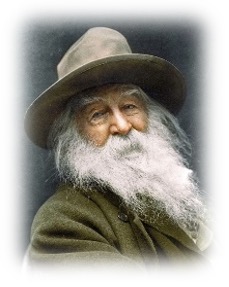
In his magnificent elegy “When Lilacs Last in the Dooryard Bloom’d” on the assassination of President Lincoln – ‘the great star in the west’ – on Good Friday, April 14, 1865, Walt Whitman reminds us that spring’s reviving warmth can sharpen the pain of loss and intensify one’s grief.
from When Lilacs Last in the Dooryard Bloom’d
When lilacs last in the dooryard bloom’d,
And the great star early droop’d in the western sky in the night,
I mourn’d, yet shall mourn with ever-returning spring.
Ever-returning spring, trinity sure to me you bring,
Lilac blooming perennial and drooping star in the west,
And thought of him I love.
O powerful western fallen star!
O shades of night – O moody, tearful night!
O great star disappear’d – O the black murk that hides the star!
O cruel hands that hold me powerless – O helpless soul of me!
O harsh surrounding cloud that will not free my soul.
In the dooryard fronting an old farm-house near the white-wash’d palings,
Stands the lilac-bush tall-growing with heart-shaped leaves of rich green,
With many a pointed blossom rising delicate, with the perfume strong I love,
With every leaf a miracle – and from this bush in the dooryard,
With delicate-color’d blossoms and heart-shaped leaves of rich green,
A sprig with its flower I break … [6]
|
|
On a completely different note, Billy Collins, a poet about whom I ask myself “Does he take himself seriously,” the answer to which is Yes and No and Not Completely, with his customary whimsy sings:
Today
If ever there were a spring day so perfect,
so uplifted by a warm intermittent breeze
that it made you want to throw
open all the windows in the house …
a day … so etched in sunlight
that you felt like taking
a hammer to the glass paperweight
on the living room end table,
releasing the inhabitants
from their snow-covered cottage
so they could walk out,
holding hands and squinting
into this larger dome of blue and white,
well, today is just that kind of day. [7]
|
|
While we’ve been speaking about April, spring actually springs in March, as Robert Herrick reminds us. Daffodils bloom in late winter and early spring, usually early to mid-March and last anywhere from six weeks to six months. Their life span mimics that of humans; it can be long, it can be short, but whichever, it ends.
To Daffodils
Fair Daffodils, we weep to see
You haste away so soon;
As yet the early-rising sun
Has not attain'd his noon.
Stay, stay,
Until the hasting day
Has run
But to the even-song;
And, having pray'd together, we
Will go with you along.
We have short time to stay, as you,
We have as short a spring;
As quick a growth to meet decay,
As you, or anything.
We die
As your hours do, and dry
Away,
Like to the summer's rain;
Or as the pearls of morning's dew,
Ne'er to be found again. [8]
|
|
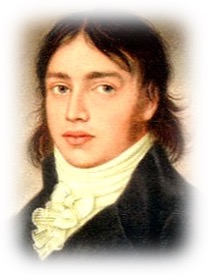
Speaking of daffodils as emblems of life, this time not its transitoriness but its sustaining beauty, Wordsworth’s “I Wandered Lonely as a Cloud,” which is sometimes cataloged as “Daffodils” tells us:
I wandered lonely as a cloud
That floats on high o'er vales and hills,
When all at once I saw a crowd,
A host, of golden daffodils;
Beside the lake, beneath the trees,
Fluttering and dancing in the breeze.
Continuous as the stars that shine
And twinkle on the milky way,
They stretched in never-ending line
Along the margin of a bay:
Ten thousand saw I at a glance,
Tossing their heads in sprightly dance.
The waves beside them danced; but they
Out-did the sparkling waves in glee:
A poet could not but be gay,
In such a jocund company:
I gazed – and gazed – but little thought
What wealth the show to me had brought:
For oft, when on my couch I lie
In vacant or in pensive mood,
They flash upon that inward eye
Which is the bliss of solitude;
And then my heart with pleasure fills,
And dances with the daffodils. [9]
|
|
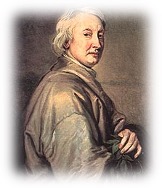
If spring is alive with life’s renewal, with intimations of love and Eros flourishing, John Dryden reminds us it does not always end, to tweak a phrase of John Donne’s, with “a consummation of our joys.” [10] Here’s Dryden’s:
Song: Calm was the even, and clear was the sky
lllllllllllllllllllllllllllllllllllllllllllllllllfrom An Evening's Love
Calm was the even, and clear was the sky,
lAnd the new budding flowers did spring,
When all alone went Amyntas and I
lTo hear the sweet nightingale sing;
I sate, and he laid him down by me;
lBut scarcely his breath he could draw;
For when with a fear, he began to draw near,
lHe was dash'd with A ha ha ha!
He blush'd to himself, and lay still for a while,
lAnd his modesty curb'd his desire;
But straight I convinc'd all his fear with a smile,
lWhich added new flames to his fire.
O Silvia, said he, you are cruel,
lTo keep your poor lover in awe;
Then once more he press'd with his hand to my breast,
lBut was dash'd with A ha ha ha ha!
I knew 'twas his passion that caus'd all his fear;
lAnd therefore I pitied his case:
I whisper'd him softly, there's nobody near,
lAnd laid my cheek close to his face:
But as he grew bolder and bolder,
lA shepherd came by us and saw;
And just as our bliss we began with a kiss,
lHe laugh'd out with A ha ha ha ha! [11]
We’ve been examining poems by some of the old masters; what have younger poets to say about spring?
|
|
Anne Stevenson, who died at 87 in 2020, was an English woman who spent a large portion of the first half of her life in the United States studying at the University of Michigan, where she was a student of the poet Donald Hall. Leaving America in 1962, she lived mainly in the United Kingdom. Anchoring her own work in the long tradition of English verse, she probably annoys most contemporary poets whose diction she likens to “mass-produced vegetables grown in chemicals for supermarkets.” [12] Here is her on swifts, a bird similar but not identical to the swallows who strafe my deck and pond and whose return is a certain sign of spring.
from Swifts
Spring comes little, a little. All April it rains.
The new leaves stick in their fists; new ferns still fiddleheads.
But one day the swifts are back. Face to the sun like a child
You shout, 'The swifts are back!'
Sure enough, bolt nocks bow to carry one sky-scyther
Two hundred miles an hour across fullblown windfields.
Swereee swereee. Another. And another.
It's the cut air falling in shrieks on our chimneys and roofs.
The next day, a fleet of high crosses cruises in ether.
These are the air pilgrims, pilots of air rivers.
But a shift of wing, and they're earth-skimmers, daggers
Skilful in guiding the throw of themselves away from themselves … [13]
|
|
Tony Hoagland, who died in 2018, writes about spring as a respite from all the times love went wrong in “A Color of the Sky”:
from A Color of the Sky
Otherwise it’s spring, and everything looks frail;
the sky is baby blue, and the just-unfurling leaves
are full of infant chlorophyll,
the very tint of inexperience.
Last summer’s song is making a comeback on the radio,
and on the highway overpass,
the only metaphysical vandal in America has written
MEMORY LOVES TIME
in big black spraypaint letters,
which makes us wonder if Time loves Memory back. [14]
|
|
Dealing with themes of redemption, suffering, and survival, Amy Gerstler’s “In Perpetual Spring” reminds us of spring’s redemptive power, or at least our persistent belief that with the turning of the seasons we might be revived.
In Perpetual Spring
Gardens are also good places
to sulk. You pass beds of
spiky voodoo lilies
and trip over the roots
of a sweet gum tree,
in search of medieval
plants whose leaves,
when they drop off
turn into birds
if they fall on land,
and colored carp if they
plop into water.
Suddenly the archetypal
human desire for peace
with every other species
wells up in you. The lion
and the lamb cuddling up.
The snake and the snail, kissing.
Even the prick of the thistle,
queen of the weeds, revives
your secret belief
in perpetual spring,
your faith that for every hurt
there is a leaf to cure it. [15]
|
|
And if, as I’ve said many times, the art of poetry is helping others be more present-to-the-present, then the talent of Arthur Sze, who we discussed back in January in a Book Notes (which can be found here), is on full display in “Spring Snow.” It is something those of us along the lakes know only too well and will help you focus.
from Spring Snow
A spring snow coincides with plum blossoms.
In a month, you will forget, then remember
when nine ravens perched in the elm sway in wind.
… If, in deep emotion, we are
possessed by the idea of possession,
we can never lose to recover what is ours.
Sounds of an abacus are amplified and condensed
to resemble sounds of hail on a tin roof,
but mind opens to the smell of lightening …[16]
|
|
Jamaal May shows us how a garden doesn’t need to be a pedantic exercise in Better Homes and Gardens’ fussiness or Martha Stewart’s Living trendiness, but simply a way to connect, a way to be, a way to simply feel alive.
I Have This Way of Being
I have this, and this isn’t a mouth
lfull of the names of odd flowers
I’ve grown in secret.
lI know none of these by name
but have this garden now,
land pastel somethings bloom
near the others and others.
lI have this trowel, these overalls,
this ridiculous hat now.
lThis isn’t a lung full of air.
Not a fist full of weeds that rise
lyellow then white then windswept.
This is little more than a way
lto kneel and fill gloves with sweat,
so that the trowel in my hand
lwill have something to push against,
rather, something to push
lagainst that it knows will bend
and give and return as sprout
land petal and sepal and bloom. [17]
|
|
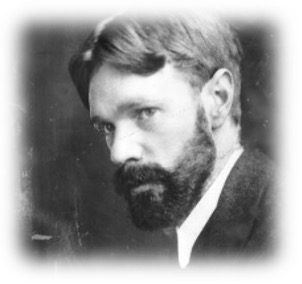
Let’s bring this sampler of spring poems old and new to a conclusion with one by an old master, well, maybe not a master, but a famous novelist from another century and a second by Mary Oliver, who always has something worth the hearing to say about, well, just about anything. First, D. H. Lawrence on spring’s refiring the life force, on spring’s amazing ability, as Jim Morrison said in another context, “to light your fire.”
The Enkindled Spring
This spring as it comes bursts up in bonfires green,
Wild puffing of emerald trees, and flame-filled bushes,
Thorn-blossom lifting in wreaths of smoke between
Where the wood fumes up and the watery, flickering rushes.
I am amazed at this spring, this conflagration
Of green fires lit on the soil of the earth, this blaze
Of growing, and sparks that puff in wild gyration,
Faces of people streaming across my gaze.
And I, what fountain of fire am I among
This leaping combustion of spring? My spirit is tossed
About like a shadow buffeted in the throng
Of flames, a shadow that's gone astray, and is lost. [18]
|
|
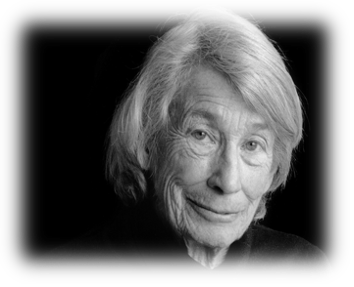
If spring is about renewal, fecundity, and the life force reasserting itself, who better in her firm gentleness to share that with you than Mary Oliver as she recounts a sound I’ve heard untold times walking Presque Isle in April – a flicker calling to a mate.
Spring
All day the flicker
has anticipated
the lust of the season, by
shouting. He scouts up
tree after tree and at
a certain place begins
to cry out. My, in his
black-freckled vest, bay body with
red trim and sudden chrome
underwings, he is
dapper. Of course somebody
listening nearby
hears him; she answers
with a sound like hysterical
laughter, and rushes out into
the field where he is poised
on an old phone pole, his head
swinging, his wings
opening and shutting in a kind of
butterfly stroke. She can’t
resist, they touch, they flutter.
How lightly, altogether, they accept
the great task, of carrying life
forward! In the crown of an oak
they choose a small tree-cave
which they enter with sudden quietness
and modesty. And, for a while,
the wind that can be
a knife or a hammer, subsides.
They listen
to the thrushes.
The sky is blue, or the rain
falls with its spills of pearl.
Around their wreath of darkness
the leaves of the world unfurl. [19]
Next week we’ll conclude this exploration of poems about spring by identifying, from my perspective, the 10 best both old and new.
What’s your favorite spring poem? Let me know at roth@jeserie.org.
|
|
-- Andrew Roth, Ph.D.
Scholar-in-Residence
The Jefferson Educational Society
This content is copyrighted by the Jefferson 2022.
|
|
Photo Credits
Poetry Wordle by LHS Media Center at Lynfield High School, Lynfield, Massachusetts available here accessed April 10, 2022.
End Notes
-
Eliot, T.S. “The Waste Land” in The Complete Poems and Plays: 1909-1950. (New York: Harcourt, Brace and Jovanovitch, 1971), p. 37.
-
“April: Fourth Month of the Year” at Time and Date. com available here accessed April 11, 2022.
-
Chaucer, Geoffrey. “The Prologue,” in The Canterbury Tales. (New York: Penguin Books, 2003), p. 5.
-
Rossetti, Christina. “Spring” in Hello, Poetry? available here accessed April 11, 2022.
-
Carew, Thomas. “The Spring” at The Poetry Foundation available here accessed April 11, 2022.
-
Whitman, Walt. “When Lilacs Last in the Dooryard Bloom’d,” in Whitman: Prose and Poetry. (New York: The Library of America, 1982), p. 459.
-
Collins, Billy. “Today” in Aimless Love: New and Selected Poems. (New York: Random House, 2013), p. 25.
-
Herrick, Robert. “To Daffodils” in The Norton Anthology of Poetry. (New York: W.W. Norton and Co., 1970), pp. 266-267.
-
Wordsworth, William. “I Wandered Lonely as a Cloud” in The Norton Anthology of Poetry. (New York: W.W. Norton and Co., 1970), p. 585.
-
In his “A Valediction: Forbidding Mourning,” Donne tells his illicit lover it would be “a profanation of our joys” to tell others of our love, i.e. let’s keep the affair a secret. Cf. Donne, John, “A Valediction: Forbidding Mourning” in The Norton Anthology of Poetry. (New York: W.W. Norton and Co., 1970), pp. 230-231.
-
Dryden, John. “Song: Calm was the Even, and clear was the Skie” in Dryden: Poem and Fables. (London: Oxford University Press, 1962), p. 126.
-
“Anne Stevenson” at The Poetry Foundation available here accessed April 11, 2022.
-
Stevenson, Anne. “Swifts” at The Poetry Foundation available here accessed April 11, 2022.
-
Hoagland, Tony. “A Color of Sky” at Best Poems available here accessed April 11, 2022.
-
Gerstler, Amy. “In Perpetual Spring” at PoemHunter.com available here accessed April 11, 2022.
-
Sze, Arthur. “Spring Snow” in The Redshifting Web: Poems 1970-1998. (Port Townshend, WA: Copper Canyon Press, 1998), p. 219.
-
May, Jamaal. “I Have This Way of Being” at The American Academy of Poets available here accessed April 11, 2022.
-
Lawrence, D. H. “The Enkindled Spring” at Your Daily Poem.com available here accessed April .
- Oliver, Mary. “Spring” in Devotions: The Selected Poems of Mary Oliver. (New York: Penguin Press, 2017), pp. 201-202.
|
|
JES Mission: The Jefferson was founded to stimulate community progress through education, research, and publications. Its mission also includes a commitment to operate in a nonpartisan, nondenominational manner without a political or philosophical bias. As such, the Jefferson intends to follow the examined truth wherever it leads and is neither liberal nor conservative, Democratic nor Republican in philosophy or action. Our writers’ work reflects their own views. |
|
|
|
|
|
|