Volume 10, Issue 6 │February 20, 2026 | | | |
SB 3707 Introduced to Strengthen Oversight of Vision Benefit Managers
Senator Cristina Castro has filed SB 3707, building on the Vision Care Plan Regulation Act. While SB 764 was an important first step, our members quickly informed us that Vision Benefit Managers continued operating in ways that undermined the intent of the law.
The IOA raised concerns, conducted extensive due diligence, and engaged legal counsel to work directly with Vision Benefit Managers on behalf of our members. Through that process, it became clear that Illinois law would benefit from stronger accountability standards and clearer regulatory authority.
SB 3707 closes those gaps.
“Doctors of optometry take an oath to place their patients first. Vision Benefit Managers do not operate under the same professional obligation,” said Leigh Ann Vanausdoll, CEO of the Illinois Optometric Association. “This legislation strengthens transparency and oversight to better protect patient choice, independent practices, and fair, balanced contracting.”
Summary of SB 3707
-
Strengthens Accountability of Vision Benefit Managers (VBMs) to protect patient choice, promote transparency, and ensure fair treatment of doctors of optometry.
-
Addresses concerning VBM practices that can interfere with patient access to care, limit provider choice, impose unfair reimbursement terms, and operate with limited regulatory standards in place.
-
Expands and clarifies the definition of Vision Benefit Manager to include affiliated entities, subcontractors, and third parties involved in administering vision benefit and discount plans, ensuring regulations apply to the companies controlling benefits and payments.
-
Requires Vision Benefit Managers to be licensed in Illinois, just as doctors of optometry are licensed, and subjects VBMs to examination and ongoing oversight by the Illinois Department of Insurance.
-
Improves transparency in reimbursement and benefit design by requiring clear disclosure of fee schedules, reimbursement rates, and payment practices, along with minimum standards to prevent unfair or below-cost reimbursement.
-
Prohibits restrictive and coercive practices, including steering patients through misleading information, penalizing providers for sourcing materials or participating in professional organizations, or forcing providers to deliver services at a loss.
-
Protects patients and providers from unfair audits, retroactive payment reversals, and retaliation for exercising rights under the law.
-
Preserves provider flexibility to offer lower-cost payment options to patients when appropriate.
-
Strengthens enforcement by establishing non-retaliation protections, creating a private right of action, and directing certain regulatory fees to support vision exams for low-income students.
-
Overall, SB 3707 ensures vision benefits operate fairly and transparently, prioritizes patient access to quality eye care, and establishes meaningful safeguards for Vision Benefit Managers.
We thank our members for bringing these issues forward and for continuing to advocate for your patients and your profession. SB 3707 is a direct reflection of your engagement and the IOA’s commitment to ensuring Illinois law works as intended.
We thank our members for bringing these issues forward and for continuing to advocate for your patients and your profession. SB 3707 is a direct reflection of your engagement and the IOA’s commitment to ensuring Illinois law works as intended.
🔗 Read SB 3707
🔗 Read the full press release
Take Action:
🔗 Consider becoming a Key Person
🔗 Donate to the Eyes on Tomorrow Fund
🔗 Donate to IOA-PAC
🔗 Report VBM Abuse
More updates and calls to action will follow as the bill moves through the legislative process.
| | | | |
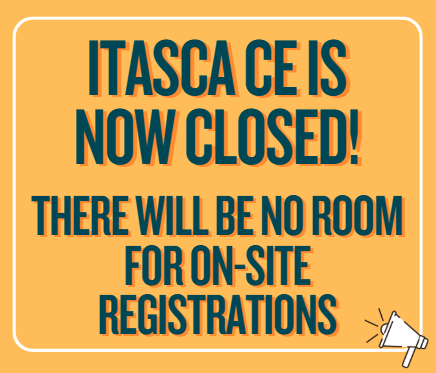
Join us on Sunday, March 1 in Tinley Park for one LAST chance of tested CE!
DON'T FORGET to get 12 tested hours this renewal period! The IOA has ONE MORE opportunity left to get tested CE.
The course will be 6 hours TQ and run from 9am-4pm. The course is automatically available as tested CE. The test will be automatically emailed out for every course where the attendee scans in and out.
| | Licenses expire on March 31, 2026, so don't forget to complete your CE before the licensing cycle ends! | | |
Attention: Illinois Controlled Substance license holders!
Please be aware that when renewing an Illinois controlled substance license, IDFPR has the previous requirement of 3 hours of continuing education listed as a condition of renewal. This was changed on 1/1/2025 to 1 hour of continuing education. Only one hour of CE on safe opioid prescribing is required per state law.
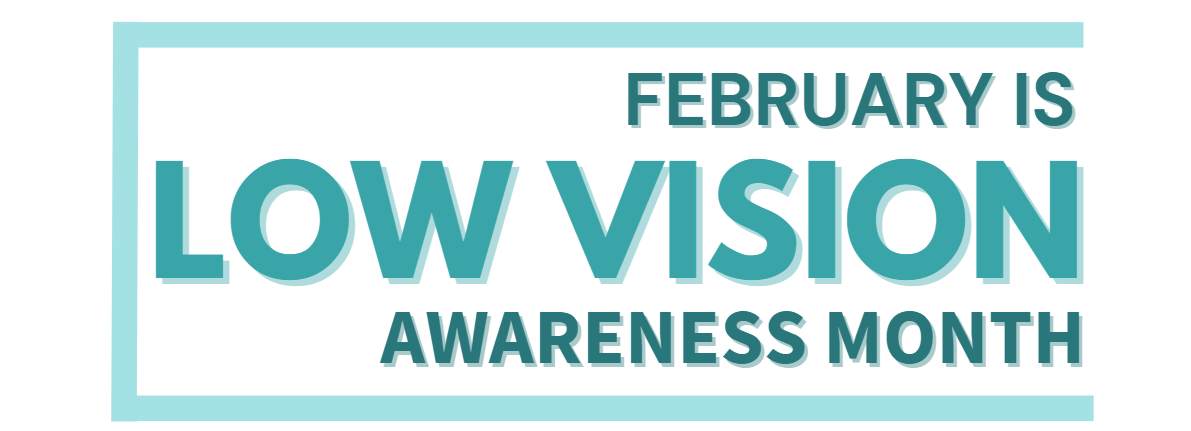
| | February is Low Vision Awareness Month! | | |
Here are some ways to spread awareness during Low Vision Awareness Month:
- Raise awareness through in-office and digital outreach
- Identify patients early, especially those with chronic eye disease
- Educate patients on low vision care and rehabilitation options
- Promote low vision devices and assistive technology
- Engage staff and caregivers in the care process
- Focus messaging on independence and quality of life
| |
Win a $100 Gift Card!
The IOA is gathering insights to strengthen optometry across Illinois. Please fill out the anonymous survey & upon completion you will receive a link for your chance to win a $100 gift card!
| | |
Do you provide home visits? Eye exams in Spanish? Aviation vision? Update your doctor profile today!
Every week patients use the doctor lookup feature on the IOA/AOA website or call the IOA looking for an OD in their area. Oftentimes they are looking for services such as home visits or optometrists who speak a certain language. Update your IOA/AOA profile so patients can easily find you by logging into your profile at the link below.
| | |
Please join the Southern Illinois Optometric Society and the IOA in supporting State Rep Paul Jacobs, O.D., in his race for the Illinois Senate!
An IOA member Rep. Jacobs is currently running for the Illinois Senate in the 59th district to replace retiring Senator Dale Fowler. Join your fellow optometrists in supporting the ONLY optometrist in the Illinois General Assembly. Your contribution will help support the campaign for State Rep. Paul Jacobs, O.D. as he runs for the Illinois Senate.
Contributions may be made to the campaign via check.
About Rep. Paul Jacobs, O.D.
Representative Paul Jacobs has been an optometrist for over 45 years, practicing in several communities throughout Southern Illinois. He currently serves in the 118th district as the elected representative for all of Alexander, Pulaski, and Union Counties and portions of Jackson and Williamson Counties. Some of his committee assignments include Appropriations-Higher Education, Cybersecurity, Data Analytics, & IT, Health Care Licenses, Higher Education, Veterans' Affairs, and Higher Ed-Degree Conferral.
Dr. Jacobs has been a strong advocate for the Illinois Optometric Association, supporting their efforts to enable optometrists to practice to the full scope of their license in VA hospitals, ensuring that our nation's veterans receive essential eye care.
Representative Jacobs also sponsored SB764, known as the Vision Care Plan Regulation Act, which introduced reforms to ensure fairness and transparency in contracts with vision plans. A key provision of this legislation prohibits vision care plans from limiting an eye care provider's freedom to choose their suppliers, materials, or labs, or from requiring them to purchase materials from a source owned by the entity that issued the vision care plan. SB764 also mandates that eye care providers post a notice to patients if they do not accept the fee schedule set by the insurer for vision plans.
| | |
MEMBER BENEFIT: Vision Awareness Patch Program
Here’s a unique community outreach opportunity that you can easily incorporate into your practice! There are thousands of participants in scouting programs across our state, with involvement starting at the kindergarten level. Many children remain involved up to and through high school.
This outreach is also an opportunity to introduce careers in Science, Technology, Engineering, and Mathematics (STEM), most importantly the profession of optometry.
| | The Eyes on Tomorrow Fund, previously known as the Legislative Equity Fund, is a dedicated resource created by and for optometrists to support the Illinois Optometric Association’s (IOA) state-level advocacy efforts. This fund directly empowers optometry’s fight for scope expansion, the regulation of Vision Benefits Managers (VBMs), and other legislative battles crucial to protecting the profession and ensuring patient care. Unlike political action committees (PACs), this fund is not used to support candidates but instead provides critical resources for advancing optometry in Illinois. | | |
The PAC (Political Action Committee) is a group organized to promote its members' views on selected issues, usually through raising money that is contributed to the campaign funds of candidates who support the group's position to keep our friends in office. Now more than ever, we need strong, principled leaders who will fight for equal rights, and access to essential services —Will you pitch in today to help us protect our profession and the patients we serve?
Contributions to the IOA PAC can be made as a One-Time Donation or as Recurring Monthly Donation and deducted automatically from donor's bank account or charged to their credit card. Selecting to contribute a set amount on a monthly basis is a painless and effortless way to contribute to and support the IOA PAC. Contributions to the IOA PAC fund are not deductible for federal income tax purposes.
| | |
|
We want to hear from YOU!
Do you have a business question or a dilemma we can answer for you? Others may have the same inquiry. Ask away! We will answer your question in an upcoming issue.
(Don't worry, we won't include your name.)
| | |
Eye care practitioners should report all violations of the FCLCA, including instances in which contact lens sellers fail to comply with the prescription verification provisions of the law.
| | |
Filing a complaint? Use the resources below to get started.
If you believe a health insurance company is violating the Vision Care Plan Regulation Act, please file a complaint with the Illinois Department of Insurance by following the link below. If appropriate, please also encourage your patients to file a complaint. Doing so is what drives the Department of Insurance to take action against insurance companies who aren’t following the law. File a complaint with the Department of Insurance at the link below.
Vision Plans & Insurance Companies:
Dept of Insurance Complaint Submission - How to File a Complaint
Office of the Illinois Attorney General - File a Complaint
Report illegal and unsafe contact lens sales to the FDA & FTC:
Fairness to Contact Lens Consumers Act compliance and safety | AOA
IDFPR:
IDFPR | File a Complaint
Medicaid Managed Care Complaint Portal:
Managed Care Provider Resolution Portal | HFS
| | |
AOA CIP Independent Practice Institute Now Accepting Applications
The AOA Center for Independent Practice (CIP) is accepting applications for its 2026-2027 class of Independent Practice Institute (IPI) participants. Applications are due by Feb. 27 with selected participants notified in April.
The AOA CIP Independent Practice Institute is a 12-month, member-benefit program designed to engage and equip the upcoming generation of doctors with the business basics of running an independent practice. Through a combination of virtual and in-person training, participants will obtain the skillset and confidence to start or step into an independent practice.
Open to all active AOA member students and doctors, particularly those early in their careers, the Independent Practice Institute is accepting applications for the 2026-27 program. Applications are due by Friday, Feb. 27.
Learn more about the Independent Practice Institute here.
| |
Pritzker Pitches $56 Billion Budget With New Fees on Social Media, Zoning Law Changes to Address Housing Shortage
WTTW | By Nick Blumberg
February 18, 2026
Facing a projected $2.2 billion gap and massive uncertainty over federal funding flowing into Illinois, Gov. JB Pritzker on Wednesday proposed a $56 billion state budget plan for fiscal year 2027 beginning July 1.
That number reflects a 1.6% increase in spending from fiscal year 2026, which senior budget officials in the governor’s office say is due almost entirely to increased expenses tied to medical costs, pensions and evidence-based funding for school districts.
Budget leaders also stressed the dangers proposed by inconsistent federal funding, citing near-weekly threats for a wide array of programs that could cost the state up to $1.7 billion in the coming fiscal year.
While that federal cash doesn’t necessarily flow directly into the state’s general revenue fund, officials say cuts from Washington have ripple effects on the state’s economy – for example, a hit to employers if their workers lose child care. Federal cuts could also force the state to pick up the full cost of certain childcare programs, or make drastic changes to them.
In addition to the danger of lost funding, the budget also includes new costs tied to the One Big Beautiful Bill in the form of $50 million for new staff and eligibility monitoring for changes to SNAP and Medicaid requirements.
During Pritzker’s 2025 address, he warned of the looming threats posed by the recently inaugurated President Donald Trump.
“I was hoping that his threats to gut programs that support working families was the kind of unrealistic hyperbole that fuels a presidential campaign but then is abandoned when cooler heads prevail,” Pritzker said Wednesday. “Unfortunately, there are no cooler heads at 1600 Pennsylvania Avenue these days.”
Pritzker told lawmakers that the second Trump administration has come at an $8.4 billion cost to Illinois, which has sparked more than 50 court cases over the legality of funding freezes and clawbacks.
“These are not handouts,” Pritzker said. “These are dollars that real Illinoisans paid in federal taxes and that have been constitutionally approved by our elected Democratic and Republican representatives in Washington.”
The governor also took a swing at the president’s scattershot communication style, slamming his “executive orders, letters, and edicts that read like proclamations from the Lollipop Guild.”
But Republican leaders dinged Pritzker for spending too much time focusing on Trump.
“The governor spent a lot of time blaming President Trump and the federal administration for Illinois’ budget woes, which I will just tell you is not true,” Senate Minority Leader John Curran said after the speech. “What I wanted to hear more is how the governor is going to chart a more robust economic growth for the state of Illinois.”
To help close the budget gap, Pritzker’s proposed budget proposes several new revenue streams, including an estimated $200 million from a social media platform fee that would be earmarked for education. That fee would need to be passed through a bill in the General Assembly. For the largest social media firms with 1 million Illinois users or more, the proposal calls for charging $165,000 per month and an additional $.50 per month for each user over the 1 million user mark. Additional revenue would also come from changes to corporate tax structure, and from taxing table and electronic games in casinos at the same rate.
State Sen. Don DeWitte (R-West Dundee) said Illinoisans are feeling the economic pinch not from Washington, but from a state budget that’s grown significantly larger during Pritzker’s tenure.
“Groceries cost more. Energy costs more. Property taxes keep rising. And too many families feel like they’re falling further behind every single year, DeWitte said. “But let’s be honest about why – for years the majority party in Springfield has passed budgets filled with new spending, new mandates, new taxes and fees, and this year is no different.
Despite the budgetary challenges, officials stressed the progress the state’s finances have made during Pritzker’s tenure, including credit rating upgrades, an increased GDP, refinancing bonds to save on interest costs, and an improved pension funding ratio.
To that end, Pritzker is also pitching multiple ideas to improve the state’s long-problematic pension situation. While officials say the state is on target to meet a legally-required 90% funding ratio by 2045, the governor is calling for a 100% funding level by 2048. Pritzker’s plan calls for redirecting money currently used to pay off bond issues from 2003 and 2017 toward pensions once those obligations are paid off.
| | |
HFS Provider Notice Issued 2/18/2026
HFS |Provider Notice
February 18, 2025
The IMPACT Provider Enrollment team is currently working to address the backlog of pending enrollment applications, modifications, and revalidations. To enhance our processing efficiency, we will be implementing the following changes:
- No Phone Calls on Wednesdays and Thursdays:
- Effective immediately, IMPACT staff will not be taking provider phone calls on Wednesdays and Thursdays. This decision aims to streamline our operations.
- Available Assistance Days:
- Our team will be available to assist providers at 877-782-5565 on the following days:
-
Monday: 8:30 AM - 4:30 PM CST
-
Tuesday: 8:30 AM - 4:30 PM CST
-
Friday: 8:30 AM - 4:30 PM CST
We believe that this operational adjustment will improve our efficiency and help prevent payment delays for the provider community we serve.
| |
Setting Young Students Up For Success
— Why school screenings fall short—and how your practice can fill the gap.
Optometry Times Journal | By Danielle Richardson, OD
March/April 2026 Edition
One in 4 school-aged children has a vision disorder.1 There is a direct correlation between undiagnosed vision problems and school performance.2-4 Most obviously, we think about distance visual acuity, because if a student cannot see the board or the teacher, they are unlikely to perform well. However, accommodative function and stereoacuity have also been shown to be predictive of reading performance in kindergarten and first grade.2 Young students do not always complain about not being able to see. Instead, they may develop headaches or eye fatigue, or avoid reading because they have near-vision or focusing issues. Children with eye-tracking problems may experience that words “jump around” on the page, making reading more difficult and frustrating. In addition to these issues being reflected in classroom grades, they also often manifest as attention or behavioral issues or a lack of motivation. The child may be labeled a “problem kid” when, in reality, they have uncorrected vision problems.
Kids who see a pediatrician annually will typically get a quick vision screening every year or two. Most states also require schools to conduct vision screenings before admitting students to kindergarten or first grade. Although these screening systems are important—they catch many vision problems and lead to referrals to eye care providers—they are not comprehensive eye exams and do not result in a prescription. Vision screenings are primarily designed to make sure the child can see 20/25 or better at distance and to evaluate for amblyopia, with a referral to an optometrist or ophthalmologist if the child fails the screening. Ocular alignment and depth perception may also be evaluated. However, screenings typically do not detect more subtle vision disorders, such as near convergence, accommodative issues, ocular motility or eye-tracking problems, and stereoacuity.
As optometrists, we have a responsibility to encourage families to schedule comprehensive eye exams for their children so we can fully evaluate their ocular health and vision in the office. Here are 4 strategies for setting kids up for success in school—and for a lifetime of good vision:
- Talk to your adult patients about using their vision benefits for the whole family. Back-to-school season or school breaks for the holidays or summer provide the perfect opportunity to encourage parents to get their children's eyes checked. The American Optometric Association, through its InfantSEE program, recommends scheduling a child's first eye exam between 6 and 12 months of age. Even if parents have missed this free infant visit, I strongly encourage a full exam before starting kindergarten. That is a great time to catch vision issues before they affect school performance and to establish good habits for annual eye exams.
- Make your practice family-friendly and welcoming to younger children. This might include having an area of the waiting room with smaller chairs and books or toys, and certainly stocking a good range of children’s frames. In our practice, we recognized that it can be challenging for families with several kids to schedule appointments for all of them and deal with siblings during another child’s appointment, so we have implemented a “family day” several times per year when the whole family can be seen at 1 appointment. There are lots of kids there, and we make it a fun event for all.
- Let families know that you offer multiple services for kids beyond just glasses. For example, for our young patients who are active in sports, we offer sports goggles and contact lenses so that they do not have to worry about breaking their glasses or having them slip around during exercise. Many parents do not realize that kids can wear contact lenses even before the teen years, depending on their maturity. Some kids are embarrassed to wear glasses, so contact lenses can be a welcome alternative. To safeguard against issues with consistent hygiene, a daily disposable lens can eliminate the need for cleaning and handling multiple times. We also offer vision therapy and myopia management for appropriate candidates.
- Do not forget to talk about UV protection. Most parents know they need to use sunblock on their kids, but they may not be aware that ocular UV exposure has been associated with pterygium, pinguecula, melanoma, photokeratitis, and accelerated development of cataracts and age-related macular degeneration.5 The majority of UV damage happens before the age of 18 years, in part because young lenses transmit much more UV radiation than older lenses.6 I always recommend that kids wear sunglasses and hats, and I also offer contact lenses with Class I UV blocking. Lenses in this class, which includes all of the Acuvue brand silicone hydrogel lenses as well as a few others, block at least 90% of UV-A and 99% of UV-B radiation. Among these, Acuvue Oasys MAX 1-Day lenses block 99.9% of UV-A and 100% of UV-B rays.
School vision screenings are an important step in directing young people to the eye care they need, but they do not go far enough. Ideally, we should all be reaching out to families in our practices and communities to encourage comprehensive exams and eye care before children start school.
|
Keratoconus Linked to Allergic Conjunctivitis in Real-World Study
Healio| By Justin Cooper
February 16, 2026
Allergic conjunctivitis was linked to a significantly increased risk for keratoconus in a large real-world study published in Contact Lens & Anterior Eye.
“Allergic conjunctivitis is one of the most common ocular conditions worldwide, particularly in children and adolescents — the same population at risk for keratoconus,” study author Zvi Gur, MD, an ophthalmologist at Hadassah Medical Organization, Israel, told Healio. “In clinical practice, we repeatedly see patients with chronic allergy symptoms and significant eye rubbing. This raised a fundamental question: Is allergic conjunctivitis simply associated with keratoconus, or could it represent an early risk marker?”
Gur and colleagues retrospectively analyzed two cohorts of patient data from the TriNetX collaborative network, one with allergic conjunctivitis and one without, each consisting of 174,443 participants.
The primary outcome was incidence of keratoconus.
According to the results, allergic conjunctivitis was associated with a significantly increased risk for keratoconus (P = .0024); 118 patients with allergic conjunctivitis developed keratoconus vs. 62 without allergic conjunctivitis.
Allergic conjunctivitis was also linked to a significantly higher risk for corneal erosion (P = .0305). These patients were more likely to undergo corneal topography (P < .0001) or advanced corneal diagnostic procedures (P < .0001).
“Allergic conjunctivitis may not be a benign nuisance condition,” Gur said. “Our findings suggest it could be a clinically meaningful risk marker for keratoconus.
“For optometrists, this underscores the importance of educating patients about avoiding eye rubbing, maintaining vigilance in young patients with chronic allergy symptoms and having a low threshold for corneal imaging when vision fluctuates,” he said. “Early detection remains critical because timely intervention can alter the disease course. ... While the link between allergy, eye rubbing and keratoconus has long been suspected, demonstrating this relationship in a large-scale dataset reinforces that this is not merely anecdotal clinical observation.”
| |
CDC Study Warns of Vision-Threatening Eye Infections After Laser Surgery
— Three patients at New York City clinic developed fungal keratitis caused by a mold.
MedPage Today | By Randy Dotinga
February 18, 2026
Three patients undergoing laser eye surgery at a New York City ophthalmology clinic developed Purpureocillium lilacinum corneal infections as a result of poor infection prevention and control practices, health officials reported.
The patients all experienced vision loss, and one required a corneal transplant, due to fungal keratitis from P. lilacinum, an environmental mold, noted Michelle E. Chang, MD, of the CDC's Epidemic Intelligence Service and the New York City Department of Health and Mental Hygiene, and colleagues in the Morbidity and Mortality Weekly Report.
Chang and team highlighted several infection prevention and control deficiencies at the unidentified clinic, including:
- Incomplete logs tracking sterilization of surgical instruments
- Use of a disinfectant for surface cleaning that was not approved by the Environmental Protection Agency
- Intraoperative use of expired topical ocular medications
- Use of saline solution with no expiration date
- Exposure to non-sterile water via cool-mist humidifiers
Terrence O'Brien, MD, of the Miller School of Medicine at the University of Miami, who wasn't involved in the report, told MedPage Today that the cases are reminiscent of a wave of Mycobacterium infections tied to similar lapses at laser eye surgery clinics in the early to mid 2000s.
The allure of laser surgery can lead to carelessness among practitioners, he said. "Because it's a laser, they let their guard down a bit. You have to really follow very careful, strict guidelines."
The report doesn't specify whether the patients were undergoing LASIK surgery, but it does say the procedures were elective and "for the purpose of reducing or eliminating the need for corrective lenses."
Each year, hundreds of thousands of patients in the U.S. undergo LASIK surgery, the most popular kind of laser refractive surgery. A previous retrospective study found that the incidence of post-LASIK infectious keratitis was 0.035% per procedure.
Photorefractive keratectomy has a higher infection rate, O'Brien said, and the true incidence of infections following laser eye surgery is likely underestimated. "Physicians don't report the case, or they don't realize there was an infection because the patient went somewhere else," he explained.
According to Chang and colleagues, most cases of P. lilacinum keratitis have been reported in association with soft contact lens use, eye trauma, eye surgery, and immunosuppression.
Clinically, the fungal infection presents in the eye with pain, photophobia, and decreased vision, O'Brien said. "Those are the red flags, and you have to act quickly," since infections can burrow deep into the cornea and cause it to perforate.
Diagnosis is often delayed, however, since fungal infection can be mistaken for bacterial keratitis and treated with antibiotics. "Most people can't even pronounce or spell this organism right, let alone diagnose it," O'Brien noted. "Just having an awareness is the first step to having that high clinical suspicion of a possible infection."
If a clinic can't perform confocal microscopy or doesn't have the ability to get corneal scrapings and cultures, he said, "immediate referral to a facility that can be very rigorous in detection and treatment is mandatory."
The New York City clinic employed a single ophthalmologist and consisted of a single treatment room. Two patients began experiencing symptoms 2 and 3 days, respectively, after surgery, at which point the clinic paused surgeries. The third patient was identified the next day.
Based on the patient reports of eye pain and vision loss and postoperative clinical assessments, the clinic sent corneal specimens to a laboratory, which noted fungal elements on microscopy. Due to the unusual appearance of the organism, the laboratory notified the health department. Corneal cultures from two patients grew P. lilacinum.
Among materials from the clinic sent for environmental testing, a laboratory detected the fungus in the suction tubing of an epikeratome, a surgical device that separates the corneal epithelium from underlying corneal layers. Clinic staff said the tubing was never shared between patients, and it's not clear if it was used for any of the infected patients.
The epikeratome was replaced and cool-mist humidifiers were replaced with steam humidifiers. As Chang and team noted, CDC infection prevention and control guidelines recommend against the use of cool-mist humidifiers in healthcare facilities.
The three patients were first treated with topical voriconazole and natamycin, and eventually all were switched to oral posaconazole. Details about clinical outcomes, including the status of the patient who underwent corneal transplant, were not available.
Another eight patients who underwent procedures during the same time period didn't develop infections.
A recent analysis of fungal culture results from a major U.S. commercial laboratory found increasing rates of P. lilacinum from 2019 to 2025, Chang and team noted, explaining that the use of certain P. lilacinum strains as pesticides in agriculture could be increasing infections in people.
O'Brien described one particularly striking case from his own practice: A patient was carrying a poinsettia plant, scratched their cornea on the edge of a leaf, and developed a severe P. lilacinum infection. Apparently, the poinsettia had been treated with a P. lilacinum strain as a pest control agent.
| |
State, Federal Lawmakers Aim to Bar PBMs From Owning Pharmacies
— Arkansas law passed in 2025 is being challenged in federal court
MedPage Today | By Joyce Frieden
February 13, 2026
Federal and state governments' latest strategy in the fight to rein in the power of pharmacy benefit managers (PBMs) is focused on industry consolidation -- specifically, PBMs' ability to own pharmacies.
"In their quest to put profits over people, Big Pharma and the insurance companies continue to gobble up every independent healthcare provider and pharmacy they can find," Sen. Josh Hawley (R-Mo.) said in a press release Tuesday, the day he and Sen. Elizabeth Warren (D-Mass.) introduced the Break Up Big Medicine Act. "Working Americans deserve better. This bipartisan legislation is a massive step towards making healthcare affordable for every American."
The legislation would prohibit a parent company from owning a medical provider -- such as a pharmacy -- and a PBM or an insurer; it would give companies currently in such arrangements 1 year to divest themselves of one of the entities or face financial penalties.
"There's no question that massive healthcare companies have created layers of complexity to jack up the price of everything from prescription drugs to a visit to the doctor," Warren said in the press release. "The only way to make healthcare more affordable is to break up these healthcare conglomerates."
It's unclear whether their bill will gain any traction, but in the meantime, states are taking their own actions. Arkansas enacted a law last year that would bar any entity affiliated with a PBM from being granted a pharmacy permit. The Pharmaceutical Care Management Association (PCMA), a trade group for PBMs, sued in federal court to block the law, and the case is currently pending. In a press release, PCMA called the law "dangerous" and "misguided," saying it could cause about 40 pharmacies in the state to close.
"Further, the law would sharply reduce market competition in the prescription drug space by unlawfully discriminating against certain types of pharmacies," the press release said. "Patients, employers, and health plan sponsors could all experience increased costs as they lose access to these pharmacy options, which can deliver significant savings."
But the National Community Pharmacists Association (NCPA), which represents independent pharmacies, likes the law. Without such restrictions, "PBMs will steer patients to pharmacies they own and pay themselves at a much higher rate than they do non-affiliated pharmacies," Anne Cassity, the association's senior vice president for government affairs, said in a phone interview. "And not only are they paying themselves at a higher rate, they're reimbursing non-affiliated pharmacies -- their competitors -- many times at reimbursements below the acquisition cost for the pharmacy. So they're paying [their competitors] below water."
| | |
Check out the newest IOA classifieds here!
Optometrist Needed in Chicago (Read more)
Northern IL:
Subcontracting Opportunity with Illinois Department of Corrections (Read more)
Small Private Practice in Morris, IL Seeking PT Optometrist (Read more)
OD Needed at Private Office in North Suburbs (Read more)
Full Time OD Needed in Highland Park (Read more)
Optometrist Needed in Algonquin & Mundelein (Read more)
Associate Optometrist – Part-Time with Path to Ownership (Read more)
Great FT or PT Opportunity at Primary Eyecare Center in Rockford, IL (Read more)
Part Time OD Needed at Private Practice in Schaumburg, IL (Read more)
Optometrist – Full Time - Private Practice - Yorkville, IL (Read more)
Excellent Private Practice Opportunity for Part-Time Associate in Northbrook, IL (Read more)
Optometrist Opportunity — Lake Zurich & Grayslake, IL (Read more)
Optometrist Needed in Western Suburbs (Read more)
Full-Time Optometrist Needed at Geneva Eye Clinic in Geneva, IL (Read more)
Central IL:
Join the Community Eye Care Family! Full-Time Optometrist – Pana & Taylorville, IL (Read more)
Join the Community Eye Care Family! Full-Time Optometrist – Mt. Zion, IL (Read more)
Southern IL:
On-Site Opportunity with IL Dept of Corrections (Read more)
Out of State:
Yooper Optometrist Wanted - Escanaba, MI (Read more)
Equipment for Sale:
Equipment available for sale (Read more)
| | THANK YOU TO OUR INDUSTRY PARTNERS! | |
Illinois Optometric Association
217-525-8012
| | | | | |