League Logo.jpg

2025-2026 Legislative Bulletin

November 11, 2025

In this edition of the League's Legislative Bulletin, you'll find:

1. Beloit Hosts the Last ReVITALize Event in 2025

2. First Application to the Innovation Grant Program

3. State Capitol Updates - The Four Quarters of Legislation

4. Recently Introduced Legislation of Municipal Importance

5. Agency Actions, including:

a. EMS Licensing Report Released by DHS

b. 2025 Statistical Report of Property Values

c. Housing Trust Fund Application Period Open

d. Battery Collection Best Practices Toolkit

e. Preliminary Broadband Grant Award Map

Beloit Hosts the Last ReVITALize Event in 2025


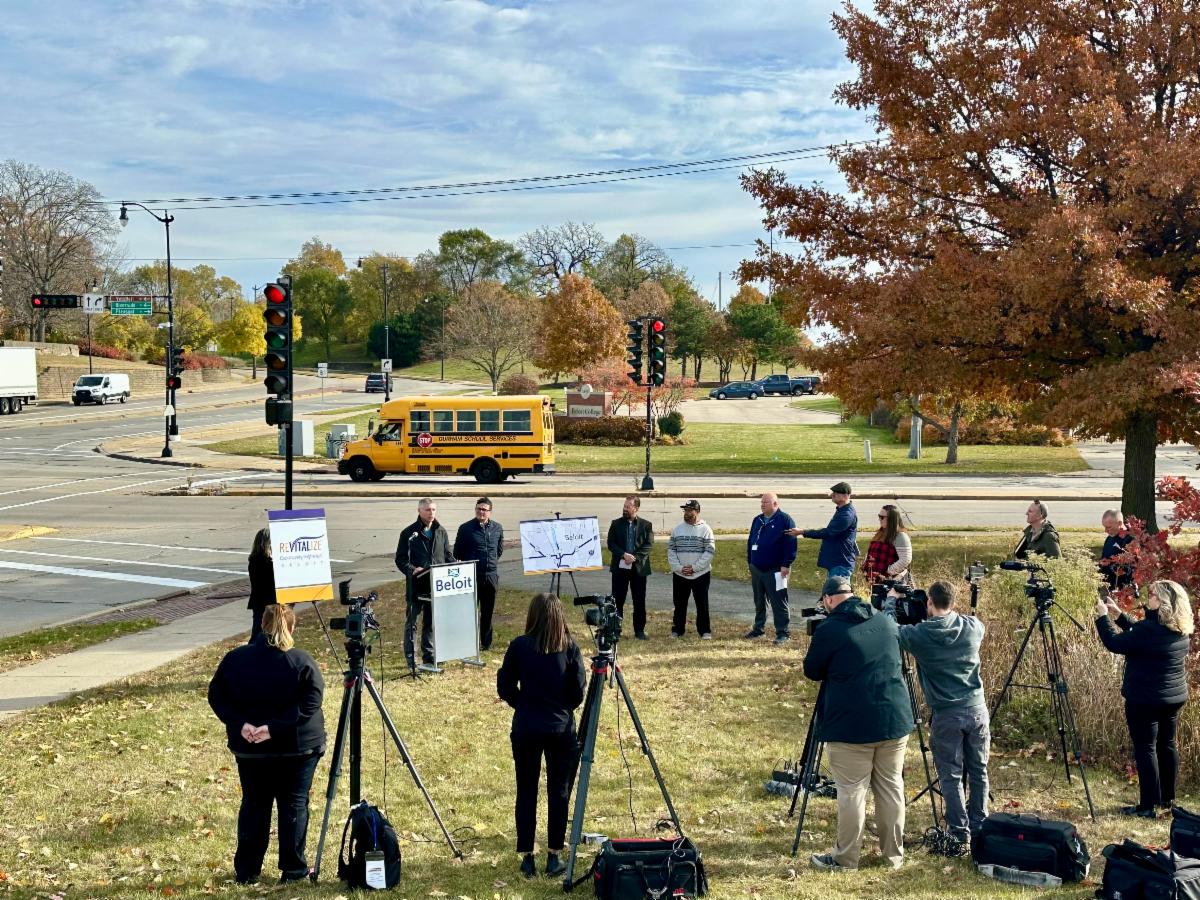
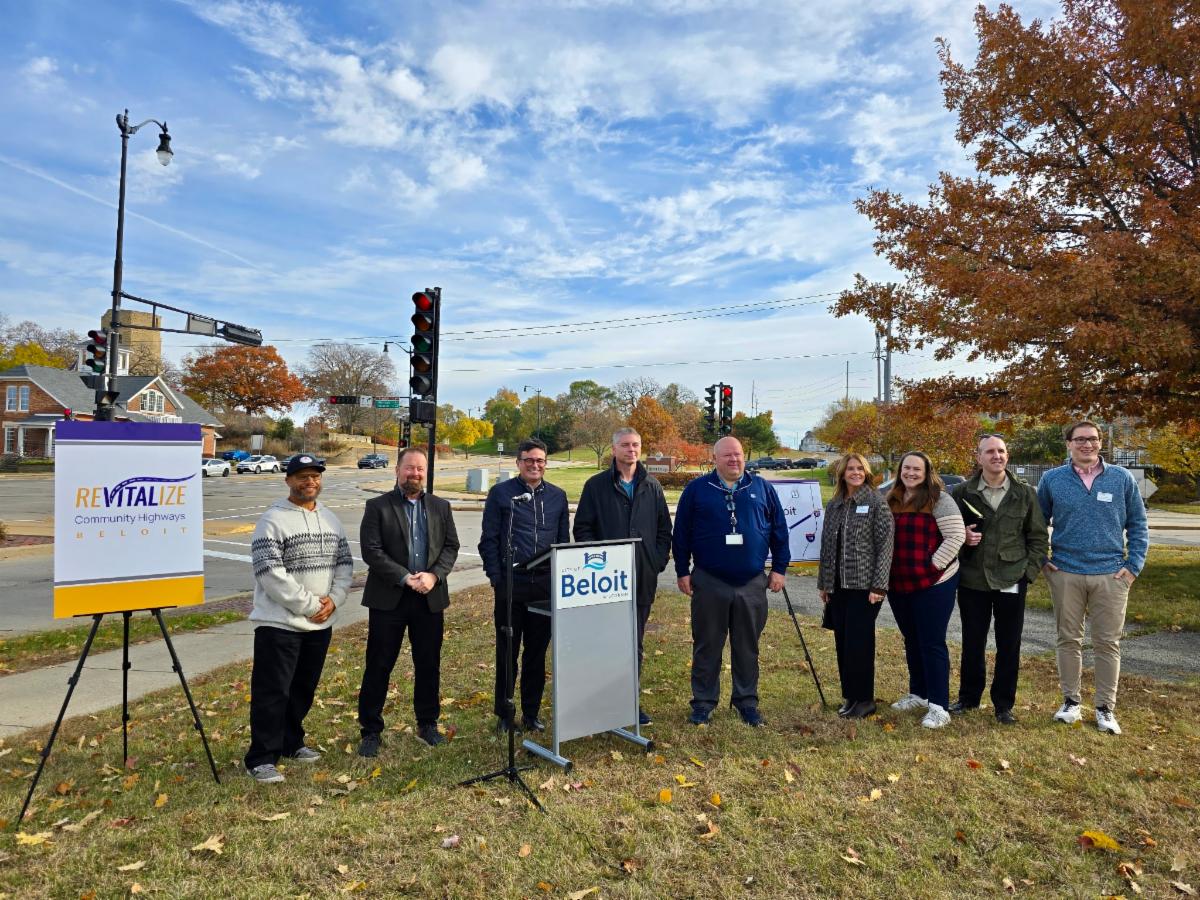
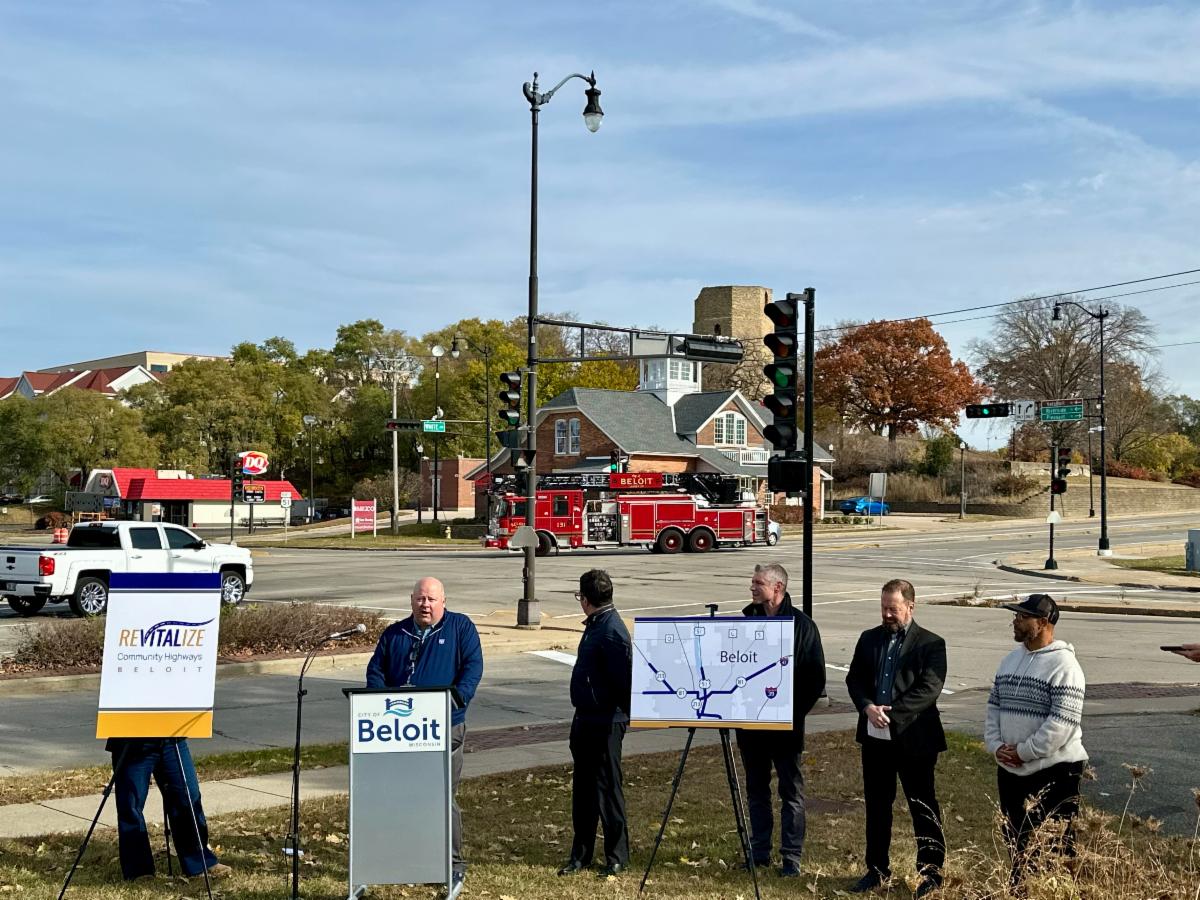
On Thursday, November 6th, local leaders in Beloit held a press conference to discuss their concerns with the state trunk highways running through their city. As part of the Re-VITAL-ize Wisconsin Community Highways campaign, City Manager Jerry Gabrielatos noted the impact these highways, which take the characteristics of local roads within the city, have on commerce, public safety, and the daily life of its residents.

“Being at the center of so many state highways, it's really important that our infrastructure keeps pace with the business needs and the needs of our residents,” said Gabrielatos. “The funding for Beloit and other Wisconsin communities is just not adequate.” Bill Frisbee, Beloit’s Director of Public Works, commented “The last couple of years, there have been increases in General Transportation Aid from the state, but the increases don’t even keep up with inflation.”


Gabrielatos and Frisbee were joined by Beloit City Engineer Scot Prindiville, Blackhawk Technical College President Dr. Tracy Pierner, and You Buy We Fly business owner Demetrius Jones. Each speaker shared their unique perspective on the state highways running through their vibrant city and their importance on the region and its residents and businesses. 

Additional photos and a press release from the event will be shared on the ReVITALize Wisconsin Community Highways Facebook page. A short video highlighting the comments from the speakers will also be shared in an upcoming edition of the Legislative Bulletin.


Beloit is the fourth stop in the ReVITALize Wisconsin Community Highways campaign and will be the final stop in 2025 before the campaign continues in Spring 2026. This effort, launched by the League and our partner, the Transportation Development Association, aims to call attention to long-overdue road improvements on state highways running through the heart of Wisconsin communities and the need for a long-term, sustainable plan to support transportation infrastructure.


If your municipality is interested in sharing your story about the impact of deteriorating state trunk highways in your community, please contact Toni and Evan at the email addresses listed at the end of this Bulletin.

🎉First Application to the Innovation Grant Program


Recently, the Village of Kewaskum became the first applicant to the Innovation Grant Program! Congratulations to leaders in Kewaskum and the City of West Bend for demonstrating leadership and collaboration that will benefit residents and taxpayers. According to the application, by transferring EMS duties from Kewaskum to West Bend, the village will see significant cost savings of approximately $175,000 per year. If their grant application is approved, their grant award will nearly cover the full cost of payments to West Bend for providing EMS for the term of the award.


The Innovation Grant Program allows municipalities to receive grant funding to support the transfer of an allowable service or duty to another entity. If the agreement is for a minimum of three years and will result in a total cost that does not exceed 115% of the total costs for that service or duty in the year prior to the agreement, applicants are eligible for up to five annual grant payments. These grants are equal to 25% of the total costs for the service or duty by the transferring municipality in the year prior to the agreement.


In October, the League hosted a webinar featuring Valeah Foy, Administrator of the Division of State and Local Finance at the Wisconsin Department of Revenue (DOR). A recording of that webinar may be found on the League’s YouTube page, and slides from the webinar may be found on the League’s website.


A total of $300 million is available in this program which underwent substantial and exciting eligibility changes in the most recent state budget. To take full advantage of the program, you’re encouraged to apply now! First Round applications are due by March 31, 2026. More information on the program may be found on DOR’s website. 

State Capitol Updates - The Four Quarters of Legislation


With the NFL in mid-season, we wanted to put a synopsis of several State Capitol happenings in football terms. The legislative process can be thought of as a four-quarter endeavor: 1) co-sponsorship period and introduction; 2) committee process; 3) floor votes; and 4) governor action. This week’s update will take the four quarters in reverse order, starting in the fourth quarter highlighting proposals at the end of the process first.


Fourth Quarter


On Halloween, Governor Evers took action on 19 bills passed by the Legislature during September and October floorperiods. This includes Senate Bill 159 which was signed into law as 2025 Wisconsin Act 39. This legislation, which was supported by the League, modernizes the statutes for lighting on police vehicles and improves the ability for local governments to make decisions that promote safety.


Under law prior to Act 39, the requirements for lighting on police vehicles was strictly prescribed. This legislation allows for additional lighting on police vehicles once that statutory baseline – which was also previously the limit – is met. These lights may increase visibility to motorists and others of a law enforcement response, improving safety for both the officers and the public.


Thank you to the authors of this effort, Senator Wanggaard (R-Racine) and Representative Jacobson (R-Mosinee), for this commonsense reform. With the actions by the Governor in October, 47 bills have been signed into law thus far in the 2025-2026 Legislative Session.


Third Quarter


While the bills above, already passed by both legislative chambers, have seen recent action by the Governor, other bills are awaiting action on the floor of the Senate, Assembly, or both. The Senate has announced they will hold a floor session on Tuesday, November 18th. The Assembly has not yet announced when they will be on the floor in November, though it’s expected they could hold a session that Tuesday as well. Calendars for these sessions will likely be released later this week.


Second Quarter


These November dates will be the final floorperiods in 2025 before picking back up in January 2026, committees are busy this week hearing and voting on a number of proposals. This includes a public hearing in the Assembly Committee on Transportation on Assembly Bill 502. Previously noticed for a hearing on October 29th, a scheduling change resulted in this bill being heard this Wednesday, November 12th. This legislation revises the process for handling outdoor advertising signs that do not confirm with local ordinances during a state transportation project.


First Quarter


Last week, a group of Democratic legislators led by Senator Mark Spreitzer (D-Beloit) and Representative Clinton Anderson (D-Beloit) unveiled the Strengthening Local Communities bill package. This package includes seven bills touching on Shared Revenue payments, tax incremental financing, municipal funding, local prohibitions, and more. The legislation is currently circulating for co-sponsorship and will be introduced in the coming weeks. More information on the package may be found in Senator Spreitzer and Representative Anderson’s joint press release. 

Recently Introduced Legislation of Municipal Importance


The following bills have been recently introduced in the Wisconsin State Legislature and have been added to the list of those being monitored by the League. Unless otherwise indicated, no formal position has been taken on these proposals to date. 


  • Senate Bill (SB) 596: Notice of Assessor Site Visits - Sen. Wimberger (R-Oconto) and Rep. Goeben (R-Hobart) - Under current law, an assessor must provide written notice to a property owner of their rights if they are requesting to view the interior of the owner’s residence for the assessment. This legislation requires local governments to provide a property owner with written notice at least seven days before a tax assessor enters their property to conduct a tax assessment.


  • Assembly Bill (AB) 617: Various Elections Law Changes - Rep. Krug (R-Rome) and Sen. Cabral-Guevara (R-Appleton) - This legislation makes a series of changes to the laws governing elections. First, it requires that alternative absentee ballot sites must be fixed locations in a building. Second, it requires that clerks must return an absentee ballot certificate with a defect to the voter if time permits the voter to correct the defect. Third, it requires reporting by clerks of the total number of ballots canvassed and remaining on election night starting at 10pm and every hour thereafter. Fourth, it prohibits municipalities from utilizing a central count location. Various other changes to elections laws and process are also made in this legislation.


  • AB 616: Funding for Required Absentee Voting Hours - Rep. Krug (R-Rome) and Sen. Cabral-Guevara (R-Appleton) - To accompany the requirements in AB 312, this legislation provides $10 million to reimburse municipalities for the hours a clerk is required to provide in-person absentee voting prior to an April or November election. Under an amendment to AB 312, reimbursement would be provided at $50 for each required hour of in-person absentee voting.


  • AB 606: Regulation of Hemp-Derived THC Products - Rep. Swearingen (R-Rhinelander) and Sen. Wimberger (R-Oconto) - This legislation regulates hemp-derived THC products in a similar manner to alcohol. Hemp-derived THC products are commonly known as Delta-8 and similar derivatives, and are found in beverages, vapes, and food products and have similar effects to marijuana but are lawfully sold due to a legal loophole. Under this comprehensive legislation, purchasers must be 21 years or older, manufacturers, distributors, and retailers must be licensed, products must be independently tested, and certain safety standards including warning labels and packaging requirements would all be imposed. Municipalities would be allowed to permit retail sales but may limit the number of licenses and enforcement capacity would be provided.

⭐If you would like to contact your legislators on any bills mentioned in the Legislative Bulletin, you can find contact information for all legislators here. To find out which legislators represent your community, use the "Find Your Legislator" function on the right side of the page. 

Agency Actions


EMS Licensing Report Released by DHS


The Wisconsin Department of Health Services (DHS) has released its 2025 Wisconsin EMS Personnel Report which highlights the licensing and certification data from July 1, 2024 to June 30, 2025. According to the new report, 2,447 new licenses were issued over this year-long period, including 522 new emergency medical responders, 1,381 new emergency medical technicians, 124 new advanced emergency medical technicians, and 420 new paramedics.


Currently, the plurality of EMS credentials are issued to EMTs at 45.1%, followed by paramedics at 27.9% and EMRs at 17.7%. Advanced EMTs and Intermediate licenses cover just 9.3% of credentials. While this report, which may be found on DHS’s website, shows some optimistic signs in resolving the EMS shortage, municipal leaders know its not that simple.


2025 Wisconsin Act 35, which was highlighted in the October 27th edition of the Legislative Bulletin, hopes to continue this progress by making EMS training more accessible and affordable for municipalities and their employees or volunteers. With this improved approach to EMS licensure and certification, we hope to see a greater reduction in the emergency workforce need in Wisconsin. 


2025 Statistical Report of Property Values


The Wisconsin Department of Revenue (DOR) has posted the Statistical Report of Property Values for 2025 on its website. This report includes the Statement of Assessments, Statement of Merged Equalized Values, Certification of State Assessment, and more. Information on this report and links to each document may be found on DOR’s website. 


Housing Trust Fund Application Period Open


The Department of Administration’s (DOA) Division of Energy, Housing, and Community Resources (DEHCR) has released a Notice of Funding Opportunity (NOFO) for the Housing Trust Fund. This program has approximately $6.5 million available in this NOFO. The Housing Trust Fund allows housing authorities, eligible nonprofit and for-profit developers, and tribal housing entities to receive assistance for the development or rehabilitation of affordable rental housing.


More information on the Housing Trust Fund is available on DOA’s website. Applications are due by December 31st with awards anticipated to be announced in February 2026. 


Battery Collection Best Practices Toolkit


Landfills, recycling plants, and transfer stations throughout the state have experienced fires recently due to lithium-ion batteries. These fires can not only be dangerous to those working at the site but are costly to the property owners and have the potential to disrupt the management of waste and recycling for an entire region.


The U.S. Environmental Protection Agency (EPA) has released a new resource to help battery collection sites establish and operate safely and effectively. While voluntary, these sites can substantially reduce the risks from the improper disposal of batteries. The Battery Collection Best Practices Toolkit may be found on the EPA’s website.


While not yet introduced, legislation was recently circulated by Senator Tomczyk (R-Mosinee) and Representative Kitchens (R-Sturgeon Bay) that would ban the improper disposal of certain kinds of household batteries beginning in 2028 and establish a battery stewardship program for proper disposal sites. The bill and co-sponsorship memo may be viewed online. 


Preliminary Broadband Grant Award Map


Under the federal Bipartisan Infrastructure Law, Wisconsin was allocated over a billion dollars in the Broadband Equity, Access, and Deployment Grant (BEAD) Program. The Public Service Commission (PSC), which is responsible for the BEAD Program, has released an updated preliminary award map for the 2025 round of funding showing intended award recipients pending approval by the National Telecommunications and Information Administration (NTIA).


If approved, the preliminary awards would expand access to high-speed internet to more than 174,000 homes and businesses across the state through a mix of fiber, fixed wireless, and low Earth orbit satellite technologies. The 2025 preliminary award recipient locations may be found here. More information on the BEAD Program may be found on the PSC’s website. 

Email questions or comments to:

Toni Herkert, Government Affairs Director, therkert@lwm-info.org

Evan Miller, Government Affairs Specialist, emiller@lwm-info.org

Facebook  Twitter  LinkedIn  Web