Nonprofit Policy Update of the North Carolina Center for Nonprofits

September 5, 2025

In this week's issue... 

This week’s policy update begins with details of a court ruling finding that the federal government’s termination of $2 billion in funding to Harvard University was unlawful and explaining implications of that ruling for other nonprofits with federal grant funding. We follow with details of the reinstatement of AmeriCorps funding and the prospects of Congress approving a federal funding plan to avoid a government shutdown at the end of the month. We include a reminder about how you and/or your nonprofit can take action in response to the proposed federal rule that could limit eligibility for the Public Service Loan Forgiveness program. And we share a new resource explaining implications of the NC General Assembly’s non-passage of a state budget for the current fiscal year.

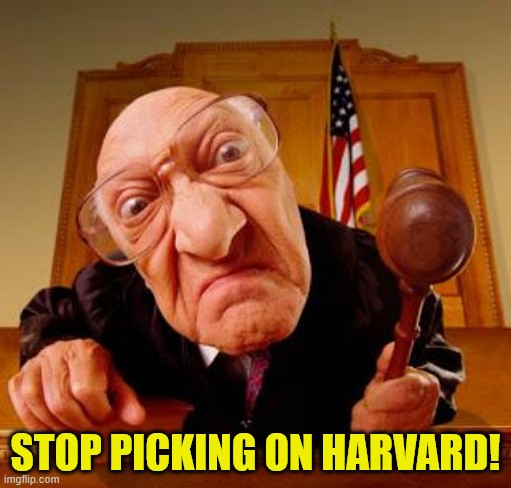
Meme of court judge leaning forward with a scowl on his face and a raised gavel in his hand. Text reads 'Stop picking on Harvard!'

Harvard Court Ruling Could Have Implication for Other Nonprofit Grant Terminations


On Wednesday, a federal district court in Massachusetts ruled that the federal government’s decision to freeze all federal funding to Harvard (one of the oldest and largest 501(c)(3)s in the country), to terminate $2 billion in federal grants to Harvard University, and to prevent Harvard from receiving future federal funding was unlawful. In April, a variety of federal agencies revoked their funding to a wide range of research programs at Harvard because Harvard refused to agree to make changes to bring its university policies and practices in line with Trump Administration priorities and because the federal government alleged that Harvard had not done enough to combat antisemitism on campus. 


Among other things, the court found that the government’s grant terminations were illegal retaliation for speech protected under the First Amendment, placed unconstitutional conditions on Harvard’s receipt of federal funds, and used unconstitutional coercion to force the university to suppress free speech rights. The court invalidated the various funding freezes and grant termination letters that federal agencies have issued to Harvard and issued a permanent injunction preventing federal agencies from issuing similar funding freezes or terminating federal grants to Harvard. In light of the recent Supreme Court ruling in the National Institutes of Health v. American Public Health Association case – which found that only the Court of Federal Claims (not federal district courts) can rule on federal contract claims such as grant terminations – it is unclear whether this week’s court ruling can actually force federal agencies to reinstate the terminated grants. The Trump Administration is likely to appeal the court’s decision.


The Supreme Court’s recent ruling in American Public Health Association creates procedural hurdles for nonprofits seeking to have terminated federal grants reinstated by federal courts. However, this week’s ruling in the Harvard case suggests that it is not legally permissible for federal agencies to freeze funding for, and terminate grants to, nonprofits simply because organizations will not acquiesce to the Trump Administration’s policy priorities.

AmeriCorps Releases Funding for North Carolina Programs


Last Friday, North Carolina Attorney General Jeff Jackson announced that AmeriCorps is releasing all of the North Carolina funds for grants and volunteers that it had withheld at the direction of the Trump Administration. The release of funds comes after a federal judge issued a preliminary injunction in June in a lawsuit initiated by Attorney General Jackson and 23 other state attorneys general directing the Corporation for National and Community Service to stop its efforts to “dismantle AmeriCorps.”

Photo of a squirrel standing on its hind legs with its little arms raised wide in the air and its head thrown back. Meme text reads 'Why does there always seem to be a threat of a federal government shutdown[question mark]'

Federal Government Shutdown Looming in Less Than Four Weeks


Congress has until the end of the month to pass appropriations legislation for the new federal fiscal year (which begins on October 1) or to approve a short-term continuing resolution to avoid a partial shutdown of the federal government. Either measure would require bipartisan support in the U.S. Senate, where 60 votes are needed to consider most legislation. 


President Trump complicated the appropriations process last Friday by issuing a “pocket rescission” that cancels $5 billion in congressionally-approved funding for foreign aid and funding for international organizations. Under federal law, a President typically needs congressional approval within 45 days of issuing a rescission order to cancel funding that has already been approved by Congress. Under a “pocket rescission,” which has not been used since 1977 and which many legal scholars believe is impermissible under the Impoundment Control Act, a President cancels already appropriated funding without congressional approval by issuing a rescission order less than 45 days before the end of the federal fiscal year. Because President Trump’s “pocket rescission” suggests that the President may be able to trump (pun intended!) Congress on some appropriations decisions, Senate Democrats may be less likely to support any appropriations legislation without assurances that President Trump will not rescind other funding approved by Congress.

Reminder: Take Action on Proposed Rule on Public Service Loan Forgiveness Eligibility


Two weeks ago, the U.S. Department of Education formally published a proposed rule on eligibility for the Public Service Loan Forgiveness Program (PSLF) on the Federal Register. Under PSLF, student loan borrowers who work in public service jobs – including positions with 501(c)(3) nonprofits – for 10 years while paying off their student loans are eligible to have the remainder of their federal student loans forgiven. PSLF has enabled many young professionals to afford careers in the nonprofit sector.


The proposed new rule would exclude employers – potentially including some 501(c)(3) nonprofits – from being eligible employers for PSLF if they are engaged in “substantial illegal purposes.” The proposed regulations would define “substantial illegal purposes” to include:

  • Aiding or abetting violations of federal immigration laws;
  • Supporting terrorism;
  • Engaging in chemical or surgical castration or mutilation of children;
  • Engaging in child trafficking;
  • Engaging in a pattern of aiding and abetting illegal discrimination in violation of federal anti-discrimination laws (which could potentially be construed broadly to cover programs and employment practices that provide preferences based on race or proxies for race); and
  • Engaging in a pattern of violating certain state laws, including trespassing, disorderly conduct, public nuisance, vandalism, or obstruction of highways.


Under the proposed rule, the Secretary of Education would have the authority to determine “by a preponderance of the evidence” that an otherwise eligible nonprofit has engaged in activities that have a substantial illegal purpose with only minimal due process for the nonprofit. Once a nonprofit has been deemed to have engaged in activities that have a substantial illegal purpose, it would remain an ineligible employer for PSLF for at least 10 years. The Center is concerned that this proposed rule could affect PSLF eligibility for some nonprofit employees. 


Nonprofits and other interested groups or individuals can submit public comments on the proposed rule through Wednesday, September 17. The Department of Education will then review the public comments and potentially make changes based on submitted comments. The Center is in the process of drafting public comments explaining the importance of PSLF to North Carolina nonprofits and their employees, potential impacts of the proposed rule, and suggestions for ways the rule could be improved.


If these changes potentially affect your nonprofit, here are two things you can do:

  1. Let the Center know: (a) if you or other employees of your nonprofit have benefitted from PSLF or are currently participating in PSLF; and (b) whether any of the categories of “substantial illegal purpose” described above could potentially be applied to your nonprofit or other organizations with which you partner. The Center plans to include feedback we receive from North Carolina nonprofits in our public comments, but we will not identify you or your nonprofit by name unless you specifically request that we do so. Thank you if you have already shared your input with us.
  2. Submit public comments on behalf of yourself or your nonprofit. The Center’s experience is that public comments are most helpful if they: (a) share real-world experience and/or data; and (b) provide specific, constructive feedback on potential changes to the proposed rule. The National Council of Nonprofits has developed a helpful comment guide for nonprofits and nonprofit employees interested in submitting public comments.

OPM Halts Combined Federal Campaign


Last week, the U.S. Office of Personnel Management directed federal agencies to pause the Combined Federal Campaign (CFC), the workplace giving program that enables federal workers to donate to nonprofits through payroll deductions. It is unclear whether the Trump Administration plans to end the CFC altogether or simply to pause it temporarily.


In 2023, federal employees gave more than $1 million to nonprofits in the Carolinas (out of more than $70 million in contributions nationwide) through the CFC. Nearly half of all CFC contributions go to Washington, DC area nonprofits, since that area has the greatest concentration of federal workers in the country.

Lack of State Budget Has Implications for Nonprofits


More than two months into the state’s fiscal year, the NC Senate and the NC House of Representatives remain at an impasse on details of the state budget for FY 2025-27. North Carolina law allows state government operations to continue at their current funding levels if legislators and the Governor are unable to agree on a new state budget, so a state budget is not technically a "must pass" bill since the state government will not shut down without a new state budget. However, the lack of a budget has a variety of consequences for state government operations, for nonprofits, and for North Carolinians. The NC Budget and Tax Center has a helpful analysis of the implications of not having a full state budget in place, including the ways that it affects health care, child care, disaster recovery, and public education. 


The NC General Assembly is scheduled to return to Raleigh later this month for a three-day mini-session on September 22-25. It is possible that legislators could pass a full budget during that mini-session.

Your 2025 Local Elections Toolkit Is Live


You Can Vote (YCV), a trusted partner of the Center, recently launched its 2025 local elections toolkit. Nonprofit can empower your community by sharing the emails, posts, and graphics in the toolkit from now through Election Day. Now more than ever, voters need fact-based information from trusted messengers to make their vote count. Sign up to download this resource and become a YCV Voting Rights Champion! Champions receive updates when the law changes or new information needs to be distributed. Sign up today and spread the word! 

North Carolina Center for Nonprofits
Facebook  LinkedIn

Nonprofit Policy Update is the weekly newsletter of state and federal policy issues that affect 501(c)(3) nonprofits from the North Carolina Center for Nonprofits. Learn about the Center's public policy agenda or contact David Heinen, Vice President for Public Policy and Advocacy, for more information.


Current Center Member? Access your benefits or create your account.

Not a Center Member? Join now.

Not a 501(c)(3) org? Support or affiliate with the Center.

If a colleague forwarded this message to you, sign up for our emails.


©2025 North Carolina Center for Nonprofits