|
|
Preventing Trauma
and Its Consequences:
A Series
|
|
In this Issue:
- Preventing Trauma and its Consequences
- Additional Resources
- What's Happening Around the Region?
- Upcoming Events
- Data Collection During the Pandemic, January 26
- SAMHSA's Annual Prevention Day, February 1
-
Epi Corner: Adverse Childhood Experiences: Implications for Prevention
|
|
Preventing Trauma and its Consequences
We have all been negatively affected in some way in 2020, after witnessing historic social unrest and violence while living through a global pandemic that persists longer than imagined. As a result, trauma and its consequences in our communities are rising.
This year as we reflect on the difficulties, and also the unforeseen opportunities, of 2020, we bring into the new year the lessons learned and a resolve to make this year better. As leaders in public health and professionals in behavioral health, we may ask, what we can do to prevent so much hurt that multiplies. The great news is that prevention does work and our efforts have a positive impact! We have the science and the tools to support that statement. Preventionists have a role to play in helping our communities grapple with the collective trauma of the past year.
As the South Southwest Prevention Technology Transfer Center continues to focus on addressing trauma and disasters in 2021, we will bring you a unique training series on the prevention of Adverse Childhood Experiences and include special topics of interest on trauma. We invite you to look through some of the resources already available on our website. The monthly newsletter will complement the webinar topics and provide additional resources to increase the capacity of the field to provide effective prevention strategies.
Finally, can we invite you to add one small thing to your New Year's resolution list? Many of us begin our day with a To-do list. We’d like to invite you to do something to improve your own health. At 4:45 p.m. or just before the end of your work day, make a list of your “ta-da’s”, as in, “Ta-da! This is what I have accomplished today!”
We wish you the best in 2021 and want you to know we are here to support you and your efforts!
|
|
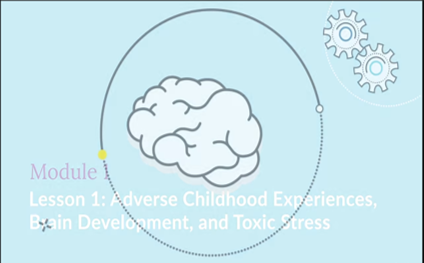
For a quick introduction to Adverse Childhood Experiences, click on the brain image to watch the first part of this training created by the Center for Disease Control and Prevention, What are Adverse Childhood Experiences, Preventing Adverse Childhood Experiences (ACEs) Online Training Module 1 Lesson 1
|
|
|
Additional Resources on ACE's |
|
Centers for Disease Control and Prevention / Injury Center
Full of resources, such as publications, journal articles, data sources, and general description of ACEs, including strategies for prevention.
Centers for Disease Control and Prevention / Injury Center
Explores risk factors (things that increase the likelihood of experiencing ACEs) and protective factors (things that protect people and decrease the possibility of experiencing ACEs). Looking at risk and protective factors in your community will help you develop evidence-based prevention strategies that will have an impact on lowering ACEs in your community.
The National Child Traumatic Stress Network
This three-page infographic defines the problem of child trauma using data, describes its signs and impact, and recommends strategies for helping individuals and communities heal from trauma.
National Hispanic and Latino PTTC
This webinar provides an overview of Adverse Childhood Experiences and its impact on population health with the emphasis on the prevention of ACEs in the Hispanic and Latinx communities by fostering resilience and building self-healing communities.
|
|
Virtual Bytes:
Implementing Prevention Services in a Virtual Setting
|
|
In response to your requests from the Changes in Prevention Practice During the COVID-19 Pandemic survey conducted by the South Southwest PTTC May through June of 2020, we will continue to share training, information, and resources related to conducting prevention services in a virtual setting.
It's Time for A Relationship Checkup
The Search Institute’s research demonstrates that when young people experience developmental relationships with parents, educators, youth program staff, and other adults, their outcomes are better, their risk behaviors are lower, and they are more likely to be on the path to thrive in life. Families that engage in fun, positive activities together are also creating protective factor’s against ACEs.
With Valentine’s Day around the corner, we’re sharing relationship check in tools and suggestions to help you recognize how you can reach out to the youth in your life and how you can keep your personal relationships strong despite the challenges you may face with COVID-19 restrictions.
Search Institute
Complete this quick Relationships Check to see where your relationships with important young people in your life are particularly strong and where they can grow. You’ll receive actionable approaches and activities to strengthen relationships with young people.
Search Institute
Every time you take one of the relationship-building steps in this checklist in the critical weeks ahead, place a check next to it and know that you have made a valuable contribution to helping young people weather this storm.
UC Berkley / Berkley News
UC Berkeley experts with decades of research and clinical expertise in intimate and family relationships provide tips on how to keep your cool amid COVID-19 cabin fever.
|
|
The South Southwest PTTC is currently suspending in-person training and meetings until further notice. Take advantage of our many virtual products and services available for free from our website.
|
|
What's Happening Around the Region? |
|
Data Collection During the Pandemic
Presented by South Southwest Prevention Technology Transfer Center
The pandemic makes in-person data collection difficult. The two-session webinar by the SSW PTTC will provide researchers and preventionists real-life examples of ways to adapt quantitative and qualitative data collection methods during COVID-19. Webinar participants will have the opportunity to discuss barriers, solutions, and lessons learned related to data collection during this critical time.
QUANTITATIVE Data Collection During the Pandemic
Session 1
Previously Recorded
Participants in this webinar explored ways to effectively adapt quantitative data collection methods during the pandemic, specifically addressing confidentiality concerns with participants during online quantitative data collection.
QUALITATIVE Data Collection During a Pandemic
Session 2
Tuesday, January 26, 1:30-3:00 p.m. CT / 12:30-2:00 p.m. MT
Participants in this webinar will explore ways to effectively adapt qualitative data collection methods during the pandemic, specifically addressing confidentiality concerns with participants during online qualitative data collection.
|
|
Substance Abuse and Mental Health Services Administration (SAMHSA)’s 17th Annual Prevention Day
Monday, February 1
Providing an opportunity for communication and networking between prevention practitioners, community leaders, researchers and consumers in the behavioral health field, Prevention Day will feature SAMHSA’s leadership who will discuss the agency's prevention priorities for the coming year. Other dynamic speakers will be featured to discuss evidence-based preventive interventions and findings from the latest developments in the areas of substance use and misuse prevention, treatment, recovery and mental illness.
|
|
Prevention Online Courses
Free online courses are available through the Prevention Technology Transfer Center.
If you are new to prevention, be sure to take the course, "Introduction to Substance Abuse Prevention: Understanding the Basics (Pre-SAPST)".
|
|
|
Epi Corner
Iris Smith, Ph.D., M.P.H.
South Southwest Prevention Technology Transfer Center
|
|
Adverse Childhood Experiences: Implications for Prevention
Exposure to traumatic experiences during childhood, or adverse childhood experiences (ACEs), is not uncommon. A recent secondary analysis of data from Behavioral Risk Factor Surveillance System (BRFSS) data collected from 25 states estimated that 1 in 6 or 15.6% of the study sample reported four or more types of ACEs. Health outcomes associated with exposure to ACEs included asthma, chronic obstructive pulmonary disease, cancer, depression, alcohol use, obesity, smoking, lower educational attainment and lack of health insurance.1 Between 1998, when the original study by Felitti, Anda & Nordenberg was published, and 2020, there have been numerous published research studies on the effects of ACEs on physical and mental health outcomes.2 A bibliometric analysis of publication trends by Struck et al (2021) identified 789 articles on ACEs appearing in 351 different journals between 1998 and 2018.3 The body of research has included both retrospective and longitudinal studies.
The good news is that several types of ACEs have declined during the 20th century including parental death, parental illness, sibling death and poverty. However, parental divorce, drug abuse, and incarceration increased. Parental alcohol and drug abuse in particular have shown upticks into the 21st century.4 In comparison with other countries, the U.S. ranks 26th out of 30 on a composite indicator of child well-being, lagging on measures of infant and child mortality, child poverty, and overall physical health.4 Reducing ACEs is a priority for the prevention of a number of negative outcomes across the lifespan.
Potential data sources for tracking risk for ACEs include the National Survey of Children’s Exposure to Violence (NatSCEV), the National Intimate Partner and Sexual Violence Survey (NISVS), the National Survey of Children’s Health (NSCH), and the Youth Risk Behavior Surveillance Survey (YRBSS). These data may suggest opportunities for prevention targets and strategies.
Resources
Oh DL, Jerman P, Boparai PB, Koita Kadiatou, Briner, Bucci M& Harris NB (2018). Review of Tools for Measuring Exposure to Adversity in Children and Adolescents. Journal of Pediatric Health Care, 32 (6); pg.564-583.
________________________________________________________
1Merrick MT, Ford DC, Ports KA, Guinn AS, Chen J, Klevens J, Metzler M, Jones CM, Simon TR, Daniel VM, Ottley P, Mercy JA (2019). Vital Signs: Estimated Proportion of Adult Health Problems Attributable to Adverse Childhood Experiences and Implications for Prevention -25 States, 2015-2017.Morbidity and Mortality Weekly Report, 68. Centers for Disease Control and Prevention, Department of Health and Human Services.
2Felitti VJ, Anda RF, Nordenberg D, Williamson DF, Spitz AM, Edwards V, Koss MP (1998). Relationship of Childhood Abuse and Household Dysfunction to Many of the Leading Causes of Death in Adults. The Adverse Childhood Experiences (ACE) Study. American Journal of Preventive Medicine 14, pg. 245-268.
3Struck S, Stewart-Tufescu, Asmundson AJN, Asmundson GJ & Afifi TO. (2021). Adverse Childhood Experiences (ACEs) research: A Bibliometric Analysis of Publication Trends Over the First 20 Years. Child Abuse and Neglect 112, pg.
4Finkelhor D (2020). Trends in Adverse Childhood Experiences (ACEs) in the United States. Child Abuse & Neglect, 108, pg. 104641. https://doi.org/10.1016/j.chiabu.2020.104641
|
|
|
|
|
|
|