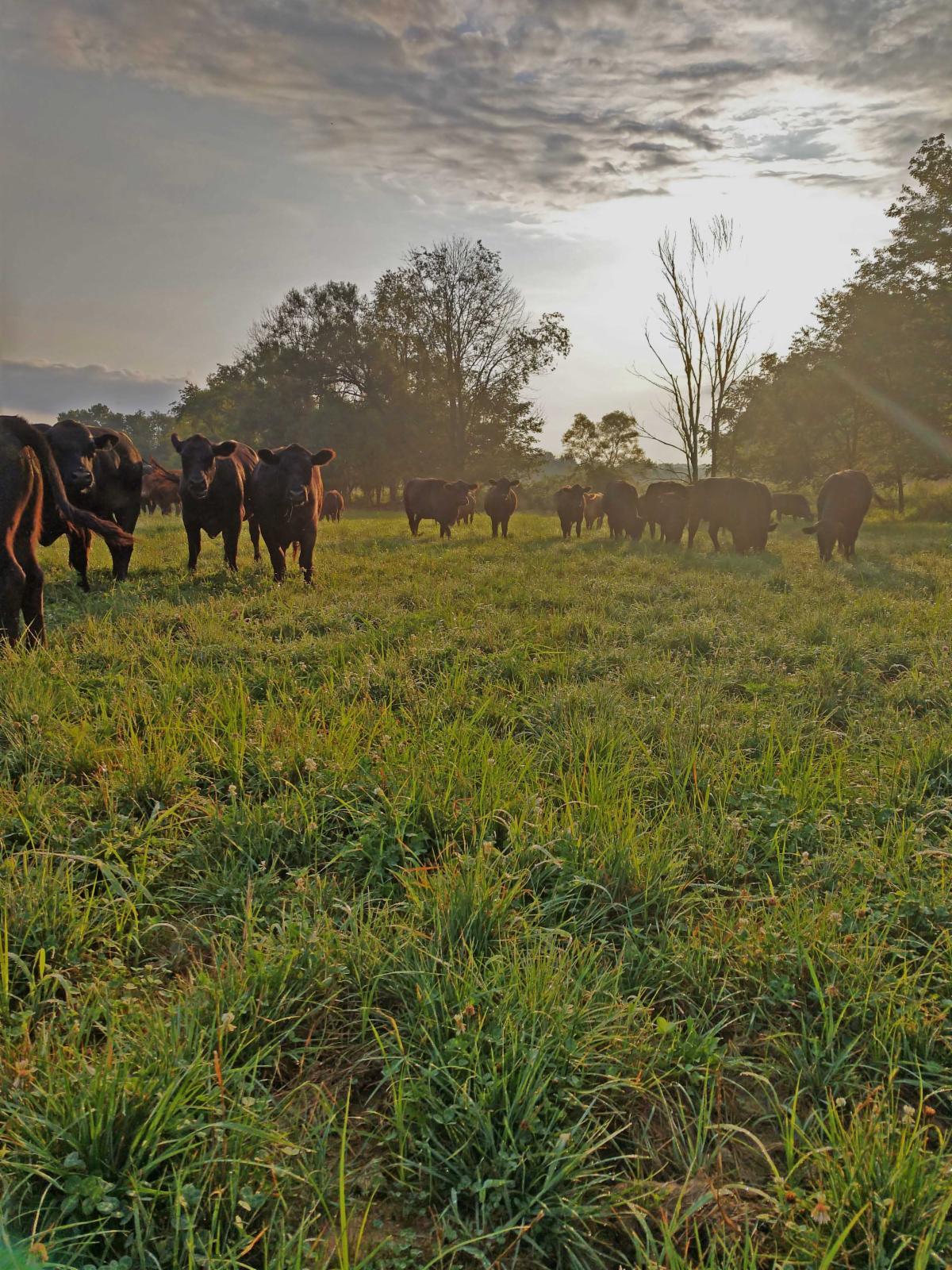
With frost upon us, grazers must be careful. Frost causes certain forages to change their chemical structure. Sorghum and sorghum-sudan grasses, which aren't very prominent around here, are notoriously dangerous for producing prussic acid - a form of cyanide - which can kill cattle within minutes. The grazer must wait for the grass to dry out, a week or two, or harvest it for hay before giving it to cattle.
Legumes like white clover, red clover, and alfalfa are much more common in pasture mixes and hay fields. However, pastures too rich in legumes are always at risk for what is called "bloat." Bloat in layman's terms is a stomach ache where the cow can't burp or fart. The gasses then build up in the rumen - the bovine fermentation tank - eventually making the animal swell up, putting pressure on the lungs. Eventually, the cow can't breath and dies.
Yeah, it's scary stuff. Generally, bloat is of greatest concern in the spring when the beef cows go from poorer quality winter forage to extremely rich spring grasses. As the summer progresses, their bodies become used to this diet and the risk is minimized.
But by fall, the grasses and legumes don't grow back as fast, and as we try to stretch the grazing season the cattle are grazing younger and more tender forage. This is also the highest protein forage. Then, a frost will change the way the plant is digested. The cell walls break or weaken, making certain minerals more rapidly available. Minerals like potassium and calcium and manganese, all which in excess can contribute to bloat.
Each day as we move the beef we cross our fingers. They want to eat the very rich stuff. So what else can we do? We add dry hay and give them very little fresh pasture in the morning. By lunch, the frost has burnt off and hopefully their bellies are full of roughage. They can then more safely graze the rich, young growth in the pasture.