What Is The Doctor Reading


Our last newsletter provided a public service of vaccine review to allow people a better "informed consent". I have been perusing the literature and wanted to share a few items I feel are newsworthy to our general membership. Also, there are a couple of services we offer that I wanted to update our readers about. I wish to again remind the readers that clicking over the blue font text will direct you to links with specific and supplemental information if you want to dive deeper.


Artificial Sweeteners Aren't Inert

In a recent New England Journal Editorial titled: Sucralose and Erythritol -Not Too Sweet, the authors report basic research findings that illustrate artificial sweeteners in our food products appear to be affecting immune function (sucralose) as well as increasing platelet aggregation (erythritol).


This information has implications for tumor growth promotion and cardiovascular events. Further, gut bacterial host environments can be affected as well.


When I studied physiology in college and medical school, it was felt that the stomach and small intestine were sterile environments. Digestion occurred primarily through mechanical and chemical work on ingested food.


We are now learning that the small bowel does harbor a functioning microbiome (microbes that are biologically active and contributing to digestion as well as genetic expression, and epigenetic/biological function switches in the body).


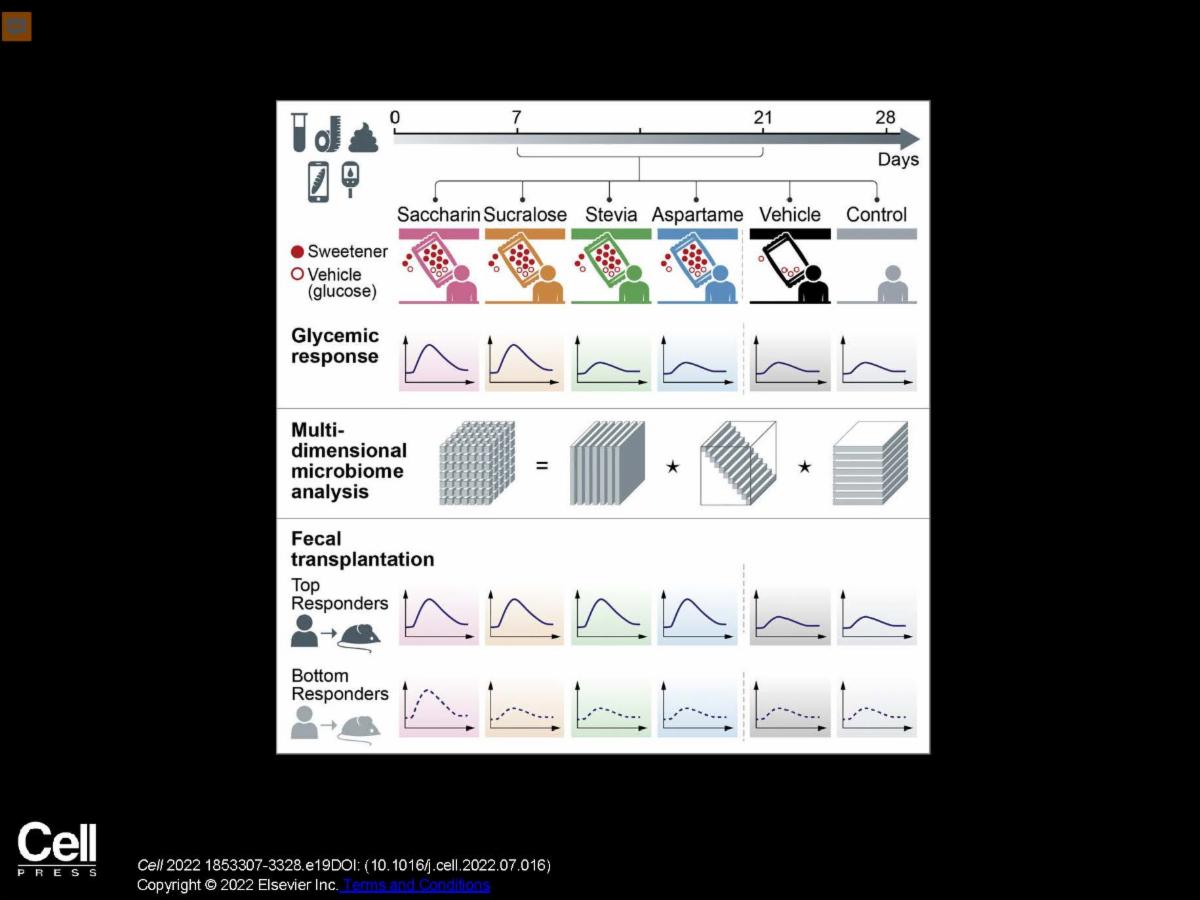
The photo at the beginning of this article is from an article referenced in the editorial. This 45 page study, using sophisticated techniques measured metabolic, metabolomic, and microbial parameters over time as human subjects were exposed to 4 common "sugar substitutes".


They found that:


1) Saccharin and sucralose detrimentally affect glycemic (blood and cell sugar) response in humans.


2) Effects of saccharin, stevia, and aspartame on the microbiome correlate with glycemic effects.


Bottom line take home message:


Contrary to popular belief, artificial sweeteners are not sugar substitutes that have no affect on human metabolism. I recommend people not consume these products as there is basic science research indicating biological effects on immunity and glucose regulation. Further, it is demonstrated that people often gain weight when using these products.


The longer I practice medicine, the more I am realizing that the human digestion process is more like the ruminants (cows with multiple stomachs) than we ever thought. The food we eat gets acted upon by intestinal cohabitating bacteria and other microbes. This results in yet to be understood caloric efficiency differences between people. Immunologic and hormone regulation signaling are also altered. Even gene expression is affected by the gut bacteria in the human host. What we eat appears to affect how that process interacts.


For optimal nutrition and to assist in weight control, I recommend some basic strategies:


  • Eat low to the ground- locally grown and fresh produce.
  • Avoid packaged foods- they took the nutrients and added softeners/chemicals etc to get the product to you. This makes those sources calorie dense and nutrient poor.
  • Buy organic when you can- and don't be fooled by incomplete labeling claims.
  • Weigh yourself weekly. Don't drift upward.
  • Drink a glass of water before and with each meal.
  • Set reasonable activity/exercise goals and commit to them.
Aggressive young man in glasses screaming and tearing off his shirt over blackboard background

A recent review from the Annals of Internal Medicine looked at factors associated with circulating sex hormones in men.


Here are some interesting tidbits:


  1. Until the age of 70, there is no difference in average male measured testosterone levels.
  2. Median testosterone concentrations were in the range of 357-588 ng/dl.
  3. Married men had on average lower testosterone levels than single men. This makes sense (less mate competition).
  4. Having cancer was associated with lower testosterone levels.
  5. Being overweight (Body Mass Index) over was noticeable after 27.5.
  6. Low HDL levels were associated with lower testosterone.
  7. Higher blood pressure was associated with lower testosterone.
  8. Smoking was associated with higher testosterone levels. Interesting observation and hypothesis generating.
  9. Alcohol frequency and amount has a minor negative effect on testosterone levels.
  10. Diabetes and cardiovascular disease are both associated with lower testosterone levels (see prior comments about HDL cholesterol, weight, blood pressure etc). Clearly being unhealthy results in lower testosterone levels in men.


It would appear that the popular use of testosterone supplementation especially with high serum targets (over 800) aren't supported by the natural testosterone production in the average population.


The idea that age adversely affects testosterone isn't measurable until 70 years of age or older. This is supported by the fact that the testosterone stimulating hormone called luteinizing hormone isn't associated with an upward trend until age 70 or older in men as well. This suggest "manopause" happens at age 70 on average.


There is an age association with higher estradiol levels (female hormone) in the men under age 70. Likewise sex hormone binding globulin levels rose with age. This suggests it is possible some subjective changes in libido and energy in aging men may be due to altered estrogen effects and/or less testosterone receptor activity.

Dr. Kordonowy and Dr. Marconi thank you for allowing us to be your doctors!

Vaginal Smear

Cervical Cancer Screening Update

A recent JAMA Review article discussed contemporary guidelines for cervical cancer screening.


This topic comes up frequently in regular medical practice/primary care. There have been some advancements and further clarity on cervical cancer risk and methods of monitoring.


Facts:

  • in the US, approximately 100,000 women per year are treated for cervical precancer.
  • 14,000 women per year are diagnosed with cervical cancer.
  • Annual US mortality from cervical cancer is just above 4,000 women.
  • 97% of all cervical cancer worldwide contained at least 1 of 13 carcinogenetic Human Papilloma Virus strains.
  • Data indicates approximately 90% protection for HPV infection following HPV vaccination if done by age 14. Protection is at least 15 years.


Screening recommendations:

  • No screening needed prior to age 21.
  • Screen any patient age 21-65 who has a uterus and last screening was 5 years or later.
  • Screening should be for HPV- testing for the virus that causes cervical cancer.
  • Immunosuppressed patients should be screened at 5 year intervals.
  • Combination cytology (pap) and HPV is indicated if HPV is detected. Additional screening intervals and procedures are based upon result-directed cancer risk. This is done by gynecology specialty referral/follow-up.
  • No need to screen if under age 21, removal of cervix with hysterectomy and no prior history of cervical cancer or high grade cell atypia on cytology.
  • No need to further screen if age over 65 and 2 or more negative HPV tests in the past 10 years.


Some nuances from the updated data is that persistent HPV infection with certain oncogene changes affecting normal cellular death and replication is the cause of cervical cancer. Latest data shows this with even higher certainty based upon pathologic specimen analysis. Further, it takes several years for these changes to result in overt cancer pathology. The number of HPV strains associated with cancer risk are identified and can be tested on HPV screening of cervical tissue. Noting the immune system is what "handles" HPV infection, women on immunosuppression therapy require ongoing screening at 3-5 year intervals.


Actual mortality from cervical cancer is low overall as to causes of death. The death rate in the United States dropped by around 50% since the mid-1970s, partly because the increase in screening resulted in earlier detection of cervical cancer. We can expect this to improve further due to advanced screening protocols and HPV vaccination.


Galleri Cancer Detection Test


It has been over a year since I informed our patients about the Multi-Cancer detection blood screening assay offered by the Galleri test. .


Noting that our practice was an early adopter of this test, Galleri is offering a discount on the cost of this test for our patients. This offer is gone after Mid November. If you are interested in having this test performed kindly contact us to schedule a discussion appointment to see if this is appropriate for you. Age is a primary discriminatory factor in considering this test. It is not advised for persons under the age of 50.


The PathFinder Study was conducted to assess the utility/outcomes from using this blood assay. The assay screens for signature DNA fragments unique to cancer cells. If detected, further testing is done to help differentiate which cell types are likely to be the source.


The results of a positive test would likely lead to further testing, usually focused imaging. It has a positive predictive value of 44.9%. This means cancer is found in just under 1/2 of those with an abnormal result.

99.5% specificity was noted. This means 5 out of 1000 results were considered false positive results. 71% of the cancers detected were found for cancer types not routinely screened for. My review indicates this test has higher predictive valued for gastrointestinal tumors such as liver, gallbladder, esophageal and pancreas.


Pure Encapsulations

Pure Genomics Program from Pure Encapsulations.


I have offered this service to at least 80 patients since I first became aware of this program.


I have also found the results to be remarkably consistent with what I am seeing clinically with tested patients.


Using raw genetic data from 23 and Me patient results, Pure Genomics' proprietary Artificial Intelligence filter provides customized reports based upon your genetic variants. As more genetic information has been accumulated, we are becoming aware of common variants that affect optimal health. Gene coded pathways for weight control, nutritional deficiency susceptibility and neurochemistry pathways are now recognized.


For our wellness motivated patients, this can provide individualized, actionable dietary and lifestyle guidelines. It can often help us doctors understand how certain supplements or nutraceutical products or programs can benefit in your health program and goals. It even helps understand or focus on unrecognized diagnoses.


If you have had a 23 and Me test already uploading your data is no cost to you. If you want to be invited to Pure Genomics to register for the program just let us know. We will need to schedule report review appointments after the data is provided and uploaded.


I have noted recently 23 and Me themselves are offering a health and wellness feature. I haven't engaged in this program and am unsure how they propose to help you monitor your health.


Other Updates/House Business


Most of our newsletter readers are getting my Substack posts via email. You can upload the Substack phone app if you want to see notes posted from me and other Substack writers. I am convinced this social media blog service is gaining wider audience. It was born out of The Free Press and other reporters and authors of all types who were censored from normal social media such as Linked In, Twitter (now X) and Facebook.


I have written three posts regarding Lee Health's pursuit of seeking private not for profit status. This is their response to upcoming hospital competition in Lee county. HCA Health Care is anticipating breaking ground early in 2024 to provide us a competing hospital system. Lee Health recently pivoted away from their commitment to start another near to HCA hospital location, coincident with their decision to seek governance change. If governance change occurs, this means the charter that they have enjoyed for decades will be removed from their responsibility.


I encourage Lee county citizens to read my three posts on this topic and follow on Substack for more and other health economics commentary.


I also encourage you to share this information far and wide. I am hopeful that our local media begins to cover this topic since it has wide implications for our citizens and especially our health care workers and doctors. If they are affected, it means patients will be as well.


Internal Medicine Lipid & Wellness are now listed with two national health sharing entities as preferred Direct Primary Care providers to their reginal health sharing members. Health sharing cooperatives recognize that our and the DPC membership model is the solution to accessing responsible primary health care with the ADDED benefit of saving members and their cooperative mission money.


After all the years of observing the health care industry and health insurance, I believe Health Sharing is the answer to our societies health care concerns. I offer this option for helping my staff with their health care costs and will not condone my business dollars to the BUCA's (Blue Cross, United, Cigna and Aetna) cartels. Being financially sound is a big factor in an individual's health. I believe that health sharing is a great alternative to the current traditional health care model.


I hope everyone finds this newsletter helpful.


To your health!


Dr. Kordonowy MD

 
Facebook  Twitter  Instagram