Monthly News & Updates


January 2024 | Issue 1 

Happy New Year!


Join or

Renew

Spring Class

of Fellows

Awards & Grants

Annual Meeting

Register for One World


Stephan Lewandowsky Assumes Role as

Chair of the 2024 Governing Board

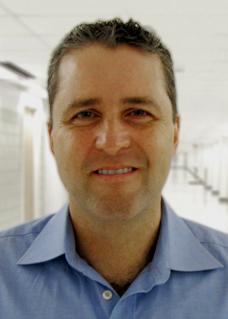
The Psychonomic Society is pleased to announce that Stephan Lewandowsky, University of Bristol, UK, has assumed the role of Chair for the 2024 Governing Board. Lewandowsky, a member for over 30 years as well as a Fellow of the Society, has been an integral part of the Governing Board since January 2020, contributing significantly by serving on most of our committees and chairing the Finance, Diversity & Inclusion, and Communications Committees.


Prior to joining the Governing Board, Steve served as the inaugural Digital Content Editor from 2014-2019, producing 100s of articles showcasing the work of our members to the public. Steve fostered strong relationships between US and European scientists and had a tangible impact on increasing membership growth outside of the US, particularly in Europe. Steve's strategic thinking and profound understanding of the Society and field will be instrumental as the Society furthers its mission and global impact. Steve emphasized the pivotal nature of this time, stating "We are facing many challenges that require dynamic and innovative solutions. However, these challenges also present opportunities for our collective research to advance our understanding of cognition and contribute to transforming lives."


Biography

Stephan Lewandowsky is a cognitive scientist at the University of Bristol and the recipient of numerous awards and honors, including a Discover Outstanding Researcher Award from the Australian Research Council, a Wolfson Research Merit Fellowship from the Royal Society, and a Humboldt Research Award from the Humboldt Foundation in Germany. He is a Fellow of the Academy of Social Science (UK) and a Fellow of the Association of Psychological Science. He was appointed a fellow of the Committee for Skeptical Inquiry for his commitment to science, rational inquiry and public education. He also holds a Guest Professorship at the University of Potsdam in Germany. More.


2024 Governing Board

The Society extends a warm welcome to Eva Van den Bussche, KU Leuven, Belgium, who becomes the Chair-Elect and newly-elected members Kristi S. Multhaup, Davidson College, USA, and Claudia von Bastian, University of Sheffield, UK. Click here for a complete list of the 2024 Governing Board. The Governing Board serves as the organization's board of directors, responsible for the business, organizational, and legal affairs of the Society.


PS One World Seminar Series Presents

Arturo Hernandez on January 24

Sensorimotor plasticity and cognitive flexibility: A Neuoremergentist approach


Speaker: Arturo Hernandez

University of Houston, USA


January 24, 2024

11:15 AM - 1 PM U.S. Eastern Time | Register Now


Abstract

Neuroemergentism, (NM) is a novel framework which has sought to consider language development as involving the organization and reorganization of cognition and its underlying neural substrate. Work to support this framework comes from studies of language and cognitive development. In this talk, I will focus on two separate levels, the sensorimotor plasticity needed to adjust to new input and the cognitive flexibility needed to select between these competing sources of information. More.


All talks in the One World Seminar Series are underwritten by the Psychonomic Society and made available free of charge. The Psychonomic Society is committed to programmatic accessibility and has secured ASL interpretation and quality closed captioning for all One World events in the 2023-2024 schedule.


Graduate Student & Postdoc Committee (GSPC)

The Governing Board is accepting applications from graduate students and postdocs who want to foster the development of trainees in the field through the inaugural Graduate Student and Postdoc Committee!


Learn more and apply by January 31, 2024.


Spring Class Fellows

Applications Due March 1

Fellowship in the Society recognizes members with clear evidence of independent scholarship, rigorous and compelling research, and demonstrated experience conducting and supervising scientific research in cognitive and experimental psychology. Becoming a Fellow:


  • Ensures your submissions to the Annual Meeting receive top priority as spoken presentations
  • Enables you to sponsor two abstract submissions by a Graduate Student Member, Undergraduate Student member, or a non-member
  • Participate in the annual election, join committees, submit award nominations, and proposals for the workshops and symposia


Self-nominations for the Spring Class of Fellows are due March 1. More.


2024 Award

Call for Nominations

The Governing Board created a range of awards with the aim of recognizing individuals who have made outstanding contributions to advancing the experimental study of cognitive psychology in various stages of their career. Members (Fellows and Members) are invited to nominate outstanding scientists in our field for the 2024 Early Career Award, 

Mid-Career Award, and Clifford T. Morgan Distinguished Leadership Award. Nominations are due March 31.


Clifford T. Morgan Distinguished Leadership Award

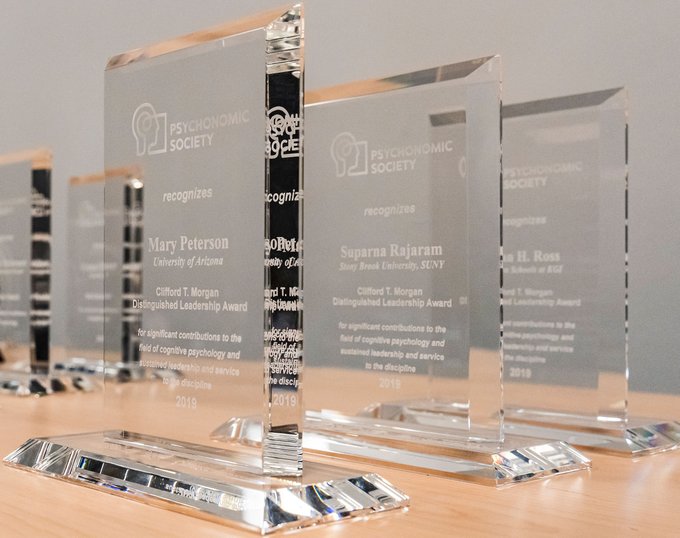
The Psychonomic Society's Clifford T. Morgan Distinguished Leadership Award annually recognizes up to two deserving candidates who have demonstrated significant contributions to the field of cognitive psychology, been in the field for 10+ years, and modeled sustained leadership and service to the discipline. Recipients will be formally recognized at the 2024 Annual Meeting and will be presented with an award and up to $1,000 USD in travel reimbursement upon request. Learn more and submit a nomination.


Mid-Career Award

The Psychonomic Society Mid-Career Award is given for exceptional contributions to the field of experimental and cognitive psychology and related areas by an individual who is currently in the middle of their career. Recipients will be formally recognized at the 2024 Annual Meeting and will be presented with an award and up to $1,000 USD in travel reimbursement upon request. Learn more and submit a nomination.


Early Career Award

The Psychonomic Society Early Career Award is given annually to up to four scientists who have made significant contributions to scientific psychology early in their careers. Recipients will be formally recognized at the 2024 Annual Meeting and will be presented with an award and a $2,500 USD cash prize. As the 2024 Annual Meeting will be held in-person, recipients' airfare to the meeting is also covered. Learn more and submit a nomination.


Welcome to Our New

Science Communication Interns!

Our science communication interns produce approximately six articles during their term that effectively and engagingly convey the scientific research conducted by our members and published in our journals. The posts are written for our members and the general public and will appear on the Society's Featured Content blog.

Daniel Pfaff

University of California, Santa Cruz, USA

Bio

Hannah Mechtenberg

University of Connecticut, USA

Bio


Psychonomic Society Journals


The impact of AI errors in a human-in-the-loop process

By Ujué  Agudo, Karlos G. Liberal, Miren Arrese & Helena Matutei

Participants decided about the guilt or innocence of numerous defendants. An Artificial Intelligence system gave judgements before or after participants made their judgements. When participants received inaccurate AI support, especially before making their own judgement, accuracy was decreased. Read this paper.


Drawing improves memory in patients with hippocampal damage

By A. Levi, A. Pugsley, M.A. Fernandes, G.R. Turner & A. Gilboa

Levi et al. investigated the memorial benefits of drawing for patients with hippocampal damage and controls. Participants studied a word list and had to draw or repeatedly write the word. Next, they took a memory test. The control group and hippocampal patients had better memory for words drawn vs. written. Read this paper.


How experts and novices judge other people's knowledgeability from language use

By Alexander H. Bower, Nicole Han, Ansh Soni, Miguel P. Eckstein & Mark Steyvers

To what extent can we gauge someone else's knowledge? A group of participants responded to general knowledge questions, and another group ("evaluators") determined which participants were more knowledgeable. The evaluators had above-change performance in identifying the most knowledgeable participants. Read this paper.


Recently Published


Behavior Research Methods

Volume 56, Issue 1


Attention, Perception, & Psychophysics

Volume 86, Issue 1


Learning & Behavior

Volume 51, Issue 4


Psychonomic Bulletin & Review

Volume 30, Issue 6


Behavior Research Methods

Volume 55, Issue 8

Featured Content blog

Interview with new science communications intern Daniel Pfaff


Interview with new science communications intern Hannah Mechtenberg


It's five o'clock somewhere, but where? Uncovering our spatial representations of time


Color me happy: Helping visuospatial abilities develop

New Guidelines and Submission Process for Special Issue Proposals


Review the new guidelines here.

Abstracts in Languages other than English


The Psychonomic Society welcomes and encourages authors to submit manuscript abstracts in languages other than English. Authors should place the additional abstract immediately below the English-language abstract in the manuscript. If the manuscript is accepted, the additional abstract will be published alongside the English abstract. Please note that we cannot do any copyediting to the additional abstract.


Job Postings


PS Career Center

Find a Job. Post a Job.

PS Career Center
 

Renew Your PS Membership


PS Members

Login to your member profile to renew.

PS members attend the Annual Meeting for FREE. Membership also gives you complimentary access to all seven PS journals, the chance to submit proposals for exclusive PS funding opportunities, and more.

Renew or Join Today
 
Facebook  X  LinkedIn  YouTube

Website | Contact Us