BNSF threatens Preemption as if it is a done deal - Is it though? NO!
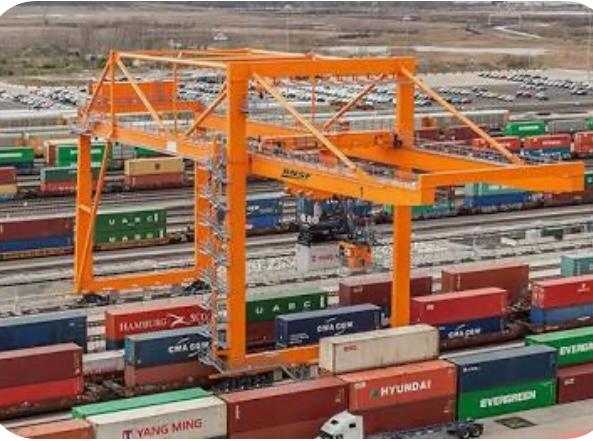
BNSF is proposing a large logistic hub/intermodal facility in Wittmann, Arizona that would involve rail‐served tracks, yard infrastructure, transfer facilities, 19 warehouses, truck/rail interchange, and so on.
This is a major project with significant local impact: traffic, land-use, zoning, environmental concerns, community opposition.
Because the facility is tied to interstate freight rail operations, federal law around railroad regulation and preemption plays a central role in how local/state governments can regulate it. BNSF has told the Maricopa County Board of Supervisors - We can move forward with the project under preemption. That is partially true. BNSF can use another avenue to get the intermodal hub they want should the BOD vote NO. So what exactly is preemption?
The Legal Basis
- Under the Interstate Commerce Commission Termination Act of 1995 (“ICCTA”) and related statutes, the Surface Transportation Board (STB) has exclusive jurisdiction over “transportation by rail carriers” as well as construction, acquisition, operation, or discontinuance of rail facilities.
- Section 10501(b) of title 49 U.S.C. preempts state or local regulation with respect to rail transportation and facilities when applied to a carrier.
- The basic definition is: if local land use, zoning, permitting or preconstruction review significantly interferes with rail carrier operations, they may be preempted.
What local governments can and cannot do
- Local governments can still exercise police‐power regulation for health/safety (e.g., building codes, fire safety) so long as they do not unduly interfere with a carrier’s operations.
- However, requiring full local permit reviews, zoning changes that effectively block or impose undue burdens on a rail facility, or applying regulations aimed specifically at rail operations, are more likely to be preempted. E.g., permits for a transload facility were held preempted.
How the Process Would Play Out in Wittmann (Step-by-Step)
1. Local Land Use/Permitting Review
- Because the area is unincorporated, Maricopa County has land‐use & zoning authority.
- BNSF must apply for rezoning or special land‐use permit to allow the intermodal hub facility. Indeed, the information session states BNSF “is requesting changes to the current zoning to accommodate this state-of-the-art facility”.
- The County and possibly other local bodies will conduct public hearings, (state/local level), traffic/air quality studies, etc. Residents will have opportunity for input.
- At this stage, local officials and residents raise concerns (traffic, environmental, property values) as has been reported.
2. Claim of Federal Preemption by BNSF
- Because the facility is a rail‐carrier‐served intermodal hub (i.e., tracks, switching, yards, transloading), BNSF may assert that certain local/regulatory requirements are preempted under ICCTA and federal law.
- They would assert that requiring their rail facility to undergo the full local land‐use or permitting review, or be blocked by zoning changes, is interfering with interstate rail transportation by a rail carrier.
- At this point, BNSF may file with the STB for a declaratory order or ask for the STB’s view on whether local regulations are preempted. Alternatively, they may commence site acquisition/development and rely on the preemption defense if local regulation challenges occur.
3. Local Government Response & Legal Review
- The County may attempt to apply zoning, environmental review, traffic/air-quality mitigation, and other conditions. Local opposition groups will likely challenge the project in hearings, comment sessions, and possibly file lawsuits.
- If local government regulations or decisions impose burdens that BNSF believes unduly interfere with its rail operations (e.g., outright denial of zoning, requirements that prevent efficient switching/trucking/rail operations), BNSF may mount a legal challenge citing federal preemption.
- Legal issues include: is the facility reasonably integral to interstate rail transportation (so that the preemption applies)? Are the local regulations “regulating rail transportation” rather than legitimate health/safety regulation? Courts use “as-applied” and “categorical” preemption tests.
4. Environmental Review (Federal, State, Local)
- Even if preemption is argued, environmental review cannot be ignored: federal law (e.g., NEPA) may apply depending on funding, permits, federal involvement; state law may apply for state environmental statutes unless preempted.
- Local review may attempt to require EIS or EAW (Environmental Assessment/Impact Statement) for county approvals. BNSF may challenge such requirements if they are “pre‐clearance” style and interfere with rail facility construction. For example, courts have held zoning/permitting that required pre-clearance was preempted.
6. Construction / Operation Phase
- Once the hub is approved (through zoning/permitting or via preemption outcome), BNSF moves forward with design, construction, rail track installation/switching, yard operations, trucking interface.
- Local jurisdictions may still regulate health/safety (noise, lighting, fire codes, stormwater) so long as they don’t impose burdens that interfere with rail operations.
- Residents and local governments will monitor traffic, truck volumes, air quality, and land‐use impacts.
7. If Local Government Imposes Conditions or Blocks Project → Legal Challenge
- If the County imposes heavy mitigation requirements, limits on design/timing that BNSF argues interfere with efficient rail operations, the railway may seek a declaratory order from the STB to determine whether the condition is preempted.
- Example: courts have found local ordinances imposing time restrictions or zoning bans on rail‐related operations preempted because they interfered with rail service.
- The litigation path can delay or reshape project approvals, and may involve appeals in federal courts.
Additional Key Federal Agencies Involved
- Primary regulator under the ICCTA (49 U.S.C. § 10501(b)).
- Has exclusive jurisdiction over:
- Construction, operation, and abandonment of rail lines.
- Rates and service disputes.
- Determining whether local or state laws are preempted.
- The STB can issue “Declaratory Orders” confirming whether a project is federally preempted from local zoning or permitting requirements.
- Federal Railroad Administration (FRA) - is a safety agency
- Pipeline and Hazardous Material Safety Administration (PHMSA) - safe transportation of hazardous materials.
- Transportation Security Administration (TSA) - regulations pertaining to transporting hazardous materials.
- Occupational Safety and Health Administration (OSHA) - employee safety.
- In BNSF’s case, if Maricopa County attempts to block the project through zoning or environmental requirements, BNSF could petition the STB for such an order.
Conclusion
In short, BNSF’s proposed hub in Wittmann will trigger a complex interplay of local land‐use/regulation and federal rail‐carrier rights. While the project must go through the standard zoning/permit process in Maricopa County, BNSF may rely on federal preemption (via the ICCTA/STB) to limit how much local governments can block or regulate the railroad facility. In either case, the public's voices will be heard. Every agency mention above has a format to review what the citizens near the project desire for their community. Whether the County approves, denies, or imposes conditions—and whether BNSF challenges those via preemption—will determine how and when the hub is built, and what implications will flow to nearby suburban neighborhoods. This is not an automatic Ys or no, it is a process.
Preemption does not mean BNSF can move forward with the project ignoring the will of the people. Each of the above mentioned agencies reviews citizen concerns and adds their own layer of regulations to the project.
|