Do you have family or friends looking for at-home ideas? Share this newsletter with them and ask them to
subscribe
.
|
|
Keep your family engaged this summer with
#NASAatHome STEM learning activities.
|
|
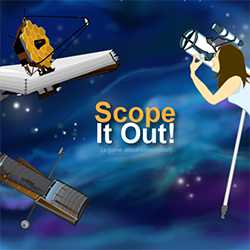
Play Scope It Out and Learn About Telescopes
|
|
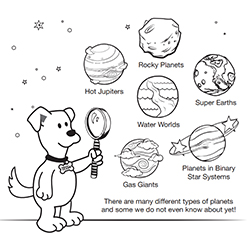
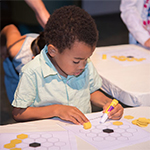
Color and Draw
Exoplanets
|
|
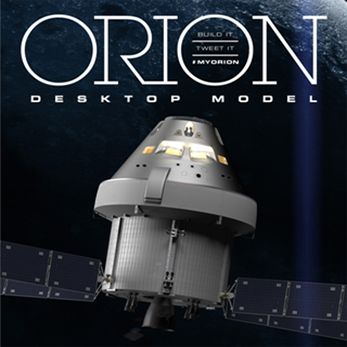
Build a Desktop Model of the Orion Spacecraft
|
|
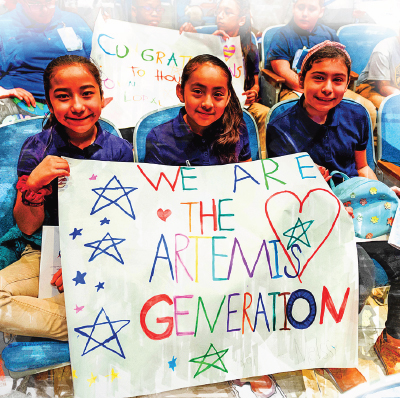
NASA’s Artemis program will land the first woman and next man on the Moon by 2024. NASA is seeking dynamic collaborations to share this story with today’s K-12 students and teachers to inspire, engage, and educate our next generation of explorers.
On
July 8 from 11 a.m. to 2 p.m. EDT
, NASA will host a virtual meeting to engage both its funded grantees and unfunded networks of partners and collaborators to discuss the potential to use Artemis to engage students nationwide. NASA will emphasize its core values of diversity and inclusion and the importance of working with the K-12 community to develop a diverse and highly skilled future STEM workforce.
|
|
Join the
NASA STEM Engagement & Educator Professional Development
Collaborative
at Texas State University for live educational webinars.
|
|
Upcoming webinars for
Parents, Caregivers,
Educators and Students
include:
|
|
For a full list of upcoming webinars,
click here
.
|
|
Audience:
Students Ages 13+
Event Date:
July 6 at 12:30 p.m. EDT
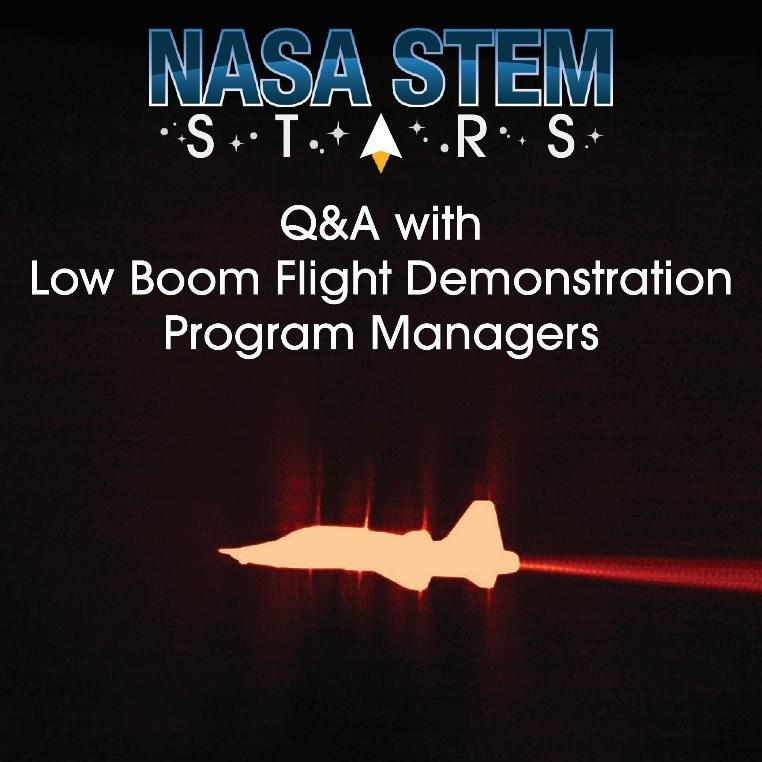
“NASA STEM Stars” is a
webchat series
that connects students with subject matter experts to learn about STEM careers and ask questions about STEM topics.
Are you ready to learn about
the Low-Boom Flight Demonstration (L
BFD) project
? Cathy Bahm
and Heather Maliska, deputy project manager and project manager for Innovation in Commercial Supersonic Aircraft at NASA’s Armstrong Flight Research Center in Edwards, California,
will talk about
how they joined
NASA and what it's like to manage and support a project that is
designing and building large-scale supersonic X-planes
.
Join in the conversation by using the chat feature to ask your questions!
|
|
|
|
Event Date:
July 7 at 4 p.m. EDT
Join NASA experts and education specialists for a virtual education workshop for parents/caregivers, K-12 and informal educators. Ask
questions, get teaching resources and share the excitement of space exploration with students.
All audiences welcome.
|
|
Audience:
Educators, Parents and Students in High School and College
Event Date:
July 7 at 9 p.m. EDT
Join the Endeavor STEM Teaching Certificate Project team for a free webinar featuring NASA's Jet Propulsion Laboratory Earth science social media producer and outreach specialist Shannon Forrey. She currently coleads the
@
NASAEarth
social media channels reaching 13+ million followers. Learn how art naturally fits into STEM topics and discuss the importance of creatively approaching challenges as a central component of the agency’s work.
|
|
|
|
Event Date:
July 9 at 2 p.m. EDT
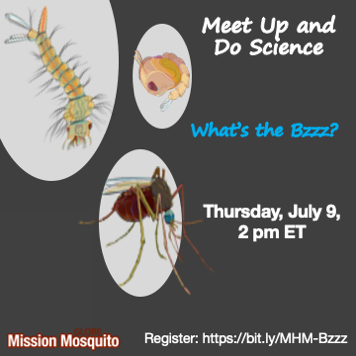
Citizen scientists worldwide are using the
GLOBE Program’s
Mission Mosquito tool to help map mosquito habitats. Join the
Mission Mosquito team for a free online science event. Examine live mosquito larvae using a camera microscope, and learn how to determine the genus of live specimens. Come with questions, bring larvae photographs and get a few professional tips.
|
|
More Activities and At-Home Resources
|
|
Audience:
Parents, Caregivers, K-12 and Informal Educators
Mission Dates:
July 14-17
Sally Ride EarthKAM is a free STEM educational program managed by the U.S. Space & Rocket Center in Huntsville, Alabama. EarthKAM allows participants to take images of Earth from space using a camera aboard the International Space Station. Use EarthKAM as a teaching tool to study subjects ranging from geography to art to meteorology.
The July mission is a great opportunity for those new to EarthKAM to learn how the system works and to start planning ways to incorporate EarthKAM into the school year. Visit the website for details and to register to participate.
|
|
 |
Audience:
Educators, Parents and Students in Grades 3-6
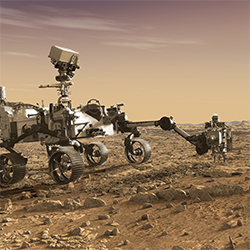
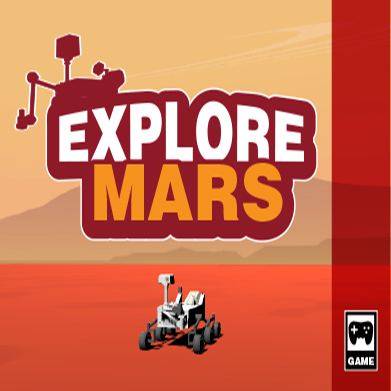
The Explore Mars game lets you drive a model of the new Perseverance rover around
the surface of Mars and collect information about Martian rocks. Players earn points by successfully analyzing a new Martian rock.
Learn, play and explore
here
.
|
|
|
|
Leading STEM learning at home can be a daunting experience for parents and caregivers. The NASA STEM Engagement & Educator Professional Development Collaborative team has tips to help smooth the way.
Find fresh STEM topics to explore and develop new ways of learning.
|
|
|
|
Are You Up for a Challenge?
|
|
Audience:
All Educators, Students and Parents
Submission Deadline:
July 15
NASA and the Houston Cinema Arts Society invite professional and aspiring filmmakers to share their works using actual NASA imagery. The CineSpace competition will accept all genres, including narrative, documentary, comedy, drama, animation and others, up to 10 minutes long. Entries must use at least 10 percent publicly available NASA imagery. Entries will be judged on creativity, innovation and attention to detail. Cash prizes will be awarded to the top three submissions, as well as two special category films: 1) the best documentary film and 2) the film that best celebrates 20 years of human presence on the International Space Station.
|
|
Audience:
Educators, Parents and Students in Grades K-12
Deadline:
July 26
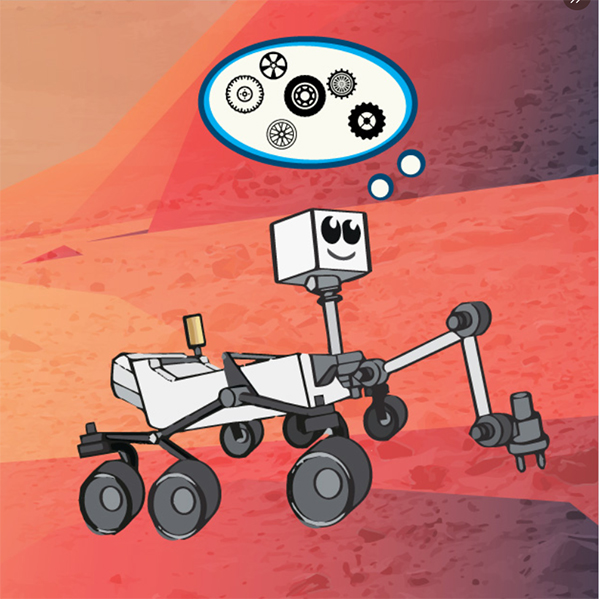
This summer, the Perseverance rover will launch on a trip to explore Mars.
Perseverance has six aluminum wheels with S-shaped treads called grousers that will help the rover drive across the sandy, rocky and hilly Martian terrain. To develop this wheel design, NASA engineers had to brainstorm ideas, create 3D designs and test different wheel prototypes.
What could wheels for future Mars rovers look like? We want innovative ideas from K-12 students! Use your creativity to design a rover wheel best equipped for the Red Planet’s terrain. Create a digital 3D model of your reinvented wheel, and write a short description of your design.
While digital 3D models are encouraged, young inventors in grades K-5 can opt to provide an image of a sketch or mock-up instead of a 3D model. Out-of-this world entries will be featured with a NASA gold star in the challenge gallery.
|
|
Audience:
Innovators of All Ages
Deadline:
Aug. 17
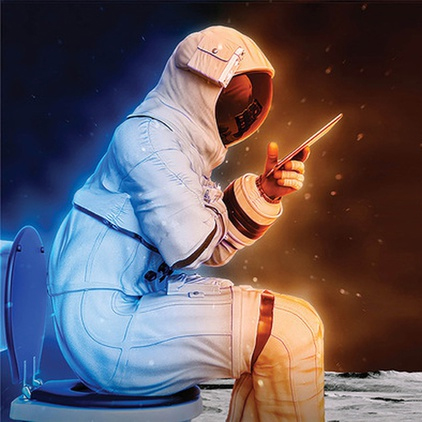
As NASA prepares to send the first woman and next man to the Moon, engineers and scientists are busy working on the logistics and infrastructure needed to support astronauts for the trip, including a new toilet design.
The space toilet used on the International Space Station is designed to work for long-duration missions in microgravity. NASA’s Human Landing System Program is looking for ideas for a next-generation device for Artemis astronauts that is smaller, lighter, more efficient, and capable of working in both microgravity and lunar gravity.
Winning entries in the Technical Category are eligible for a portion of the $35,000 prize pool. A Junior Category is open to designers under 18 years of age.
|
|
Audience:
Educators, Parents and Students in Grades 6-12
Student production teams are needed! Gather your team, your creativity and video recording devices.
NASA and the National Institute of Aerospace (NIA) want your team to produce a video for the NASA eClips website. NASA Spotlites are 90- to 120-second videos that are written, filmed, edited and produced by students using the engineering design process.
Each video submission should target a science misconception.
|
|
Pre-Proposal Teleconference:
July 7
Proposal Deadline:
Aug. 13
NASA is seeking proposals for the TEAM II RORR NASA Research Announcement. Selected parties will offer innovative remote or distance-learning opportunities. Organizations should be capable of reaching a diverse set of students with relevant NASA content, and focus on minimizing the inequities faced by communities without ready access to information and communication technology.
|
|
Application Deadline:
July 20, 11:59 p.m. EDT
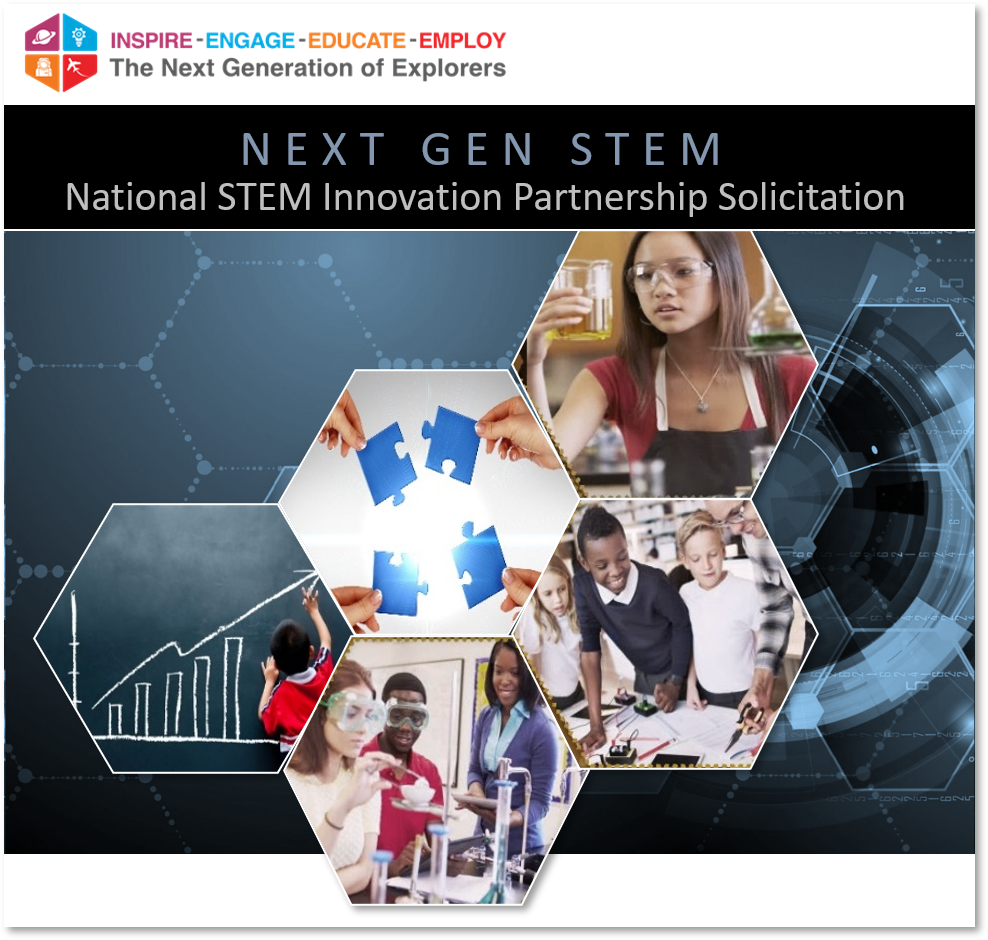
NASA’s Office of STEM Engagement seeks to increase collaborators during the 2020-21 school year. Proposals are being solicited from eligible STEM networks and STEM influencers for the dissemination and implementation of STEM engagement opportunities tied to one or more of four Next Gen STEM mission-focused activities. For more information, view the
full solicitation
.
Up to three awards will be awarded through a competitive application process, with a maximum award of $125,000. This solicitation is being managed by Paragon TEC, a support service contractor to NASA.
|
|
Informational Webinar:
July 28 at 3 p.m. EDT
Application Deadline:
Aug. 31
Academy Dates:
Jan. 25-29, 2021
The free Earth to Sky (ETS) Academy is for interpreters/informal educators interested in creating or strengthening regional communities of practice for improving climate science communication. Graduates will be prepared to develop and run an ETS climate communication course, and be supported in building and sustaining their regional community of practice.
Applicants must apply and attend as a team of three to five members from various agencies/organizations. At least one member must have attended an ETS course or minicourse.
|
|
Opportunities With Our Partners
|
|
Audience:
S
tudents and Families
Entry Deadline:
Aug. 15
What would it be like to live on the Moon? Would living there be similar to living on Earth? The Aldrin Family Foundation wants you and your family to imagine what it might be like with the Home on the Moon project.
Perfect for completing at home, this interactive project invites students, families and teams to explore how systems work on Earth and how they can be modified to work on the Moon. Visit the project website to find step-by-step instructions and videos that will guide you through the process.
|
|
Audience:
Educators, Parents, Community Members and Industry Stakeholders
Event Dates:
July 28-30
Join the Smithsonian Science Education Center for a series of live, asynchronous meeting opportunities to tackle the challenge of ensuring K-12 science education remains a critical component in the classroom and community during COVID-19 and in the future.
Click here
for a full schedule of events and registration information.
|
|
Are you looking for NASA STEM materials to support your curriculum?
Find NASA science resources for your classroom
. NASA Wavelength is a digital collection of Earth and space science resources for educators of all levels — from elementary to college, to out-of-school programs.
https://science.nasa.gov/learners/wavelength
Check out the ‘Explore NASA Science’ website!
Science starts with questions, leading to discoveries. Visit
science.nasa.gov
. To view the site in Spanish, visit
ciencia.nasa.gov
.
|
|
Visit NASA STEM Engagement on the Web:
|
|
|
|
|
|
|