|
PA Prep Pulse
Your Source for ESF 8 Preparedness Information
September / October 2025
| | The Federal Emergency Management Agency (FEMA) created National Preparedness Month (NPM) three years after the September 11 attacks. It is observed every September to encourage Americans to prepare for disasters, both natural and man-made. NPM aims to raise awareness about the importance of community involvement in emergency preparedness and to help keep individuals, their families and their communities safe. | | |
National Preparedness Month - Preparedness Starts at Home
Source: Ready.gov, Ready PA
Preparedness Starts at Home, the 2025 theme, focuses on getting back to the essentials of preparedness. In addition to sharing the tips, messages and graphics you can find on Ready.gov, there are four key actions you can take to prepare for any disaster you may face:
- Know your risk
- Know what could happen where you and your family live. This helps you figure out what you need to do to stay safe. You can explore various disasters and emergencies on Ready.gov.
- Make a family emergency plan
-
Making a plan early helps you reduce stress and save time and money. Follow four easy steps and create a free Family Emergency Plan quickly and easily with our fillable form.
-
Disasters are costly but preparing for them doesn’t have to be. Taking time to prepare now can help save you thousands of dollars and give you peace of mind when the next disaster or emergency occurs. Visit Ready.gov’s low and no-cost tip page to see how you can be better prepared without spending a lot of money.
- Build an emergency supply kit
- Having enough food, water and medicine can help you stay safe and comfortable until help arrives. Having what you need can also prevent injury and damage to your home.
-
Build a go-bag with all the essentials you might need, so you don’t need to scramble in an evacuation situation. Find a list of supplies at Build A Kit.
-
Get involved in your community by taking action to prepare for emergencies
- Emergencies can happen fast, and emergency responders aren’t always nearby. You may be able to save a life by taking simple actions immediately. You can learn these steps when you take a first aid class through many organizations in your community.
- Join a Community Emergency Response Team program and get trained on basic disaster response skills, such as fire safety, light search and rescue, team organization and disaster medical operations.
-
Take a free online independent study course through FEMA’s Emergency Management Institute or a CPR course through the American Red Cross to learn more about how to help your community become more prepared.
Sign Up for Emergency Alerts in Pennsylvania
Ready PA provides Pennsylvanians with weather alerts, building alerts, health notifications, and other timely updates from state and federal agencies with Alert PA. Sign up for alerts to stay informed about:
- Severe weather
- Emergencies at your chosen location(s)
- Building alerts
- Health notifications
A CodeRED weather warning will automatically alert you if your address falls in the path of severe weather, as determined by the National Weather Service.
Additional information for healthcare and public health professions in PA as well as preparedness tools and program initiatives can be found here as well.
| | |
National Weather Service
Source: National Weather Service (NWS), Ready.gov, FEMA
September is National Preparedness Month. It is a time to prepare yourself and those in your care for emergencies and disasters. You know that emergencies can happen unexpectedly in communities just like yours, to people like you. We’ve seen tornado outbreaks, river floods and flash floods, historic earthquakes, tsunamis, and even water main breaks and power outages in U.S. cities affecting millions of people for days at a time. Police, fire and rescue may not always be able to reach you quickly in an emergency or disaster. The most important step you can take in helping your local responders is being able to take care of yourself and those in your care; the more people who are prepared, the quicker the community will recover This September, please prepare and plan in the event you must go for three days without electricity, water service, access to a supermarket, or local services for several days. National Preparedness Month culminates on September 30th with National Preparedness Day, the National Day of Action.
The National Weather Service is proud to be participating in NPM. By doing so, we want to make sure YOU are prepared in case of a disaster (natural or man-made). If you haven't taken the time to think about how different disasters could effect you, then we challenge you to take the necessary steps to become informed and develop a family plan for such events. These simple steps could SAVE YOUR LIFE!
Step 1: Learn Your Risks & Responses - Be Informed!
- Emergency Alerts: You can receive important lifesaving alerts no matter where you are - home, school, or work.
- Social Medial: Some weather & safety information can also be relayed through social media. However, please remember that this is NOT an official means of receiving important lifesaving information.
- Natural Disasters: Know which natural disasters can occur in your area and how each could affect you.
- Other Hazards: Remember to plan for things such as pandemics, terrorist attacks, etc.
Step 2: Make a Plan!
It is important to make a family emergency plan that can be put into action as soon as disaster strikes. Make sure to include plans for children, seniors, disabled, and don't forget pets!
Step 3: Build a Supply Kit!
A supply kit is a must when planning for potential disasters. You need to make sure you and your family have the necessary food and supplies to sustain you until the power returns or help arrives. It is also important to keep the kit maintained by keeping food/water fresh and supplies working properly. It is typically best to store the kit, along with any pet supplies, in a closet or the basement.
Step 4: Get Involved!
Find opportunities to support community preparedness. There are many ways to get involved before disaster strikes. So, ask yourself, "How can I help?"
| | |
Make Emergency Plans Now
Source: American Red Cross
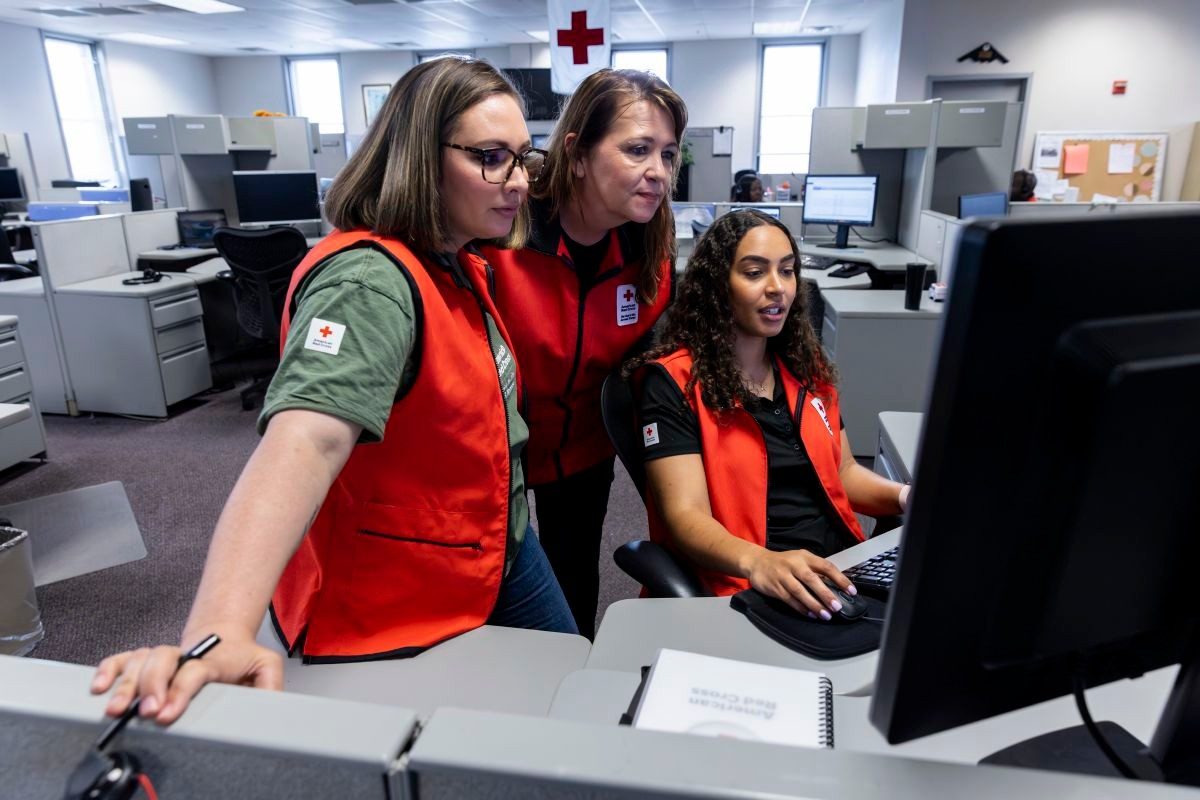
The United States is experiencing more frequent and intense extreme weather, making it more important than ever for people to be prepared for emergencies. September is National Preparedness Month and the American Red Cross urges everyone to take steps to protect their loved ones by getting their households ready now.
Last year, disasters displaced a record 11 million people in the U.S. This is the highest number for any country, accounting for roughly one-quarter of all disaster-related displacements worldwide, according to the Internal Displacement Monitoring Centre.
“Unfortunately, disasters don’t wait for the right time,” said Jennifer Pipa, vice president of Disaster Programs at the Red Cross. “They can happen in the middle of the night, during your commute or while your kids are at school. Disasters can turn your entire life upside down in a matter of minutes, and that’s why it’s more important than ever for families to be prepared.”
To help people in need, the Red Cross is now responding to nearly twice as many major disasters — at a rate of about once every two weeks versus once a month a decade ago. And, when the worst happens, Red Cross volunteers are on the ground working with local partners to provide food, shelter, comfort and financial assistance to make sure no one faces recovery alone.
TAKE THESE STEPS TO GET READY Protect your family by making a plan to stay safe, gathering important supplies and knowing how you’ll stay connected by taking these steps:
- Depending on the emergency, you may need to stay where you are or go somewhere else to stay safe. If you may need to leave, think about where you’ll go, how you’ll get there, where you’ll stay and what you’ll take with you. Plan well in advance if you’ll need help leaving or use public transportation.
- Next, gather and organize critical supplies — like food, water and medicine — into a go-kit and a stay-at-home kit. Make sure to include backup batteries and chargers for your devices (cell phone, CPAP, wheelchair, etc.), a battery-powered or hand-crank radio, and critical personal records.
- Your go-kit should include three days of supplies that you can take with you. Your stay-at-home kit should have two weeks of food and water, and a one-month supply of medications, if possible.
- Customize your kit to meet your household’s specific needs. If you have young children, don’t forget formula and diapers. If you have pets, include leashes, carriers, food, bowls, litter and a litter box.
- Finally, make a plan to reconnect with loved ones if you’re separated or if the phone or internet is down. Write down important phone numbers on a contact card and carry it with you.
Download the free Red Cross Emergency app for weather alerts, safety steps for different emergencies and expert advice in both English and Spanish. Don’t forget to sign up for local government emergency alerts to get critical local information — like evacuation notices — during an emergency.
People can also help their community be better prepared for disasters by giving blood, taking a class in lifesaving skills like CPR, or becoming a Red Cross volunteer. Visit redcross.org or call 800-RED CROSS (800-733-2767) to learn more today.
| | |
TRAININGS / EVENTS / RESOURCES
Source: Emma Hosman PA DOH BEPR
Managing Deployment Stress in Public Health Emergencies
- Live webinar offered through Bucks County MRC taught by Steve Crimando.
- October 1, 10-1130am
-
Register here
Training Opportunity: Public Health Essentials for Rural Teams
In response to critical needs in public health, especially among local health departments serving rural communities, the Cornell Health Impacts Core (CHIC) is providing free access to the 15- week Public Health Essentials (PHE) certificate program.
Region 2 Public Health Training Center
Resources
-
Media Tips and Resources for Local Health Departments / Learn more here
-
Financial Strategic Planning Case Studies Fact Sheet / Learn more here
-
Exploring the Power of Change: NACCHO Expands Adaptive Leadership Practice with Adaptive Action Guide / Learn more here
-
Updated Resilience Analysis and Planning Tool (RAPT) / Learn more here
| |
|
September and October Observances
Sept 1 - Labor Day
Sept 10 - World Suicide Prevention Day
Sept 11 - Patriot Day
Sept 18 - U.S. Air Force Day
Sept 22 - 1st day of Autumn
Sept 30 - National Preparedness Day
National Preparedness Month
Suicide Prevention Month
Oct 8 - National Emergency Nurses Day
Oct 9 - Fire Prevention Day
Oct 10 - World Mental Health Day
Oct 13 - Indigenous Peoples’ Day / Columbus Day / Navy Birthday
Oct 17 - Women in Military Service for America Memorial Anniversary
Oct 26 - National Day of the Deployed
Oct 28 - National First Responders Day
Oct 31 - Halloween
Oct 5-11 - Fire Prevention Week
Breast Cancer Awareness Month
| |
If you have recommendations on content for future newsletters, please reach out to our team at ra-dhBEPR@pa.gov.
If you were forwarded this newsletter and want to subscribe, visit the PA DOH Emergency Preparedness webpage and fill out the form at the bottom.
If you no longer want to receive this newsletter, click the 'Unsubscribe' link at the bottom of this page, below the PA DOH address.
|
| | | |