Parent Support & Student Advocacy
Save the Date
| |
Spotlight: Save the Date
Mark your calendars!
Yearly Student Advocacy Workshop
September 26, 2026
Park Academy
Join us for a powerful day dedicated to student voice, leadership, and advocacy. This annual workshop brings together students who learn differently to build confidence, connect with peers, and develop the skills to advocate for themselves and others.
Empowerment. Connection. Student Voice.
More details and registration coming soon—stay tuned!
| |
Spring Membership Drive
Membership
| | | |
🌸 Spring Forward with IDA
Real change happens when knowledge meets action.
When you join the International Dyslexia Association, you’re not just becoming a member—you’re becoming part of a movement.
By joining IDA, you help:
✔ Advance dyslexia awareness
✔ Support ongoing research
✔ Promote evidence-based literacy practices worldwide
Limited-Time Membership Campaign
Join between April 1 and May 15, 2026
Use code: SPRING15
Receive 15% off your membership
#untileveryonecanread
#springforwardwithida
| |
Professional Development
Upcoming Orton-Gillingham Trainings
|
Orton-Gillingham Training Opportunity – June 2026
Oregon Dyslexia Institute
State-Approved Dyslexia Training
Instructor: Lynn Lamping
Accredited Training Fellow (OGA)
Structured Literacy Dyslexia Specialist (IDA)
Associate Level Training
This course is the ideal starting point for educators seeking formal training in the Orton-Gillingham Approach to support individual students or small groups.
Training Dates
- June 22–27, 2026
- October 10, 2026
- November 7, 2026
🕗 Time: 8:00 AM – 4:00 PM
Credits
Approved for 4 graduate-level college credits
Location Options
- In-person at George Fox University (Newberg campus)
- Online option available
Contact Information
| |
Professional Development Opportunity
Edison Teaching and Learning Center is pleased to offer three Orton-Gillingham training courses taught by Elizabeth Johnson, Accredited Training Fellow with the Orton-Gillingham Academy and Director of Literacy Instruction at Edison High School.
Summer 2026 Registration is Now Open!
These courses provide educators with valuable, evidence-based training in the Orton-Gillingham Approach, designed to support students with dyslexia and other learning differences.
Location
All trainings will be held at:
Edison High School
9020 SW Beaverton Hillsdale Highway
Portland, OR 97225
| |
Professional Development Spotlight
| |
Join Ron Yoshimoto for a series of engaging, hands-on trainings in August designed to strengthen your instruction and expand your toolkit. Brought to you by IDA-Oregon, and Dyslexia Language Skills Therapy with a special thanks to our location partner, Park Academy. | | | |
OG Basic
Plus Morphology
August 3–8, 2026
Deepen your understanding of the Orton-Gillingham Approach while integrating morphology to support reading, spelling, and vocabulary development.
IDA Accredited
| |
One-Day
Morphology Training
August 9, 2026
A focused session on how morphology enhances literacy instruction and supports comprehension and word knowledge.
| |
Two-Day Multisensory Math Training
August 10–11, 2026
Explore multisensory strategies to support math understanding and engagement for diverse learners
.
| | |
Build your knowledge. Strengthen your practice. Support every learner.
| |
Training Scholarship Opportunity
The Oregon Branch of the International Dyslexia Association and Dyslexia Language Skills Therapy is pleased to offer a scholarship opportunity for educators seeking Orton-Gillingham basic and advanced training.
Ron Yoshimoto Orton-Gillingham Basic Plus Morphology Training Scholarship
This scholarship covers one full registration for:
Six-Day Orton-Gillingham Basic Plus Morphology Training
Instructor: Ron Yoshimoto
August 3–8, 2026
Park Academy, Lake Oswego, OR
Application Deadline:
Sunday, May 31, 2026
How to Apply:
Click the "Apply PDF" button below to apply.
Complete the application and submit via email to:
scholarship@orbida.org
More Information:
https://or.dyslexiaida.org/ron-scholarship/
| |
Spotlight on Dyslexia
IDA 2026 ANNUAL READING, LITERACY & LEARNING CONFERENCE
| | |
Save the Date: IDA Annual Reading, Literacy & Learning Conference
November 12–14, 2026
Hyatt Grand Rio – Las Vegas, NV
Early Bird Registration Opens: February 18, 2026
Connecting a global network of researchers, educators, families, and individuals with dyslexia—Until Everyone Can Read.
Get ready for one of the most anticipated events in dyslexia education and advocacy—the Annual Reading, Literacy & Learning Conference hosted by the International Dyslexia Association.
This premier conference brings together educators, researchers, clinicians, families, and advocates from around the world for three dynamic days of learning, collaboration, and innovation.
What to Expect:
✔ Engaging education sessions and expert-led presentations
✔ Thought-provoking symposia and award lectures
✔ The latest research and evidence-based practices
✔ Practical strategies you can immediately apply
✔ Opportunities to connect with a global community
Whether you’re new to the field or a seasoned professional, this conference offers a rich and personalized experience designed to deepen your understanding and expand your impact.
Learn. Connect. Be inspired.
Mark your calendar and start planning now—Las Vegas awaits!
| | This is a valuable opportunity to learn from leading experts, connect with a global community, and bring impactful strategies back to your classroom. | |
Conference Scholarship Opportunity
The Oregon Branch of the International Dyslexia Association is excited to offer scholarships to attend the Annual Reading, Literacy & Learning Conference:
Las Vegas, Nevada
November 12–14, 2026
Scholarship Details
Thanks to the generous support of Ms. Cherida Collins Smith, scholarships are available for both in-person and virtual participation:
- In-Person Scholarships: $1,000 each
- Virtual (On-Demand) Scholarships: $400 each
Scholarships will be awarded until the full $5,000 fund is distributed.
Who Should Apply
- Educators and administrators at all levels
- Classroom teachers (especially encouraged)
- Pre-service teachers and current students
Eligibility
Applicants must live or work within the Oregon IDA region, including:
- Oregon
- Southwest Washington counties: Pacific, Wahkiakum, Cowlitz, Clark, Skamania, and Klickitat
Application Deadline
June 21, 2026
How to Apply
Click the "Apply Here" button.
Applications are available in:
| |
Structured Literacy Highlights
What’s the difference between structured literacy and balanced literacy?
| | |
Q. Do you keep hearing about the “reading wars” and structured vs. balanced literacy? What’s the difference between these two approaches?
A. The “reading wars” is a decades-old debate about how children best learn to read. In the 1980s and 1990s, some educators argued that phonics-based instruction, with its focus on the rules of decoding words, was the most effective.
Other educators said that phonics instruction bored students and didn’t build a love of reading. They believed in “whole language” — the idea that immersing kids in books helps them learn to read.
But the “whole language” approach had opponents, too. Opponents said that learning to read doesn’t magically happen when a book is put in a child’s hands. In fact, research shows that reading is not an innate ability. We naturally learn to speak when we’re exposed to oral language as babies. But our brains aren’t wired in that same way to read. We must be taught how to read.
As the reading wars continued, a compromise emerged: “balanced literacy.” Balanced literacy uses a variety of teaching methods (such as read-alouds, independent reading and writing, and small group instruction) to address the five pillars of reading instruction: phonemic awareness, phonics, vocabulary, fluency, and comprehension.
Finding that balance in busy classrooms is easier said than done. And some educators say they feel unprepared to teach all aspects of literacy, especially phonics. When phonics is taught, it’s not always taught directly. In some cases, reading instruction includes “guessing” words based on pictures or other clues.
With renewed interest in the science of how kids learn to read, some schools are using a more explicit approach to teaching literacy skills. It’s an approach called structured literacy.
Structured literacy is:
- Explicit, meaning that a teacher directly explains and models what’s being taught.
- Systematic and sequential, meaning that skills are taught in a logical order — one skill building on the next.
- Diagnostic, meaning it includes ample opportunities for student practice and teacher feedback.
One of the most notable approaches to using structured literacy is called Orton–Gillingham. Several reading programs use Orton–Gillingham strategies.
Why is there such a draw to structured literacy? It builds foundational skills in ways that help all students. But it is especially beneficial for students with reading challenges.
To learn more, watch a video of a structured literacy reading intervention.
| |
Highlights Facts of Dyslexia
What’s New in the 2025 Definition?
| |
Spotlight on Dyslexia
What’s New in the 2025 Definition?
The updated 2025 definition of dyslexia builds on the International Dyslexia Association’s 2002 definition—keeping what we know works, while expanding our understanding based on over 20 years of research.
What Stayed the Same
- Dyslexia is a specific learning disability
- It primarily affects reading and spelling
- Difficulties are unexpected compared to peers
- It is not related to intelligence
What’s New in 2025
- Recognizes that dyslexia occurs across languages and writing systems
- Emphasizes a continuum (mild to severe)
- Highlights multiple causes (brain, genetic, and environmental)
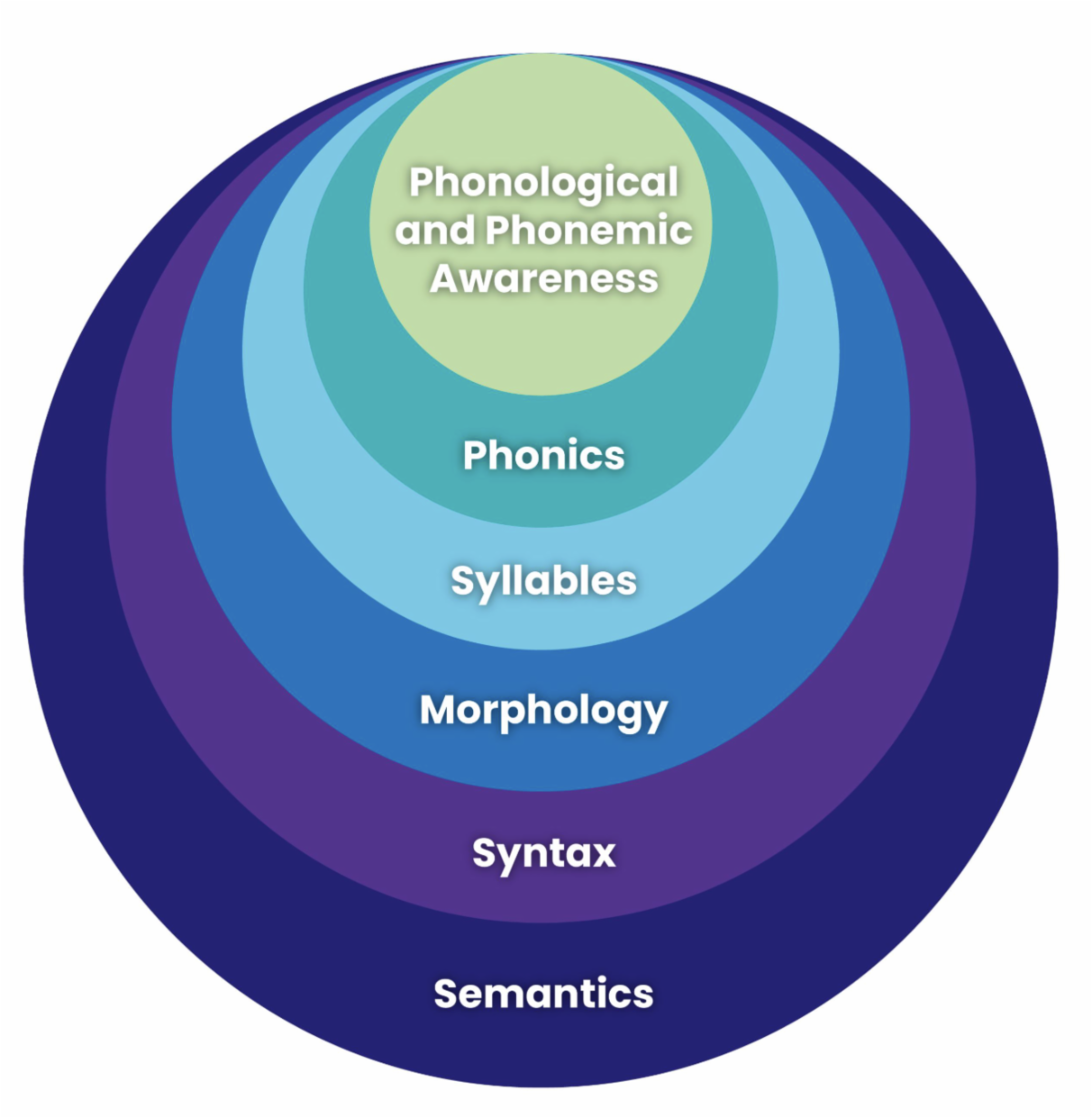
- Includes morphology (word parts) along with sound processing
- Acknowledges broader impacts beyond reading, including:
- Academic achievement
- Confidence and well-being
- Long-term opportunities
In Simple Terms
Dyslexia means a person may have trouble reading and spelling words.
This can look like:
- Accuracy: Reading words incorrectly
- Speed: Reading very slowly
- Or both: Slow and with mistakes
The way it shows up can also depend on the language someone is learning. Some languages are easier to read than others, so the challenges may look different.
Bottom Line
Dyslexia affects how easily and quickly someone can read and spell—but it does not affect intelligence.
Understanding dyslexia has evolved—
and so has our ability to support every learner.
| |
Educator's Corner
Orton-Gillingham vs. Wilson: What’s the Difference?
| | |
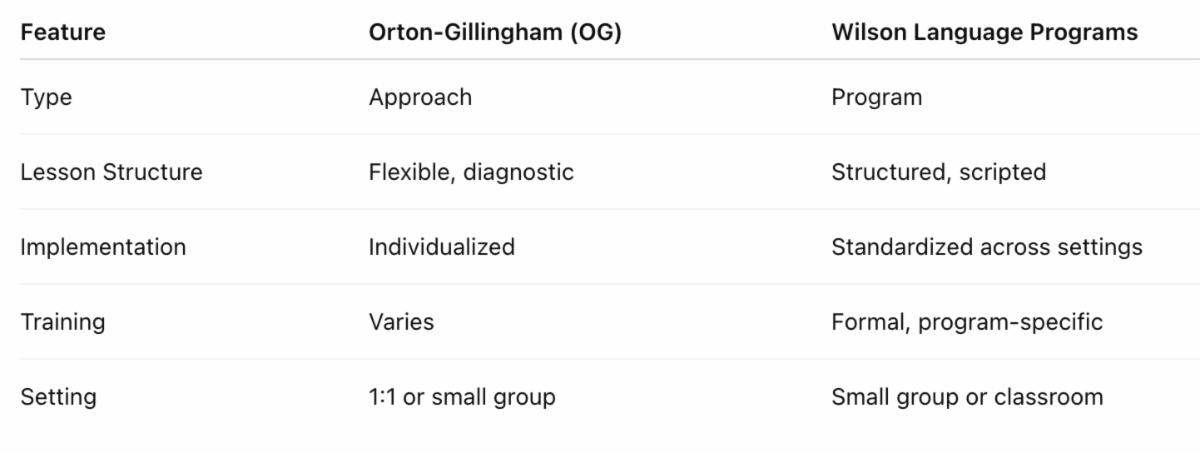
Both the Orton-Gillingham (OG) Approach and the Wilson Language Programs are grounded in the science of reading and use Structured Literacy—explicit, systematic, and multisensory instruction. But they differ in flexibility, training, and how they’re used in practice.
Orton-Gillingham (OG) – An Approach
- What it is: A teaching approach, not a single program
- Flexibility: Highly individualized and diagnostic—lessons are tailored in real time based on student response
- Use: Often used 1:1 or in small groups
- Training: Varies by provider; depth depends on certification level (e.g., OGA/IDA pathways)
- Best for: Students needing intensive, customized intervention
Wilson Language Programs – A Structured Program
- What it is: A specific, scripted curriculum (e.g., Wilson Reading System®)
- Flexibility: More structured and sequential with built-in lesson plans
- Use: Can be implemented in small groups or classroom settings
- Training: Formal training required to deliver with fidelity
- Best for: Schools seeking consistency, scalability, and clear implementation guidelines
Bottom Line
Both OG and Wilson are effective, evidence-based options. The best choice depends on your setting and student needs:
- Choose OG for deep, individualized instruction
- Choose Wilson for structured, consistent implementation across classrooms
| |
Community Stories
Chapter 2
| | |
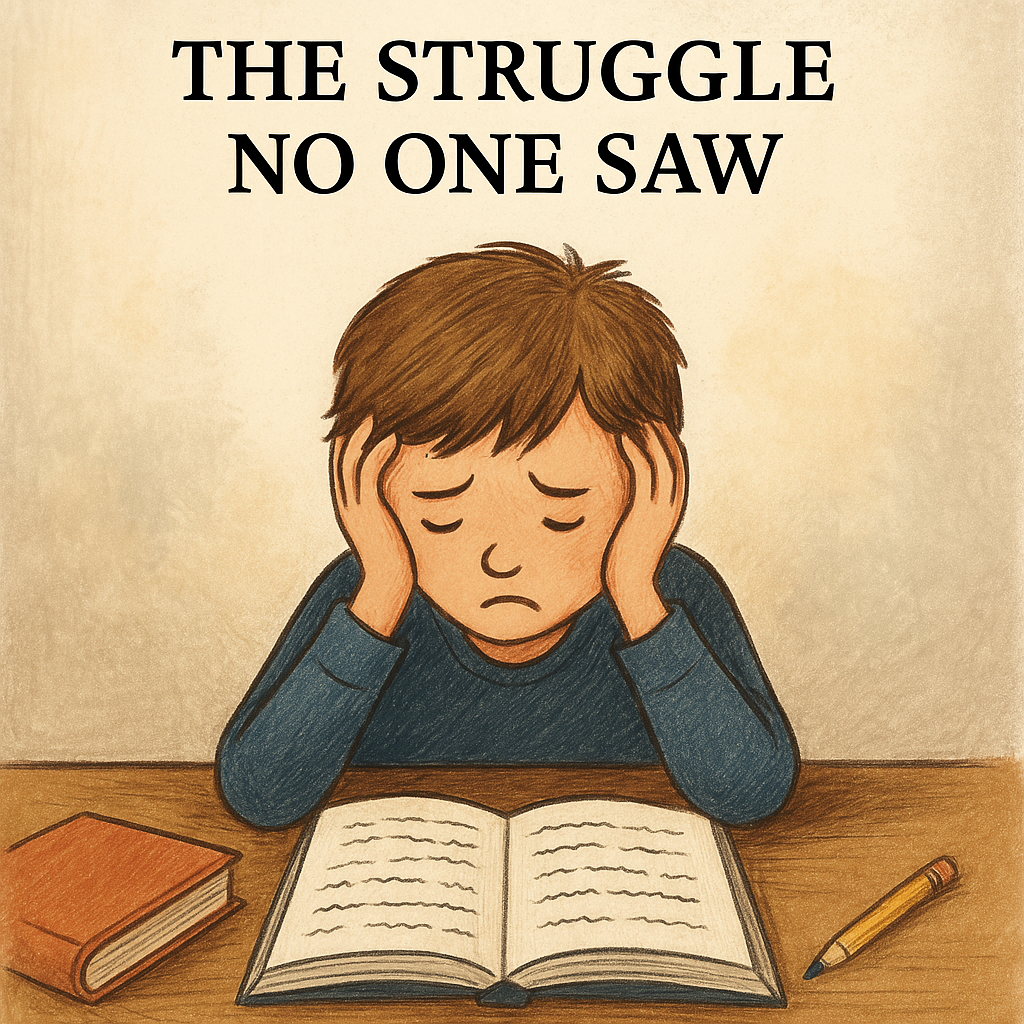
"The Reading Journey: From Frustration to Empowerment"
Follow the real-world-inspired story of a student with dyslexia and the people supporting him. Through Jack’s journey, we hope to illuminate many families' paths filled with questions, courage, and breakthroughs.
| | | |
Chapter 2: Naming the Need:
“Know the Signs – Early Indicators of Dyslexia”
After months of worry, late-night homework struggles, and unanswered questions, Jack’s mom finally made the call.
“What if it’s dyslexia?” she asked quietly.
The evaluation process felt overwhelming at first—appointments, forms, testing sessions—but for the first time, someone was looking deeper. Not just at Jack’s reading level, but at how he learned.
Weeks later, they sat across from the evaluator, holding their breath.
“Jack is bright, curious, and capable,” she began. “And yes—he has dyslexia.”
The word hung in the air. For a moment, everything felt still.
Then something unexpected happened.
Relief.
It wasn’t laziness.
It wasn’t a lack of effort.
It wasn’t that Jack “just needed more time.”
There was a reason.
Jack’s mom felt a shift—from confusion to clarity, from frustration to understanding. But with that clarity came new questions:
What happens next?
How do we help him?
Will he be okay?
At school, the conversation began to change. Instead of “trying harder,” it became about finding the right instruction. Instead of guessing, there was a plan.
Jack wasn’t broken—he just needed to be taught in a way that matched how his brain worked.
And for the first time, he started to believe that maybe… just maybe… he could learn to read.
| | Connect with Our Community! | | Professional Dyslexia Network | |
Join the IDA-Oregon monthly discussion group, for adults with dyslexia.
| | Student Empowerment Group | |
Join the IDA-Oregon Student Empowerment Group. Monthly zoom meetings and in-person gatherings.
| | | | |