Oct. 8, 2026


Editor’s Note: This newsletter is taking a short break in observance of Indigenous Peoples' Day. We’ll return to your inboxes on Tuesday, Oct. 13.

Top stories

■ Judge extends pause on Trump’s ban against CNN, MS NOW, and POLITICO (New York Times) / Why a court order didn’t stop Trump from keeping reporters off Air Force One (New York Times) / White House correspondent April Ryan reflects on reporting while under attack (NPR) 


■ Trump to pay for controversial TV ads after DNC sues (Axios) 


■ CBS News to launch election night ‘nerd show’ for politics junkies (Axios) / Fox News is tuning out Trump’s rallies. Here’s what that means (CNN) / In a crucial election season, student journalists are filling news voids (The Boston Globe) 


■ David Ellison insists corporate will stay out of editorial decisions between CNN and CBS News (TheWrap)


■ ‘Roger Lynch will introduce Condé Nast’s interim chief executive to staff on Monday, as questions swirl over who will lead the publisher into the future.’ (Status)


■ Sinclair’s new Substack repackages its local TV reporting into a video podcast (Nieman Journalism Lab)


■ Spokesman turmoil detailed, former intern buys newspaper and more (The Seattle Times) / The Island News purchased by local businessman. What we know. (Hilton Head Island Packet) / New Ellsworth nonprofit seeks to raise $1M to buy Hancock County newspapers (Bangor Daily News) 


■ Washington Post names media veteran Alex Wallace COO (Reuters) / Deep South Today names Jordan Hickey editor-in-chief of Arkansas Today (Arkansas Times) / Curran named publisher, advertising director of River City Newspapers (HavasuNews) / Pooley named senior US companies and markets news editor at FT (Talking Biz News) / Fast Company promotes McCracken to global tech and special projects editor (Talking Biz News) / Ross Douthat joins The Free Press as weekly columnist (TheWrap) 


■ Fox News’ Jennifer Griffin has been in war zones and faced cancer. Now she’s got new challenges (People) 


■ Editors are facing an influx of AI-written pitches. What now? (Columbia Journalism Review)

 
CRAFT

When officials deny access, a legal expert explains what journalists should do


By Hubbah Abdi, NPCJI Press Freedom Fellow


When government officials deny reporters access to pressers, meetings, public events or government institutions, journalists often face difficult decisions in real time. Should they challenge the restriction then and there? Call an attorney? Pursue legal action? And, what rights do they actually have when access is denied?


These questions have taken on renewed importance as disputes over press access have emerged at the national, state and local levels.

In light of increasing barriers to access, how can reporters advocate for their ability to be present and gather information in the public interest?


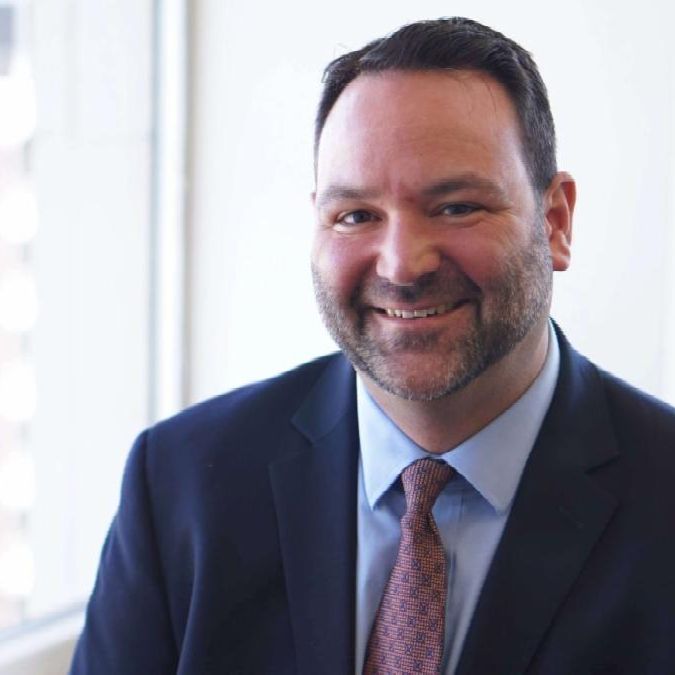
The Institute spoke with Gabe Rottman, vice president of policy at the Reporters Committee for Freedom of the Press and a practicing attorney focused on issues at the intersection of press freedom, newsgathering and technology. 


Rottman shared what journalists should know when they are denied access, when legal action may be appropriate and how ongoing restrictions on journalist access impact the public’s ability to hold the government accountable. 

This interview has been edited for length and clarity.


What legal rights should journalists know when they are denied access?


Rottman: It would depend on the nature of the forum. If you’re talking about a city council meeting where they’ve gone into closed session, you should be aware of your state’s or locality’s open meetings laws. It’s worth actually having a copy of the statute with you, and if they’re trying to remove you from the room, you can flag the existence of the law.


What’s happening at the Pentagon or the White House in terms of denying physical access, one thing that’s pretty clear is that no government agency or official can exclude you because they don’t like what you report. What’s happening at the White House right now with CNN, MS NOW and Politico is flatly unconstitutional because the president himself has said that he initiated the ban because he perceives their coverage as overly negative.


Most government buildings are not going to be what under the First Amendment are called traditional public forums, where you receive really strong First Amendment protections. If they invite journalists in (to a government building), they create something called a non-public forum, and they can restrict access to that forum in ways that are reasonable and viewpoint neutral.


But the one thing that they absolutely cannot do is exclude you because they don’t like what you report. 


At what point should journalists and news organizations consider litigation when access is denied?


Rottman: That’s going to depend on the case. It’s going to depend on the facts. It’s very difficult to say one way or the other when litigation is appropriate.


What you’ve seen in the cases that have been brought against the second Trump administration is that they all share one characteristic. Although there are different legal theories in play, in all of those cases, there is a very strong claim of viewpoint discrimination, that the actions are being taken because the administration is retaliating against the organizations for what they report and because it perceives their coverage as overly negative or critical.


What are some effective ways journalists can push back against access restrictions when they occur? 


Rottman: If you’re worried about being denied access to an open meeting or something similar, it’s helpful to have the actual law with you, printed out, and have a working knowledge of what the law provides for.


You can point to that if people are trying to improperly remove you. If it’s an interaction with law enforcement, you shouldn’t resist. You can politely and respectfully advocate for your rights, but if it gets to the point where you could potentially be arrested, you should comply.


You should call your editor. You should call your lawyer. And if you don’t have a lawyer, you should call the Reporters Committee’s legal hotline.


Have you observed any kind of chilling effect for news organizations following high-profile stories where journalists have been denied access? 


Rottman: The short answer is that journalists are resilient. They’re always going to keep doing the job.


In the cases that I mentioned before, especially the Pentagon and White House cases, there is an impediment to reporting from being denied access to the physical building. You can’t have the conversation in the hallway. You can’t have the kind of organic give-and-take where you’re corroborating information, checking the accuracy of a story or going on background with a source to figure out what’s going on.


That’s an impediment. But I think what we’ve seen, especially with the Pentagon, is that exclusion from the building itself is not going to stop accountability reporting on the military and the Pentagon.


The problem with the chilling effect is that it can be subtle, and we don’t know right now what that looks like.


If you look at historic examples, during the Nixon administration, the administration was very savvy in trying to use levers of government power to influence coverage. For instance, it used the threat of bringing antitrust litigation against the big three networks to try to influence their coverage.


You can see discussions that came to light much later showing that, at a minimum, top decision-makers and management at those organizations were at least thinking about threats from the government. So it can be very subtle, the chilling effect. 


Looking forward, how can news outlets prepare themselves for denial of access before it occurs? 


Rottman: Have a copy of the law with you. Have a working knowledge of the law. Make sure that you’ve got contact information for a lawyer. If you don’t have a lawyer, have the contact information for the Reporters Committee’s hotline.


If you’re denied access, politely advocate for your interests at the moment. And if you’re

unsuccessful, call a lawyer.


What are the broader implications for press freedom when any government entity limits or revokes journalists’ access to public officials, events or information?


Rottman: Our theory of government is that the press exists to act as an independent check on the government by providing the public information that it needs when it goes to the ballot box.


The denial of access to journalists means that the information that’s going to the public is incomplete. The public is ultimately the one that suffers because it doesn’t have the information it needs to hold the government accountable.

CAREER
 

Building newsroom partnerships to improve crisis coverage


“There is only so much a small newsroom can do, even though many punch far above their weight during moments of crisis. To really scale the work, look for partnerships with other newsrooms, nonprofits, community leaders, and trusted messengers that can help meet the information needs of more communities without duplicating efforts. Newsrooms are traditionally siloed from one another and competition is often the norm, but especially during a crisis, collaboration can help limited staff cover more ground. … Of course, this takes relationship-building before a crisis hits. But when resources are limited and information needs are high, those relationships can become a critical part of a newsroom’s ability to help the communities that need it most.”


-- Erika Carlos, RJI Innovation columnist, excerpt from "How small newsrooms can provide live updates across communities during a crisis"(Donald W. Reynolds Journalism Institute)


COMMUNITY

Follow NPCJI on Instagram!


Journalists need resources to navigate today’s press freedom challenges and accurately and effectively cover their government and communities.


The Institute recently launched a new Instagram page to do just that – bringing engaging, actionable content to journalists of all levels where they’re at: their social media feeds.


We invite The Latest subscribers to join our Instagram community, where we provide crucial tips, reporting advice, press freedom advocacy, and opportunities for journalists to build new skills for the digital media age. (And don’t forget to follow the Institute on LinkedIn, Bluesky, and Facebook, too.)

Resources


This newsletter is written and edited by the National Press Club Journalism Institute staff. Send us your questions and suggestions for topics to cover.


Get this from a friend? Subscribe and view the archives.

Bluesky  Instagram  Facebook  Linkedin  X  Youtube

DONATE TO THE INSTITUTE


The National Press Club Journalism Institute promotes First Amendment values by equipping journalists in Washington, D.C., and nationwide with the skills, knowledge, standards, resources and networks to empower and inform the public. As the non-profit affiliate of the National Press Club, the Institute powers journalism in the public interest. The Institute's tax ID number is 52-1750908.