Act Now: Tell Lawmakers to Prioritize Young Children in Michigan’s Budget | |
Michigan's FY2027 budget process is well underway. The House and Senate passed their proposals in late April, and on May 15, the Consensus Revenue Estimating Conference released updated revenue projections.
With revenues expected to rise modestly, the Conference flagged the need for an $88.1 million increase in Child Development and Care (CDC) scholarships to keep pace with growing caseloads as more working families seek child care support. Read the full statement from ECIC CEO Alicia Guevara on projected revenues.
Lawmakers are now reconciling significant differences across the proposals, particularly around child care, Early On, and Early Learning Partnerships (Section 32p of the School Aid budget). See ECIC’s latest blog and FY27 Budget Tracker for details.
| |
Stable, sustained investment in the prenatal-to-three window, including early care and education, isn't a luxury — it's one of the most cost-effective commitments Michigan can make. Now is the time to speak up and ensure your lawmakers are prioritizing Michigan’s youngest children in their FY27 budget decisions. | | | | The importance of consistent funding and enrollment-based payments in the Child Care Scholarship Program. | | |
Needed investments for
Early On.
| | |
Protect and support funding for early childhood programs in services.
| | Child Development and Care (CDC) Scholarship | | |
A record number of Michigan children and families are benefiting from the state’s Child Development and Care (CDC) scholarship, with 47,548 children and more than 28,800 families now participating statewide.
The program helps working families afford child care while also supporting more than 6,300 providers across Michigan, strengthening both local communities and the state’s economy. State leaders say access to reliable, affordable child care plays a critical role in helping parents stay in the workforce, pursue education, and build long-term financial stability.
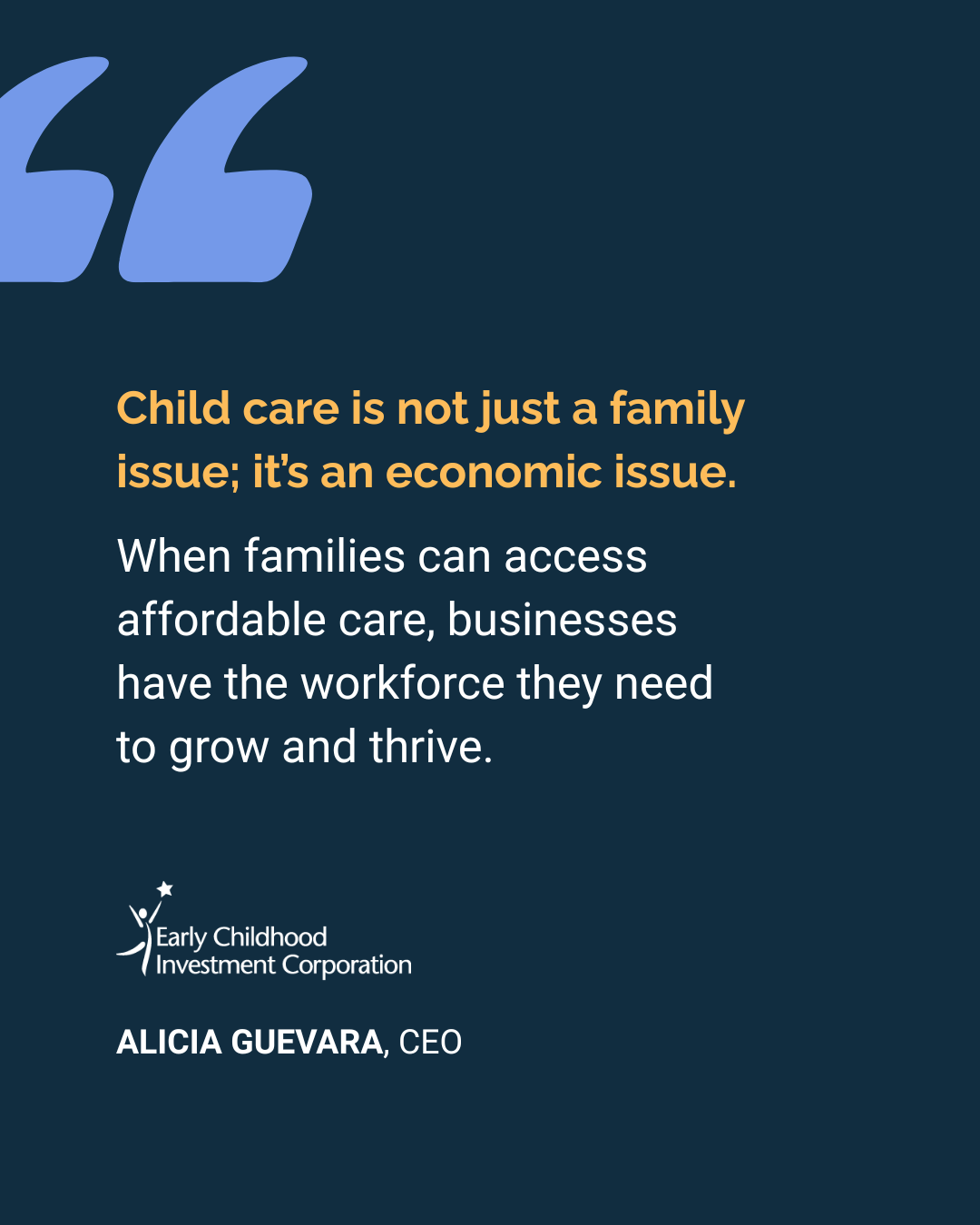
“Reaching a record number of children through the CDC scholarship is a clear sign of how important this program is to Michigan families and our economy,” said Alicia Guevara, ECIC CEO. “When families can access affordable, high-quality child care, parents are better able to work, employers have a more stable workforce, and children are set up for long-term success.”
Learn how record enrollment in these scholarships strengthens Michigan’s workforce and economy.
| | Michigan Families, Educators, and Advocates Urge State Investment in Early Childhood at 2026 Capitol Day | | |
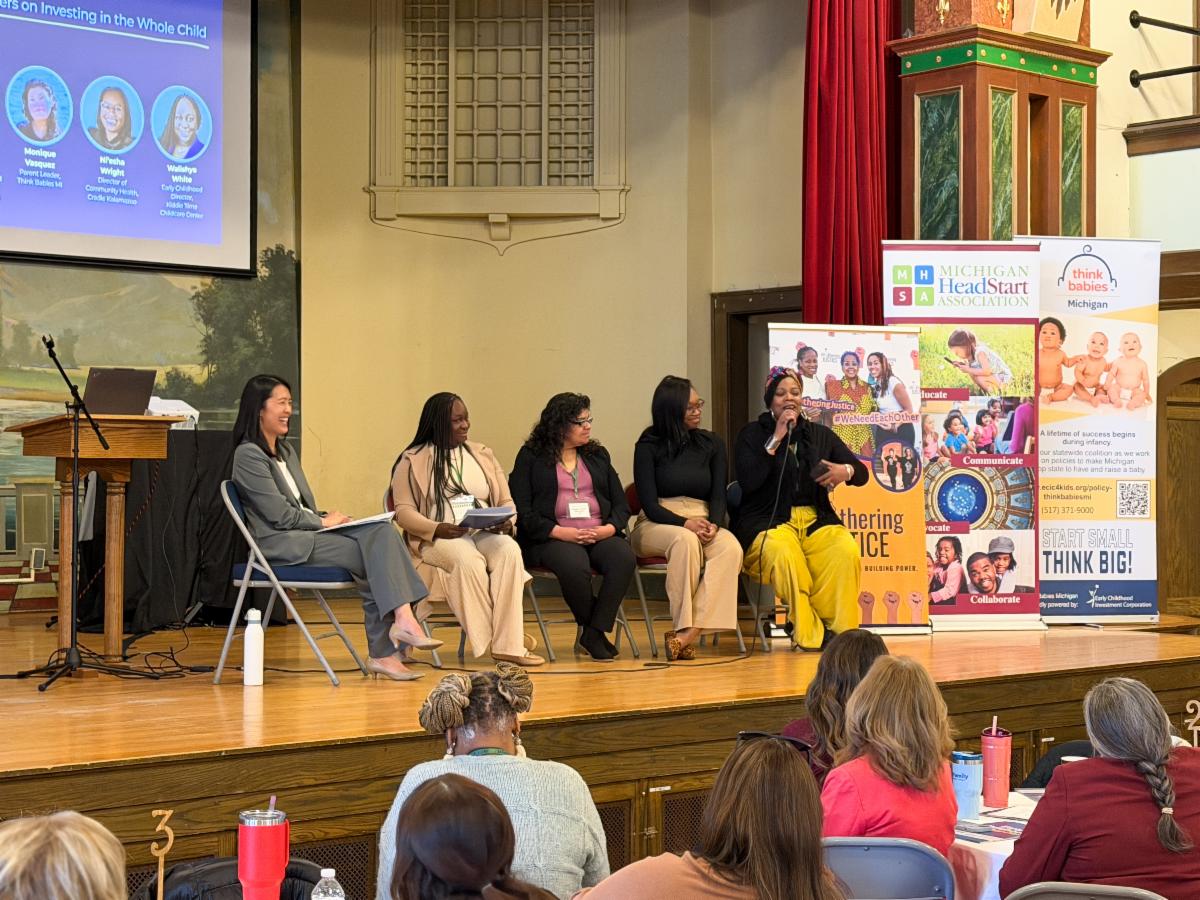
More than 100 parents, early childhood educators, and advocates from across Michigan converged on the State Capitol on April for the 2026 Early Childhood Capitol Day, urging state legislators to make meaningful investments in early childhood programs in the Fiscal Year 2027 state budget.
The event, co-hosted by the Early Childhood Investment Corporation (ECIC), Think Babies Michigan (TBMI), Michigan Association for the Education of Young Children (Michigan AEYC), Mothering Justice, and the Michigan Head Start Association (MHSA), brought together advocates to elevate their voices and engage directly with their state representatives and senators.
Champions for young children emphasized the urgency of the moment: the brain develops faster in early childhood than at any other point in life, and the outcomes Michigan policymakers are most focused on— third-grade reading, high school graduation, workforce participation, and long-term health — are shaped or undermined during these earliest years.
| | From Seed to Fruition: Reflecting on the 2026 Detroit Early Childhood Policy Table | | |
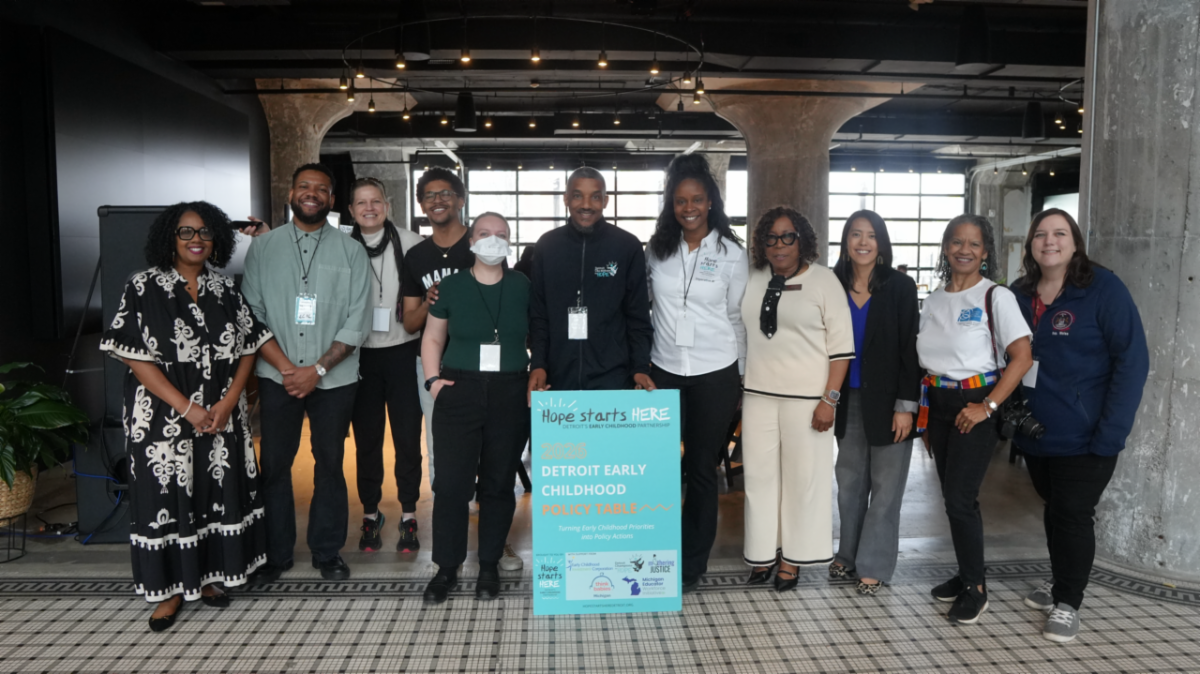
On Saturday, April 25, Hope Starts Here convened Detroit families, parents, advocates, and early childhood professionals and service providers for the 2026 Detroit Early Childhood Policy Table.
The event, hosted by numerous Hope Starts Here partners including the Early Childhood Investment Corporation, and supported by community partners, brought Detroiters together to discuss the state of early childhood in Detroit and speak directly with Detroit representatives. Senator Stephanie Chang and Representative Regina Weiss joined the event, along with staff from the offices of Senator Mary Cavanagh and Senator Erika Geiss.
To learn more about the impact of the 2026 Detroit Early Childhood Policy Table event, visit this blog post by Furqan Khaldun, Partnership Coordinator at Detroit Champions for HOPE, Hope Starts Here Imperative 2 Lead, and Hope Starts Here Imperative Lead and Connector.
| | Regional Child Care Coalitions Convening Recap | | |
On May 7th, ECIC’s Child Care Innovation Fund hosted an in-person professional learning community convening in Lansing to support members of the Regional Child Care Coalitions (RCCC) initiative.
The convening focused on strengthening municipal engagement strategies and exploring how coalition members can help advance child care-friendly policies in their communities. Participants heard from MiLEAP Deputy Director of Early Education, Emily Laidlaw, and ECIC CEO Alicia Guevara on the importance of the RCCC initiative in driving systems-level change within the child care sector.
Coalition members also learned from The National League of Cities, engaged with expert guest speakers with lived experience, and collaborated with peers from across the state to share ideas and identify promising practices.
| | |
Protect Federal Child Care Funding
Congress has proposed legislation that could destabilize America’s child care system, and your voice on this matter is important now more than ever.
In the House, a package of bills would give the federal government authority to withhold child care funding from states and impose costly new administrative burdens without evidence of widespread fraud.
In the Senate, the Cassidy “discussion draft” would overhaul the Child Care and Development Block Grant (CCDBG), rolling back child care policies that support stability for Michigan child care businesses and families while adding additional administrative burdens and granting the federal government new powers to freeze a state’s child care funding.
With no evidence of significant or widespread fraud in child care programs, these bills do not address the real child care crisis — they make it worse for families and child care businesses.
| | |
Opportunity to Submit Public Comment: Notice of Proposed Rulemaking on the “Do No Harm” Provision
The U.S. Department of Education released a Notice of Proposed Rulemaking (NPRM) on the “Do No Harm” provision, which was included in last year’s H.R.1. legislation and will go into effect on July 1, 2026.
The “Do No Harm” provision requires that every program in institutions that participate in the federal Direct Loan Program demonstrate that its graduates:
- Earn more than those who hold solely a high school diploma (for undergraduate programs), or
- Earn more than those who hold solely a baccalaureate degree (for graduate programs)
Programs that fail to demonstrate this will be deemed a “low-earning outcome” program, and students in those programs will not be able to access federal student loans. For programs preparing students to enter high-skill and high-demand professions with low wages, like early childhood education, this provision would have a negative impact on the availability of vital higher education pathways that support professional growth.
Public comments must be submitted by 11:59 PM on May 20.
NAEYC invites you to join them in a sign-on letter to elevate your concerns and share recommendations for changes in the draft regulations – if you wish to sign on to the letter, complete this form.
If you would like to submit your own public comment, visit NAEYC’s “Do No Harm” provision explainer to learn more, and review their public comment guide to help craft your statement.
| | Save the Date: Advocacy 301 & 401 | |
Advocacy 301: Levels of Power
Wednesday, June 24, 2026
Register here for 12 PM–1 PM EST
Register here for 6 PM–7 PM EST
As election season approaches, Michiganders will be voting on candidates at the federal, state, and local levels. Learn more about the influence each race will have and which candidates are responsible for the issues impacting early childhood at the different levels of government. This training is open to all interested advocates, families, direct service providers, community members, and early care and education professionals – no prior advocacy experience needed.
Trainings will not be recorded, but slides will be shared with registrants. MiRegistry training credit will be available – keep an eye out for the link to register for credit!
| |
|
Advocacy 401: Nonpartisan Electoral Advocacy
Wednesday, July 22, 2026
Register here for 12 PM–1 PM EST
Register here for 6 PM–7 PM EST
In Advocacy 301, we will learn about different types of candidates and levels of power – in 401, we will learn how to effectively plan for and engage in nonpartisan electoral advocacy on those levels. This training is open to all interested advocates, families, direct service providers, community members, and early care and education professionals – no prior advocacy experience needed, although attendance at Advocacy 301 is encouraged.
Trainings will not be recorded, but slides will be shared with registrants. MiRegistry training credit will be available – keep an eye out for the link to register for credit!
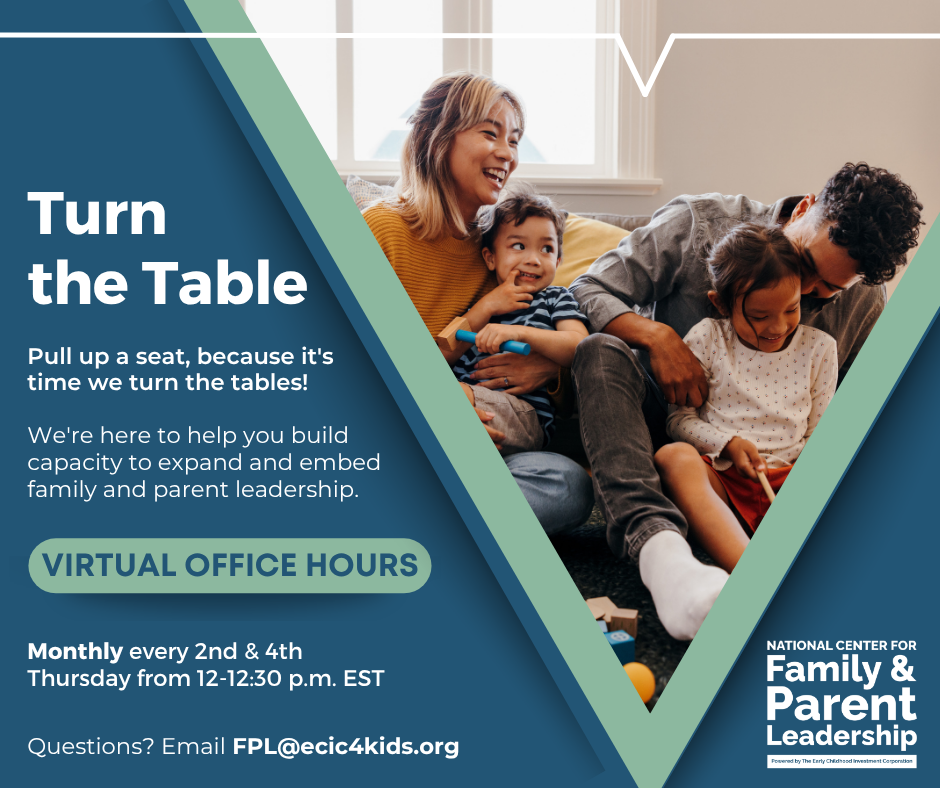
| | Early Childhood Advocates' Corner | | Turn the Tables Virtual Office Hours | | |
Pull up a seat, because it's time we turn the tables! Have questions on how to ensure families’ experiences are strengthening your programs, services, and systems? The National Center for Family & Parent Leadership can help!
We're here to help you build capacity to expand and embed family and parent leadership to improve early childhood systems in Michigan and across the country.
Family & Parent Leadership office hours will be held every 2nd and 4th Thursday at 12 p.m. EST for 30 minutes.
Next session: https://ecic4kids-org.zoom.us/meeting/register/AdyfJVAiR9C80kTfCTEUuA#/registration
Questions? Contact FPL@ecic4kids.org.
Recordings available on the NCFPL website.
| |
In Case You Missed It: ECIC In the News | | |
Get Involved: In the Community
| | | | |