In This Issue
Research Spotlight:
New Trial Will Study Treatment of Sepsis in Children
CPCE In the News:
Brief Interventions Could Reduce Risk of Suicide
CPCE In the News:
State Variation in Posthospital Home Nursing for Commercially Insured Medically Complex Children
CPCE In the News:
COVID-19 News
Upcoming Events
Recent Publications
|
|
New Trial Will Study Treatment of Sepsis in Children
|
Last month, long-standing CPCE core faculty member
Fran Balamuth, MD, PhD presented a virtual seminar on the new PRagMatic Pediatric Trial of Balanced vs nOrmaL Saline FLUid in Sepsis (PRoMPT BOLUS), a study that she will co-lead with
Scott Weiss, MD, MSCE, Assistant Professor of Anesthesiology, Critical Care and Pediatrics, and attending physician in pediatric critical care medicine.
The trial will compare the effectiveness and monitor safety of balanced/buffered crystalloid fluids (lactated Ringer’s solution - LR) vs. 0.9% normal saline (NS). Both types of fluids, Dr. Balamuth noted, are FDA approved to reverse septic shock. The team hypothesizes that there will be more adverse effects such as kidney injury, dialysis, and others in patients treated with NS, and improved outcomes in patients treated with LR. Evidence from a few studies in adult patients as well as
preliminary work by Dr. Balamuth and her team support this hypothesis.
About 100,000 children in the United States present to emergency departments (EDs) with severe sepsis each year, and sepsis results in more than 2,500 deaths in children per year. Treatment of sepsis involves rapid recognition, broad spectrum antibiotics, and resuscitation of shock with crystalloid fluids followed by vasoactive agents when needed. For the PRoMPT BOLUS trial, children ages six months to 18 years who present to EDs with suspected septic shock and have received antibiotics and one fluid bolus with the intent to give more fluids, will be eligible to enroll and will be randomized to receive NS or LR. They will receive the study fluid for 24 to 48 hours, and will be monitored for a variety of effectiveness and safety endpoints. The primary outcome is
Major Adverse Kidney Events by 30 days (MAKE30), a composite of death, new dialysis, or persistent kidney dysfunction.
The trial qualifies for
exception from informed consent (EFIC) for emergency research, which requires pre-study activities such as consultation and public disclosure with communities in which the investigation will be conducted and from which the subjects will be drawn. Dr. Balamuth and her team conducted focus groups with adolescents treated in the pediatric intensive care unit (PICU) who have conditions that put them at higher risk for sepsis, along with patient and family surveys in the ED and the PICU. They also sent letters to all CHOP physicians; posted flyers in the ED, PICU, primary care clinics, and high-risk subspecialty clinics; and leveraged CHOP social media and other communication channels. There is a study website at
https://www.research.chop.edu/prompt-bolus.
The project will leverage networks in the U.S., Canada, Australia, and New Zealand to enroll patients at more than 40 total sites in order to reach the more than 8,000 patients needed to detect the small but meaningful difference the team expects to see in the primary outcome. Enrollment at CHOP is expected to start late summer or fall of this year.
Dr. Balamuth concluded with words of encouragement particularly aimed at early-career researchers. Dr. Weiss came to her with the idea for the project more than five years ago, and they initially faced skepticism given the scope and large number of patients required. But they persisted and went through several iterations before getting to this point. If you missed the presentation, you can watch the full recording via
BlueJeans. See more CPCE/PolicyLab seminars under Upcoming Events below, and
contact us to register.
|
|
Brief Interventions Could Reduce Risk of Suicide
Stephanie Doupnik, MD, MSHP,
Diana Worsley, MPH,
Cadence Bowden, MSW, MPH and colleagues conducted a
systematic review and meta-analysis to examine whether brief interventions delivered in a single encounter to individuals at risk of suicide could improve patient outcomes. In 14 studies involving 4,270 patients, Dr. Doupnik and colleagues found that “brief suicide prevention interventions were associated with reduced subsequent suicide attempts,” they wrote. These interventions also increased linkage to follow up care.
|
|
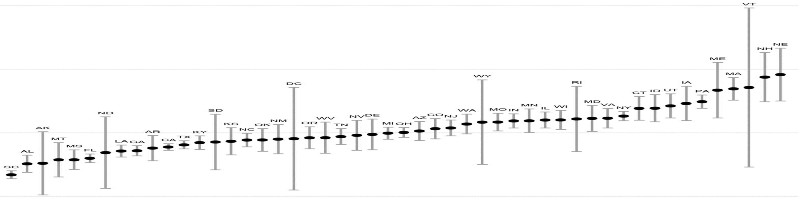
State Variation in Posthospital Home Nursing for Commercially Insured Medically Complex Children
Irit Rasooly, MD, MSCE appeared in a video abstract describing her work in Pediatrics. Home nursing is essential for children with medical complexity (CMC), but provision varies substantially across states. For her MSCE
thesis project, Dr. Rasooly sought to quantify state-to-state variability in distribution of posthospitalization home nursing to commercially insured CMC. Along with advisors
James Guevara, MD, MPH and
Chris Feudtner, MD, PhD, MPH she found the probability of receiving home nursing by state ranged from 3.4% to 19.2%, suggesting opportunities for state-level improvement.
|
|
COVID-19 News
William Otto, MD,
Louis M. Bell, MD,
Susan Coffin, MD, MPH,
Jeffrey Gerber, MD, PhD, MSCE and others at CHOP sought to understand the prevalence and clinical presentation of COVID-19 in pediatric patients. Read the
abstract and an
interview with Dr. Coffin in Children's Hospitals Today, the Children's Hospitals Association quarterly magazine, and an earlier
Cornerstone blog post.
A study conducted by
Dustin Flannery, DO, MSCE,
Miren Dhudhasia, MPH,
Sagori Mukhopadhyay, MD, MMSc, Dr. Gerber,
Karen Puopolo, MD, PhD and others at CHOP and Penn found that Black and Latino pregnant women in Philadelphia are five times as likely to be exposed to COVID-19 compared to white pregnant women. Read the
preprint and a
New York Times article.
|
|
Upcoming Events
CPCE/PolicyLab Virtual Seminar Series*
Date: TODAY July 17, 2020
Time:
12:00 noon - 1:00 pm
"Marketscan Insurance Claims Data as a Source for Health Services Research" presented by
Michael O'Byrne MD, MSCE and Hannah Katcoff, research statistician with the Healthcare Analytics Unit.
Social Determinants and Health Equity: What Has COVID-19 Taught Us and Where Do We Go From Here?
Date: July 21, 2020
Time: 1:00 - 2:00 pm
Join Manatt Health for a cross-sector panel discussion examining the on-the-ground impact of COVID-19—and how states, local governments, and communities are changing their policies, priorities and programs to respond to the pandemic. Leann more and register
here.
Racism is a Public Health Issue: Examining the Impact of Police Brutality on Black Communities in the Age of COVID-19
Date: July 21, 2020
Time: 7:00 - 8:30 pm
Join
For Freedoms
,
GYOPO,
LACMA, and
StopDiscriminAsian (SDA) for the second in a series of lively virtual conversations about the pandemic’s impact on the movement for racial justice, and the country’s long standing health, economic, and racial inequities. Panelists include Eraka P. Bath, MD, Associate Professor and Vice Chair for Equity, Diversity and Inclusion for the Department of Psychiatry at the Jane and Terry Semel Institute for Neuroscience and Human Behavior, UCLA; Ava DuVernay, Filmmaker and Founder, ARRAY; Darnell Hunt, Professor and Dean of Social Sciences, UCLA; and artist Rashid Johnson. Learn more and register
here.
Returning to Youth Sports Safely Amid COVID-19
Date: July 22, 2020
Time: 2:00 - 3:00 pm
CPCE/PolicyLab Virtual Seminar Series*
Date: July 31, 2020
Time:
12:00 noon - 1:00 pm
Molly Candon, PhD
- "Trends in Antipsychotic Prescribing to Youth Enrolled in Philadelphia Medicaid"
CPCE/PolicyLab Virtual Seminar Series*
Date: August 7, 2020
Time: 12:00 noon - 1:00 pm
*For CPCE/PolicyLab Virtual Seminar Series: If you would like to participate in any of the virtual events and did not receive a BlueJeans link, please contact
crosss2@email.chop.edu
|
Recent Publications
Extreme precipitation events may be an important environmental trigger for asthma exacerbations in children.
Chén Kenyon, MD, MSHP and colleagues used a time stratified case-crossover design and data from a large electronic health record database at CHOP to estimate associations of daily heavy precipitation with asthma exacerbation among children. They found little evidence of effect modification by most measures, suggesting that heavy summertime precipitation events may contribute to asthma exacerbations.
Mary Kate Kelly, MPH,
Robert Grundmeier, MD,
Alexander Fiks, MD, MSCE, and their colleagues extracted electronic health records for HPV vaccine-eligible 11-to-17 year olds. They assessed the proportion of visits during which an influenza vaccine was given and an HPV vaccine was due, but not given, in order to better understand missed opportunities (MOs) for HPV vaccination during primary care visits at which influenza vaccination is delivered. Their results showed that HPV vaccine MOs were common during visits where influenza vaccine was administered. Increasing simultaneous administration of HPV and influenza vaccines could increase HPV vaccine coverage.
For children with medical complexity (CMC) and technology dependence, living at home requires well-qualified caregivers and an environment that is clean, safe, accessible, and spacious enough for medical equipment and supplies.
Chris Feudtner, MD, PhD, MPH and his colleagues wrote a perspectives piece on how, unfortunately, securing suitable housing can be prohibitively expensive for families of CMC who experience financial hardship.
The experience of starting and growing a pediatric palliative care program (PPCP) has changed over the last 10 years as rapid increases of patient volume have amplified challenges related to staffing, funding, standards of practice, team resilience, moral injury, and burnout.
Chris Feudtner, MD, PhD, MPH and colleagues first asked a convenience sample of 15 PPCP directors who assumed their duties within the last 10 years the following open-ended question: What do you wish you had known before starting or taking over leadership of a PPCP? The themes ranked as most important from their responses included “Learn how to manage, not just lead,” “Negotiate everything before you sign anything,” and “Balance patient volume with scope of practice.”
Neonatal seizures are common and difficult to identify clinically because the majority are subclinical and correct identification of electroclinical seizures based on semiology is unreliable. Therefore, continuous EEG monitoring (CEEG) is critical for seizure identification in neonates. As a quality improvement study, researchers including
Karen Puopolo, MD, PhD established a framework for providing remote CEEG at two network hospital neonatal intensive care units to expand access to CEEG for at-risk neonates and address barriers to implementing widespread CEEG. They found that establishment of a remote CEEG program for neonates is feasible, effective at identifying seizures, and improves the quality of care provided to neonates hospitalized at these network hospitals.
Sogol Mostoufi-Moab, MD, MSCE and her colleagues ran a cross-sectional study from the 1988-1994 National Health and Nutrition Examination Survey III to create reference charts for sitting height to standing height ratio (SitHt/Ht) for children in the United States, and to describe the trajectory of SitHt/Ht during puberty. The team’s SitHt/Ht assessment can detect disproportionate short stature in children with skeletal dysplasia, but age-, sex-, and population-specific reference charts are required to interpret this measurement. Non-Hispanic Black children in the United States have significantly lower SitHt/Ht than other children, which adds complexity to interpretation.
Researchers including
Jeffrey Gerber, MD, PhD, MSCE ran a quasi-experimental study to evaluate the clinical impact of the implementation of VERIGENE gram-positive blood culture testing (BC-GP) coupled with antimicrobial stewardship result notification for children with positive blood cultures. They found that the implementation of BC-GP testing coupled with antimicrobial stewardship result notification was associated with decreased time to optimal therapy and time to stopping vancomycin for hospitalized children with gram-positive blood culture isolates.
Insights from behavioral economics suggests that the effectiveness of health messages depends on how a message is framed.
Brian Jenssen, MD, MSHP,
Mary Kate Kelly, MPH,
Chloe Hannan, MS,
Alexander Fiks, MD, MSCE, and their team conducted a cross-sectional discrete choice experiment to assess parents’ perceptions regarding the relative importance of distinct message framings to promote their smoking cessation. Parent smokers identified smoking cessation messages that emphasized the impact on their child versus parent or family, with outcomes focused on respiratory health, cancer, or general health, as most important, whereas messages focused on the financial benefits of quitting ranked lowest.
Hansel Otero, MD and his colleagues conducted a retrospective study of all patients with suspected calyceal diverticula (CD) based on medical records to determine the magnetic resonance urography (MRU) imaging findings of CD in a large cohort of children and to compare the frequency of CD in their cohort with what has been previously reported. Their results showed MRU is reliable in differentiating CD from renal cysts. On MRU, all diverticula were identified within 15 minutes of contrast administration; hence longer delays in imaging are unnecessary.
Prolonged critical illness after congenital heart surgery disproportionally harms patients and the healthcare system, yet much remains unknown.
Joseph W. Rossano, MD, MS and his colleagues ran an observational analysis to define prolonged critical illness, delineate between nonmodifiable and potentially preventable predictors of prolonged critical illness and prolonged critical illness mortality, and understand the interhospital variation in prolonged critical illness. Although many prolonged critical illness predictors are nonmodifiable, they identified several predictors to target for improvement and observed that complications and prolonged critical care therapy drive prolonged critical illness mortality.
Bedtime problems and night wakings are highly prevalent in infants.
Ariel Williamson, PhD and her research team assessed the real-world effectiveness of an mHealth behavioral sleep intervention (Customized Sleep Profile; CSP). Caregivers used the CSP intervention via smartphone application and were analyzed in two groups, problem versus no problem sleepers (PS; NPS). Results included improved sleep onset latency in both groups. Earlier bedtimes, longer continuous stretches of sleep, as well as decreased number and duration of night wakings, were evident in the PS group only. Intervention recommendations results in changes in caregivers’ behavior and improvements in caregiver-reported sleep outcomes in infants, in as few as 4 days.
Ariel Williamson, PhD and her colleagues used actigraphy-estimated sleep duration, sleep onset, sleep offset, and sleep sufficiency to quantify changes in sleep during the middle-to-high school transition and determine if changes in sleep differ by sociodemographic characteristics. Their results indicated that insufficient sleep is highly prevalent, especially on school nights and among male and black adolescents, and this problem worsens with the transition to high school.
Abusive head trauma (AHT) is the leading cause of fatal child physical abuse. Research has shown missed opportunities for early detection of AHT in the medical setting are common and can lead to repeated injury. Researchers have worked to understand the yield of neuroimaging in detection of clinically occult AHT and to identify risk factors, yet findings have varied widely across studies. Researchers including
Kate Henry, MD, MSCE and
Joanne Wood, MD, MSHP discuss the recent literature, identify potential reasons for variation across studies, and other opportunities for future research.
In March 2020 due to the COVID-19 pandemic, in-person visit volumes in pediatric primary care practices
plummeted, and many practices initiated or dramatically expanded video visits to reach patients and attempt to maintain financial viability. Within weeks, primary care practices and the families they serve had widely adopted virtual primary care. In this
JAMA Pediatrics Viewpoint,
Alexander Fiks, MD, MSCE and
Brian Jenssen, MD, MSHP discuss the advantages of telehealth and how the pandemic provides an opportunity for healthcare providers, payers, and systems to create models integrating telehealth into primary care for the long term.
|
|
About CPCE
We are a pediatric research center dedicated to discovering and sharing knowledge about best practices in pediatric care by facilitating, organizing and centralizing the performance of clinical effectiveness research -- research aimed at understanding the best ways to prevent, diagnose and treat diseases in children. CPCE’s multidisciplinary team conducts research on a diverse range of clinical effectiveness topics.
CPCE E-News is edited by
Holly Burnside. Please feel free to contact us with questions or feedback.
|
|
|
|
|
|
|