|
Amboseli Trust for Elephants
July - September 2025
| |
30th September 2025 | Newsletter | |
Note from our Director
Sir/ Madam
During the final week of September, Kenya’s Wildlife Research and Training Institute held its second International Wildlife Scientific Conference. The Amboseli Trust for Elephants team attended the first conference two years ago and presented several papers. Almost all of us attended this second one. Phyllis Lee gave a paper on Vicki Fishlock’s behalf, which Vicki has summarised below; Lydia Tiller presented on the methods she developed for our coexistence survey (see Two ATE Reports); and Keith Lindsay presented a poster on our vegetation and habitat work, which he describes in his story in this newsletter.
As WRTI Director Dr. Patrick Omondi stated, “The inaugural conference was a watershed event in bridging the gap between wildlife science and policy.” The second conference was aimed at carrying forward this objective. The topics ranged from: “Wildlife Population Dynamics and Ecosystem Connectivity” to Wildlife Health and Disease Management” and “Climate Change and its Impacts on Wildlife”.
We at ATE were very pleased to see wildlife research highlighted and valued at this important conference.
Cynthia Moss
Director
| | | | |
Long-term Range Shifts of the Amboseli Elephants
by Vicki Fishlock
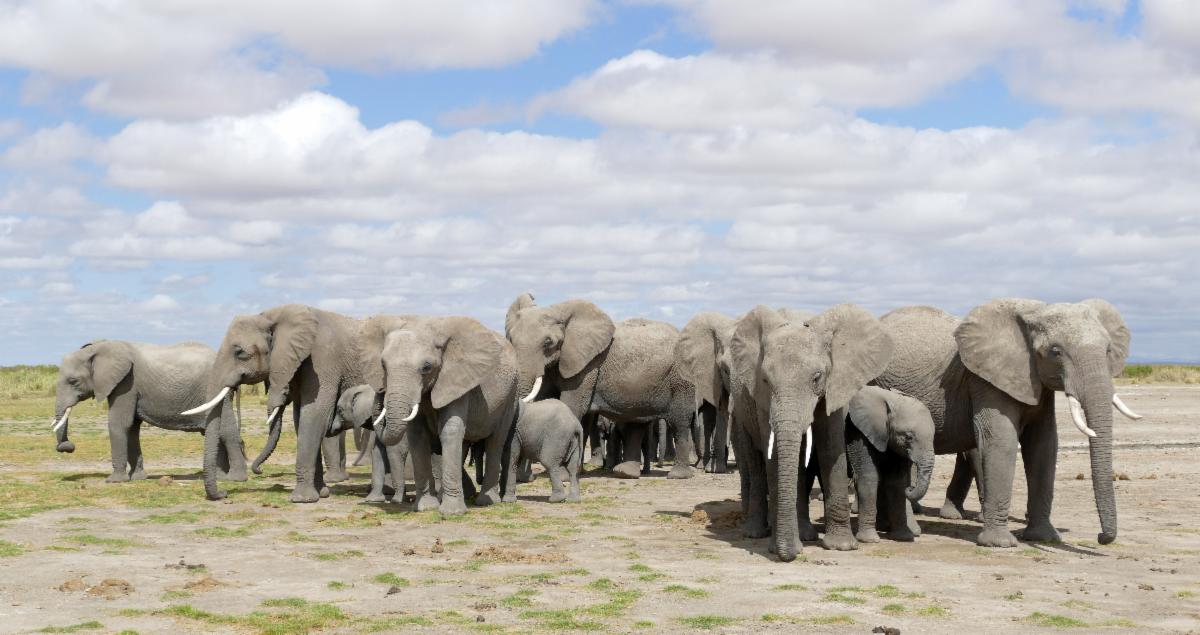
At the 2nd International Wildlife Scientific Conference we shared findings on the stability of elephant family home ranges over time. Elephant movements are shaped by ecology, social bonds, and the people that share the landscape, and elephant ranges can vary hugely—even within the same landscape.
In Amboseli, some families stay mostly in the heart of the ecosystem, while others only come into the central area in certain months. This mix of strategies is known from other landscapes too, but in Amboseli we are also able to look at patterns over elephant lifetimes. In the past five decades, most families have kept the same movement patterns, but more than a third have altered how they use the ecosystem.
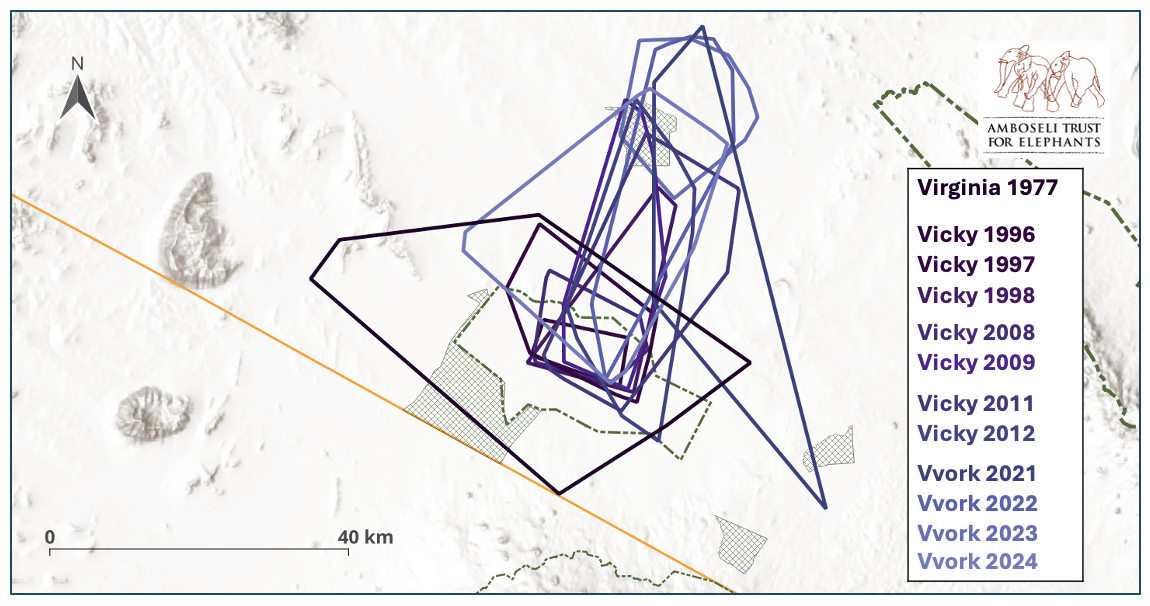
Over the years we have tracked a small number of elephants using collars; in the early years light aircraft searched for VHF signals to secure “fixes” on elephant locations, while modern units constantly stream locations via satellite. Combining data from eight females in three families collared over four different decades, we could plot examples of both “stable” and “shifting” families. Our shifted family, the VAs, is one of Amboseli’s most dominant and successful (Read the VA history on our website). Their shift can partly be attributed to community conservancies, but like with so much of elephant behaviour it is not obvious what the main drivers to move are.
Elephants in Amboseli continue to enjoy free movement across viable habitat thanks to the choices made by Amboseli communities, and the partners that facilitate habitat protection. It’s an honour to be able to showcase this kind of success.
| | |
Capturing shifting ranges - each colored shape represents the maximum space used by each female in a year. We collared three VA females over five decades, and the shift in space use is shown as colors go from dark to light purple. Although range sizes vary annually, in a good year (2024) Vvork's range is similar in size to Virginia's from 1977.
| | |
Monitoring Vegetation in Amboseli
by W. Keith Lindsay
The author A. Herbert noted, in his 1917 book The Elephant, that for the great grey animals "Life was one long feed." Elephants spend up to 18 hours every day searching for and feeding on all manner of plants to satisfy their enormous appetites and meet their metabolic needs. So to understand how seasonal and annual changes in habitat quality affect their health, survival and reproduction, and their social behavior and ranging, we must assess the availability of food plants over time.
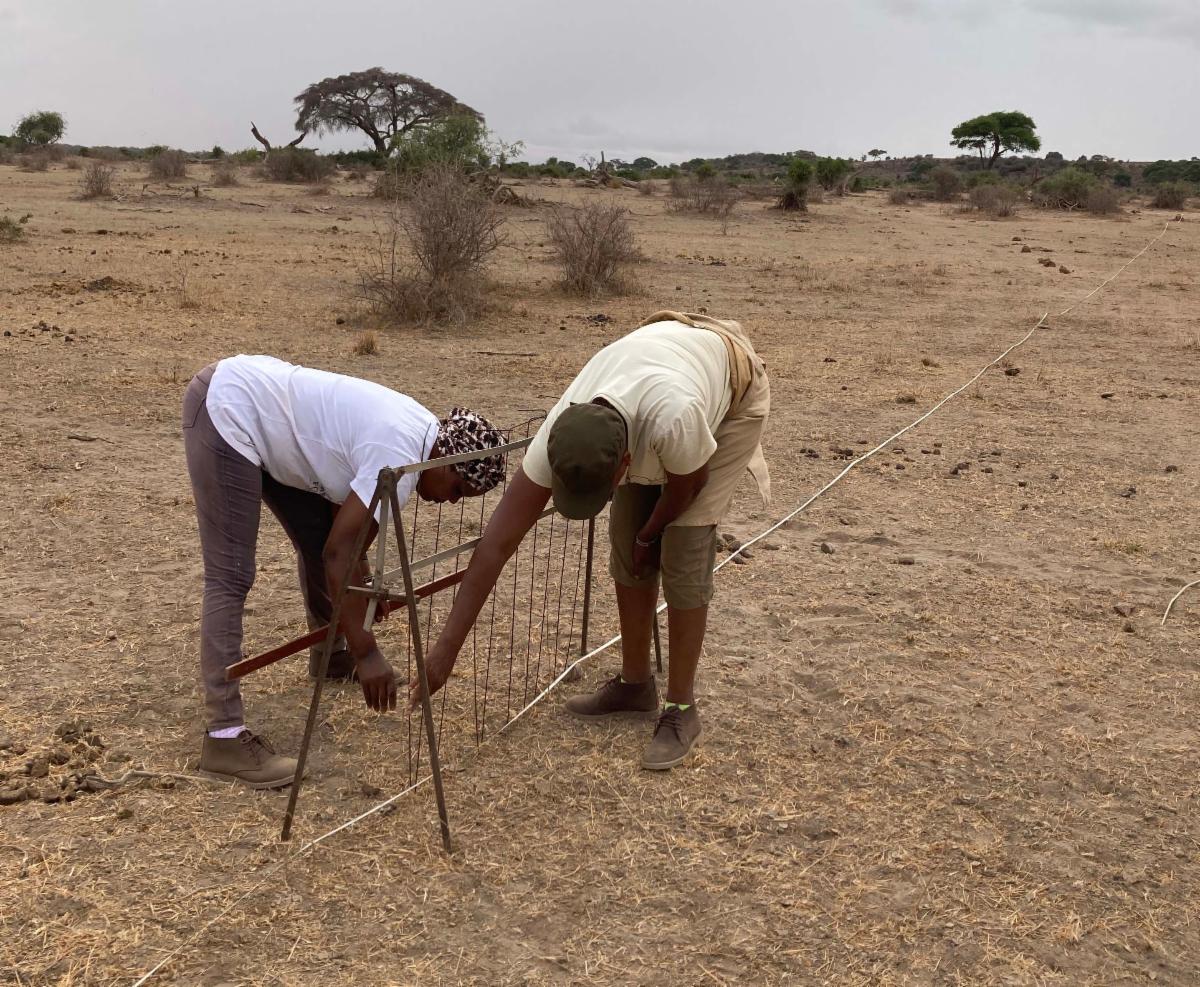
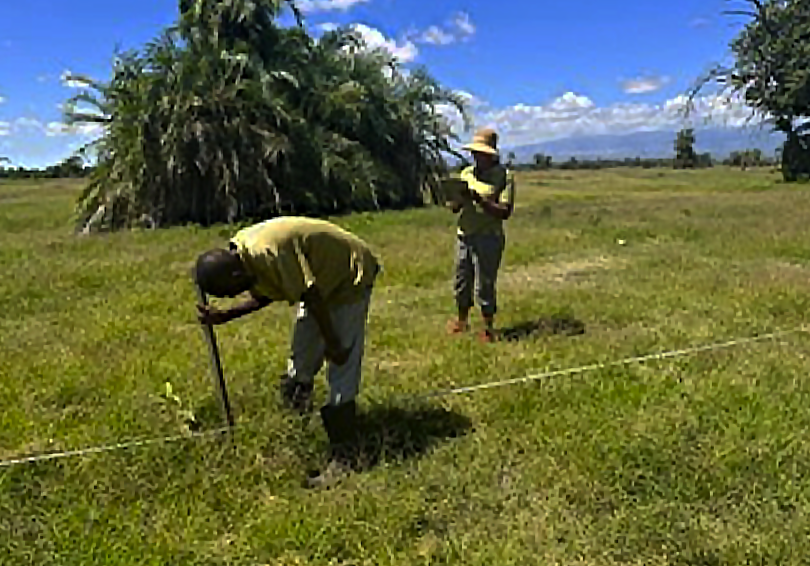
In 1985, after studying elephant foraging behavior for my PhD research, I established vegetation plots in several sites in the National Park. Monitoring the vegetation involves driving out to the locations and measuring grass cover and height in transects so that biomass can be estimated. For many on the research team, this is not their favorite activity. Observing elephant behavior, checking for new babies or missing family members, and taking ID photos is much more enjoyable than bending over a metal frame with a metre stick and taking 50 measurements along the 100m tape measure, before driving to the next place and repeating, over the course of three days. It is a tribute to the team's dedication that they have done this, with only moderate complaints, every year at the end of wet and dry seasons, for the past 40 years.
A continuous record of daily rainfall has also been maintained at the Elephant Research Camp in the middle of the Park. Plant biomass responds to rainfall, and we can see from the 40 year record that there are higher peaks in wet periods and deeper troughs in dry periods and droughts. Elephant demographic parameters, such as conception and mortality rates, rise and fall with changes in forage abundance on a seasonal basis and in wet or dry periods.
We plan to take this monitoring further by looking for relationships between forage biomass at the ground-based sites and satellite remote sensing data, so that we can extend the assessment of plant communities from the few localized ground sites to the wider Amboseli region. This bigger picture will help us assess changes in and prospects for elephant distributions, movements and use of landscape corridors, in the face of the land use changes that are transforming the habitat for the elephants, and all the other wildlife species, across the ecosystem.
| | The History of the FB Family - Updated | | An FB family portrait from 2022 | | |
Freda of the FBs had one of the longest reigns as matriarch of any of the families in Amboseli. She was there when the family was first sighted on the second day of the project on September 2, 1972, and she continued as matriarch until she died in 2009. That made her very special to us. Freda’s family is one of the best known in the population. We have continuous records of its births and deaths, good times and bad times over the past 53 years.
In those first days we were trying to contact as many groups of elephants as possible and photograph at least the adult members. We drove out to the western part of the Park crossing the causeway over the Enkongu Narok swamp. Just along the shore we found a group of females with calves. Unfortunately, they were disappearing into the deep swamp, but we managed to get a few photographs. When we developed the rolls of film in Nairobi we identified two females-–one adult and one sub-adult--who we assumed belonged to a single family. On that first trip we had seen and photographed seven definite families each of which we gave a letter of the alphabet. The first group was called the "A" family; the sixth group was given the letter “F”. We named the larger female Freda and the younger one Fay.
| | |
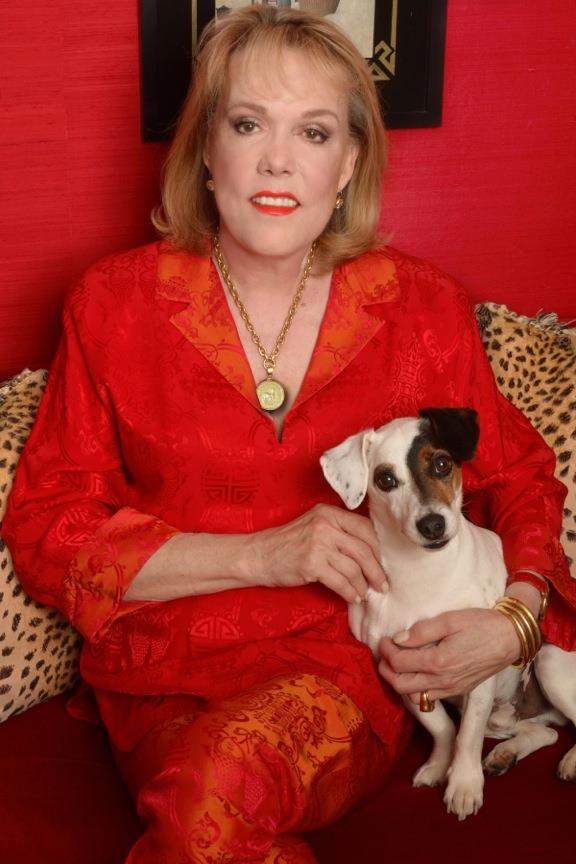
We are deeply saddened by the death of our longtime Board member, Lynn Chase, who passed away on July 30. A native New Yorker, Lynn Chase graduated from Bennett College and completed her studies at the New York School of Interior Design. Lynn always had a deep connection with nature, and it became the driving force in her life and work.
Lynn traveled extensively through Africa and South America, and it was this travel that led to her spectacular body of work — paintings and sketches, porcelain dinnerware collections, and home furnishings, which she brought to the world first for Lenox China, and then under the name Lynn Chase Designs. Her work celebrated jaguars, monkeys, tigers, parrots, sea life, and, of course, elephants, and expressed not only her fascination with wildlife but also her concern for the precarious nature of its future.
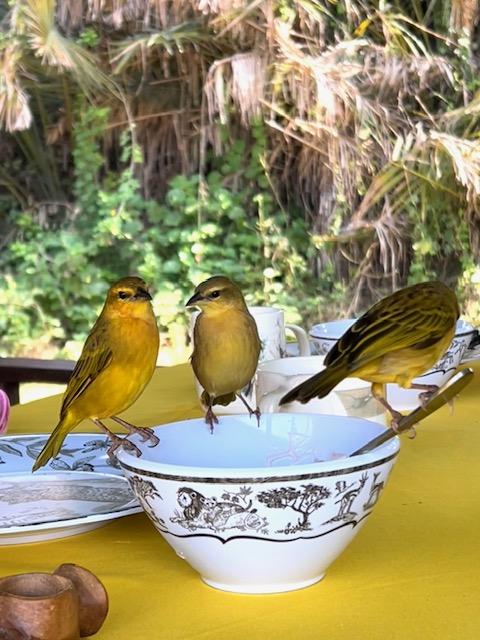
She was a woman of great generosity, founding the Lynn Chase Wildlife Foundation, an independent nonprofit dedicated to preserving endangered animals around the globe. People from all over the world collected her work and often shared stories of being at a dinner party and finding her designs on the table. Indeed, you can find her designs on our table in Amboseli, where they are a favorite of staff and guests.
Lynn’s compassion will live on in the hearts of everyone who knew her—and in gatherings of people around the world who still set their tables with her creations. We will greatly miss her on the ATE board.
| Lynn's beautiful dishes in camp adorned with Taveta Golden Weavers | |  | |
Scholarships
This year we are supporting 18 students, 12 of them at university level. Ours is a hands-on program. We don’t just pay for their tuition and leave it at that. Sylvi Nyambura oversees the program with great care for these young people. She visits them and attends their open days and graduations. For the secondary school students, she goes with them to shop for all the equipment and supplies they need before they are sent off to boarding school. In addition, she councils those who are struggling.
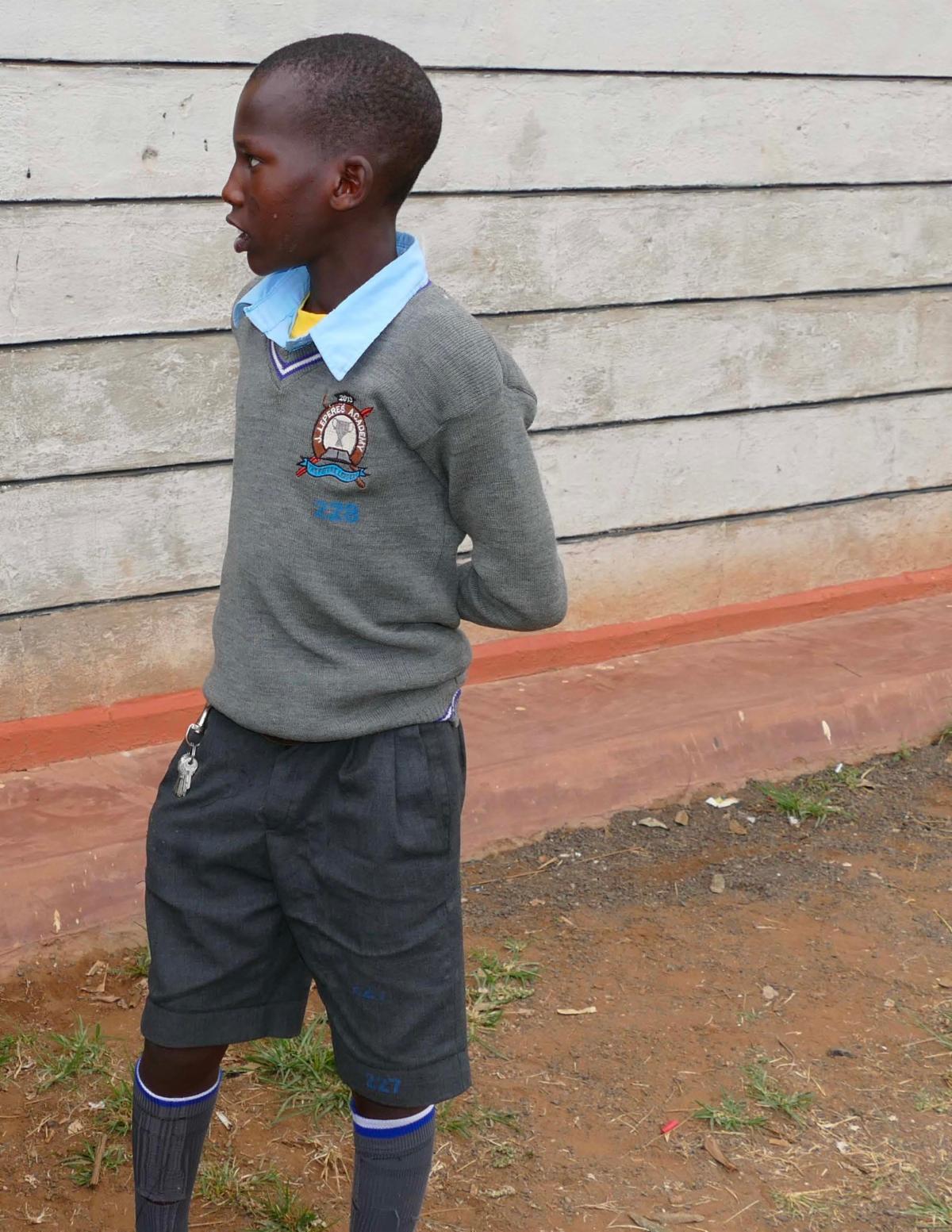
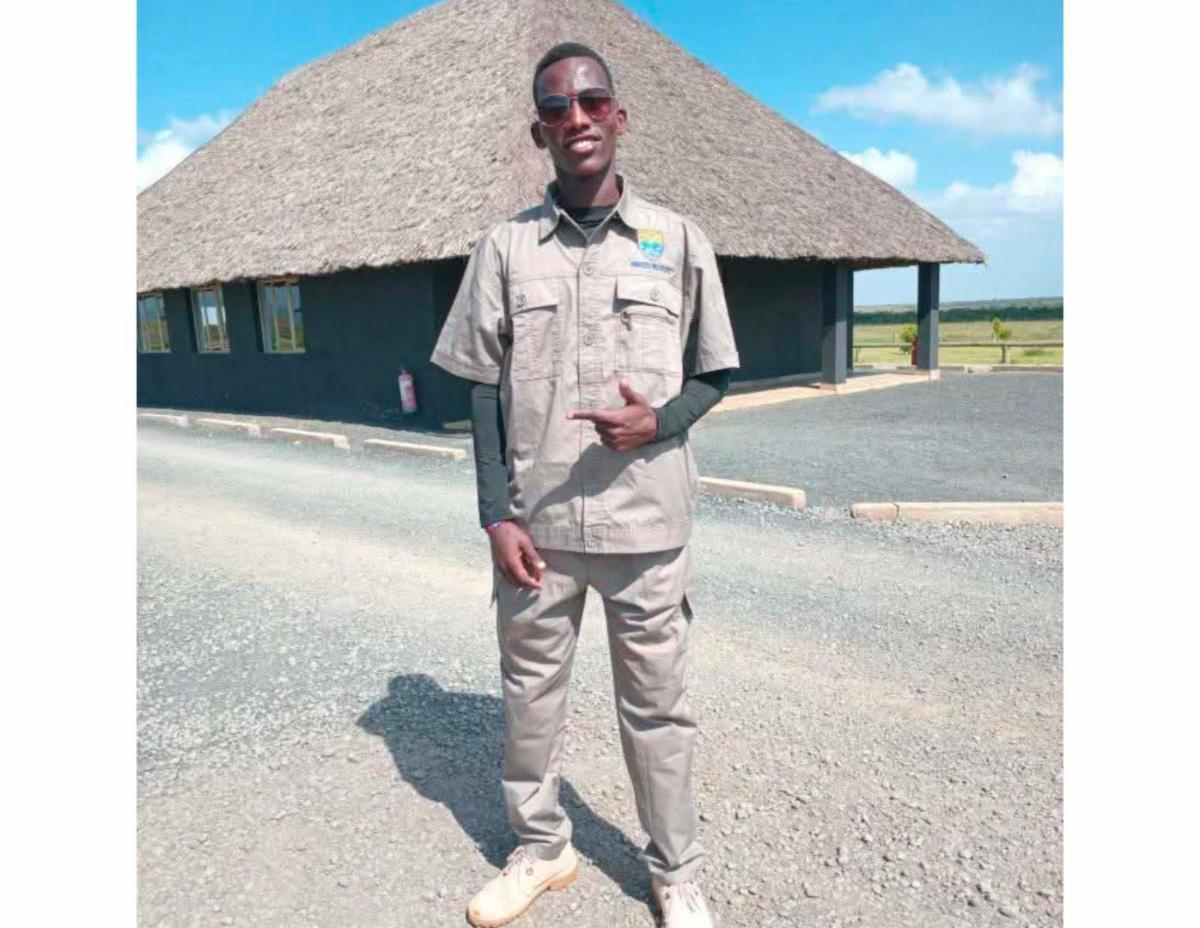
We are very proud of one young boy who we have been sponsoring since 2014. Martine Kimunyan is the son of one of our scouts who sadly died of cancer. We have supported him throughout his education, and he will be graduating from the Amboseli Institute of Hospitality and Technology with a diploma in wildlife management this October.
| Martine in junior school and at his attachment today | |
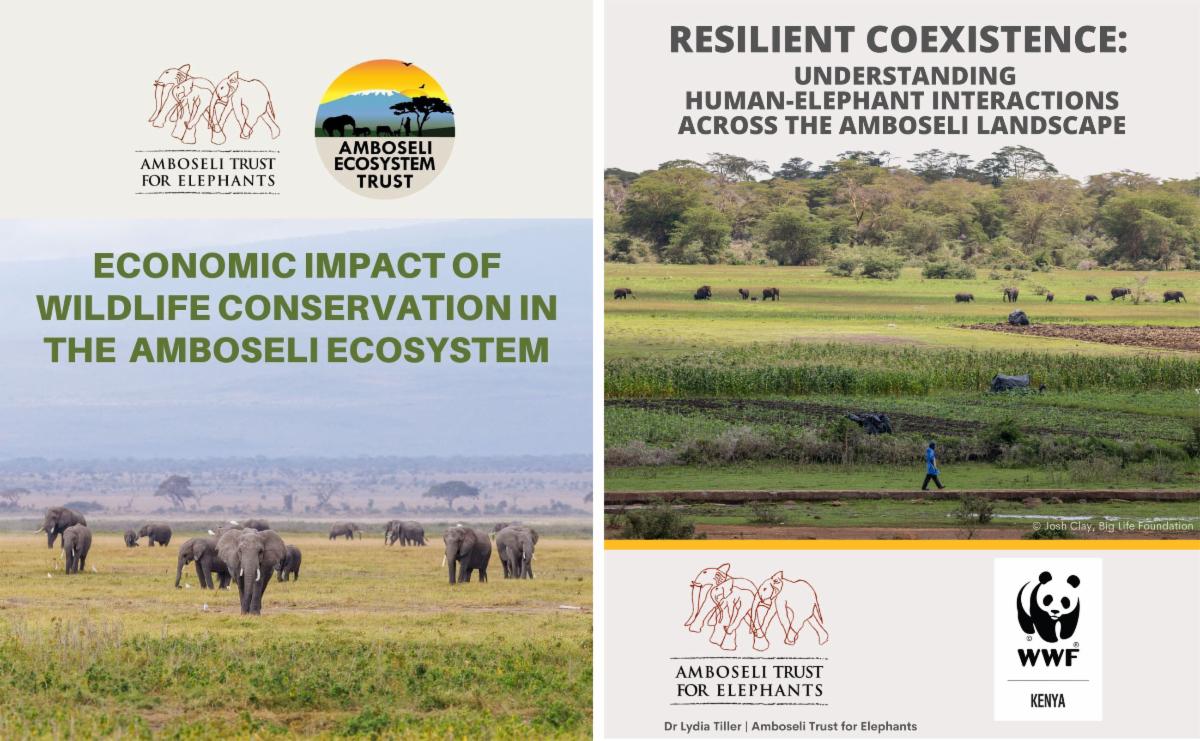
Tal Manor has produced a second economic benefits report. Five years ago, ATE in partnership with the Amboseli Ecosystem Trust, commissioned a report on the financial benefits of wildlife to the people in the Amboseli ecosystem. It was published in 2018, and it showed considerable economic benefits to local people & businesses. We followed up with a second report released this year.
Lydia Tiller’s work on human-elephant coexistence is going from strength to strength. She has produced a very impressive bound report on this work entitled: “Resilient Coexistence: Understanding Human-Elephant Interactions Across the Amboseli Landscape”.
Both of these reports are available here.
| | | |
Air Kenya
Pradeep Bansal
Born Free Foundation
Lisa Ching
Olivier Delaere
Shephal Doshi
Joseph and Marie Field Family Foundation
Teri Gabrielsen
Gary Gonzalez
Elizabeth Halliday
Ralph Hammelbacher
Marc Hauser
| | | |
Dennis Lindfors
Linda MacLaughlin
Ernest Mahaffey
Maue Kay Foundation
Penelope Naylor
Jules Oldroyd
Mary Jane O’Loughlin
Rogers Family Foundation
Gwen Stern
Cameron Texter
Kishor Varsani
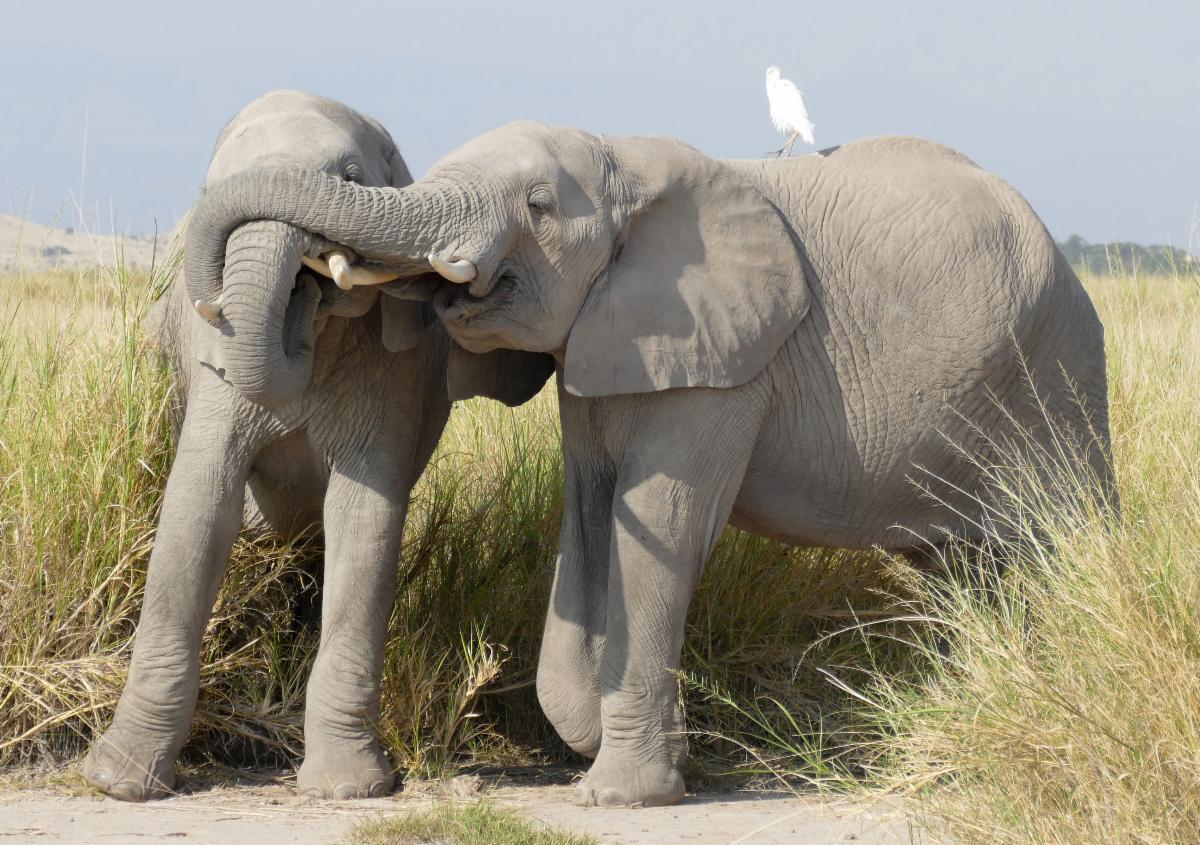
| | The two boys playing are Falafel and Fortinbras from the FB family, which is one of the six families you can follow in our Elatia program. You can choose one or more of the families to join the program. You will receive regular updates, which include photos and videos and news of what is going on in the family. To learn more about Elatia go to: this link or contact us directly on: info@elephanttrust.org | | | Laxmi, with her mother Lassit of the LD family, was recently named by a supporter. Laxmi was born in January 2022. Her namer will be able to follow her life as she grows up and has her first calf and perhaps goes on to lead her family one day. You too can name an elephant calf. The name you give "your calf" forms a part of the Amboseli dataset for all time. For more information write to us at: info@elephanttrust.org | | | Give a Gift that Lasts Forever | |
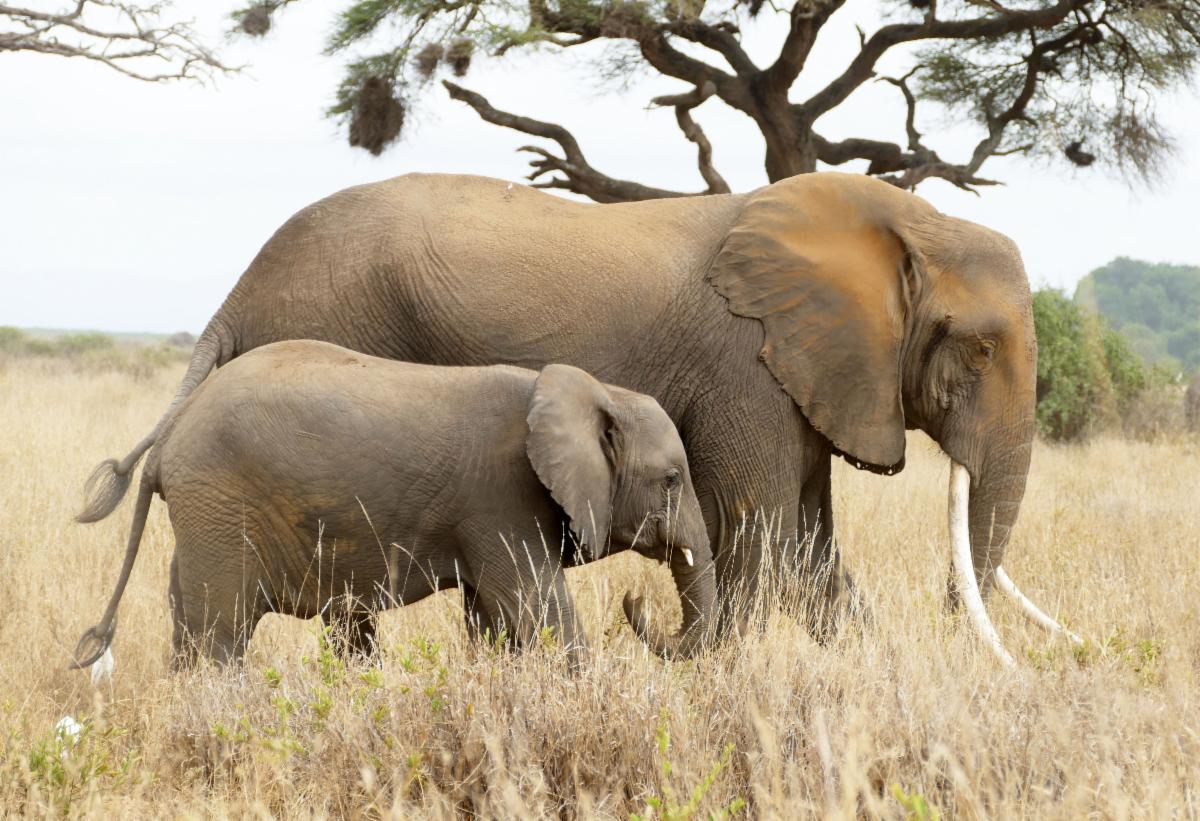
These two calves from the PC family could have long lives ahead of them. You can assure that their world remains secure by designating ATE as a beneficiary of your will, individual retirement account, or life insurance policy. To learn more about planned giving, contact Betsy Swart: eswart@elephanttrust.org
Tel: +1-508-783-8308
| | | Echo's adult daughter Enid with her latest calf born in June this year. She is now the leader of the EB family. Help us keep her safe by making your online purchases through iGive. If you sign up the Amboseli Trust for Elephants as your recipient organization, we will get a small percentage of the sale. www.igive.com | | |
Make a Donation
We use a secure online system on which you can make your donation with a credit or debit card. All donations exclusively support our not-for-profit organization.
| | | | |