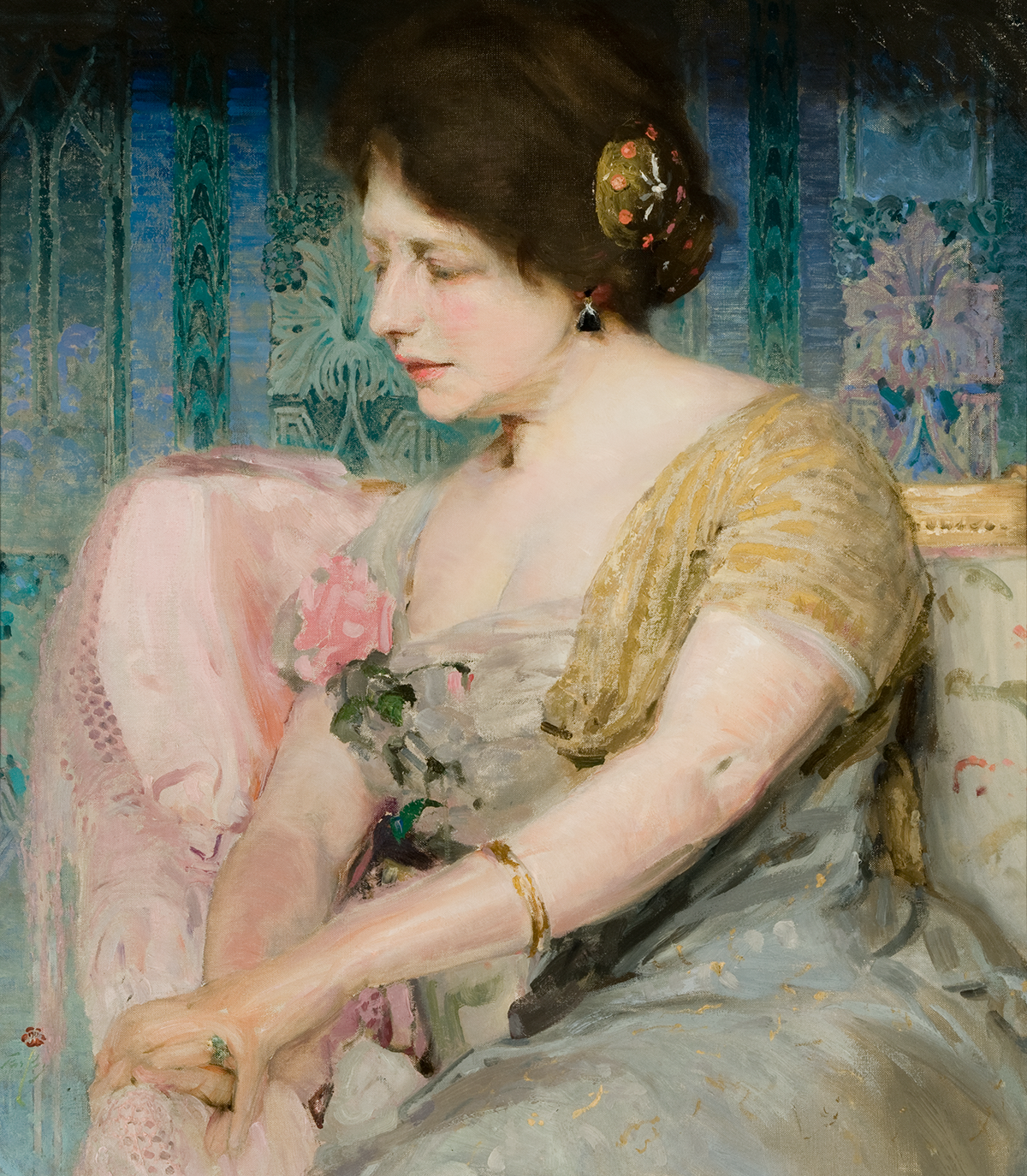
I was predisposed to love
Blue and Gold
, as I have long believed those to be the two colors out of every possible color pairing that look best together. This dates back to my childhood love of the animated
Beauty and the Beast
. Check out the ballroom, “Tale as Old as Time” scene - a kaleidoscope of blue and gold. However, a friend pointed out that this painting would be more appropriately titled,
Gold and Pink
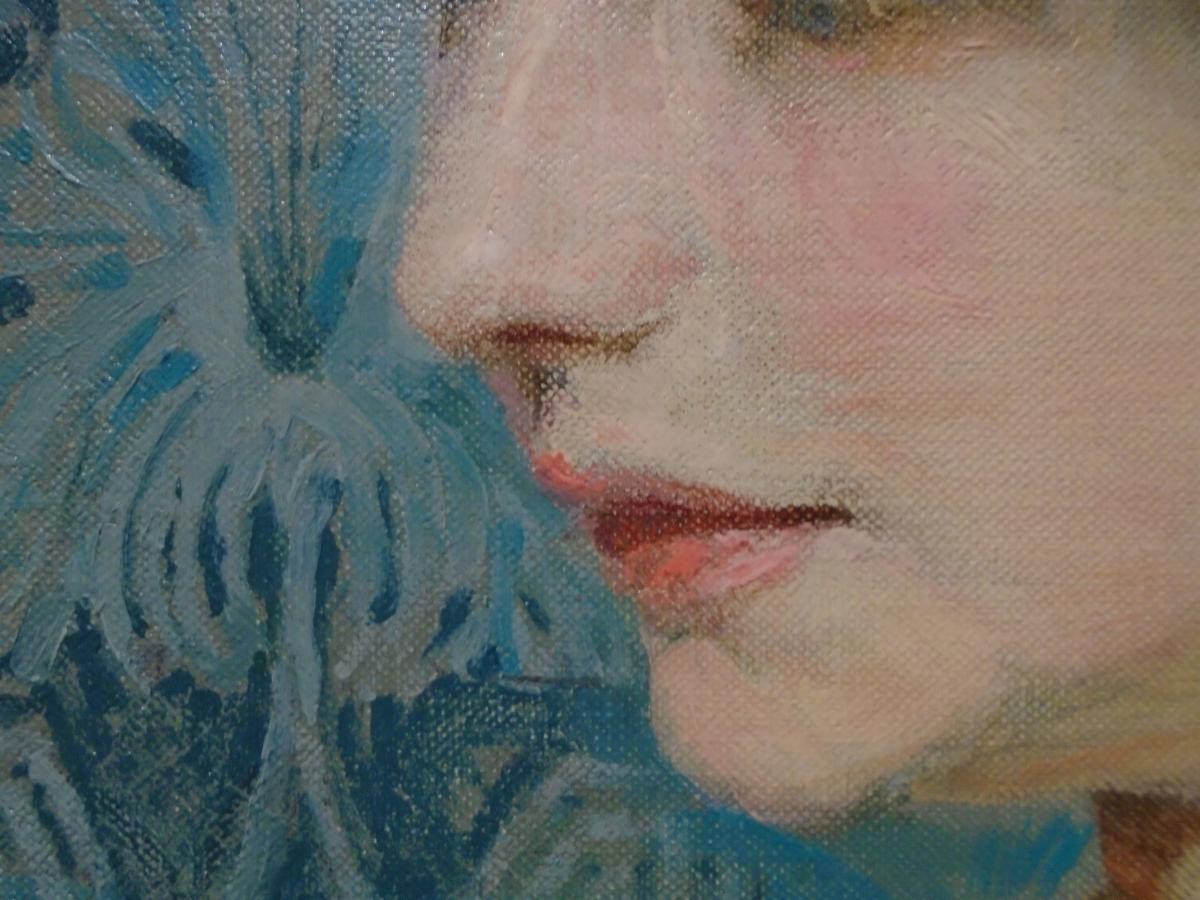
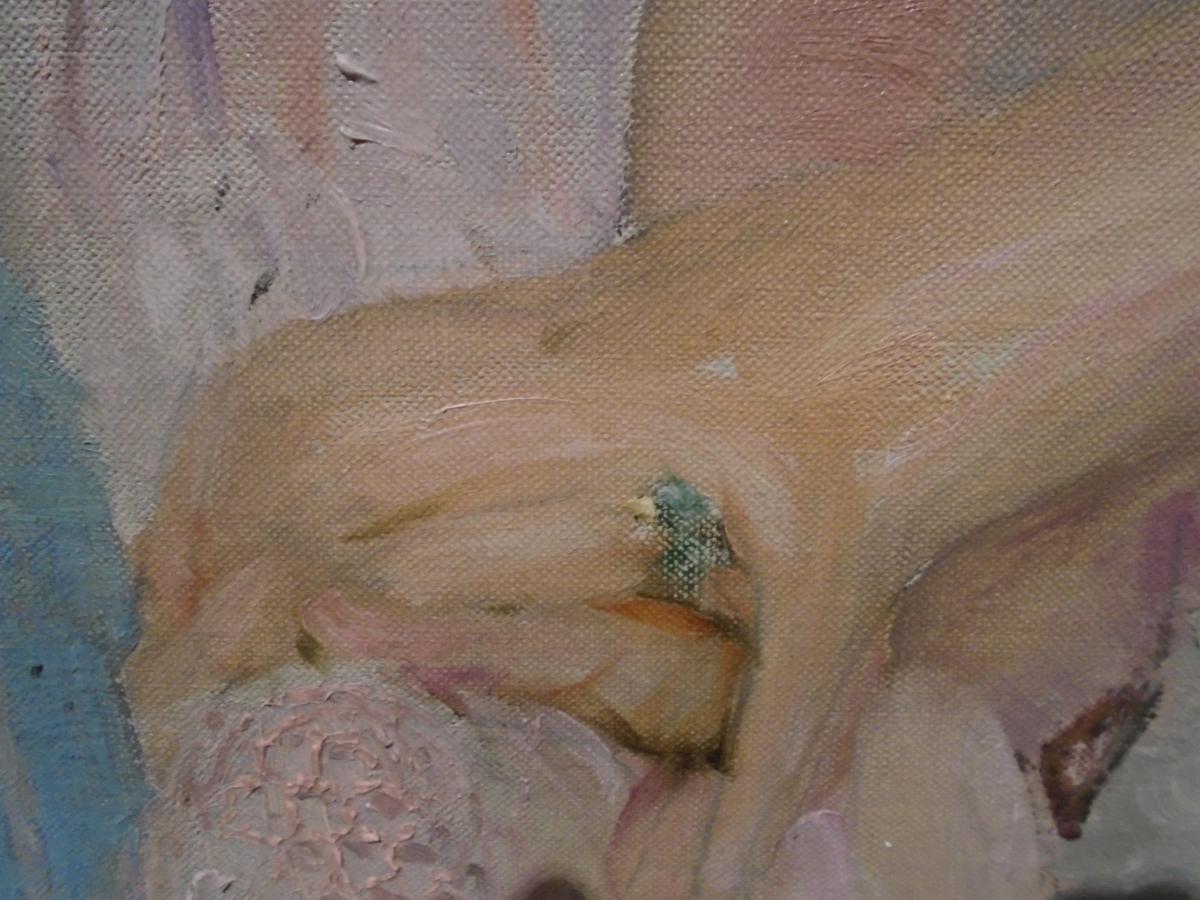
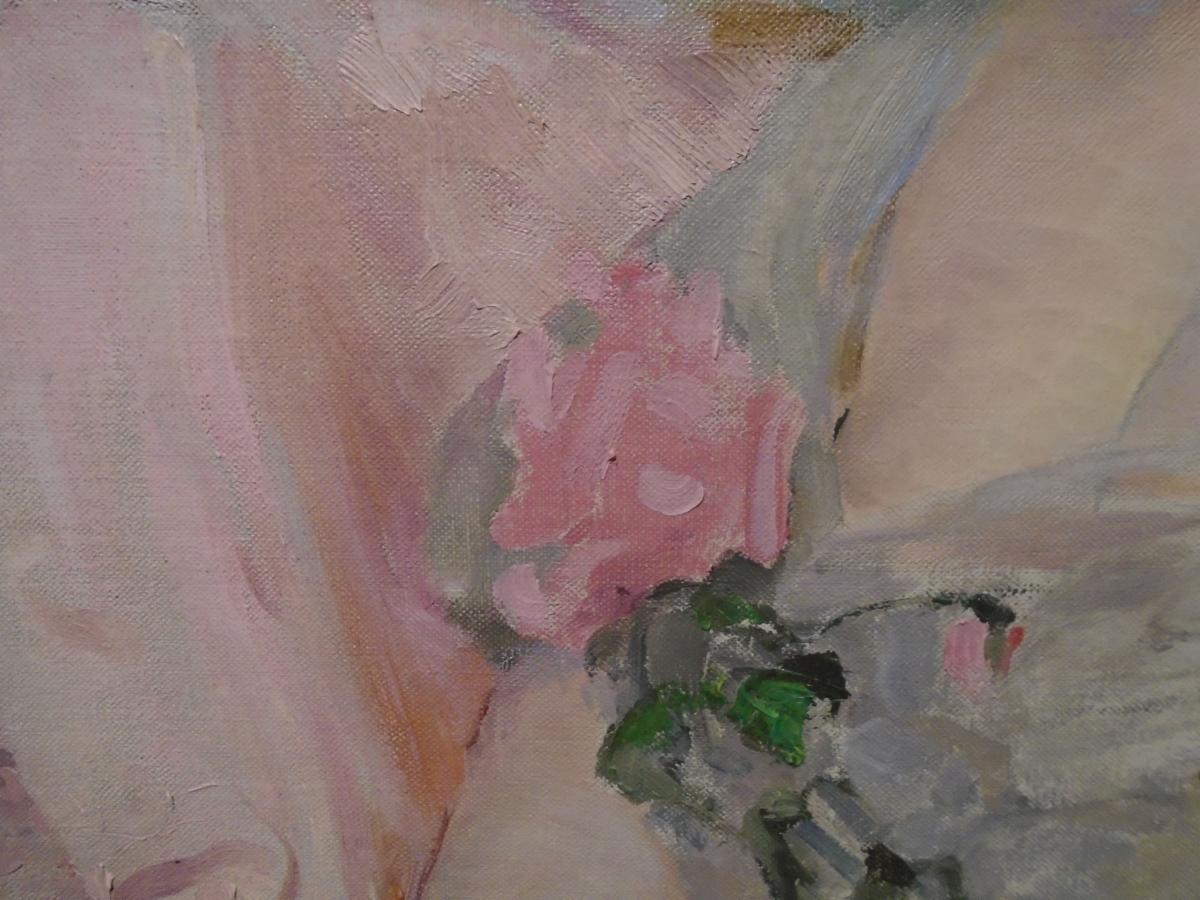
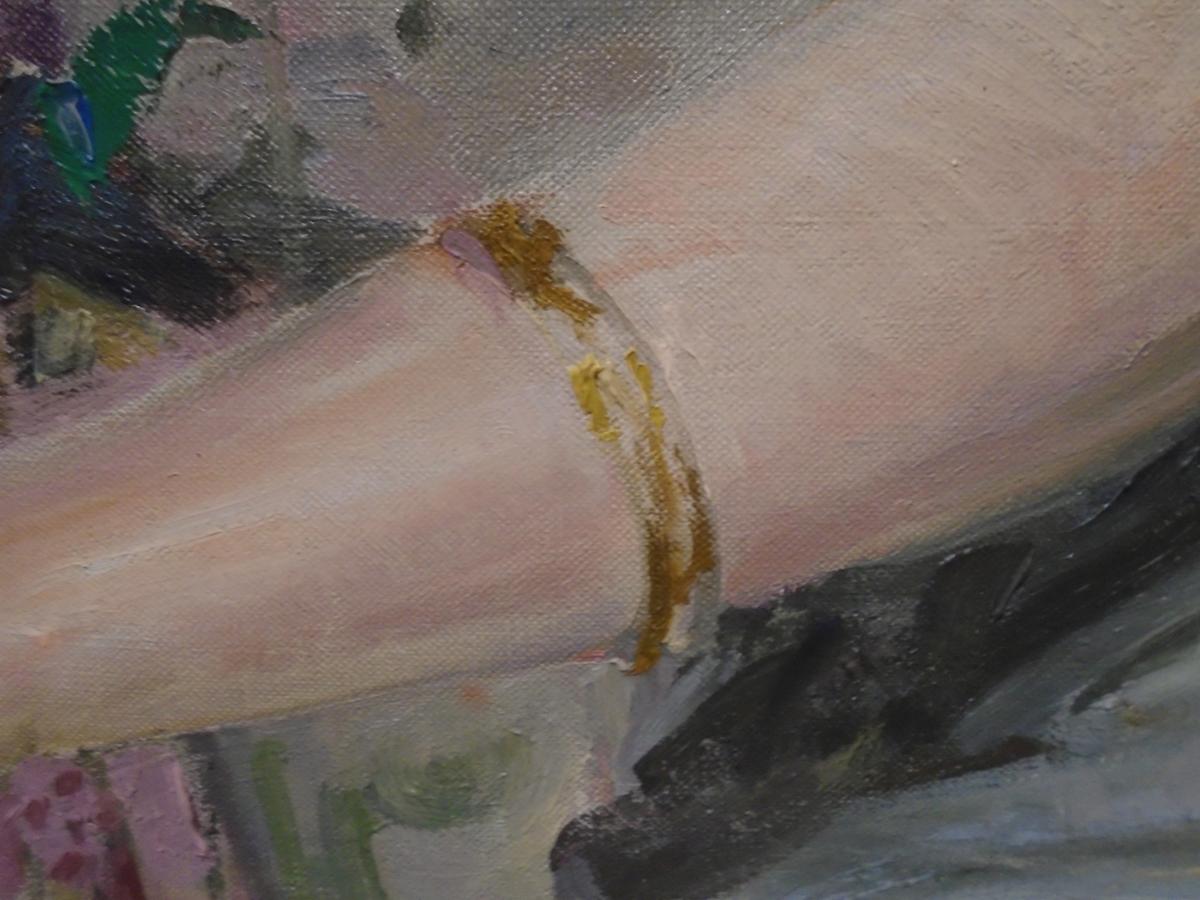
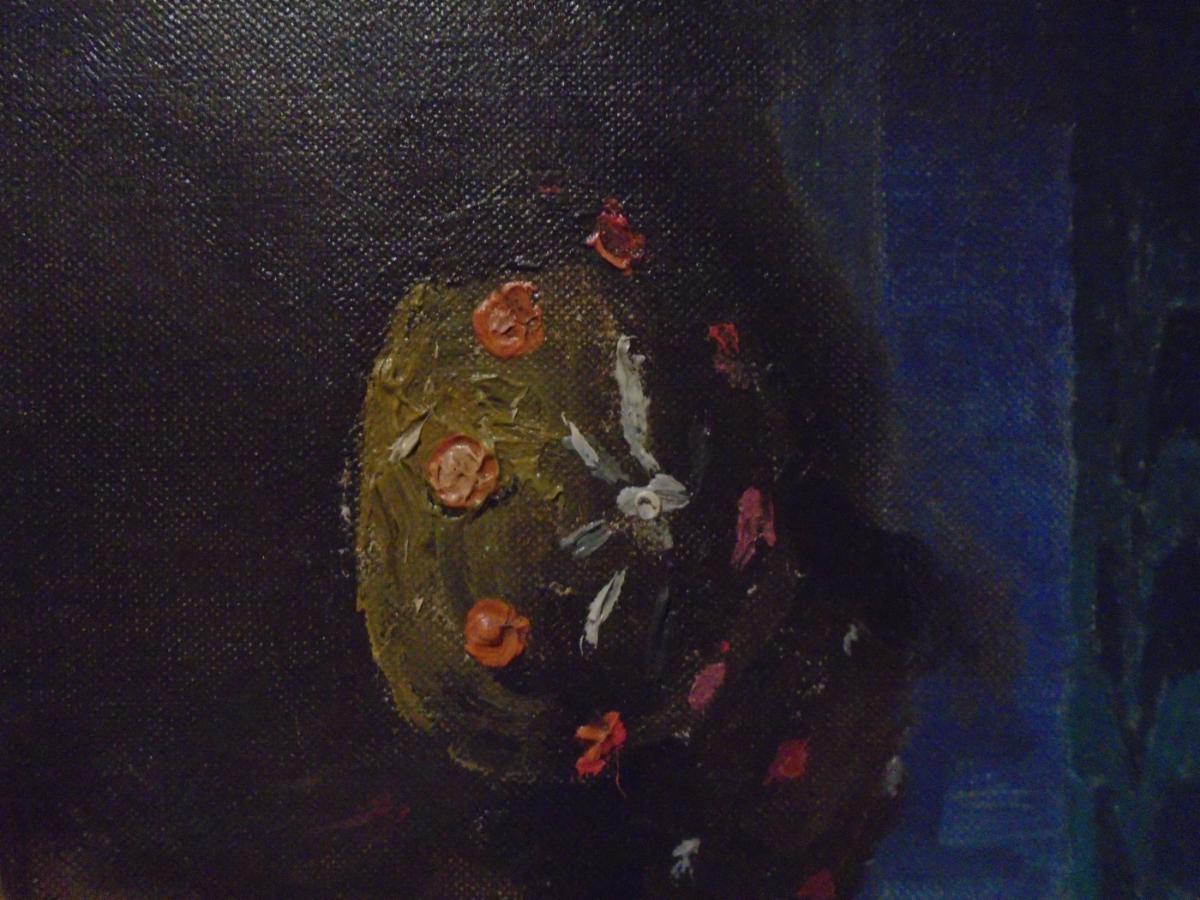
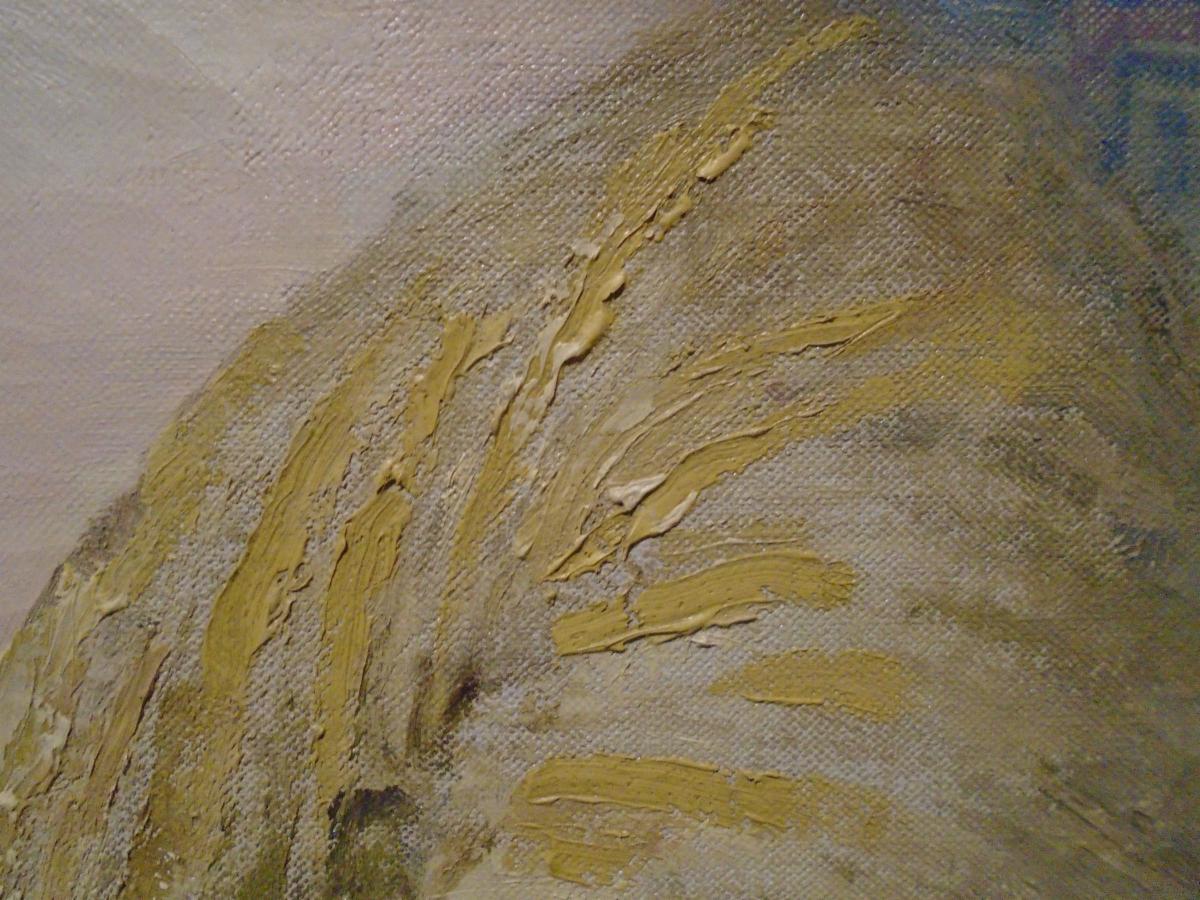
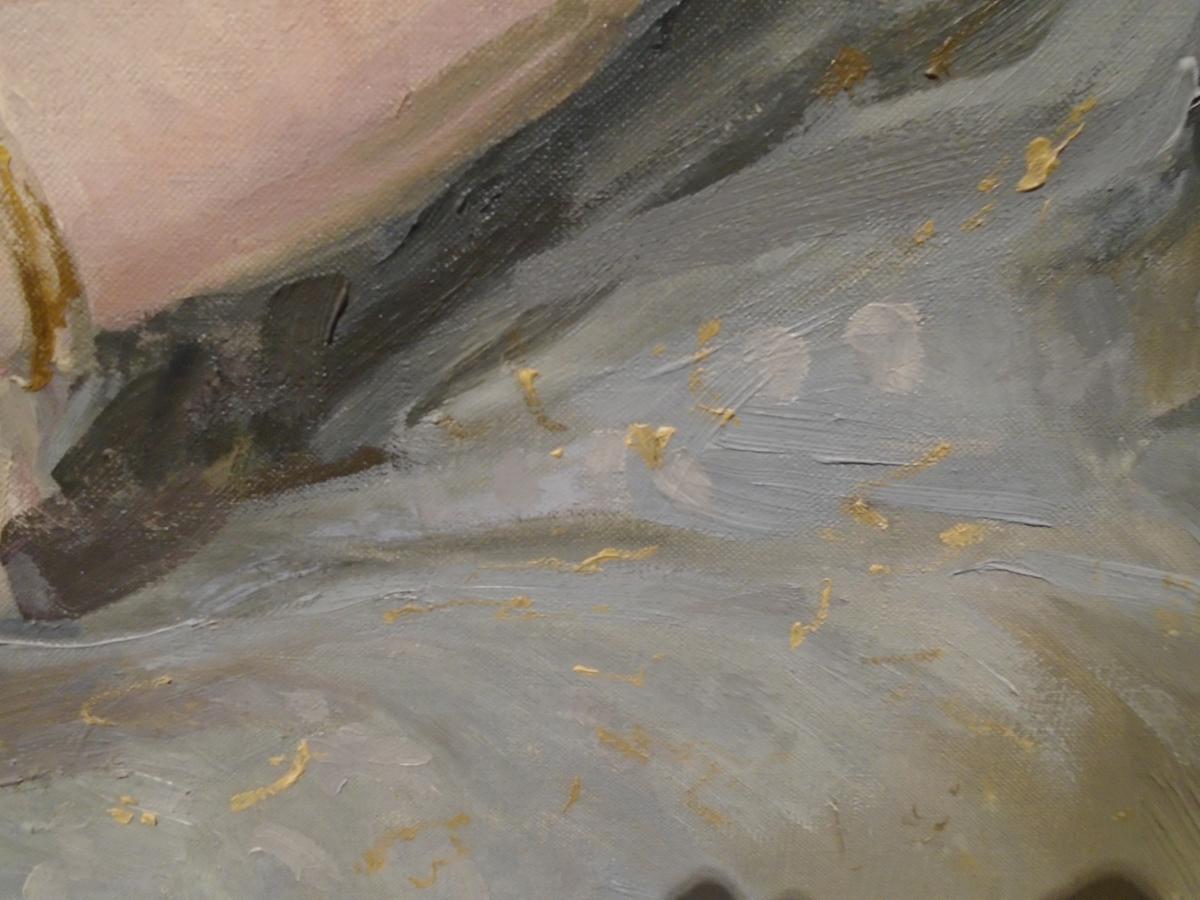
. The right side of the painting (the woman subject’s left) is awash in gilt. From the furthest right we have the gilded wood back of the sofa, which leads directly to the sitter’s filmy gold bolero, which drapes delicately over her arm, drawing the eye to both her gold bangle and elaborate hair ornament with coral beads. The left side of the painting is flooded in pink, starting with the bubblegum-colored flower pinned to her chest. The flower’s petals just touch the filmy pink throw that covers the left end of the sofa, pink leading to pink. The sitter’s skin even looks a bit more flushed on this side. The lush colors of Farley’s palette complement the rich textures, such as the deep blue brocade wallpaper behind the sitter. This darker color also acts as a frame to highlight the luster of the subject’s pale skin and the pink and gold accents. It’s a rich jewel-box of a painting, and I’m so happy it’s part of the exhibition.
Richard Blossom Farley was born in Vermont in 1875 and studied at the Pennsylvania Academy of Fine Arts with William Merritt Chase and Cecilia Beaux in the mid-1890s. After PAFA he traveled to France and continued his studies with James Abbott McNeill Whistler. Farley worked steadily as a successful studio artist, specializing in portraits in opulent interiors like
Blue and Gold
. He spent World War I working as a "camoufleur," for the U.S. Shipping Board, painting ships in camouflage designs to protect them from attack. After the war, Farley settled in New Hope, Bucks County, Pennsylvania.
--Associate Curator Kate Kunau