|
Since December 2024, TRAC has recorded 75 claimed attacks by Islamic State Somalia (ISS), signalling a dramatic and sustained escalation in operations. Once functioning as the financial hub of the Islamic State network, ISS is now leveraging territorial familiarity and logistical depth to mount a high-frequency insurgency, primarily targeting Puntland forces. This operational tempo has profound implications for regional stability and transnational jihadist influence.
Historically viewed as a quiet facilitator in the Islamic State’s global ecosystem, Islamic State Somalia (ISS/Abnaa ul-Calipha) has shed its low-profile identity and launched a campaign of aggressive, high-volume attacks. This is a significant shift from financial coordination to kinetic operations. ISS has claimed 75 attacks since December 2024, the vast majority clustered in the Bari Region and Jalil Valley—key strongholds serving as a sanctuary and staging ground.
This strategic shift directly responds to intensified counterterrorism campaigns by Puntland security forces. In just the past week alone, ISS has claimed six attacks, including IED ambushes, armed clashes near Qara Village, Dandamale, and Miraale Valley, and the targeted assassination of a local security advisor. The sharp uptick in activity, primarily during Ramadan, reflects a deliberate retaliation strategy and the depth of the group’s pre-established logistics, including weapon stockpiles and entrenched mountain hideouts.
What makes this trend particularly alarming is not just the volume, but the sustainability of the pace. That ISS can stage 75 attacks in under five months demonstrates organisational resilience, local recruitment, and access to materials far exceeding what was previously assumed. The group’s use of complex terrain—notably in the Bari mountains and Wadi Ja’il—has allowed them to evade complete eradication and inflict repeated blows on state forces. These remote areas provide natural defences, concealment, and mobility, making traditional military campaigns dangerous and largely ineffective.
The implications of this escalation are profound. First, Puntland’s ability to contain the threat is at risk of being overwhelmed, particularly if ISS continues to layer IED tactics with targeted assassinations and coordinated assaults. Second, ISS’s ability to sustain high-frequency attacks may elevate its status within the broader Islamic State network, potentially drawing increased funding, fighters, and digital propaganda opportunities. This could further re-establish Somalia as not just a logistical node, but an active jihadist battlefield.
If left unchecked, this resurgence could trigger spillover effects across East Africa, embolden other Islamic State provinces, and fuel recruitment by portraying ISS as a resilient and capable extension of the global jihadist movement. This escalation is unfolding in an already crowded militant landscape, where Al-Shabaab has effectively encircled Mogadishu on three sides, while the only remaining corridor of escape is rapidly narrowing with each passing day.
| | | TRAC Incident Report: The Resistance Front (TRF) Militants Kill 28 Tourists, Primarily Hindus, Including Israeli and Italian Nationals, After Asking Their Religion in Baisaran, Pahalgam, Anantnag District, Jammu & Kashmir, India & Pakistan | | |
On 22 April 2025, militants from The Resistance Front (TRF) carried out a coordinated mass shooting targeting tourists in Baisaran, Pahalgam, Jammu & Kashmir. Armed with assault rifles, the attackers fired over 50 rounds in five minutes, killing at least 28 people, mostly Hindu tourists, including Israeli and Italian nationals, and injuring dozens more. Victims were singled out by religion, with militants demanding Aadhaar cards and names before opening fire. Among the dead were Indian Navy officer Vinay Narwal and an Intelligence Bureau officer, both targeted while off duty. The assailants remain at large at this time of writing.
The attack marks a significant escalation by TRF, a group widely recognised as a proxy for Lashkar-e-Taiba (LeT). The tactics—sectarian targeting, execution-style killings, and retreat into forested terrain—mirror those used in previous LeT operations, including the 2008 Mumbai attacks. While TRF presents itself as an independent, homegrown movement, its operational similarities and ideological alignment with Pakistan-based groups like LeT and JeM underscore a deliberate strategy of proxy warfare, allowing sponsors to avoid direct attribution.
This incident has put the already fragile relationship between India and Pakistan in jeopardy. India’s response was immediate and forceful. The government announced the suspension of the Indus Waters Treaty, a decades-old agreement critical to Pakistan’s water supply, along with the closure of the Attari-Wagah border crossing, the expulsion of all Pakistani nationals, and the removal of Pakistani military personnel from its High Commission. These measures reflect both the severity of the attack and its timing, coinciding with the visit of U.S. Vice President JD Vance, adding diplomatic weight to India’s retaliation.
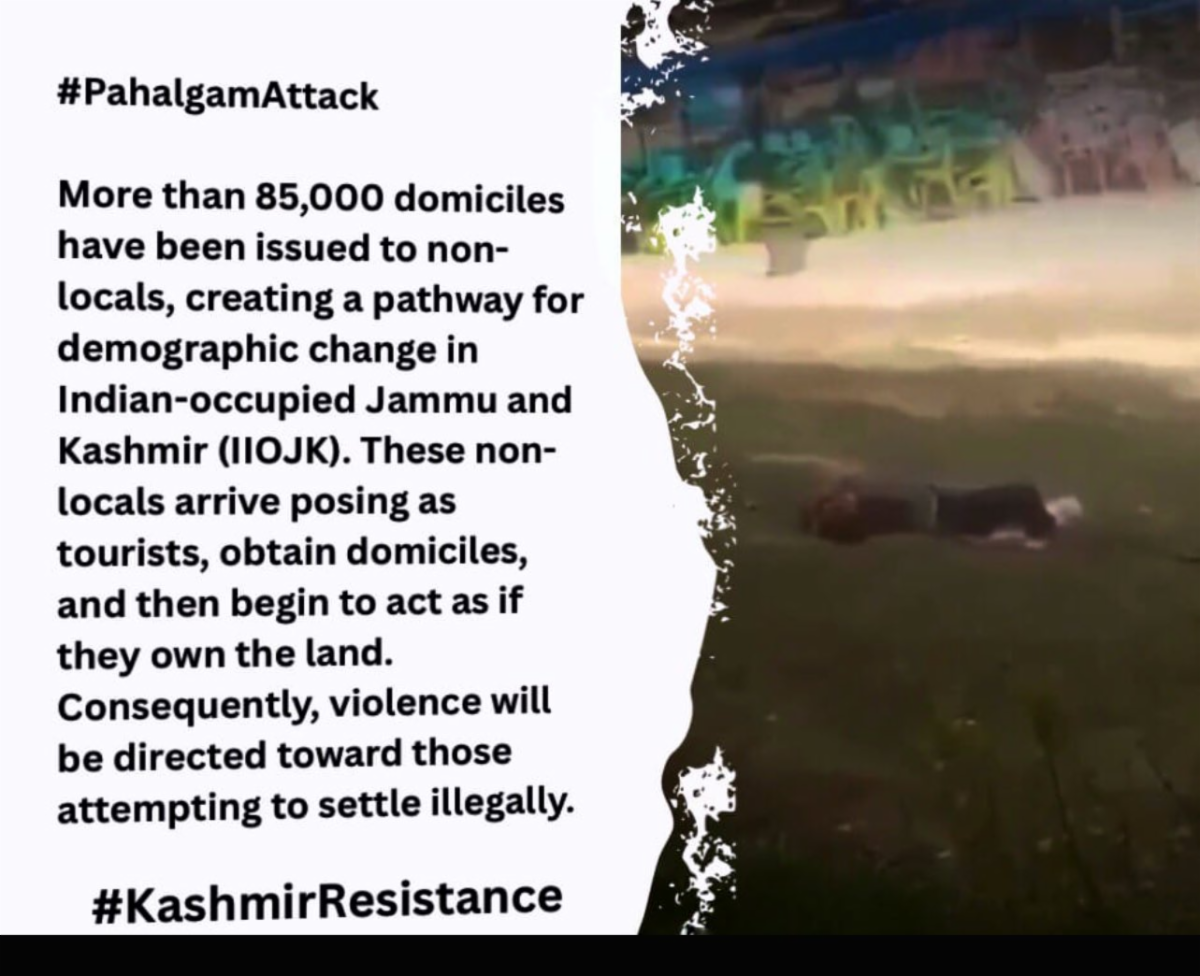
TRF claimed the attack was in protest of Indian policies allegedly aimed at altering the demographic makeup of Kashmir. However, the deliberate killing of non-local, unarmed tourists rather than administrative figures reveals a broader sectarian and jihadist motive, designed to instil fear and provoke political upheaval. It also raises concerns over the growing trend of civilian-targeted insurgent attacks under the guise of political grievances.
The incident illustrates the deepening complexity of the Kashmir conflict, as decentralised militant groups exploit sectarian narratives and international attention to intensify violence. With TRF stepping up its profile and India adopting an assertive stance, regional tensions are poised to escalate further. Pakistan’s forthcoming response will be pivotal in shaping whether this crisis deepens or de-escalates. TRAC will continue to monitor the situation closely.
| | TRAC Incident Report: Newly Formed Jihadist ‘Mahmuda’ Group Targets Communities Around the Kainji Lake National Park (KLNP), Kwara and Niger States, North Central Nigeria | | |
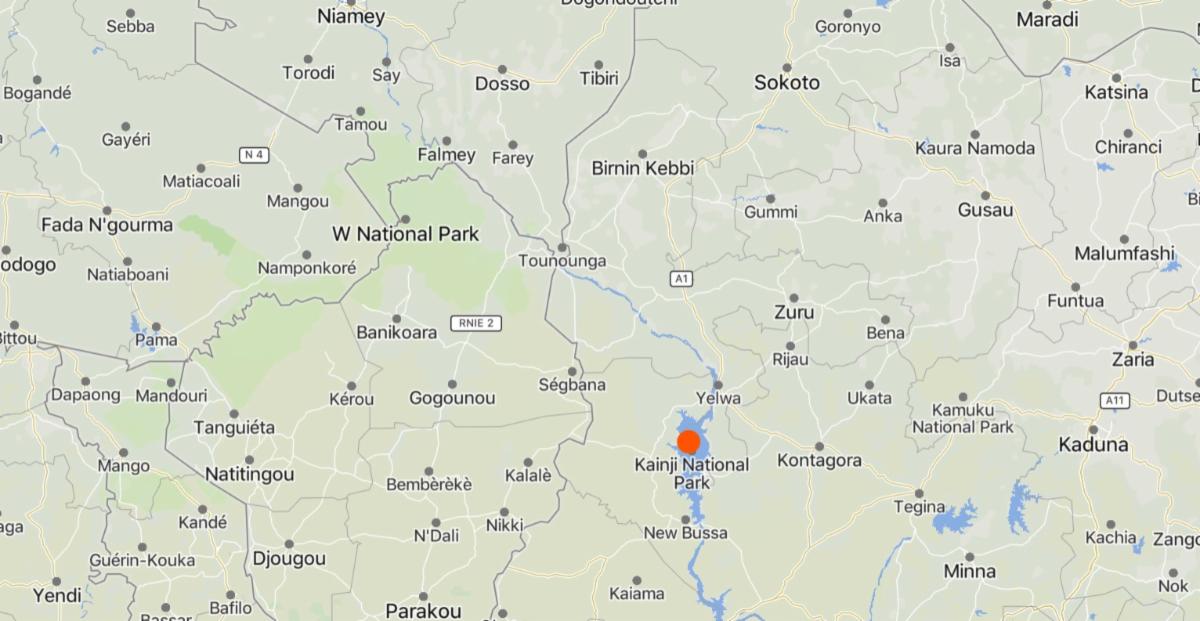
On 18 April 2025, intel surfaced regarding the formation of a new militant jihadist group called the Mahmuda Group, operating in and around Kainji Lake National Park (KLNP), which spans parts of Kwara and Niger states in western Nigeria. The group is believed to be led by an individual known only as Mallam Mahmuda, and is named after him. In a voice message circulated to local communities, Mahmuda issued threats of violence, signalling the group’s intent to impose control through fear and intimidation.
The affected communities in Kwara State include Kemaanji, Tenebo, Baabete, Nuku, and Nanu in the Kaiama Local Government Area (LGA) and multiple villages in the Yashikira District of Baruteen LGA. In Niger State, communities such as Babana and the Wawa District in Borgu LGA have also reported militant activity linked to the group. The Kainji Lake National Park, a largely forested and ungoverned area, offers ideal terrain for militant hideouts and mobility, further complicating security operations.
Early accounts suggest that the Mahmuda group has engaged in both killings and kidnappings for ransom, following a model of violence and extortion typical of other jihadist and bandit groups in Nigeria and the broader Sahel. While some sources speculate that the fighters may have infiltrated from neighboring Benin or Niger, TRAC assesses that the group could also be a splinter faction of Boko Haram, especially given its structure, tactics, and religious framing. The possibility of it being a rebranded or breakaway cell highlights the fluid and fragmented nature of jihadist movements in Nigeria, where ideological shifts and leadership disputes often give rise to new violent actors.
The emergence of the Mahmuda group reflects a broader and troubling pattern: the continued proliferation of militant groups in regions with limited state presence, poor infrastructure, and weak local governance. This mirrors similar trends across northern and central Nigeria, where ungoverned spaces and cross-border smuggling routes facilitate the movement of arms, fighters, and radical ideologies. As established groups like Boko Haram and ISWAP face military pressure in northeastern Nigeria, new fronts are opening in the west, suggesting a geographic spread of militancy previously concentrated in the Lake Chad Basin.
In light of these developments, TRAC will closely monitor the group’s activities to determine whether Mahmuda represents a new independent jihadist actor or an extension of existing networks such as Boko Haram or ISWA. The implications of a jihadist foothold in western Nigeria—close to the borders of Benin and Niger—could signal a new transnational threat corridor, further destabilising already fragile border regions.
| | TRAC Incident Report: 10 Al-Shabaab Militants Ambush Safaricom Fuel Tanker & Kidnap Technician, in El Wak, Mandera, Kenya | | |
On 22 April 2025, Al-Shabaab militants carried out a targeted ambush on a Safaricom fuel tanker in El Wak, located in Mandera County, northeastern Kenya, near the Somalia border. The vehicle was en route to a Safaricom communications centre when it came under attack. According to initial reports, at least 10 armed militants, equipped with AK-47 rifles and a PKM machine gun, intercepted the tanker and abducted a Safaricom technician. The two other occupants of the vehicle were left unharmed, and there were no reports of damage to the fuel tanker, which was later recovered by security forces.
Eyewitness accounts suggest that the same group of militants set up informal checkpoints, stopping multiple vehicles, including motorcycles and cargo trucks, on roads leading into El Wak. In a notably strategic behaviour, the militants questioned travellers to determine whether they were civilians or military personnel. Civilians were reportedly allowed to pass unharmed, underscoring Al-Shabaab’s calculated shift in targeting, where they appear to be sparing non-combatants while actively pursuing government or military-affiliated individuals.
This incident is consistent with TRAC’s broader assessment of Al-Shabaab’s evolving operational strategy. While the group has historically employed indiscriminate violence—including bombings and civilian massacres—they are now increasingly favouring more selective, militarily-focused operations. This shift reflects a strategic pivot aimed at undermining the Somali and allied Kenyan militaries, weakening government control, and positioning themselves as a legitimate governing authority rather than simply a terrorist entity. By reducing attacks on civilians and focusing on military and infrastructure targets, Al-Shabaab appears to be pursuing hearts-and-minds tactics to gain local support or at least compliance.
The ambush in El Wak also demonstrates Al-Shabaab’s expanding cross-border reach and intelligence-gathering capabilities, particularly in remote and under-governed regions like Mandera County. Their ability to coordinate such operations within Kenyan territory highlights the security vacuum along the Somalia-Kenya border, where the group's mobility and familiarity with the terrain offer them a considerable tactical advantage.
Meanwhile, the situation in Mogadishu remains dire. As stated above, Mogadishu is surrounded on three sides and is closing in on the only escape route daily. The group's territorial consolidation in surrounding regions places Somalia’s central government at severe risk, particularly as the group escalates direct assaults on security forces and state-linked infrastructure. This latest ambush in Kenya, while geographically distant, serves as a chilling indicator of the group’s intent to regionalise their control, push state forces further into retreat, and ultimately assert dominance over the Horn of Africa.
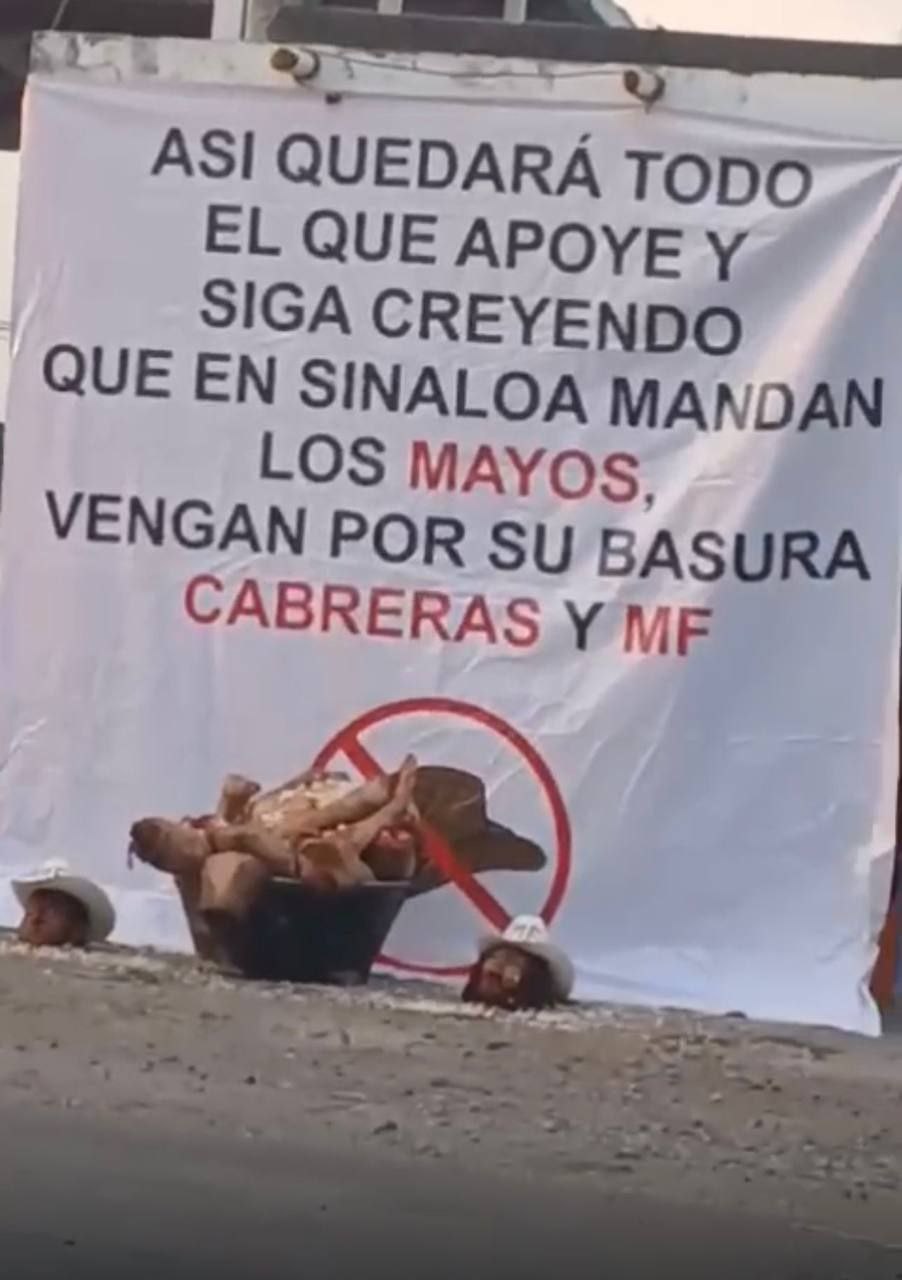
| | TRAC Incident Report: Cártel de Sinaloa (CDS) La Chapiza (CH) Sicarios Leave Dismembered Corpses Wearing Sombreros and Symbolic Narco-Message for La Mayiza (MF) and Los Cabrera, Chametla, Rosario Municipality, Sinaloa, México | | |
On 18 April 2025, Los Chapitos (La Chapiza) left a brutal narco-message accompanied by dismembered corpses wearing sombreros in Chametla, Sinaloa. The message was explicitly addressed to La Mayiza, a rival faction within the Cártel de Sinaloa (CDS). This gruesome display is the latest act of escalation in the ongoing internal cartel war that has pitted the two CDS splinter groups—Los Chapitos, loyal to Joaquín “El Chapo” Guzmán, and La Mayiza, aligned with Ismael “El Mayo” Zambada—against each other since early 2024.
While La Mayiza currently holds a broader national footprint, Los Chapitos maintain strongholds in Culiacán, Baja California Sur, Sonora, Chihuahua, and southeastern Mexico. The two factions are locked in a territorial and symbolic battle for control of Sinaloa, a region vital to trafficking routes, production infrastructure, and cartel prestige. This incident mirrors a similar one from October 2024, when five tortured bodies were left with sombreros placed on their heads, a macabre warning to La Mayiza to vacate Chapitos-controlled territory.
In this latest event, Los Chapitos directed their message to La Mayiza. They issued a broader warning to their known allies, including Los Cabrera, urging them to withdraw from the Sinaloa region. The sombrero is a recognised symbol of La Mayiza, while “pizza” imagery often appears in the propaganda or coded communications associated with Los Chapitos. The use of dismembered bodies and symbolic staging is a form of psychological warfare deeply rooted in Mexican cartel culture, designed to instil fear, assert dominance, and publicly humiliate rivals.
The escalation of symbolic violence between these two mighty wings of the CDS illustrates how fragmentation within large cartels can often lead to localised, guerrilla-style warfare. This infighting not only increases the brutality and frequency of attacks but also destabilises surrounding communities and complicates law enforcement responses. Chametla, like much of Sinaloa, is now caught in a conflict that is as much about territory and trafficking routes as it is about narrative control and legacy within the cartel world.
TRAC assesses that this internal conflict is unlikely to de-escalate soon. As both factions continue their violent tug-of-war for dominance in Sinaloa, retaliatory attacks from La Mayiza should be anticipated. This intra-cartel war will likely persist until one faction consolidates enough control to neutralise the other or a larger structural shift occurs within CDS leadership.
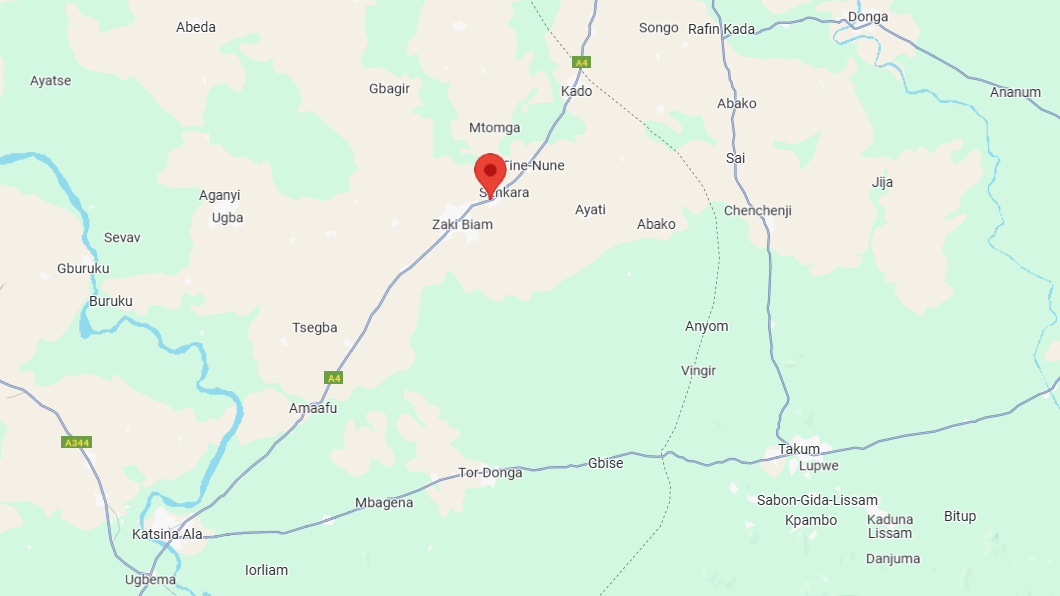
| | (Right-Wing Extremism) American Futurist Releases Article “The Tiny King and The Duke” Displaying Feud With Patriot Front | | TRAC Incident Report: Fulani Herdsmen Ambushed Good Friday Worshippers, Killing Ten and Injuring Several others at Gbagir Community, Ukum LGA of Benue State, Nigeria | | TRAC Incident Report: Twelve Killed in Disputed Missile Impact on Farwah Market, Sana’a, Yemen | | | | |