March 2021
Published by the Oregon Office of State Fire Marshal
|
|
2021 Wildland Urban Interface Assistance Grant
|
|
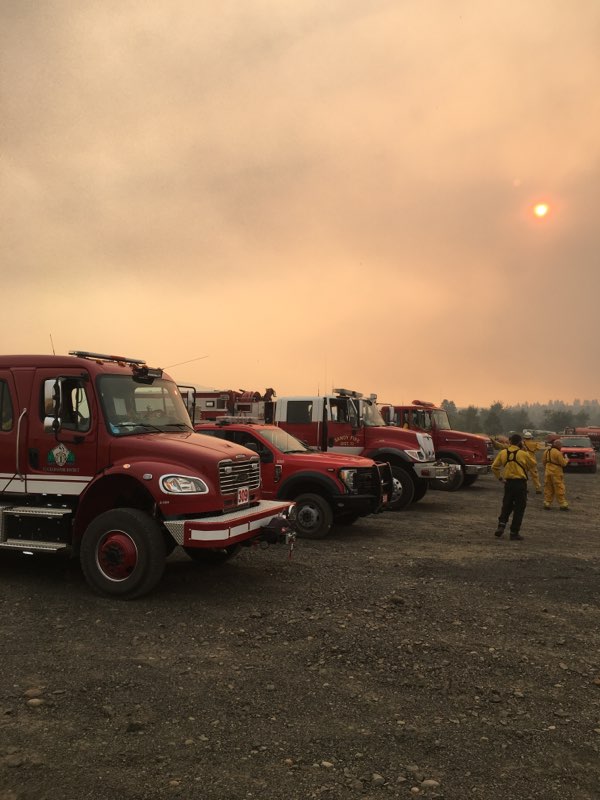
The Office of State Fire Marshal is excited to present this grant opportunity to local fire departments. In January of 2021, the Oregon Legislature Emergency Board granted approximately two million dollars to the Oregon Office of State Fire Marshal for distribution to the Oregon Fire Service.
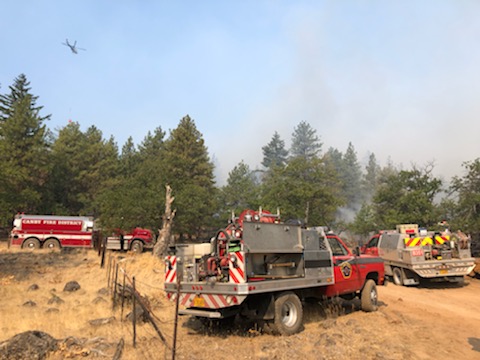
The objective of the Wildland Urban Interface (WUI) Assistance Grant Program is to improve the capacity and capability of fire protection districts and fire departments across Oregon. These jurisdictions protect Oregon communities and play a pivotal role in the prevention and suppression of wildland fires in the WUI. The WUI Assistance Grant is administered as a pass through award. The grant is intended for fire agencies that were impacted by the 2020 fire season along with underrepresented and under-served communities. Although all Oregon fire jurisdictions are eligible to receive funding.
|
|
A scoring committee will evaluate all grant applications for this one-time grant. This process will better define those jurisdictions that demonstrate the greatest need to increase readiness and target requests that demonstrate substantial department damage or loss from the 2020 fire season as well as communities with under-served and underrepresented populations. No one criterion listed in the application will assure or eliminate a fire department from funding. Each of these factors will be part of the ranking criteria.
To be eligible for this grant a local fire agency must:
- Be an established fire district or fire department which has been assigned an FDID or in the process of being established.
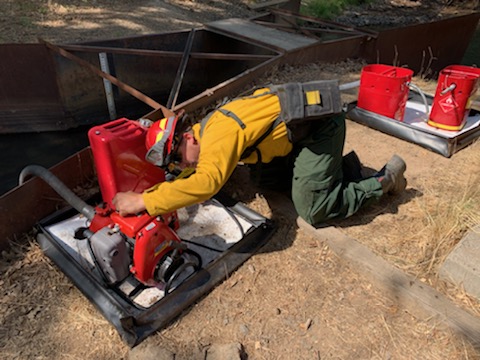
- Proposals must be moving forward fire prevention activities and programs, fire training, operational needs, including but not limited to PPE and equipment and other fire related programs and needs.
- Projects that do not indicate improvement of the protection capabilities will not be eligible.
|
|
Applications must be received no later than 5:00 p.m. March 15, 2021. Email with attachments to: wui.assistance.grant@osp.oregon.gov or you can mail to: WUI Grant Coordinator, Oregon Office of State Fire Marshal, 3565 Trelstad Ave SE, Salem OR 97317.
If you have any questions regarding this grant, please contact the Grant Coordinator at wui.assistance.grant@osp.oregon.gov or visit WUI Assistance Grant 2021 .
|
|
School Safety Inspections |
|
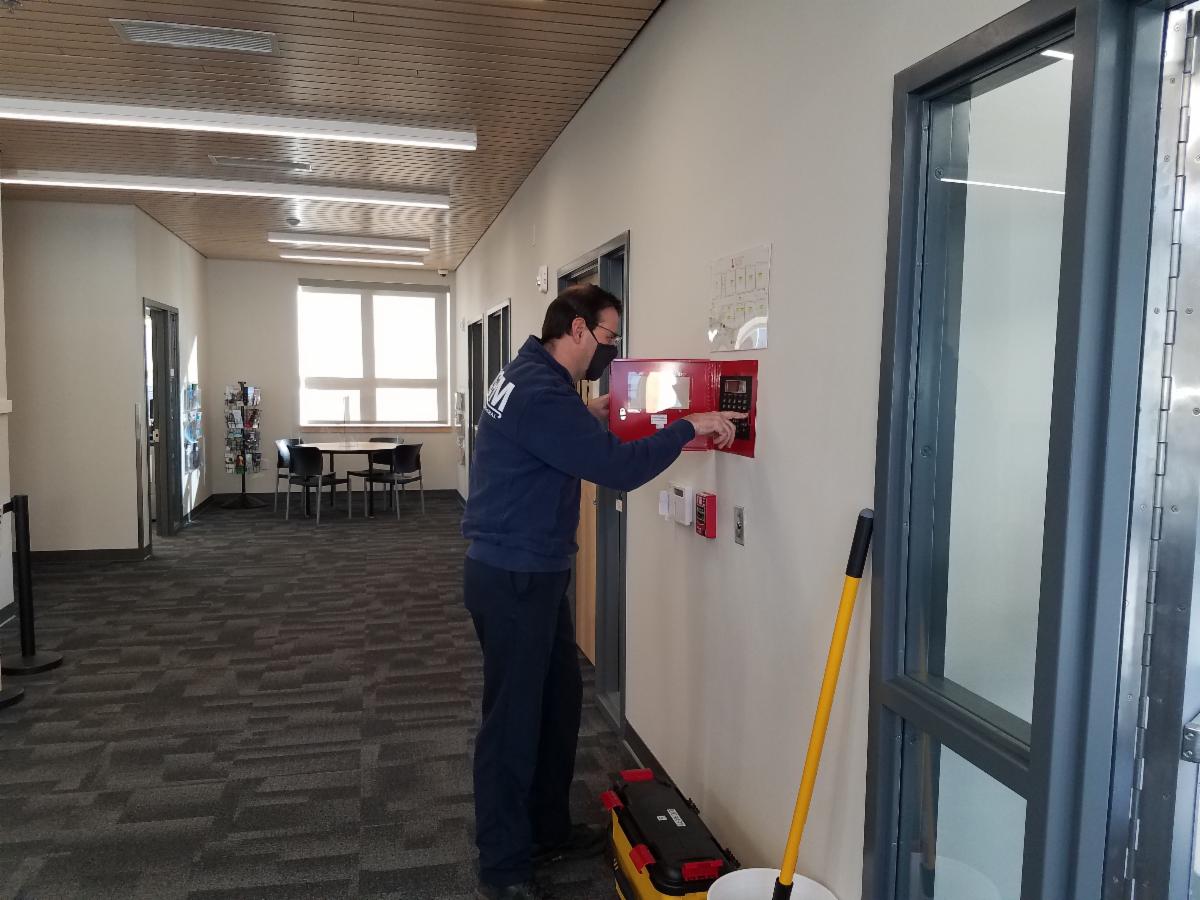
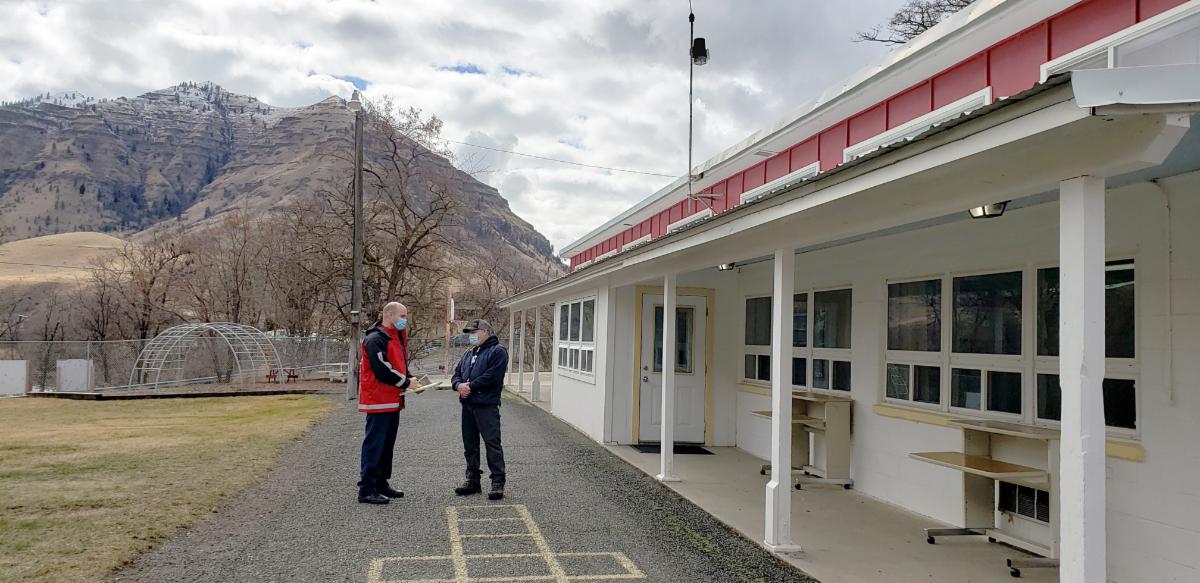
The Fire and Life Safety Division (FLSD), Deputy State Fire Marshals, have been working diligently to inspect schools that are re-opening across Oregon that may have been vacant for an extended period of time.
In addition, the FLSD has also developed guidance for fire officials, with collaboration from the Oregon Fire Marshals Association (OFMA), and in conjunction with the Oregon Department of Education (ODE), to provide a smooth and safe transition back into school buildings within the current COVID-19 pandemic environment.
As schools transition from unoccupied to occupied, it is of the utmost importance for school personnel and fire officials to review all pertinent fire code requirements to maintain a high level of fire and life safety for everyone in those structures. There are many different fire and life safety considerations as it relates to the on-going pandemic that should be addressed. For example, drills and exercises are still vital components in preparing for potential emergencies and can be safely conducted regardless of pandemic-related restrictions.
|
|
Preparing to return within the pandemic environment may be challenging for school personnel as reentry procedures may need to be altered based on the level of risk a county is currently in. Depending on the location, whether urban or rural, it is critical that a school have a well-established partnership with the local fire department. Please visit our website to find the resources mentioned above.
|
|
Oregon Fire Service "Spotlight" |
|
The Office of State Fire Marshal would like to congratulate Chief Stanton on becoming the President of the Oregon Fire Chiefs Association this July. We know he will continue the same level of leadership the OFCA has enjoyed and building our relationships with other state agencies and associations to continually improve the Oregon Fire Service for our citizens. |
|
Umatilla County Fire District # 1 |
|
by Chief Stanton
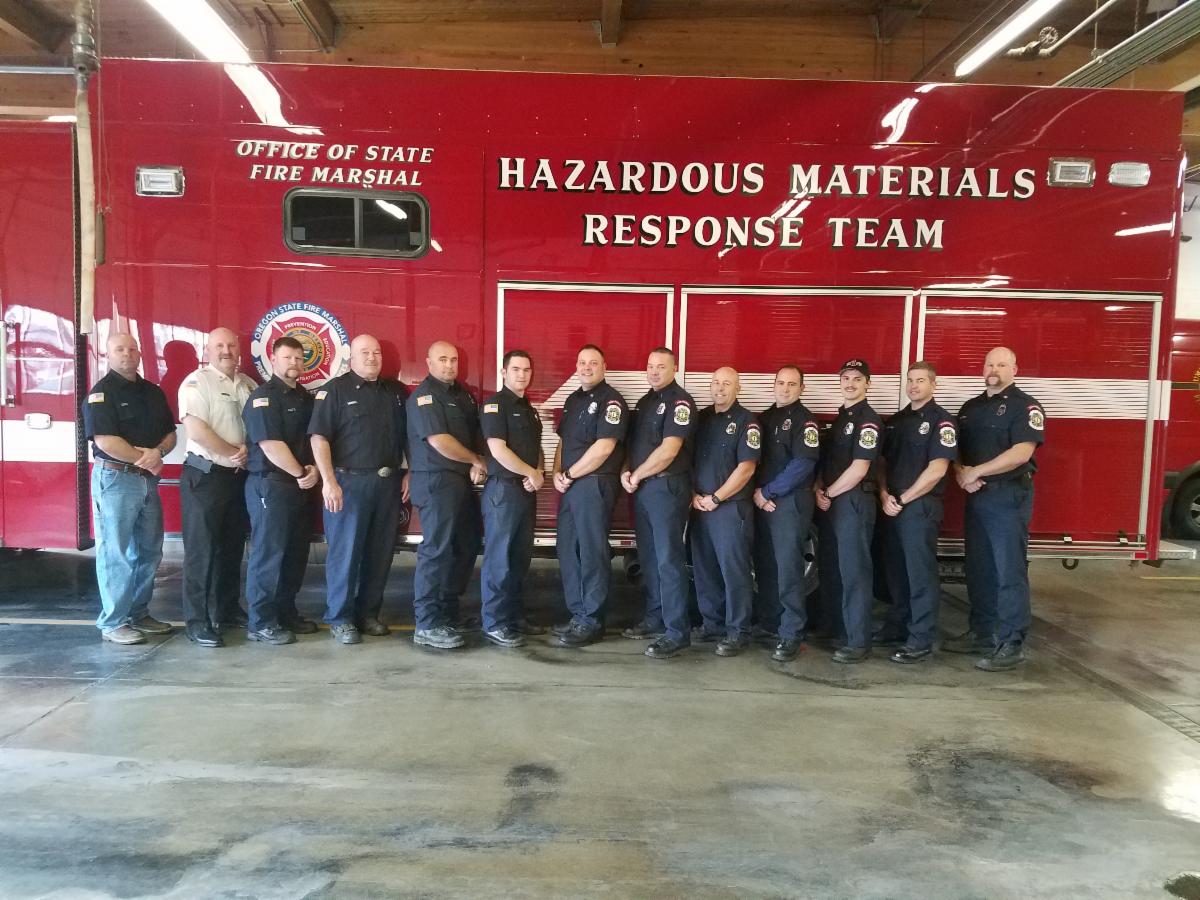
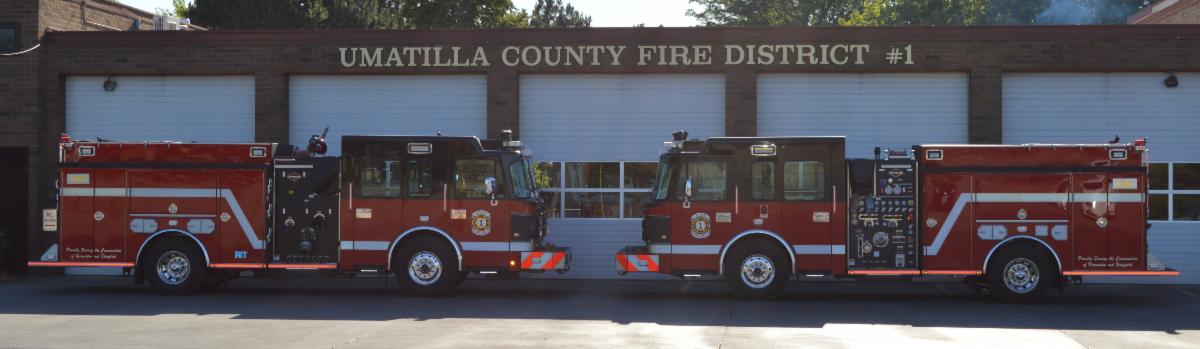
Umatilla County Fire District #1 was formed in 2016 and was created from the former Hermiston and Stanfield Fire Districts plus some unprotected lands were included in the new District. Since that time in May of 2020 another area called the Hat Rock and Salmon Point communities were annexed into the fire district. The fire District provides fire, rescue, medical services and hosts one of the 13 Regional Hazardous Materials Emergency Response Teams, Team 10.
|
|
The Fire District covers approx. 204 square miles of fire protection with a population of approx. 37,000 community members in the cities and surrounding areas of Hermiston and Stanfield. UCFD1 also provides the ambulance service to all of West Umatilla County, including the communities of Echo and Umatilla and a portion of Morrow County, for a total of about 620 square miles of coverage. |
|
Calls for service continue to rise every year and in 2020 the Fire District was dispatched to 4,956 calls, ranging from fires to motor vehicle crashes to general medicals. Medical calls make up approx. 89% of our calls.
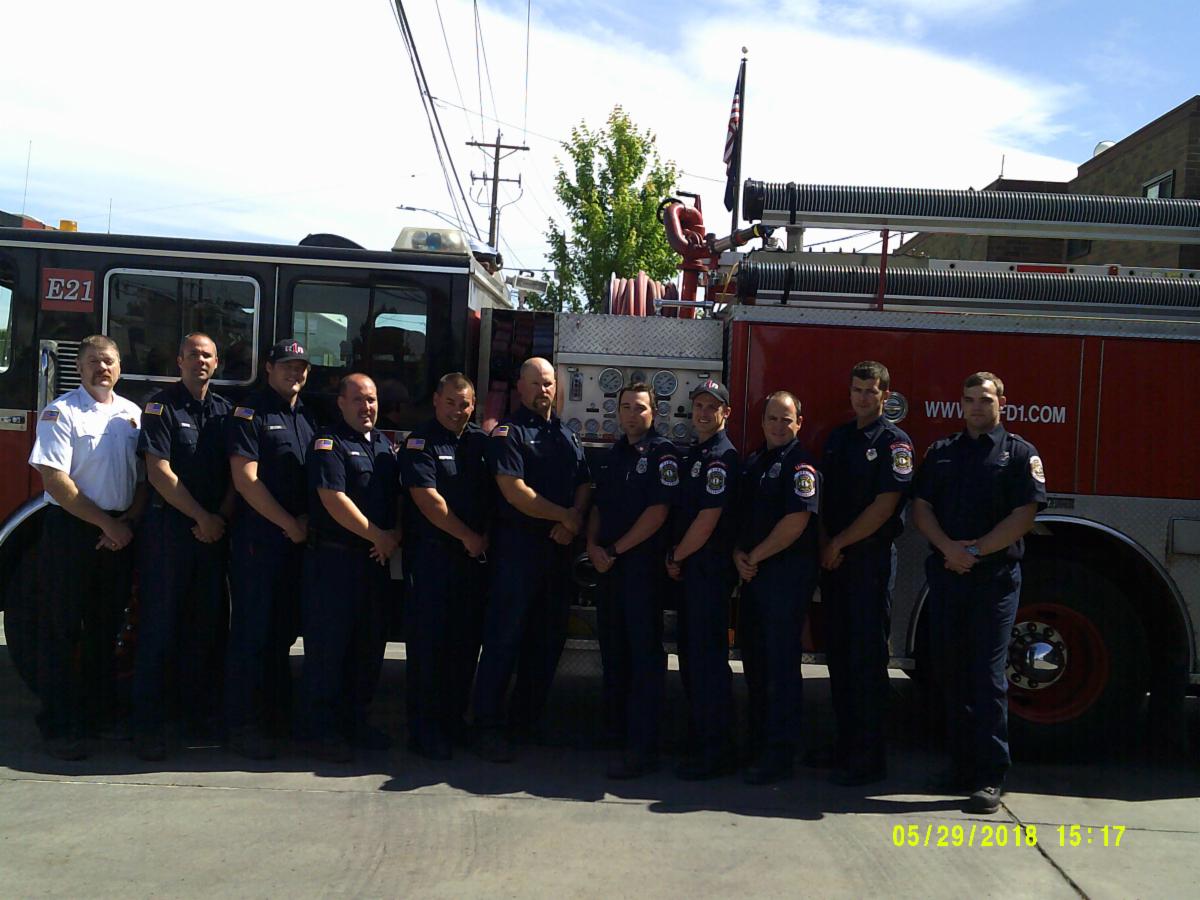
UCFD1 is a combination department with approx. 80 member’s total. The priorities for District 1 are to hire EMS only personnel to help staff ambulances, find solutions to funding shortfalls so we can continue to grow with the demands of service and our communities, and keep our current infrastructure of stations and apparatus in good working order and replacing them when needed.
Ultimately, we want to always strive to improve service levels to our communities and take care of our employees by providing the best protective equipment and work environments we can so they can stay healthy and happy.
|
|
Seeking Sparky Awards Nominations |
|
The Office of State Fire Marshal is accepting nominations for the 2021 Golden and Silver Sparky Awards!
The Golden Sparky award recognizes a member of the fire service for outstanding achievement in fire prevention or public fire safety education. The Silver Sparky award recognizes a civilian for outstanding achievement in fire prevention or public fire safety education.
The Sparky awards call attention to the critical role of public education in fire safety. Each year, the Sparky award nomination and selection process helps inform the public of the importance of fire prevention and education. It also allows Oregonians, communities, and the fire services to acknowledge the leadership of their colleagues who are making a difference. We encourage all Oregonians to call out excellence among those helping others through fire prevention.
You don't have to be a member of the fire service to nominate any person or agency. Nominations may also be submitted by members of the public.
Nominations are due by April 15, 2021. Please submit your completed Sparky nominations form, and include examples of your nominee's achievements.
|
|
Youth Fire Safety Education Through Distance Learning
|
|
It is safe to say that the 2020-2021 school year has been like none other, but the commitment to keeping our students and families safe is as strong as ever. Fire agencies from around the state have continued to find ways to provide students with the necessary fire safety education they need.
The Youth Fire Safety Program at OSFM wants to help educators in the creative maneuvers required to teach through Covid-19 restrictions. This includes new additions to our webpage to allow virtual distribution of some of the most popular resources as well as increased training opportunities for Fire Service and other partner agencies through the YFS Webinar series.
Through the webinar series, attendees will receive a closer look at these resources and guidance on how they may be used most effectively. Our commitment is to provide 30-minute trainings each month on a wide variety of topics in both youth fire education and intervention.
For a list of future trainings and to sign up in advance, please see our training calendar at
For more information on the Youth Fire Safety Program at OSFM, please contact Sara Jasmin via email at SJasmin@OSP.Oregon.Gov or by phone at 503-934-2136. |
|
Hazardous Materials by Rail |
|
The HazMat by Rail program is excited to announce the HazMat by Rail Equipment Grant is available for Oregon Fire Agencies as an opportunity to increase their equipment capabilities to respond to a rail incidents involving the release of hazardous materials. For this grant, fire agencies will be able to request quantities from a prescribed list of equipment. If the fire agency is awarded the grant, OSFM will procure and direct ship the requested equipment to the fire agency. Once received, the equipment will become the property of the fire agency.
To qualify for this grant, fire agencies must have rail in their jurisdiction or provide mutual aid to neighboring fire agencies with rail. Priority for the grant is fire agencies located Multnomah, Lane, Deschutes, and Klamath counties. Secondary preference will be assigned to agencies with Class 1 railroads or which provide mutual/automatic aid to agencies with Class 1 railroads.
To apply, please use the application link below. The application period will close March 15, 2021. For additional questions regarding this grant, please reach out to the HazMat by Rail program coordinator, Fraser Wick at: 503-934-8283 or Fraser.Wick@osp.oregon.gov.
https://www.oregon.gov/osp/programs/sfm/Pages/HazMatbyRailEquipmentGrant.aspx
|
|
By OSFM Code Deputy Glenn Geiger |
|
Flammable liquid storage cabinets are commonly encountered while inspecting businesses. Owners may be wanting to both increase their maximum allowable quantities and follow the best practice of storing their incidental flammable liquids in a safer manner.
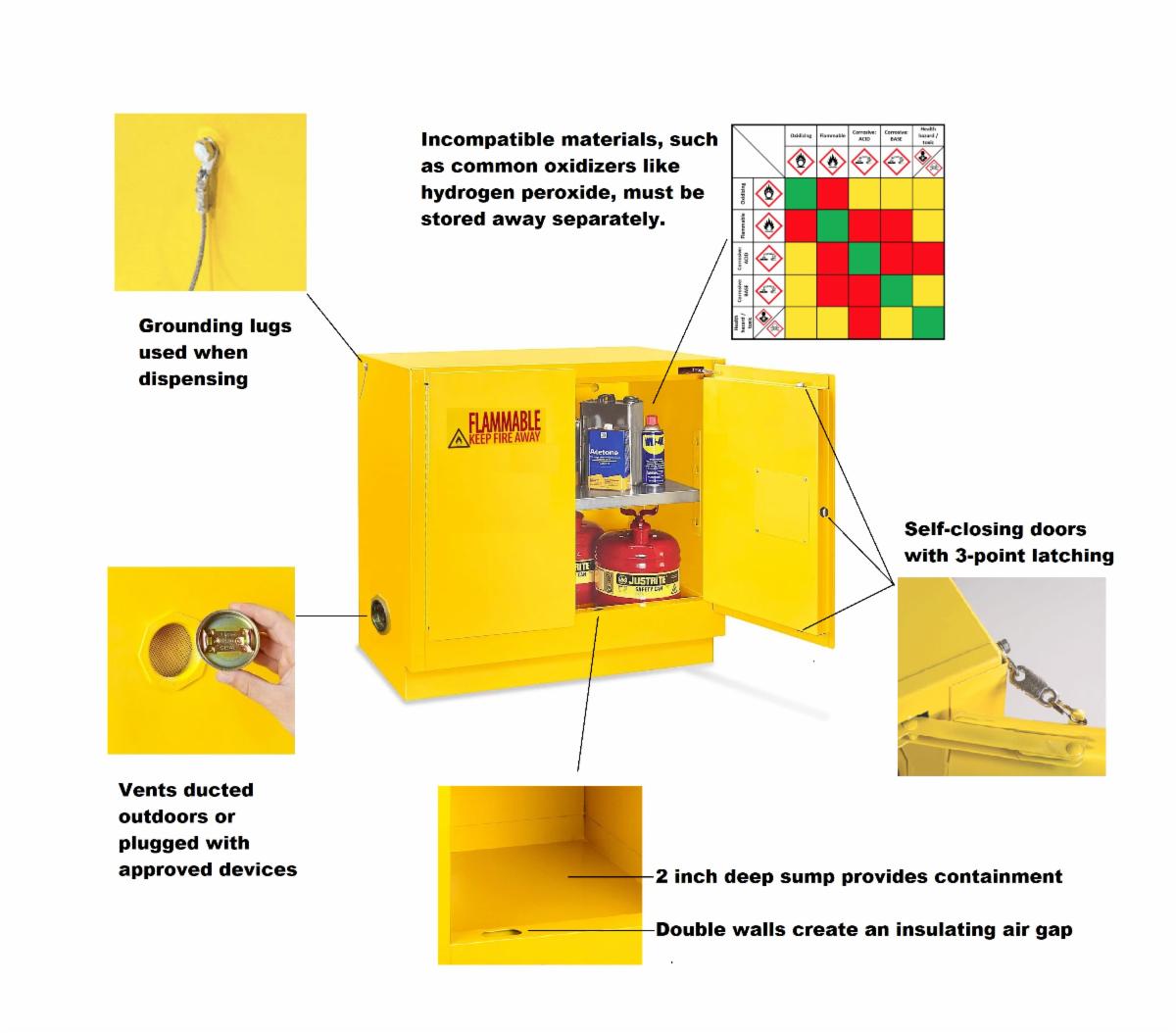
It is useful to understand that the essential purpose of these cabinets is to allow building occupants enough time to escape an uncontrolled room fire involving the storage area. NFPA 30 uses a relatively short 10-minute testing criteria just for this reason. Not widely understood, these cabinets are not designed or intended to confine a fire originating inside the cabinet, and they should never be allowed within the 3-foot clear space surrounding a spray booth.
While the Oregon Fire Code lists the requirements for all flammable liquid storage cabinets, those that are commercially purchased should bear a UL 1275 label or show this listing as part of the owner’s manual.
All cabinets must be labeled FLAMMABLE—KEEP FIRE AWAY, be in good repair with operational latches on the unhinged side of each self-closing panel so that storage won’t be exposed with door warping expected during an intense fire.
The floor and 2-inch raised sill at the bottom of the cabinet should be rust free, liquid tight, and ready to hold the expanded storage contents expected with heating from a fire. The owner should never drill holes in the cabinet or make other alterations that would violate its care and use manual.
Commercially available cabinets are also likely to have other features not required by the fire code. These may include sloped shelves that direct leaks into the lower sump. Other optional features may include vents, which when provided must terminate outdoors or be plugged using an approved means. There may be a bonding-grounding connection for cabinets where liquids are dispensed. These ground wires are commonly connected to a rod or water pipe in accordance with the manufacturer’s instructions.
While these cabinets can provide a convenient location for storing lubricants, cleaning agents, fuels, solvents and other flammable chemicals, the owner must also make sure all items are compatible with each other and that the cabinet is designed and constructed for the storage present.
Flammable liquid storage cabinets are not intended for storing cylinders of flammable compressed or liquefied gases such as propane, which have their own storage requirements.
To learn more about flammable liquid storage cabinets please refer to Oregon Fire Code Section 5704.3.2 and the NFPA 30 Handbook, Section 9.5. See also hazardous materials storage cabinets in OFC Section 5003.8.7.
|
|
Risk-Based Response to Dry Ice Train-the-Trainer Course
|
|
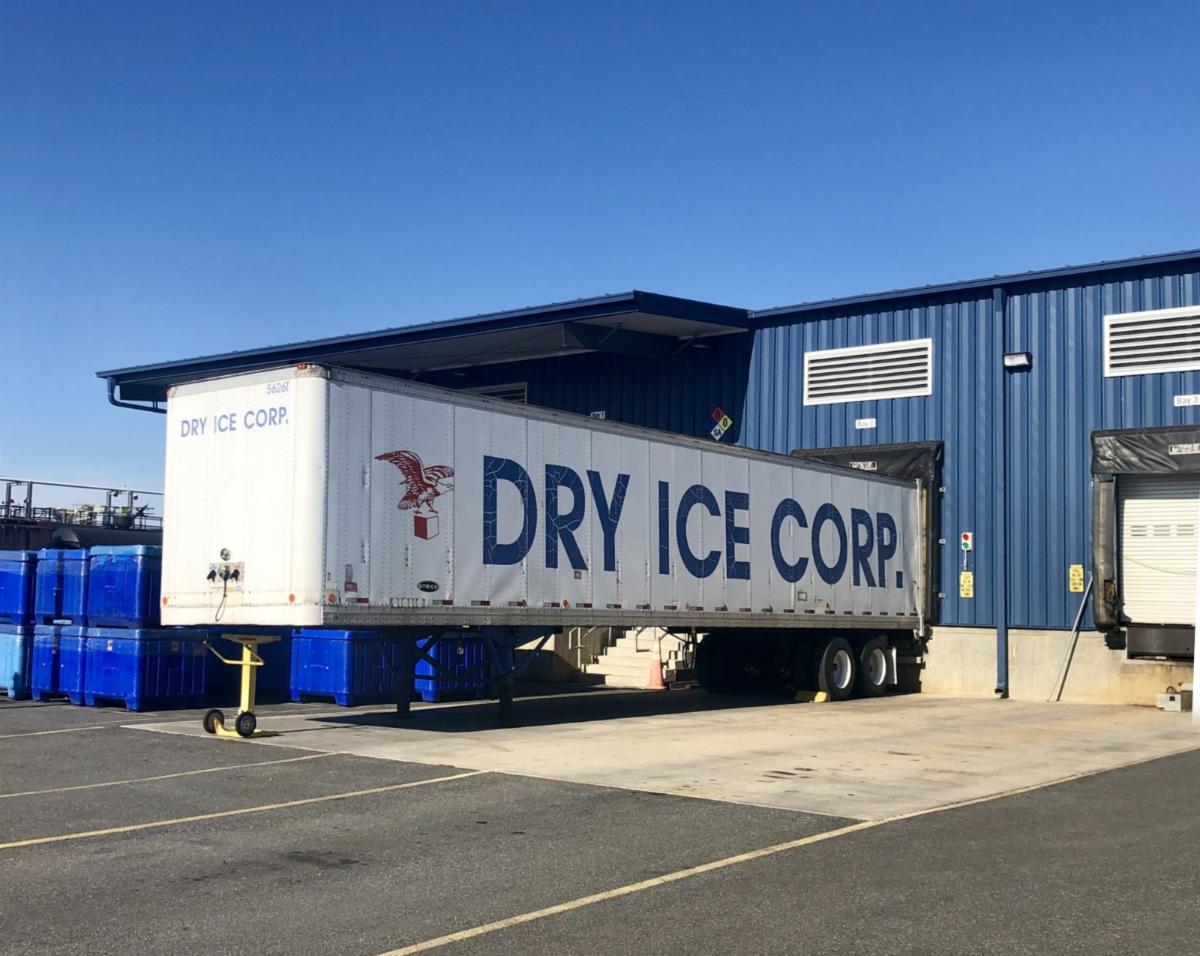
Through federal Hazardous Materials and Emergency Preparedness (HMEP) grant funding made available by the Pipeline and Hazardous Materials Safety Administration (PHMSA), the Office of State Fire Marshal offered a Risk-Based Response to Dry Ice Train-the-Trainer Course in January to public safety instructors interested in delivering the training to their agencies.
This course was to prepare personnel to conduct a risk-based response to incidents involving Carbon Dioxide (CO2) from dry ice, including emergencies in transportation and point-of-use. As dry ice begins to be rapidly transported and used in support of vaccination efforts, responders should be prepared to mitigate reported illnesses and injuries. Although the course had a connection for the cold storage of vaccines, it has great application for responses to transportation and facility incidents, and two of our own Regional Hazardous Materials Emergency Response Teams (RHMERT) have received better capabilities to respond to these types of incidents because of this training.
Battalion Chief Steve Takis of Coos Bay Fire Department and RHMERT HM15 had this to say about the training and their increased ability to respond to these types of incidents. “This training enhanced our understanding of the hazards associated with dry ice and carbon dioxide incidents. The knowledge gained in this course in addition to the monitoring equipment provided to our HazMat Team by OSFM will allow us to more safely plan for and respond to carbon dioxide incidents. We feel very fortunate to have access to great HMEP funded training such as this, especially in rural Oregon where resources can sometimes be very limited.”
The purpose of the HMEP Grant Program is to increase the effectiveness in safely and efficiently handling hazardous material accidents and incidents, enhance the implementation of the Emergency Planning and Community Right-to-Know Act (EPCRA), and encourage a comprehensive approach to emergency training and planning by incorporating the unique challenges of responses to transportation situations.
|
|
See what's happening on our social sites: |
|
|
|
|
|
|