|
Can you describe your work?
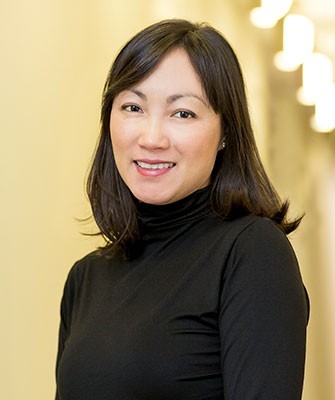
My primary lines of research and practice focus on community-based participatory approaches to the prevention and management of diabetes among Asian American populations — an invisible but growing problem. In the classroom at Boston College, I teach courses in the Connell School of Nursing on principles of evidence-based practice, population health, public health nursing, diversity in healthcare, and leadership.
How did you get into work related to diabetes?
I like being able to teach, practice, and do research together. It’s great to see the value that each brings to the other. For example, I’ve been able to take things I teach, such as the Diabetes Prevention Program (DPP) and the Mobilizing for Action through Planning and Partnership (MAPP) framework, and integrate them into my community-based diabetes prevention and management work with Asian Americans. Similarly, I’ve been able to incorporate real-life challenges, opportunities, and lessons learned from my research and clinical practice into the classroom.
What do you like most about your job?
I started off my career as an ICU nurse who saw many people suffering from strokes and heart attacks due to uncontrolled diabetes and high blood pressure. While I loved the work, it inspired me to pivot toward disease management and prevention during my graduate studies. During my time as a graduate student at the Johns Hopkins University, I had an amazing PhD mentor named Dr. Miyong Kim. She conducted some of the first randomized trials examining the impact of culturally and linguistically tailored diabetes self-management interventions in Asian American populations. Much of my work in diabetes expands on that work.
What motivates you to do work related to diabetes?
Oddly, at about the same time I was in graduate school, my dad, who has never been overweight, got diagnosed with Type 2 Diabetes. It was a stressful time for him and my family, and further motived me to do work related to diabetes. Much of the stress came from not knowing what to do, as most of the resources his provider shared were not very helpful. On top of that, my dad was experiencing a lot of stress from the 2008 financial crisis and did not feel the urgency to prioritize his health. It took a lot of patience, love, and community to support him through his journey. This experience highlighted to me the importance of attending to health-related social needs in diabetes care, as well as a common phenomenon among Asian populations of getting diabetes at lower BMIs.
What guidance or “lessons learned” would you give other health professionals working in the diabetes space?
The guidance I would offer is to strengthen your leadership, innovation, and relationship-building skills because diabetes is a complex systems issue. But, similar to what worked for my dad, be sure to mix in ample amounts of patience and love.
Want to nominate a diabetes professional, organization, or project for this spotlight series? Please email Julie.Eisen@mass.gov.
|