|
Later this month, we will celebrate Thanksgiving. We are thankful for each and every one of our Aerospace Education Officers and Aerospace Education Members for all you do to inspire the next generation in aerospace/STEM education. We continue to work to give you more tools to help you and to improve existing resources.
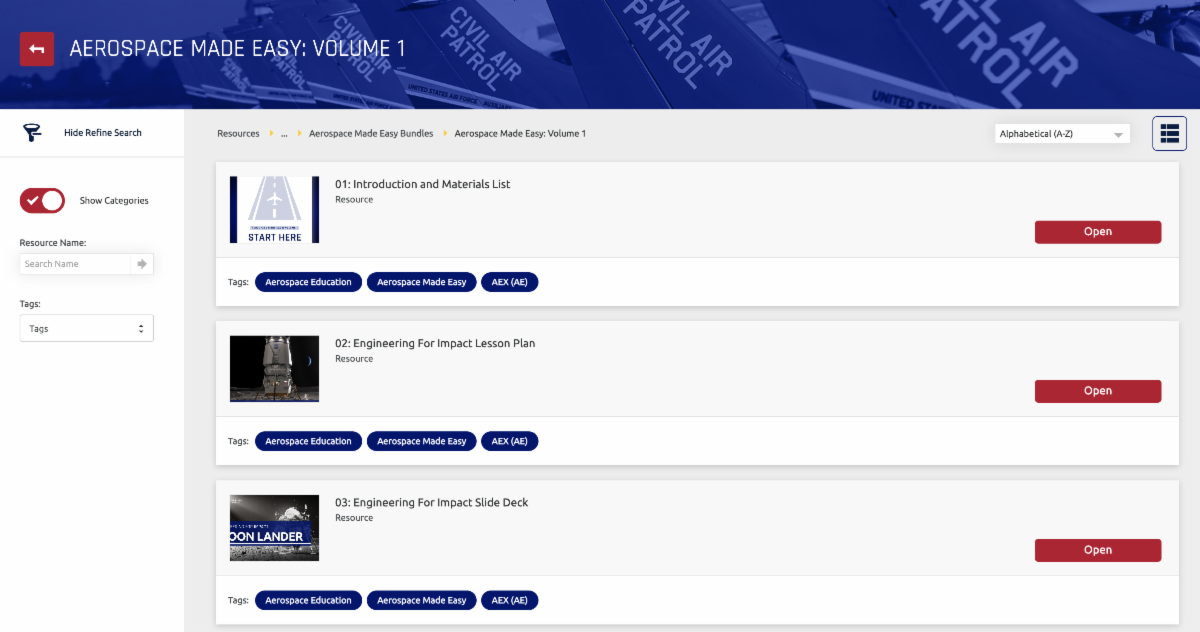
We are pleased to announce a new Aerospace Made Easy bundle, a toolkit of resources to make your instruction planning hassle-free.
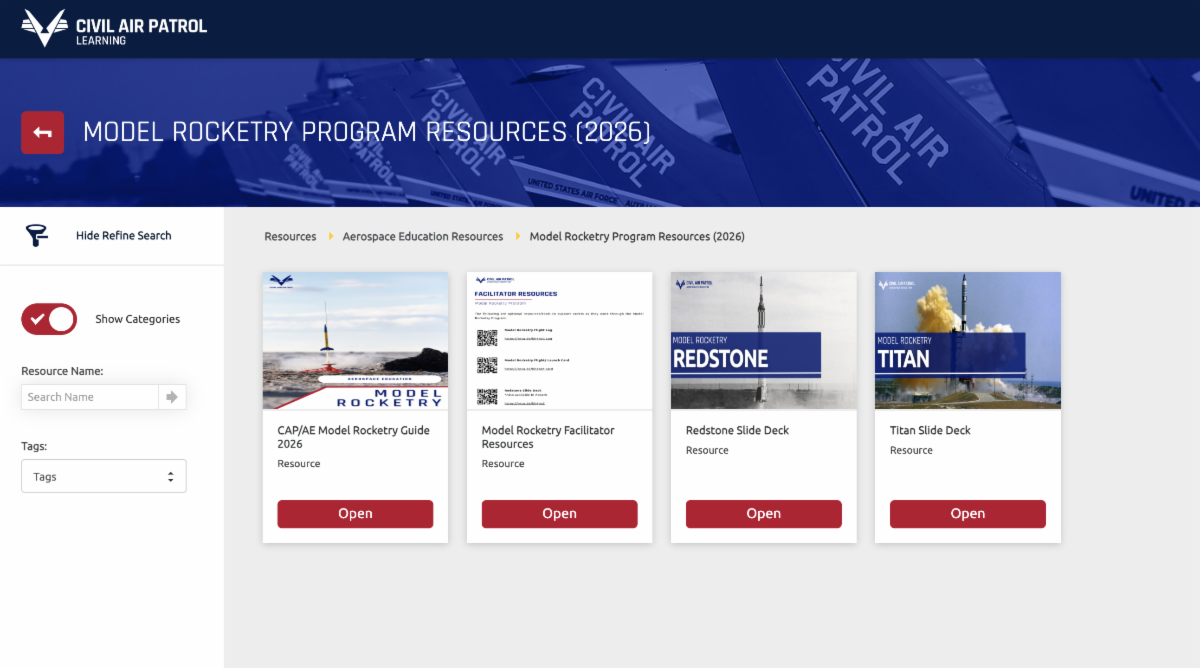
Also, now available in Absorb LMS is the newly updated and expanded Model Rocketry Program. Find out how to access these new tools in the newsletter.
ALSO IN THIS ISSUE
- Aerospace Connections in Education Program celebrates 2026-2027 Liftoff.
- OUTREACH: STARBASE and CAP make a great team.
- SAFETY: Static electricity can pose a safety issue.
- AWARDS: National AE Awards deadlines are approaching in January. Start working on your nominations now.
If you have story ideas for any upcoming monthly newsletter, please reach out to us at ae@capnhq.gov. We would love to hear from you!
| | |
PROGRAM UPDATES
Blast off into 2027 with the updated CAP Model Rocketry Program!
| |
Get ready to elevate your squadron's rocketry experience! Civil Air Patrol’s Model Rocketry Program has been completely updated and expanded, placing a stronger emphasis on the real-world science, technology, engineering, and math (STEM) behind every launch.
Whether you're guiding a single cadet or managing a large squadron, these updated tools will make teaching rocketry smoother, safer, and more engaging than ever!
What’s New in the 2026 Update?
-
Modernized Program Book: Features all-new graphics, clear diagrams, and revised content that break down complex flight physics and math for learners.
-
Facilitator Slide Decks: Ready-made presentations designed to help AEOs and squadron facilitators lead large group lessons effortlessly.
-
Updated Assessments: Refreshed knowledge checks to measure cadet understanding throughout each stage.
-
Flight / Launch Cards: A practical operational tool to keep multi-cadet launches organized, efficient, and safe.
-
Cadet Flight Logs: An optional and simple log for cadets to track their build progress and launch records on their path to earning the Model Rocketry Badge.
-
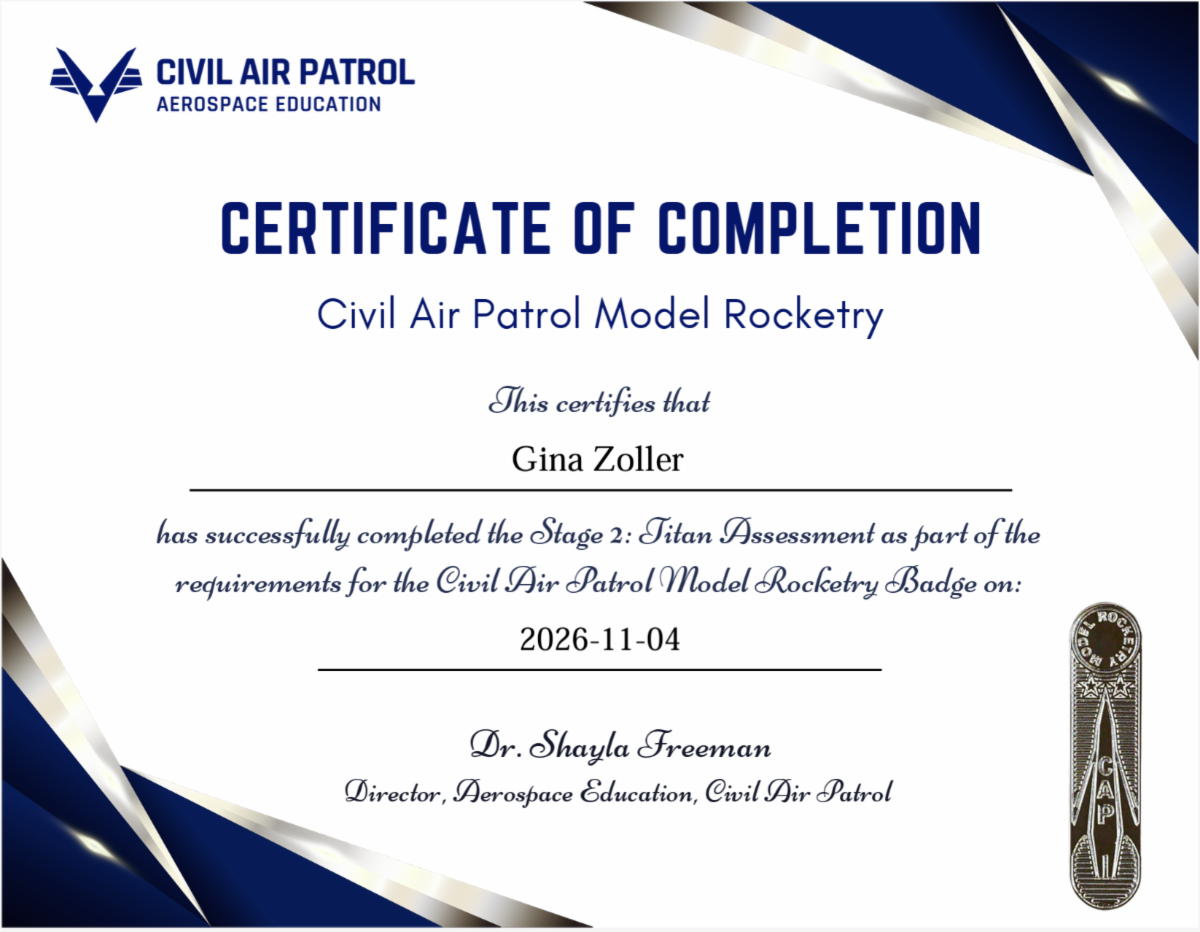
Model Rocketry Badge Updates: The badge guidelines now align with the new program materials. Cadets earn their Basic Model Rocketry Badge by completing the Redstone and Titan stages (2 rocket launches).
Already completed the Saturn stage of Model Rocketry? You are eligible for the new bronze star attachment to your Basic Badge!
Where Do I Find These Resources?
Log into Absorb via eServices and select Menu > Aerospace Education Resources > Model Rocketry Program Resources (2026).
What happens with the legacy content?
If you are currently working toward the Model Rocketry Badge using the 2015 edition, you can choose to finish with those materials or switch over to the new content.
-
Legacy Availability: Old assessments will remain available in Absorb and eServices through February 28, 2027.
-
Easy Identification: All legacy assessments include the edition year (2015) in the title/description and feature a distinct "legacy" thumbnail image so you can easily tell old and new content apart.
What else is in the works?
We’re not stopping here! Additional resources are currently in early development to support your model rocketry experience:
-
A comprehensive Facilitator Guide for large groups.
- An updated and expanded Saturn stage.
- A potential automated solution to track model rocketry badges in eServices.
Keep an ear out in the coming months for more updates!
| Volunteer opportunity: Help translate Model Rocketry Book, assessment into Spanish | |
With the updated Model Rocketry Program launching, the Aerospace Education team wants to ensure our materials are accessible to our members. We are seeking volunteer support to help translate the updated Model Rocketry Book and Assessment Questions into Spanish, with a goal to release these translated materials in January–February 2027!
Who can help?
- Native Spanish speakers or otherwise fluent/ qualified members.
- Members passionate about Aerospace Education and helping expand CAP’s outreach.
- Volunteers with the capacity to work on this project between November and January.
How to get involved:
If you're interested in lending your expertise, please reach out to Gina Zoller, Curriculum Developer and Editor. Gina will host a project kick-off call to review the scope, share the project materials, and help you determine if this opportunity fits your schedule.
Ready to help? Send an email to gzoller@capnhq.gov to express your interest and join the kick-off conversation!
| 2026-2027 ACE Liftoff showcases STEM | | |
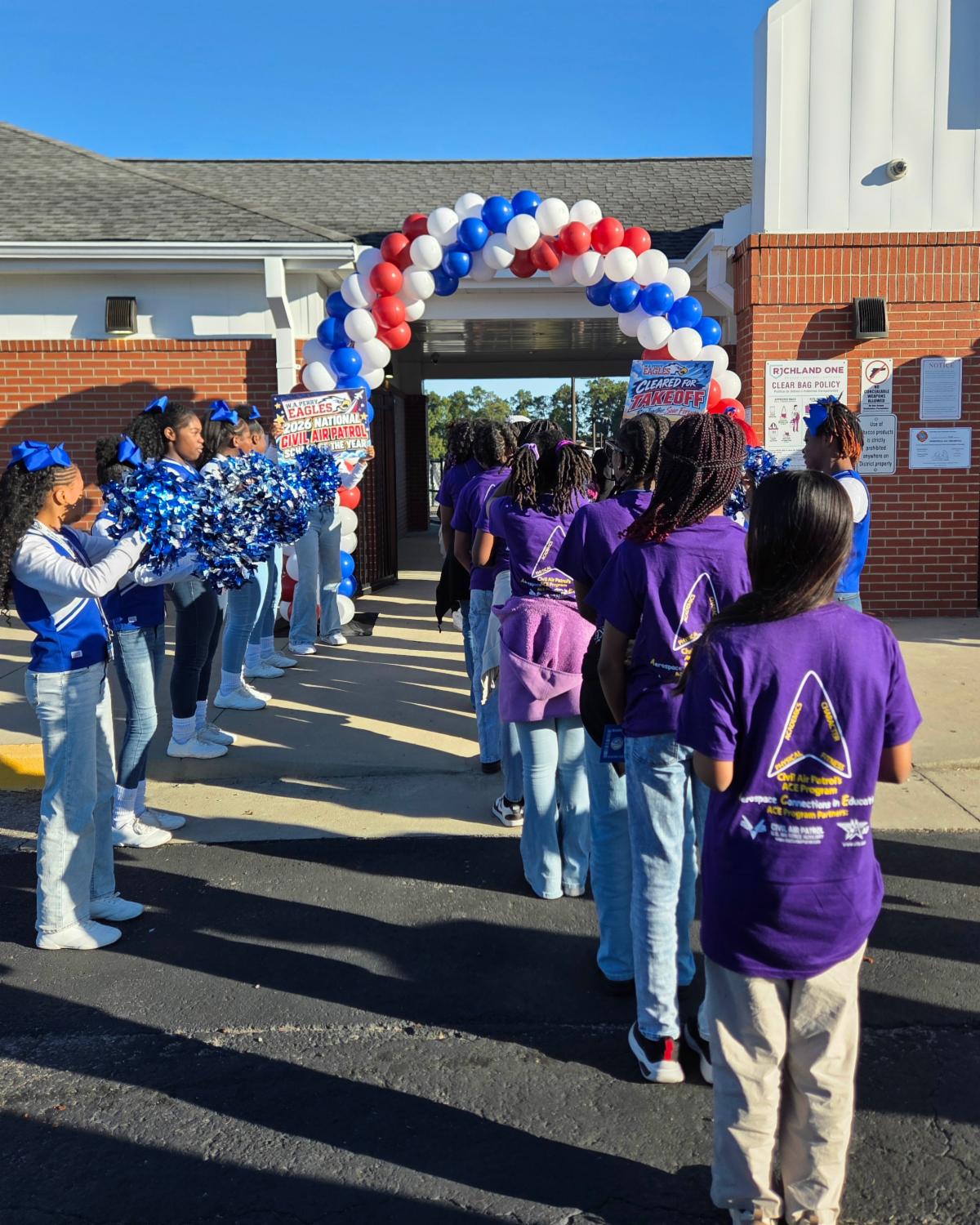
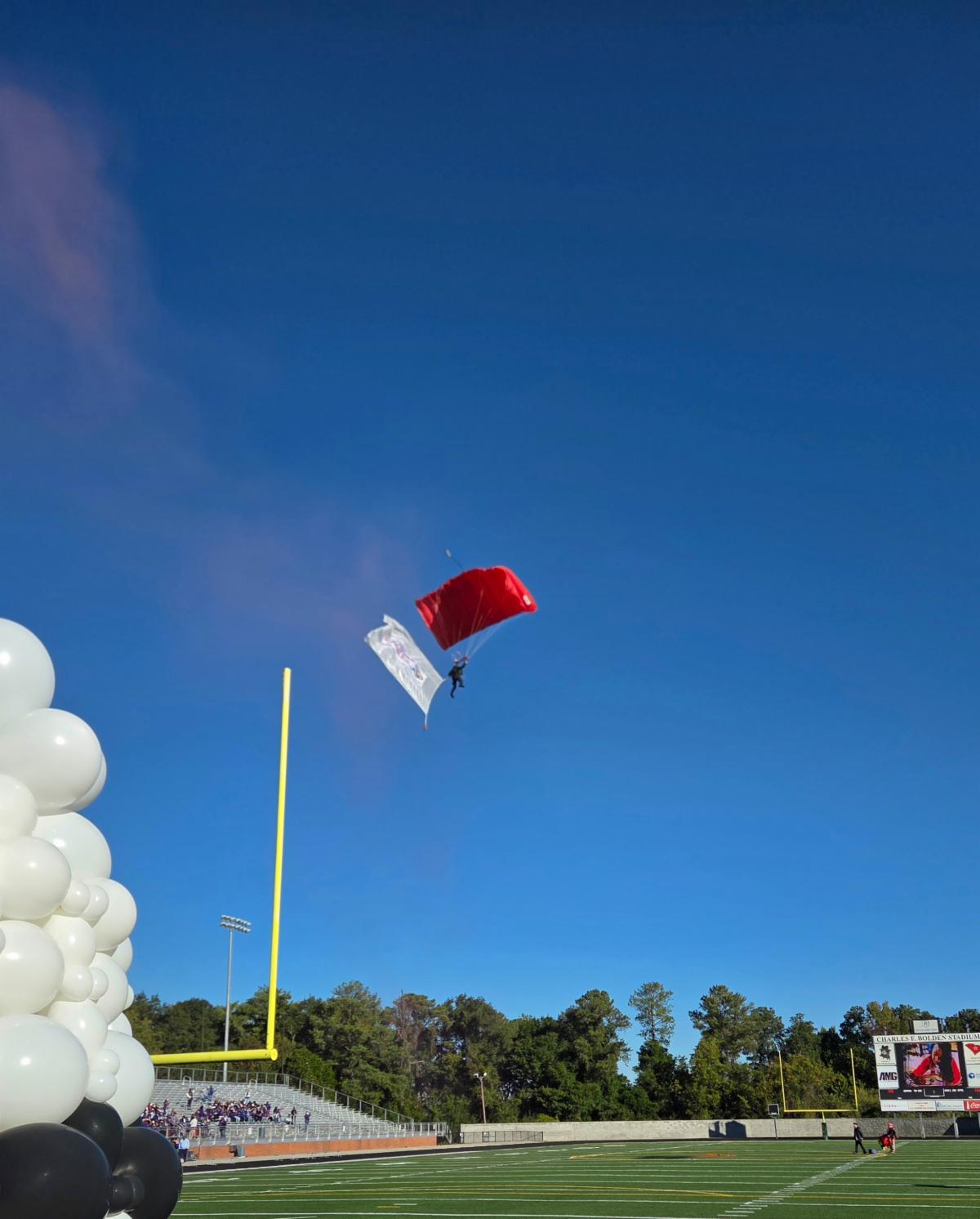
Recently, W.A. Perry Middle School in Columbia, South Carolina, celebrated its recognition as the National Aerospace Connections in Education School of the Year by hosting the National ACE Liftoff, the launch of CAP's 2026-2027 year for ACE, a K-6, grade-specific STEM program. The event brought together students, educators, and community partners for a day of hands-on STEM learning.
The October 23 celebration began with a memorable welcome as parachutists landed on the football field carrying the school flag. Following opening remarks and a keynote address from retired Air Force Colonel Walter Watson Jr., the excitement continued as students participated in a schoolwide STEM Day that transformed every classroom into a hub of discovery.
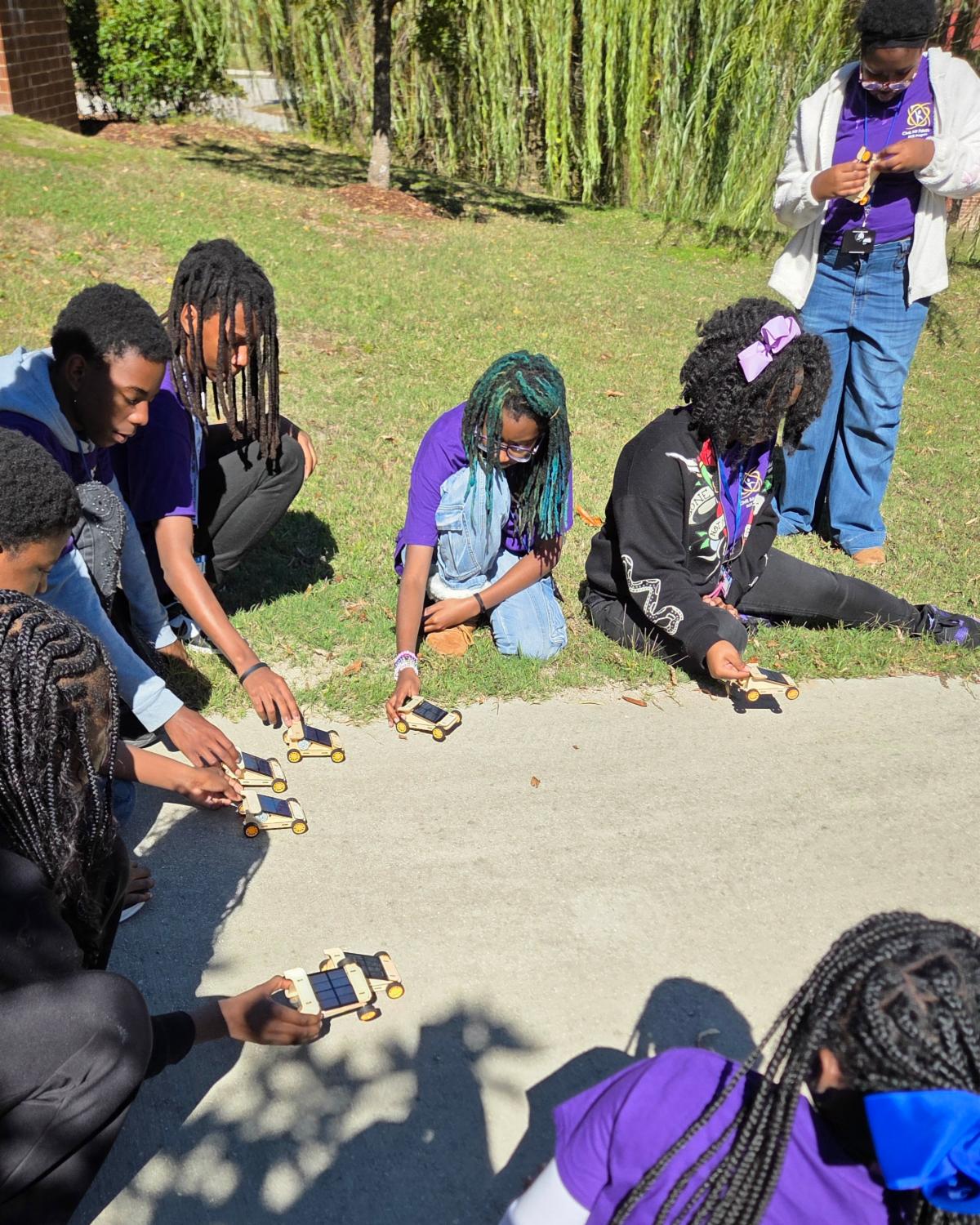
Throughout the day, students explored a wide range of activities, including building and racing solar-powered cars, participating in an astronaut landing challenge, interacting with STEM professionals during a career fair, experiencing a hands-on hot air balloon demonstration, and testing their skills with a virtual reality drone simulator. These experiences gave students opportunities to connect classroom learning with real-world careers in aviation, aerospace, science, technology, and engineering.
The event also recognized sixth-grade student Peyton Talton, who was named the National ACE Student of the Year. The national recognition earned by both W.A. Perry Middle School and its students reflects the culture of innovation, curiosity, and hands-on learning that was on full display throughout the day's STEM activities.
Click the links below to find out more about ACE and to register for the 2026-2027 ACE Program!
| | |
OUTREACH SPOTLIGHT
STARBASE and you -- perfect together
Lt. Col. Michael Castania, New Jersey Wing Director of Aerospace Education, serves on CAP's AE National Volunteer Staff in the area of educational outreach. He will provide articles for the National AE Monthly Newsletter on like-minded STEM organizations and other ways to collaborate in your community.
| | |
The Department of Defense’s STARBASE program is a federally funded educational outreach initiative that teaches Science, Technology, Engineering, Art/Design, and Math (STEAM) to elementary and middle school students across the country.
Working with DoD STARBASE is highly advantageous for Civil Air Patrol Aerospace Education Officers because it significantly expands their community outreach, resource pool, and recruitment potential.
As the civilian auxiliary of the U.S. Air Force, CAP shares a defense-supported STEM mission with STARBASE.
Key benefits of the partnership:
-
Massive Student & Teacher Outreach: Through this partnership, CAP provides class sets of Aerospace Education materials and lesson plans to the over 70 STARBASE Academies nationwide. This provides AEOs direct access to an audience of over 70,000 fifth-grade students and teachers annually, dramatically extending their local community impact.
-
Recruitment Pipeline for Cadets and Adults: STARBASE targets fifth graders right as they approach the age of 12, the exact eligibility cutoff to join our Cadet Program. Partnering allows AEOs to introduce CAP to highly motivated, STEM-focused students and their parents.
-
Reciprocal Benefits for STARBASE Staff: AEOs can promote the Civil Air Patrol Aerospace Education Member (AEM) program to STARBASE academy staff.
-
Synergistic Lesson Cross-Over: STARBASE’s "hands-on, minds-on" curriculum aligns seamlessly with CAP's signature initiatives. Activities conducted during a STARBASE session can help fulfill the requirements for CAP's Aerospace Education Excellence (AEX) award program or complement the Aerospace Connections in Education (ACE) program.
-
Mentorship and Volunteer Opportunities: AEOs can coordinate with local STARBASE centers to have CAP senior members and older cadets serve as real-world aviation and cyber subject-matter mentors, enriching the Department of Defense youth outreach initiative.
Core details:
-
Primary Audience: Fifth-grade students, with a strong focus on underserved or underrepresented communities.
-
Location: Programs are hosted at Active-duty, National Guard, Reserve, and Space Force military installations across the United States.
-
Instruction: Students receive 25 hours of hands-on, inquiry-based STEAM instruction aligned with national academic standards.
-
Activities: Lessons cover engineering design, robotics, Newton’s laws, the Bernoulli principle, computer design, and physical science experiments.
-
Military Interaction: Students interact directly with military personnel and civilian role models who demonstrate real-world career applications of STEAM.
-
Cost: The program is free for participating schools and students (schools typically only coordinate transportation and lunches).
How it counts toward your wing's Aerospace Education outreach endeavors:
-
AE Activity Report: Senior members and Aerospace Education Officers (AEOs) can log community service, class presentations, or collaborative events hosted with a local STARBASE Academy directly into their annual AE Activity Report via eServices.
-
External AE Mission Compliance: Under CAP Regulation 50-1, partnering with external military youth outreach programs like STARBASE perfectly fulfills the mandate to promote air, space, and cyber power within local school systems and communities.
Takeaway:
STARBASE Academies focus their recruitment heavily upon at-risk youth and historically underserved student populations across regional districts who might not otherwise have early access to immersive, high-tech STEM resources.
If they can dream it, they can do it -- reach out and help make dreams come true! Learn more or check local academy availability through the official STARBASE Program portal. Find STARBASE Program locations through the official locations directory. Both are linked below.
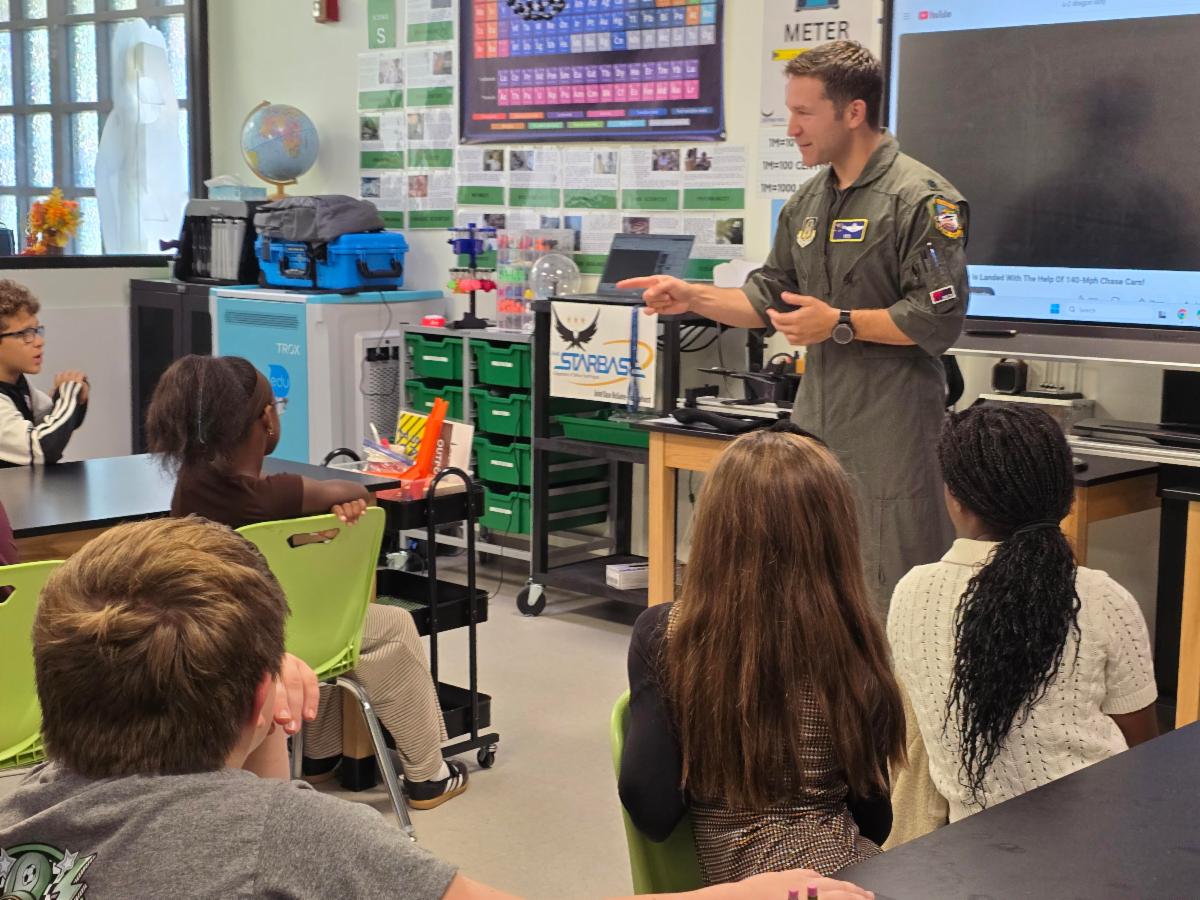
(Pictured: Lt. Col.Chris Vanchure USAF (retired), -- former U2 pilot, USAF Reserve Flight Instructor, Delta Airline Pilot, and NJWG Group AEO -- talks to students in JBMDL's STARBASE classroom.)
| | |
"NJWG has been collaborating with the Department of Defense STARBASE program at Joint Base McGuire-Dix-Lakehurst (JBMDL) since its inception on base primarily drawing its fifth-grade students from local public school districts surrounding the base. A HUGE thank you to our friends at the New Jersey Wing, Civil Air Patrol, for volunteering their time to visit and share their knowledge with our students."
Christine Fletcher, Director JBMDL's STARBASE
| | |
CURRICULUM SPOTLIGHT
Aerospace Made Easy: Your ultimate
AE resource bundle is here
| | |
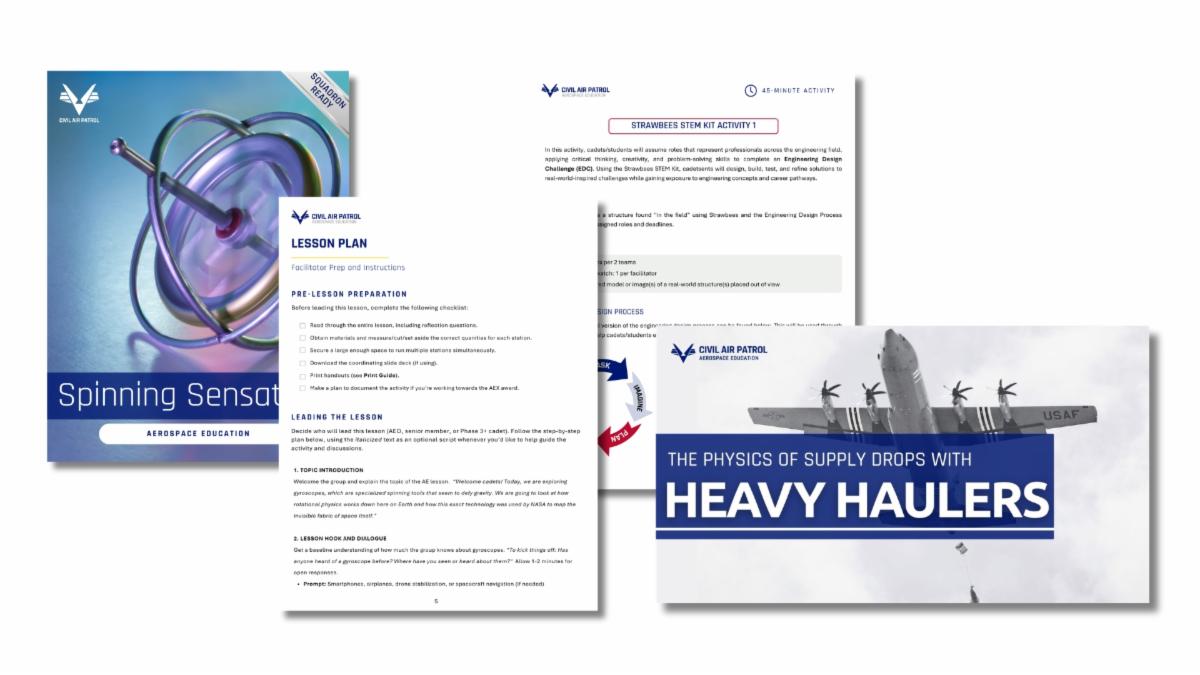
Looking to elevate your Aerospace Education program with zero hassle? We are excited to introduce the brand-new Aerospace Made Easy bundle! Designed specifically for AEOs and Aerospace Education Members working with cadets/students in grades 7-12, this all-in-one toolkit takes the guesswork out of AE planning.
What’s Inside the Bundle?
-
AEX-Ready Standalone Lessons: Complete with step-by-step directions, optional scripts to guide your teaching, and ready-to-use slide decks featuring engaging hooks, discussion points, and embedded media.
-
Strawbees STEM Kit Lessons: Hands-on engineering design challenges designed to maximize learning with the Strawbees STEM Kit (Don’t have yours yet? Apply through the CAP STEM Kit program today!).
-
AE Night Express Lessons: Brand-new, low-prep activities ideal for community outreach, STEM nights, or adding a quick AE spark to any "non-AE" squadron meeting!
-
Master Materials List: A complete, upfront list covering all lessons, so you know exactly what you need ahead of time, making prep work a breeze!
How to Access the Bundle:
Log into Absorb LMS and navigate to: Resources > AE Resources > Aerospace Made Easy
| | (These safety tips are things to think about as you lead or participate in an Aerospace Education activity. The writer of this monthly feature is Lt. Col. Karen Cooper, National AE Manager, who works in safety and risk management on the AE National Headquarters Staff and is also the Northeast Region DCS/Aerospace Education.) | | |
STATIC ELECTRICITY CAN POSE A SAFETY ISSUE
Ever get ‘zapped’ by static electricity? We all have, and it can be annoying. But to the parts of your STEM kits that are electronic, it could cause a safety issue that results in damage to the kit when you touch it! Low autumn humidity increases static electricity. To protect your equipment and yourself, ground all electronics workstations to prevent static shocks from destroying sensitive microprocessor boards. And by reducing the chances of you feeling that static electricity, you also reduce the chances of you being startled and dropping or knocking over what you are working on.
But what else could you do?
- Use a humidifier, if possible: Adding moisture to the air helps to dissipate the static.
- Use a metal key or coin: Hold a metal key or coin and touch it to a doorknob, appliance, or metal frame before touching the surface with your bare hand; this safely transfers the spark away from your skin.
- Lead with your knuckles: If you do not have a metal object handy, touch metal surfaces with your knuckles instead of your fingertips, as knuckles have fewer nerve endings and feel the shock less sharply.
- Touch a wall first: Press your flat palm against a non-conductive wall to let the charge slowly and painlessly drain.
| | If you have a safety topic you would like to be included in this space, please email kcooper@ner.cap.gov. | | |
AWARD SEASON APPROACHES
AEOs, AEMs, get ready for nominations for national AE awards - due in January
| | |
Each year, Civil Air Patrol recognizes aerospace education excellence at the National level with several awards. The process calls for nominations to go through the Wing and Region before being forwarded to the National level. January 15 is the deadline for national awards to be received by the Wing, and now is the time to begin your nominations process if you have not already done so.
For educators or a senior member who is an educator:
Civil Air Patrol Aerospace Education Teacher of the Year Award
For senior members:
- Major General Jeanne M. Holm Civil Air Patrol Aerospace Officer of the Year
- AFA Aerospace Education Cadet of the Year
- Frank G. Brewer - Civil Air Patrol Memorial Aerospace Awards
- Category I - CAP Cadet
- Category II - CAP Senior Member
- Category III - Individual/Organization (non-CAP member)
- Category IV - Lifetime Achievement
Read more about the qualifications and nomination procedures for these awards at the links below. If you have questions, email ae@capnhq.gov.
| | | | |