|
Background
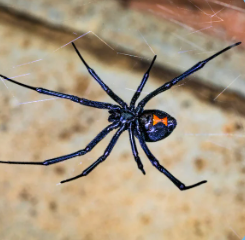
Black widow spiders are arachnids in the Lactrodectus species that are distributed nearly worldwide. While present in every state within the continental United States, the greatest prevalence is in warm, arid climates of the southern and western regions. National surveillance data estimate that approximately 1,100–2,600 black widow spider bites are reported annually, with 600–900 of those resulting in healthcare evaluation. In Ohio, black widow spiders are less frequently encountered than in southern states; however, both the Southern Black Widow (Latrodectus mactans) and Northern Black Widow (Latrodectus variolus) are present, particularly in southern Ohio. Despite the frequency of exposures, fatalities are exceedingly rare, and no confirmed deaths have been reported in recent decades (Gummin et al., 2022). Female black widow spiders are larger and are responsible for nearly all clinically significant envenomations. They are characterized by a glossy black body and a distinctive red hourglass marking on the ventral abdomen. Typical habitats include barns, sheds, woodpiles, rock crevices, abandoned structures, and cluttered indoor environments such as basements and attics. Black widow spiders are generally nonaggressive and typically bite only when their webs are disturbed or when they are inadvertently compressed against the skin.
Pathophysiology and Clinical Presentation:
Black widow envenomation results from the neurotoxin α-latrotoxin, which induces calcium influx at presynaptic nerve terminals, triggering massive release of neurotransmitters including acetylcholine, norepinephrine, and other mediators. This widespread release of neurotransmitters produces the clinical syndrome known as latrodectism, characterized by neuromuscular excitation and autonomic dysfunction. Local findings often include a small punctate lesion at the bite site, with pain typically developing within 30 minutes to 2 hours. Pain may initially be localized but frequently becomes more generalized as muscle cramping and fasciculations spread centrally to involve the chest, abdomen, and back, occasionally producing abdominal wall rigidity that may mimic an acute abdomen. Systemic manifestations may include tachycardia, hypertension, diaphoresis, and agitation. Additional symptoms may involve multiple organ systems, including neurologic symptoms (e.g., headache, weakness), gastrointestinal symptoms (e.g., nausea, vomiting, abdominal pain), respiratory symptoms (e.g. dyspnea, pulmonary edema), and genitourinary manifestations such as priapism or urinary retention. No definitive diagnostic test exists; therefore, evaluation is directed toward clinical recognition and exclusion of alternative diagnoses. For example, electrocardiography may be performed to exclude myocardial ischemia, as cardiovascular manifestations of envenomation may mimic acute coronary syndromes (Jacob, J. & White J., 2017).
Treatment:
Management of black widow spider envenomation is guided by symptom severity and is primarily supportive.
Patients with mild to moderate envenomation may be managed with local wound care, tetanus prophylaxis when indicated, and symptomatic treatment. Oral analgesics such as nonsteroidal anti-inflammatory drugs (NSAIDs) or acetaminophen and local measures such as cool compresses may be sufficient for mild pain, although opioids may be required for severe pain. Muscle spasms are typically treated with benzodiazepines. Observation for approximately 6–8 hours is recommended to monitor for symptom progression.
In cases of moderate to severe envenomation, intravenous opioids and benzodiazepines are commonly used to control pain and muscle spasms. Antiemetics may be administered for associated gastrointestinal symptoms. In patients with severe symptoms, antivenom (Latrodectus mactans antivenin) may be considered, as it has been shown to shorten symptom duration and facilitate earlier clinical improvement. Antivenom use carries a low risk for hypersensitivity reactions and delayed serum sickness (Offerman et al., 2011).
|