|
Florida Legislative
SESSION 2023
| |
|
Week 2
Health Care UPDATE
| |
Weekly summary of health care legislation being considered by the Florida Legislature. | |
Senators with Bills on the Move | |
|
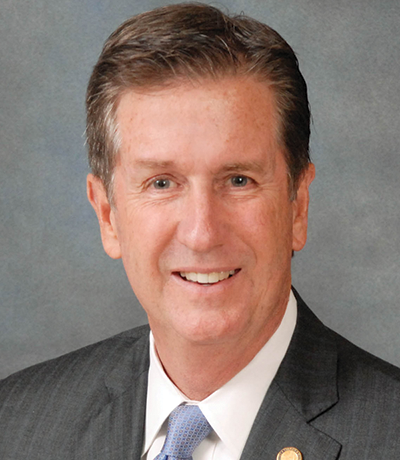
Senator Jim Boyd
SB 298 - Telehealth Practice Standards
SB 298 amends s. 456.47(1)(a), F.S., to revise the definition of “telehealth.” Under the bill, the use of audio-only telephone calls is no longer excluded from the definition.
The bill will continue the pandemic ability of doctors to choose the best method of telehealth for their patients.
| |
|
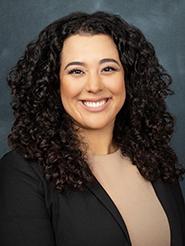
Senator Alexis Calatayud
SB 246 - Florida Kidcare Program Eligibility
SB 246 raises the income eligibility threshold for children in the Medikids program, Healthy Kids program, and the Children’s Medical Services Network within the Florida Kidcare (Kidcare) program. This will be accomplished through a phased-in approach, raising the income eligibility threshold from 200 percent of the federal poverty level to 250 percent effective July 1, 2023, and from 250 percent to 300 percent effective July 1, 2024. These increased eligibility thresholds are subject to federal approval through a waiver or state plan amendment. The bill also requires at least three but not more than five tiers be established that are based on a percentage of the federal poverty level to be used for assessing premiums for enrollees who are required to pay enrollment fees, premiums, copayments, deductibles, coinsurance, or similar charges for certain services within Kidcare.
The companion bill, HB 121 by Rep Robin Bartleman, also received successful passage in House Health Care Reg.
| |
|
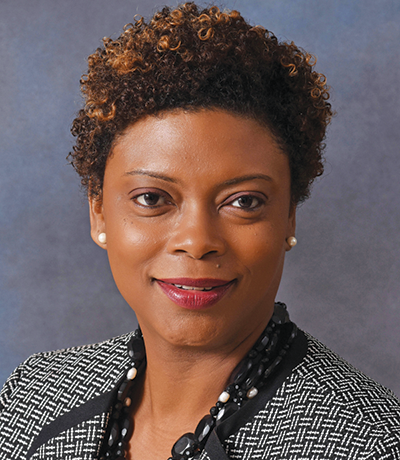
Senator Tracie Davis
SB 938 - Operation & Administration/ Baker Act
SB 938 directs the Department of Children and Families (the DCF) to update and publish an informational Baker Act handbook annually and post the updated handbook on the agency’s website every year by October 1. The bill also directs the DCF to maintain a repository of frequently asked questions (FAQs) on the agency’s website, and continually revise and expand the repository as necessary. The bill requires the DCF to inform certain stakeholders of their role in the Baker Act process and support their effective implementation of the Act. The DCF must support and facilitate research conducted by public and private agencies, institutions of higher learning, and hospitals in the interest of the elimination and amelioration of mental illness.
The companion bill, HB 829 by Rep David Silvers, also received successful passage in House Children, Families & Seniors.
| |
|
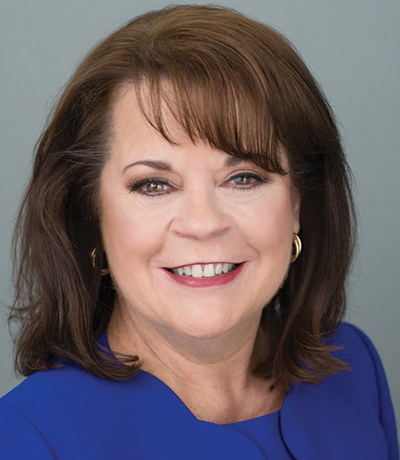
Senator Colleen Burton
SB 988 - Medicaid Coverage Continuous Glucose Monitors
CS/SB 988 creates s. 409.9063, F.S., requiring the Agency for Health Care Administration to provide coverage for continuous glucose monitors (CGM) under the Medicaid pharmacy benefit to treat Medicaid recipients diagnosed with diabetes who meet certain criteria.
| |
|
SB 1098 - Withholding or Withdrawal of Life-prolonging Procedures
Senator Colleen Burton
CS/CS/SB 1098 regulates the authority of a court-appointed guardian to consent to withhold or withdraw life-prolonging procedures, or sign an order not to resuscitate, on behalf of a ward. The bill allows the ward’s wishes to be followed without delay, but still requires court approval to withhold or withdraw life-prolonging procedures in some cases.
The bill also amends existing statutes to: Require initial and annual guardianship plans to state whether an advance directive or an order to not resuscitate listed therein remains in effect, or state the extent to which their authority to make health care decisions has been transferred by the court to the guardian. Provide that a surrogate under an advance directive, or an agent under a durable power of attorney, who has retained the authority to make health care decisions under the initial and annual guardianship plans may exercise that authority without additional approval by the court. Provide that any authority to make health care decisions that has been transferred by the court to the guardian may be exercised by the guardian, consistent with the advance directive or the durable power of attorney, and without additional approval by the court, unless there is a conflict over or objection to the guardian’s proposed exercise of that authority.
The companion measure, HB 1119 by Rep Kim Berfield, also received successful passage in House Children, Families & Seniors.
| |
Representatives with Bills on the Move | |
|
HB 825 - Assault or Battery on Hospital Personnel
Rep Kim Berfield
HB 825 amends s. 784.07, F.S., to include hospital personnel as a specified type of officer or employee for which an assault or battery offense is reclassified to the next highest level when such an offense is committed against hospital personnel while they are engaged in the lawful performance of a duty. The bill defines “hospital personnel” as a health care practitioner as defined in s. 456.001, F.S., an employee, an agent, or a volunteer who is employed, under contract, or otherwise authorized by a hospital, as defined in s. 395.002, F.S., to perform duties directly associated with the care and treatment rendered by any department of a hospital or with the security thereof.
The companion bill, SB 568 by Senator Ana Maria Rodriguez also received successful passage in Senate Criminal Justice.
| |
HB 581 - Prohibit Use of SNAP Benefits to Purchase Soft Drinks
Rep Ralph Massullo, MD
Soft drinks are are typically nutrient-poor and high in calories. Soft drink consumption may be associated with a variety of adverse health outcomes and nutritional deficiencies due to excess calories and large amounts of rapidly absorbable sugars. Research has tied soft drink consumption to an increased likelihood of stroke, heart disease, high blood pressure, and diabetes. HM 581 urges Congress to prohibit the use of SNAP benefits to purchase soft drinks.
| |
|
Tort Reform Measure Ready for House Vote,
Ready for Senate Floor Lobbytools Morning Edition
**NOTE: We were successful in amending the "Truth in Damages" section of the bill to ensure juries where not limited to only hearing the Medicaid/Medicare rate for uninsured patients treated under Letters of Protections
Proposals that aim to reduce lawsuits against businesses and insurance companies were considered in both chambers on Thursday. The Senate Committee on Fiscal Policy advanced its legislation (SB 236) on a 13-6 vote, despite some Democrats' attempts to amend the bill. Sen. Tom Wright of Port Orange was the only Republican to vote in opposition while Orlando Democrat Sen. Linda Stewart joined the Republican supermajority in voting for the measure. The bill would put new rules in place for how fault is apportioned in court cases and change timelines and attorney fee rules in premises liability cases. The measure would also make changes to what evidence juries are allowed to hear about damages. Other GOP members previously voted against the measure due to its "bad faith" provisions but that section was amended to ease some of those concerns. The legislation, sponsored by Palm Coast Republican Sen. Travis Hutson, is backed by Gov. Ron DeSantis, legislative leadership and the business community. The Senate bill is now ready to be considered on the chamber floor. The full House brought up its tort reform measure (HB 837) on the floor on Thursday and is expected to take a final vote on the proposal as early as today. Democrats on Thursday asked Republicans several hypothetical questions about the possible effects of the bill and introduced several amendments but all their attempts to alter the proposal failed. The House bill is being carried by Lakewood Ranch Republican Rep. Tommy Gregory. Florida Politics / Florida Bar News / Insurance Journal
| |
|
House Committee Advances Proposed Six Week Abortion Ban Lobbytools Morning Edition
Legislation restricting access to abortions in Florida passed the House Healthcare Regulation Subcommittee on Thursday, its first of two committee stops. The bill (HB 7) would ban physicians from performing abortions beyond six weeks of pregnancy but would make exceptions for cases of rape, incest, fatal fetal abnormalities or if the mother is at risk of severe injury or death. To qualify for the rape or incest exception, the measure requires pregnant women to prove that they're a victim of rape or incest by producing a restraining order, police report, court order or other evidence. People who perform abortions in violation of the new restrictions could face felony charges punishable by up to 15 years in prison, depending on their involvement in the procedure. Last year, lawmakers agreed to ban abortions past 15 weeks gestation but didn’t include exceptions for rape or incest. Before that, Florida prohibited abortions at 24 weeks. The new proposal requires two doctors to confirm the pregnancy will cause severe injury or death before a woman can obtain an abortion but permits one doctor’s diagnosis for the procedure if "another physician is not available for consultation." Additionally, it would ban physicians from using telehealth to provide an abortion, requiring doctors to be "physically present in the same room as the woman when the termination of pregnancy is performed or when dispensing abortion-inducing drugs." The measure would also expand services provided by state-supported pregnancy centers, including clothing, car seats, diapers and counseling. The House bill does not include funding but its Senate counterpart (SB 300) would appropriate $30 million annually. The legislation passed on a 13-5 party line vote and now heads to its final committee of reference: the House Health & Human Services Committee. Democrats filed several amendments but all failed and members heard emotional testimony from several members of the public. The House proposal is sponsored by Rep. Jenna Persons-Mulicka, R-Fort Myers, and the Senate measure (SB 300) was filed by Sen. Erin Grall, R-Fort Pierce. Both lawmakers carried the 15-week abortion ban legislation enacted last year which is currently awaiting a decision on its constitutionality by the Florida Supreme Court. The Senate bill is expected to be introduced in its first committee, the Senate Health Policy Committee, next week. Gov. Ron DeSantis has previously said he would support bills that would tighten Florida’s abortion restrictions. Associated Press / Florida Politics / USA Today / Tampa Bay Times / Orlando Sentinel / Fox News / WPTV
| |
|
Sovereign Immunity Bill Snagged in House Committee Lobbytools Morning Edition
The House Appropriations Committee on Wednesday temporarily postponed consideration of a bill that seeks to raise the sovereign immunity limit on liability for cities, counties and other government entities, including school boards. Currently, if a government employee injures someone while on the job, the government entity would face a maximum payout of $200,000 to a single victim or $300,000 to multiple victims, with amounts above that needing a state claims bill. The legislation (HB 401) increases these caps to $2.5 million per individual and $5 million per incident. Additionally, the proposal makes changes to the pre-suit process for sovereign immunity claims, including shortening the time frame for government entities to review and dispose of a claim from six months to three months. It also increases the time limitation for filing a claim against a government entity from three years to four years after the claim accrues. The legislation is sponsored by Valrico Republican Rep. Mike Beltran. A similar, though not identical Senate companion measure (SB 604), filed by Sarasota Republican Sen. Joe Gruters, has not yet been considered by any committees. Florida Politics
| |
|
House Bill Would Prevent Nurses with Doctorates from Using 'Doctor' Before Their Name
Lobbytools Morning Edition
A bill awaiting committee action in the House would prohibit nurse practitioners who have a doctorate degree from using the title "doctor" in advertisements, communications and on their personal identification, such as a hospital name tag. The bill, (HB 583), filed by Rep. Ralph Massulo, who is a medical doctor, spells out several titles that various health care practitioners can use, including several specific titles that can be used by different types of nurses. For example, the measure spells out that registered nurses may use only "registered nurse," and "R.N." However, the bill does allow people with a doctorate to put the letter "D" with their name. "Any nonphysician health care practitioner who has obtained a doctoral degree under the profession governed by the applicable practice act may use the letter 'D.' in front of the abbreviations authorized by the health care practitioner's respective practice act," the bill says. "However, a nonphysician health care practitioner may not use the title 'doctor' in any form of advertisement, telehealth interaction, text message, or verbal communication without clearly identifying himself or herself as a "doctor" of a specific profession." The bill is assigned to three House committees and is yet to be scheduled for a hearing. There is a similar bill (SB 230) dealing with health care titles and advertising that has moved through committees in the Senate and ready for a floor vote – but it doesn't contain the language about nurses with doctorate degrees, or any other mention of titles related to nursing. That bill, sponsored by Sen. Gayle Harrell, R-Stuart, originally did deal with nursing titles, though not as extensively as the House bill, but the language was stripped out of the measure by an amendment early in the committee process. Becker's Hospital Review
| |
|
Blood Clot & Pulmonary Embolism Policy Workgroup Lobbytools Morning Edition
The House Health Care Appropriations Subcommittee unanimously approved a measure that would direct the Agency for Health Care Administration to create the Blood Clot and Pulmonary Embolism Policy Workgroup to make recommendations to help health care providers better identify and monitor patients at risk for blood clots. The workgroup would also consider ways to raise awareness among patients. The bill (HB 483), called the "Emily Adkins Prevention Act," is named after former state Rep. Janet Adkins' daughter who died from a pulmonary embolism after she broke her ankle. The proposal, sponsored by Yulee Republican and freshman Rep. Dean Black, has one more committee stop. A similar Senate companion, filed by Jacksonville Republican Sen. Clay Yarborough, has yet to be heard. The Centers for Disease Control and Prevention reports that about 100,000 people die each year from a pulmonary embolism or a blood clot. Florida Politics
| |
|
Path to Nursing License for Military Medics Closer to Floor Consideration Votes
Lobbytools Morning Edition
Military combat medics would have an easier path to becoming nurses in civilian life under legislation that unanimously passed the House Higher Education Appropriations Subcommittee on Wednesday. The bill (HB 517), the "Pathway for Military Combat Medics Act," would expand state law to mandate that state universities, colleges and career schools award nursing credits to combat medics based on their military training. The proposal aims to address the expected shortage of 60,000 nurses in Florida by 2035. The measure is sponsored by Navarre Republican Rep. Joel Rudman, M.D., and has one more committee stop. An identical Senate version (SB 274), carried by Sen. Bryan Avila, R-Hialeah Gardens, cleared all of its committee assignments and has been placed on the floor calendar in the Senate. Florida Politics
| | | | |