‌
the weekly digest from NEJHE and other news from the New England Board of Higher Education
Aug. 11, 2021

The New Commonwealth Racial Equity and Social Justice Fund named Makeeba McCreary to be the first president of the fund launched by 19 local Black and Brown executives a few weeks after the killing of George Floyd. ... The UMaine System chancellor will recommend Vice President of Academic Affairs and Provost Joseph Szakas as interim president at the University of Maine at Augusta to succeed Rebecca Wyke, who left the university to become CEO of the Maine Public Employees Retirement System. ... Sharale W. Mathis, a biologist and early adopter of Open Educational Resources (OER), joined Holyoke Community College as vice president of academic and student affairs. ... See more on these and other changes in NEJHE's "Comings and Goings" tally of new appointments in New England higher ed and beyond.

Pictured: Makeeba McCreary (photo by bizjournals.com)
ICYMI from The New England Journal of Higher Education
More on the climate crisis in the week the UN issues a code red for earth ...

To fight climate change, all sectors of energy use—agriculture, transportation, industrial, residential, business—must transition to electricity. To achieve such an all-electric economy, environmental expert Thomas Jorling calls for a “smart grid” to facilitate the nationwide delivery of alternatively generated electricity. A former New York state conservation commissioner and Williams College environmental scholar, Jorling suggests the grid follow the pattern of the interstate highway system, whose main costs have already been incurred securing rights-of-way and which would not require defiling the countryside or disrupting ecosystems. "These rights-of-way represent a valuable federal and state asset that shouldn’t be limited to concrete and asphalt," writes Jorling, who is now an advisor to the law firm Murphy, Hesse, Toomey & Lehan. "This network, already invested in by the public, can accommodate not only an electric grid, but also pipelines and even elevated high-speed rail." And perhaps the expansion of broadband and related innovations in higher ed delivery?


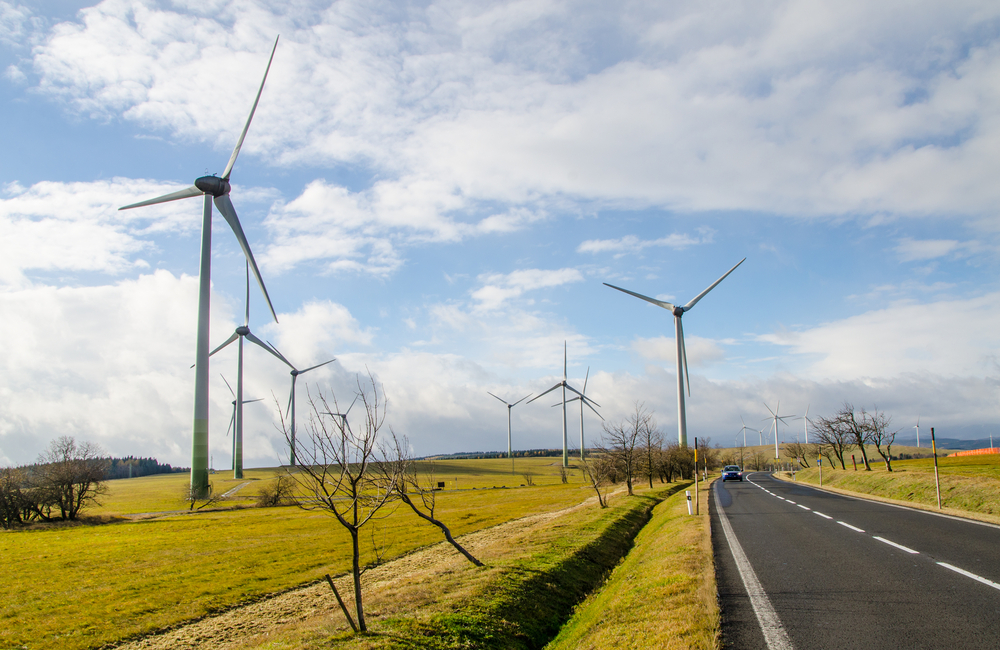
Europe has already invested heavily in large-scale offshore wind energy (OWE). In the coming decades, the U.S. will similarly commit hundreds of billions of dollars to building and operating OWE capabilities that can compete with fossil fuel-based electricity. And New England could lead the way, according to a team of experts writing in NEJHE. Among the region's various advantages: offshore winds that are up to twice as powerful as other regions in the U.S.; high electricity demands and costs; thousands of megawatts in pending plant retirements; the creation in Massachusetts of the first commercial-scale offshore wind market; Rhode Island's construction of the first American offshore wind farm; and Maine's leadership in deepwater floating-turbine technologies. And of course, New England's institutions of higher education—long leaders in ocean studies and environmental public policy, will now be charged with educating the talent to power the wind industry.

More than 250 higher education leaders from campuses across the U.S. met in Boston for the 2014 Presidential Summit on Climate Leadership. Kate Gordon, executive director of the Risky Business Project, outlined her no-nonsense research focusing on climate change's impacts on energy, agriculture and extreme heat. Some of the risks of climate change will cascade. "For example, there'll be more 'heat stroke days' when the body cannot cool itself off by perspiring. That will mean lost labor productivity (especially in states with lots of outdoor work ...) as well as more air conditioning and therefore demand for more power plants, which incidentally are mostly built along rising seas," writes NEJHE Executive Editor John O. Harney.  
Coming Soon from The New England Journal of Higher Education
A NEJHE Q&A with Richard Haass

Watch for an exclusive NEJHE Q&A featuring Council on Foreign Relations President Richard N. Haass opining on the future of globalization and higher education with NEBHE President Michael K. Thomas and NEJHE Executive Editor John O. Harney. Among Haass's mantras: "Universities have departments but the world doesn't." He believes in interdisciplinary thinking. And he believes higher ed is ripe for disruption.
Our Webinars
News Around NEBHE

We seek an intern for the fall 2021 and spring 2022 semesters to support NEBHE’s Regional Student Program, Tuition Break. The internship requires a commitment of 10-20 hours per week (negotiable). This is a paid position with preference for a student that is eligible for Federal Work Study. A successful intern will be a graduate student or upper-class undergraduate student who can effectively research and communicate detailed and technical information. To apply, eligible candidates should email a cover letter and resume to tuitionbreak@nebhe.org with a subject line of “RSP Internship.” See full position description here.

To subscribe to The Monthly Policy Dispatch, click here or contact NEBHE Associate Director of Policy Research and Analysis Stephanie Murphy at policy@nebhe.org.
NEJHE NewsBlast is a summary of NEJHE content and other news around NEBHE prepared weekly by NEJHE Executive Editor John O. Harney and emailed every Wednesday to opinion leaders and practitioners. When responding to NEJHE content, please make sure that your remarks are relevant, courteous and engaging. Individuals are responsible for their comments, which do not represent the opinions of the New England Board of Higher Education. We urge commenters to briefly note their occupational or other interest in the topic at hand. Please refrain from offensive language, personal attacks and distasteful comments or they may be deleted. Comments may not appear immediately. Thank you for staying engaged.
NEJHE NewsBlast is sponsored by
For more information about partnering with NEBHE, click here
or send an email message to our events coordinator Marla Phippen.
Explore more at nebhe.org