The voice for pharmacy compounding | June 11, 2021
$1.5 million … or bust?
Dear A4PC,
These are the end times, and we’re not talking theologically.
We’re in the last days of our effort to raise $1.5 million that will fund an ambitious media campaign to preserve patient access to compounded hormones. We’ve already raised more than $1 million, but we’re still $450,000 short of the funding needed for the actual media ad placements related to the campaign. And we only have about three more weeks to raise those funds. If we don’t make the goal, we’ll have to halt the campaign.
Many of you have already invested in this effort. Thank you. But I need to ask one thing more of you. While a handful of vendors in the compounding space have given to the campaign, many have not. They may not understand that the loss of cBHT to your pharmacy or facility could well mean they’ll lose your business. You need to remind them. In the next three weeks. And urge them to make a generous investment in your future … and theirs.
Here’s a list of who’s given to the campaign already. And here’s where vendors can go to invest in this important effort.
Thanks for your help. We’ve got three weeks. It’s $1.5 million … or bust.
Best,

Scott Brunner, CAE
Chief Executive Officer

From APC’s President
The late ’90s say hello

Michael Blaire, RPh, FIACP
APC President
It was back in 1997* that Congress passed the Food and Drug Administration Modernization Act, or FDAMA, which amended the FD&C Act by, among other actions, adding section 503A to Chapter 5.
One requirement of Section 503A was the development of a memorandum of understanding with the states concerning the interstate distribution of compounded preparations. Without going into the various legal arguments, parts of Section 503A were ruled unconstitutional in 2003 and removed from the FDCA.
Fast forward to 2013, following the NECC tragedy. Section 503A, now 16 years old, is given a new name (“the Drug Quality and Security Act”) and inserted back into the FDCA, the unconstitutional parts removed. Unfortunately, the requirement for an MOU still remained.
For many reasons, it seems that FDA is trying to fit a 24-year-old square peg into a modern-day round hole. As with computers, a lot has changed in the regulation of compounding pharmacies since 1997. One thing that has not changed: There are 50 states.
When FDA conceived the MOU, “the states” were treated as single uniform entity rather than 50 unique agencies, each with its own assignment of jurisdiction, approach to the regulation of pharmacy, due process, and information sharing. It would be an understatement to say that many were not happy with the requirements of the final MOU that was released in October 2020.
Since then, many state boards of pharmacy have pushed back on the MOU, primarily registering their complaints through NABP. At the urging of APC and several state boards, on April 27 NABP sent a strongly worded letter to FDA requesting a one-year extension to the implementation date of the MOU.
This week, that letter received reinforcement. Citing the fact that several states are unable to sign the MOU due to existing state laws that cannot be amended in time to meet the October 2021 deadline, Reps. Henry Cuellar and Neal Dunn, who worked closely with APC, are circulating a “Dear Colleague” letter, asking fellow congressmen and -women to sign the letter to be sent to FDA, also requesting a delay in the implementation of the MOU.
Now it’s up to all of us to get our representatives to add their names to that letter. Send an email. Make a phone call. Visit the district office. Do whatever it takes to get the message out and a signature on the letter.
Stop. Don’t just skim that last paragraph. Right now, make that call or send that email. It takes five minutes, tops, to say, “I’m a constituent and I’d like to ask Representative ______________ to respond to the ‘Dear Colleague’ letter from Congressman Dunn and sign his letter to FDA.”
FDA has waited 24 years to implement the MOU. Although the square peg may never be completely rounded, a delay of at least year may provide enough time to sand down the rough edges.
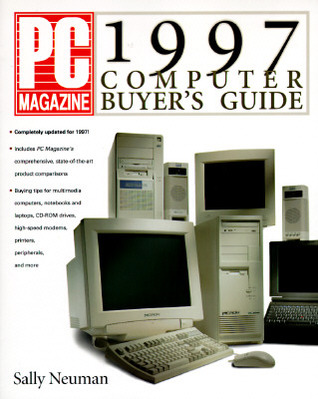
* That was the year my 50-pound desktop computer (including the CRT monitor) ran Windows 95, came with 4MB of RAM and a 200MB hard drive, and cost $2,000. Today my phone, which weighs less than 1 pound, has more than 800X the memory and 1,300X the storage, fits in my pocket, and can access the Internet from the bottom of the Grand Canyon. It cost less than $1000. Suffice to say, things have changed since 1997.
Michael Blaire is APC’s president, but his day job is vice president for government and regulatory affairs at Wedgewood Pharmacy in Scottsdale, Arizona. You can reach him at mblaire@wedgewoodpharmacy.com.

This Week
PCAC recommends three substances for 503A bulks list
FDA’s Pharmacy Compounding Advisory Committee met Wednesday, voting to recommend adding melatonin, methylcobalamin, and oxitriptan to the 503A bulks list.
PCCA’s AJ Day, a member of APC’s Board of Directors, presented on behalf of APC and NCPA in support of recommending including methylcobalamin on the list. (FDA staff had recommended that methylcobalamin not be included, but PCAC members disagreed.)
Among the committee’s actions:
- Melatonin, typically used for treatment of sleep disorders in patients with autism spectrum disorder (specifically children and adolescents), was recommended on a vote of 13-0.
- Methylcobalamin — notably a treatment for amyotrophic lateral sclerosis, pain management (peripheral neuropathy, including diabetic neuropathy), inborn errors of metabolism, hyperhomocysteinemia, vitamin B12 deficiency, and autism — was recommended by a vote of 9-5.
- Oxitriptan, also known as 5-hydroxytryptophan or 5-HTP and often used for treatment for patients with tetrahydrobiopterin deficiency, was recommended by a vote of 11-0-1.
- Finally, choline chloride, commonly used for treatment of liver diseases, atherosclerosis, fetal alcohol spectrum disorder, and supplementation in long term total parenteral nutrition, was not recommended by a vote of 2-11-1.
After the meeting, Day sought to manage expectations. “It’s just a committee vote,” he said. “FDA can still decide whatever it wants.” He also emphasized that the items were nominated, evaluated, and discussed for specific uses, but if FDA places them on the 503A bulks list, it will not be for specific uses. FDA may put parameters on the route of administration, but not the use/diagnosis. How quickly FDA will act on the PCAC recommendations is not known.

NCPA to provide in-kind support to cBHT campaign
The National Community Pharmacists Association will provide in-kind support valued at $25,000 for APC’s cBHT media campaign, APC learned this week. That support will include ongoing coverage of the campaign and ad placements in NCPA’s flagship America’s Pharmacist magazine, social media, and other communications support, and exposure at NCPA’s October annual convention in Charlotte, N.C.
“We support this important campaign and we want to help make it successful,” wrote NCPA CEO B. Douglas Hoey.
“We’re grateful for our ongoing partnership with NCPA on compounding issues, and NCPA’s in-kind support of our campaign to save compounded hormones is particularly appreciated,” said APC’s CEO Scott Brunner.
If you’re also an NCPA member, look for campaign messaging coming soon – and maybe shoot Doug a quick thank you!
Help us gather shortage data on HCG
FDA has granted a request from APC and the Outsourcing Facilities Association for a listening session related to restrictions on compounding HCG that have resulted from the March 2020 reclassification of the drug as a biologic. That listening session is set for July 20.
Because HCG does have a drug monograph, the restriction creates a conflict of laws and stands to deprive some patients of an otherwise viable treatment option.
Between now and July 20 APC is gathering documentation of shortages or other interruptions in availability of HCG products from wholesalers and distributors. That documentation must come from compounding pharmacies and outsourcing facilities like yours. We’re speaking here not of your own internal documentation, but of documentation directly to you from the wholesaler or distributor, either in writing or via screen shots of the vendor’s software. Please scrub any examples you share with us to remove confidential pricing or other data.
In addition, note that we need ongoing documentation, not only a single point in time. Best to begin to collect the data, say, weekly, and share it with us prior to July 20.
APC will hold confidential all sources and senders of HCG shortage/unavailability data.
Send documentation to info@a4pc.org, and mark it as “HCG shortage documentation.”

MedQuest hosts Rep. LaHood
Rep. Darin LaHood (IL) visited MedQuest Pharmacy in Salt Lake City today. He’s a previous sponsor of APC priority legislation, so owner Jeff Bray thanked him during the tour of the pharmacy.

Pharmacist Ryan Young (left) and Rep. LaHood
YOU should invite a legislator to tour your pharmacy. Click here for our how-to guide!
Coming Up
June 16–17 — Informa Connect's Compounding Pharmacy Compliance Virtual (APC members: Use code A4PC10 for 10% off registration!)
June 23; 2:00–3:00pm EDT — APC CE: Controlled Substances and the Corresponding Responsibility of the Pharmacist
APC CE: Leveraging a COA (three-part course bundle):
- June 22; 2:00–3:00pm EDT — Leveraging a COA: Raw Material Revealed
- July 13; 2:00–3:00pm EDT — Leveraging a COA: Calculations Based on C of A Data
- August 10; 2:00–3:00pm EDT — Leveraging a COA: Risk Mitigation
September 14–15 — Compounders on Capitol Hill (mark your calendars!)
November 8–10 — Informa Connect's Compounding Pharmacy Compliance East In Person
November 15–17 — Informa Connect's Compounding Pharmacy Compliance East Virtual
APC Owner Summit:
Short Takes
For the first time in quite a while, FDA has updated its pending 503B list — the "Bulk Drug Substances Nominated for Use in Compounding Under Section 503B of the Federal Food, Drug, and Cosmetic Act". Interested in what's on the list and in what category? Click here.
Check out two pieces of new research from Mercatus scholars on pharmacy regulations. One demonstrates that pharmacists and pharmacy technicians are capable of performing morekinds of tasks, not fewer (an argument for expanded scope of practice). The other "summarizes years of research Mercatus scholars have conducted on the impact of certificate-of-need laws on healthcare access, quality, and cost."
On-demand hand sanitizer education from USP: "Learn from USP, regulators, industry, and public health institutions about the global and regional quality risks and solutions when producing alcohol-based hand sanitizer." Both courses are free and each is just under four hours long. To take it as a manufacturer, click here. To take it as a healthcare professional, click here.