|
Tsugio Ikeda boarded a chartered plane in Billings, Montana for Washington D.C. on Memorial Day weekend 2014. He was an esteemed guest of the Big Sky Honor Flight, a nonprofit that provided war veterans with an all-expenses-paid trip to the nation’s war memorials. What made this trip special for my eighty-nine-year-old uncle was that he had been one of the 120,000 Japanese Americans incarcerated during WWII.
Silence fell over the veterans as they neared the granite pillars of the memorial. Many wore the special issue Veteran’s baseball cap handed out on the flight. The magnitude of the compound and somberness of remembering fallen comrades made this stop unforgettable to many, including Tug.
On their return flight home, each veteran was handed letters of appreciation written by family members as a reenactment of Mail Call. With this final act of recognition, Tsugio Ikeda completed his journey from internee to honored war veteran.
But wait.
Is it possible that, after seventy-two years, the deep scares of war and prejudice are healed by a little recognition and a weekend trip to our nation’s capital?
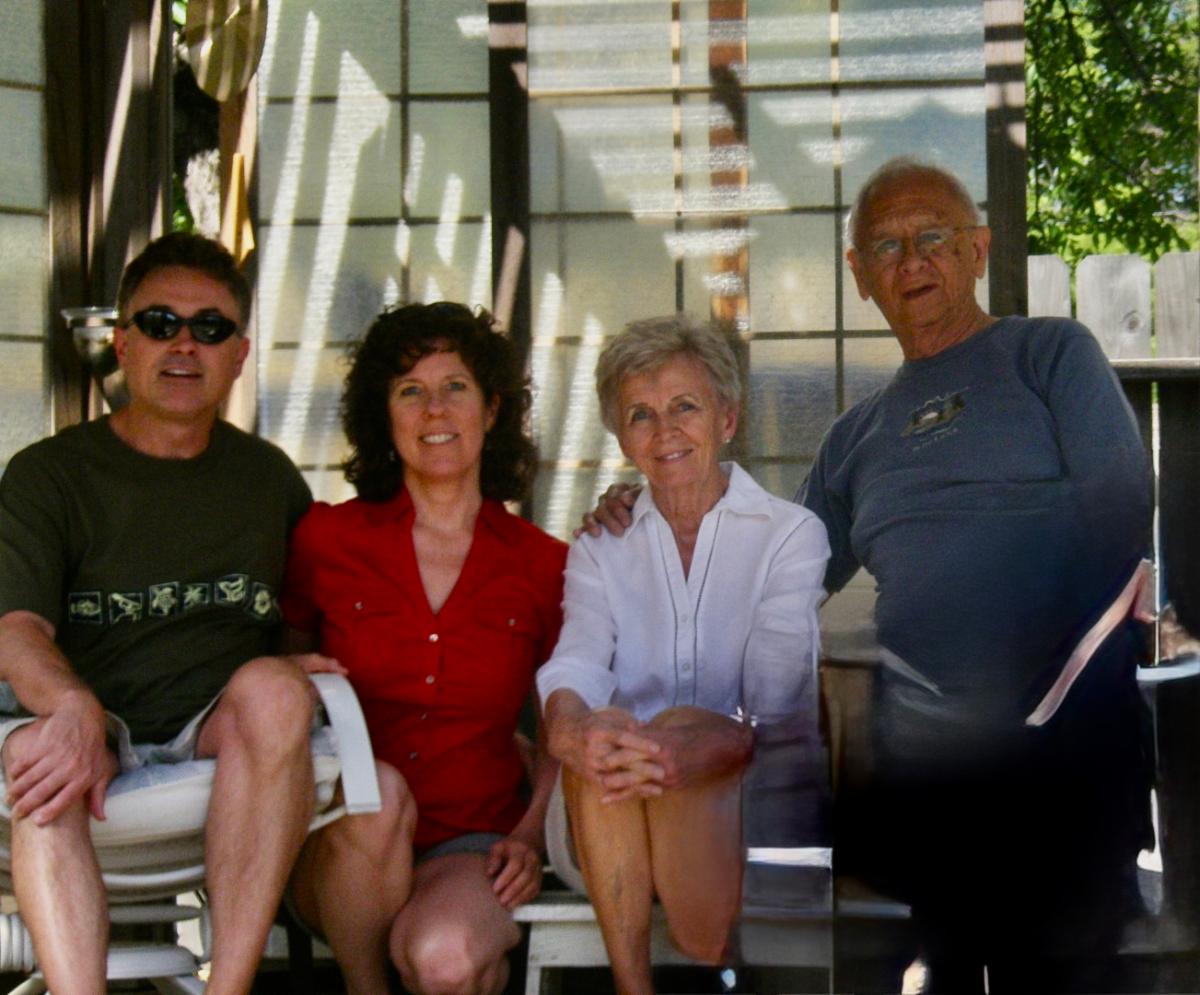
Months after the Honor Flight, my aunt and uncle visited me in San Jose, California, about an hour’s drive from where Tug’s family once lived on a lettuce farm. Perhaps it was the familiar horizon that inspired him to tell me more about his past than ever before.
“I was sixteen when the Japanese bombed Pearl Harbor. The US government snatched us from Salinas and forcibly took us to Poston,” he spoke in hushed tones as if sharing government secrets. Up until their capture, Tug and his three brothers had attended American school during the day and Japanese school in the late afternoon while their parents harvested endless rows of lettuce.
Poston Internment Camp was located on the Colorado River Indian Reservation where high temperatures and dry skies kill delicate plants and lofty aspirations, unlike their fertile growing region in California. The local Tribal Council in Arizona opposed the use of their land for a war-time prison but the Bureau of Indian Affairs overruled them to garner government-funded improvements to the lacking facilities. At its peak, the internment camp held 17,000 Japanese Americans.
“I used to love to read. Never liked school but I loved books. My friend and I stole books from the library at Poston,” Uncle Tug said, turning up one corner of his mouth.
I knew there was a catch and waited for it.
“We couldn’t check them out, only white Americans running the camp could do that. The librarian saw us leave with half-hidden books under our shirts. She looked right at me, then looked away with a smile,” he said, shrugging his shoulders with a chuckle.
“I always brought them back,” he added.
Tug sometimes wonders about his “book stealing” friend who refused to sign an agreement to enlist in the war effort. Incarcerated Japanese American boys over seventeen years of age were required to complete a lengthy survey that contained two fate-determining questions. Question twenty-seven asked if he was willing to serve in the armed forces. Twenty-eight asked if he would swear allegiance to the United States against enemies, including Japan.
If the teenager answered both questions with a “No,” he was branded a “No-no” boy, kept in a separate area, and not allowed to join the armed forces. Enlistment was the only way out of incarceration. It was often a sense of duty to parents and home country that kept No-no boys from disavowing their allegiance to Japan. “No-no” often meant no hope and no chance for dreams.
Tug answered both questions, yes.
As expected, when he turned eighteen, my uncle was drafted into the Army to serve in Military Intelligence. On his way to Japan, WWII ended. Tug’s ship continued to Japan with a changed mission. They would be the first occupational forces in Hokkaido. His new assignment was to interview Russian defectors who wanted to immigrate to America.
Upon returning home, Japanese American soldiers didn’t receive a veteran’s welcome like their counterparts. It took decades for the United States to recognize their contributions. In 1988, over forty years after the war ended, the Civil Liberties Act included a financial settlement of $20,000 per person for losses incurred in WWII.
“It wasn’t really very much, and my parents had already passed away, so they didn’t get anything,” Tug said, lowering his voice and shrugging his shoulders. This gesture I knew to mean reluctant acceptance.
After the war, Tug attended a university in Minnesota and later accepted a teaching position in Great Falls, Montana. He was promoted to elementary school principal, and later became the first Asian American elected as County Superintendent of Schools in Montana.
In my aunt and uncle’s backyard in Great Falls, Montana, Tug built a Japanese style garden. An arched bridge rests over a bed of river rock and forms a path to a wooden gazebo. His garden is peaceful in a Zen sort of way. Inside their home, Tug’s hand-built kitchen cabinets, intricately carved wooden clocks, and handmade ceramic candle holders provide a catalog from his many years of craftwork. He sent me home with a box of his handmade crafts, a scroll saw clock, a striped wooden cutting board, and several ceramic candle lanterns.
In his last years of life, Tug continued to proudly wear his WWII baseball cap. Former enlisted personnel greeted him, “Thank you for your service, sir.” He smiled at their notice, and stood tall like he’d had this recognition all his life.
Today, when I drive through the Salinas Valley, it’s hard to imagine what it was like when my uncle’s family grew lettuce at the southern edge of Silicon Valley. How determined they must have been to build a better future by having their children attend two schools, learn two languages, and serve this country in wartime.
The landscape now dominated by garlic, mushrooms, and vineyards was once home to my uncle’s people. The crops have changed as have the faces and ethnicity of the inhabitants. Asians now comprise only a small percentage of the total population. The injustices of wartime hysteria are buried deep in the soil here, but the victims have moved on with their lives and their descendants have flourished elsewhere.
Tsugio Ikeda, an immigrant farmer’s son, a prisoner during WWII, and an Army war veteran, became an educator, community leader, and mentor, emerging triumphant. Proof that, like the seeds of future crops, the human spirit will continue to grow, even when transplanted.
~~~~~~~~~~
|