| |
Because Digestive Health Matters | International Foundation for Gastrointestinal Disorders April 2025 eNewsletter | | | |
May is Food Allergy Awareness Month, a time for education on the various types of allergies and ways to ensure the safety of individuals with allergies. It is estimated that around 6% of the population has some type of a food allergy.
Food allergies are an immune system response where the body creates antibodies as a reaction to certain triggers. This immune reaction can range from mild to life-threatening. Avoiding the allergens is the only way to effectively prevent an allergic reaction. This may sound easy, but can be incredibly challenging when dealing with food allergies. Some of the most common food allergies include milk, eggs, nuts and wheat, common ingredients in every restaurant and most households. This can be a challenge to manage when eating pre-made foods or outside the home. It’s crucial to effectively communicate your allergy to others and understand ingredient lists and food labels to avoid an unexpected reaction.
| | | | |
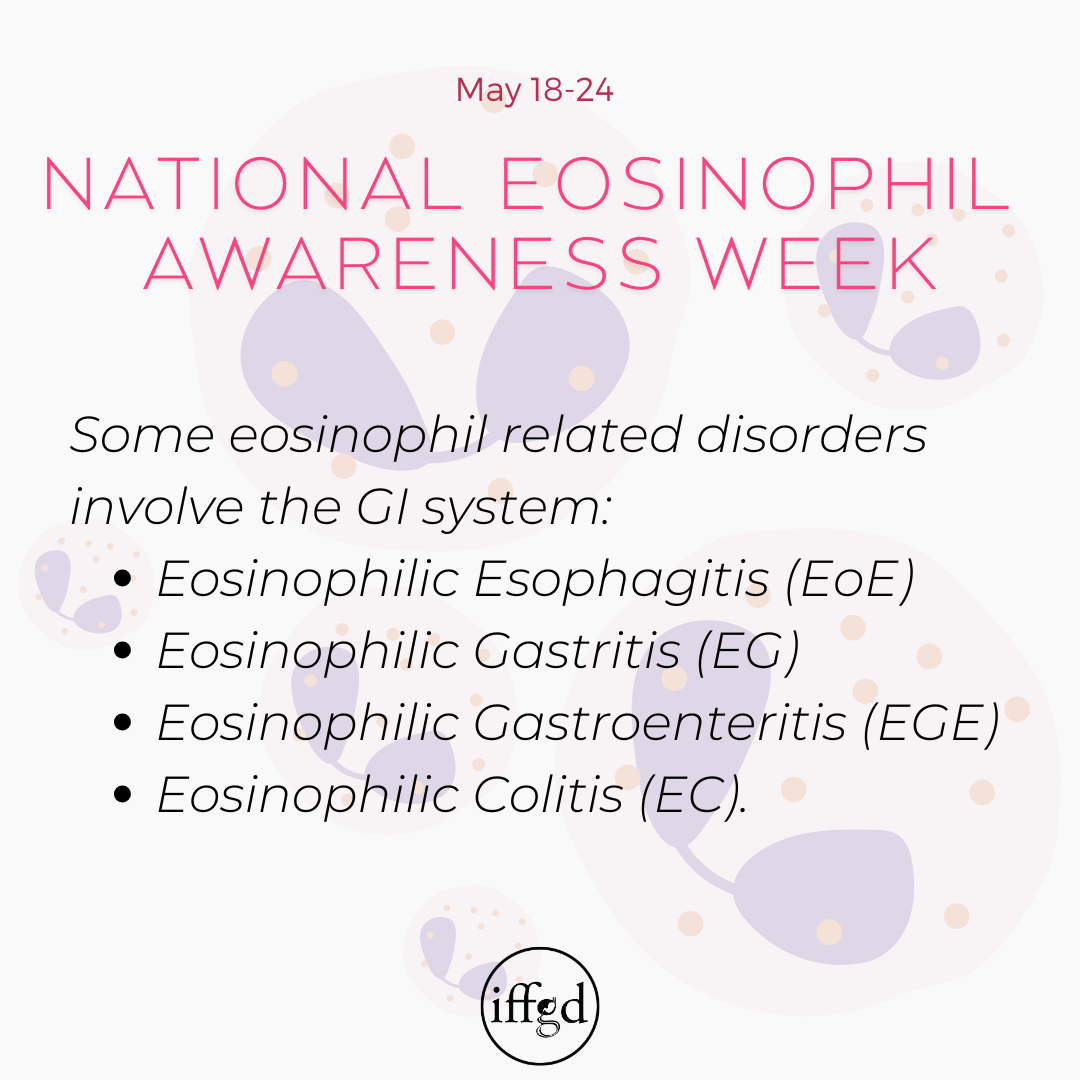
National Eosinophil Awareness Week is acknowledged from May 18-24th this year. There are numerous eosinophil related disorders, some of which involve the GI system including Eosinophilic Esophagitis (EoE), Eosinophilic Gastritis (EG), Eosinophilic Gastroenteritis (EGE) and Eosinophilic Colitis (EC).
These conditions have a few things in common: high numbers of eosinophils occurring where they shouldn’t be, whether that be the esophagus, stomach, small, or large intestine. Eosinophilic gastrointestinal disorders, or EGIDs, are rare and can cause allergic-type reactions along with symptoms such as nausea, vomiting, malnutrition, poor growth, and abdominal pain.
To learn more about EGIDs, click here.
| | This month’s ‘5 Minutes in GI’ video will discuss the available treatment options for patients with abdomino-phrenic dyssynergia? Click the button below to watch. | | |
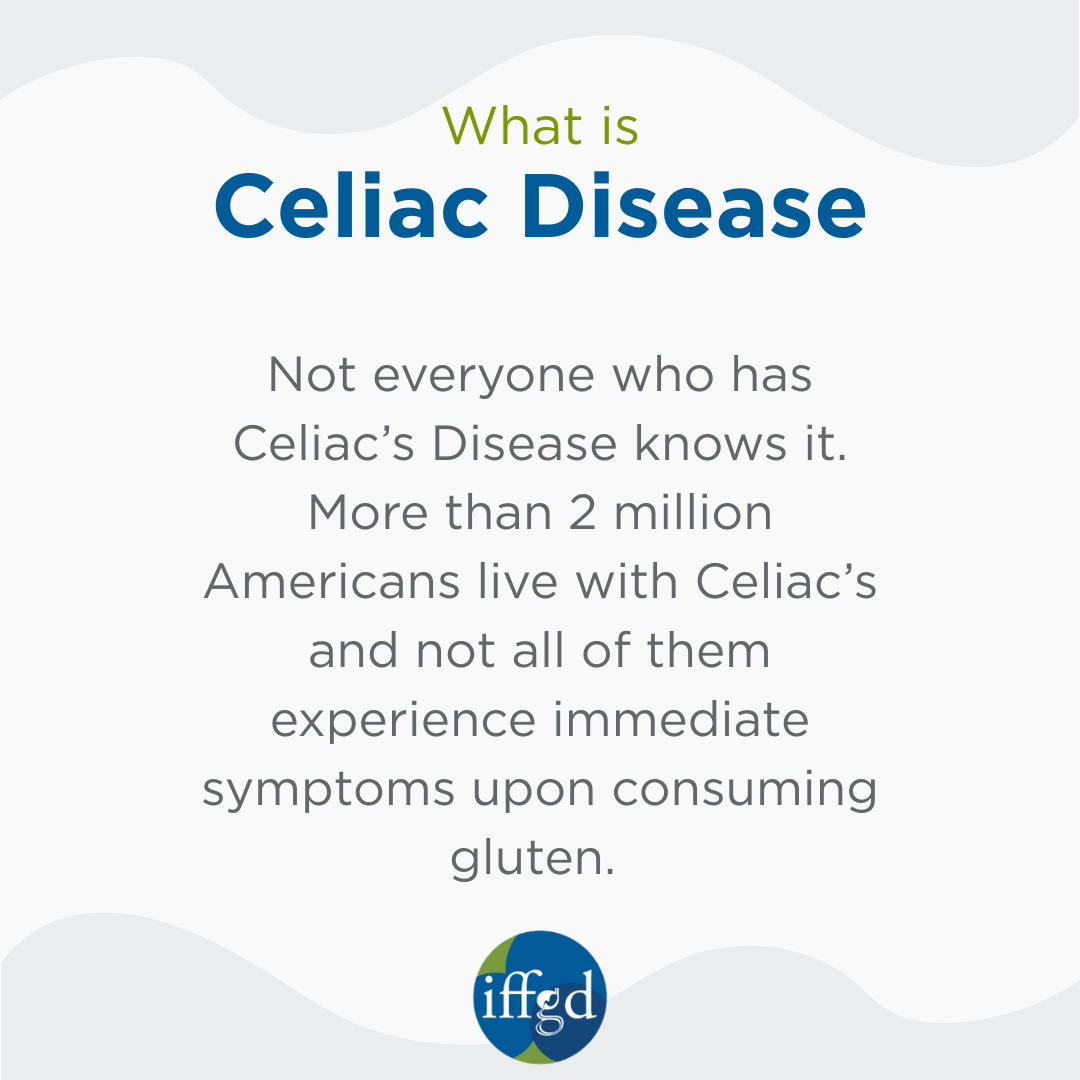
Celiac Disease (CED) is an autoimmune disorder that renders the body unable to process gluten. When gluten is entered into the body, the immune system attacks the lining of the small intestine. This damage may or may not immediately present in the form of unpleasant digestive symptoms. Many people living with Celiac may not experience any symptoms, or they may not know celiac disease is the cause.
Regardless of whether symptoms appear at the time of consumption, the gluten damages the intestinal lining, compromising the body’s ability to absorb nutrients. Over time, this can lead to anemia, infertility, brittle bones, dermatitis, or other health problems .
CED often runs in families, affecting more than 2 million Americans. To learn more about Celiac’s Disease, click the button below.
| | |
Food allergies and intolerances are often mistaken for one another. Though the two share similarities, there are several factors separating them.
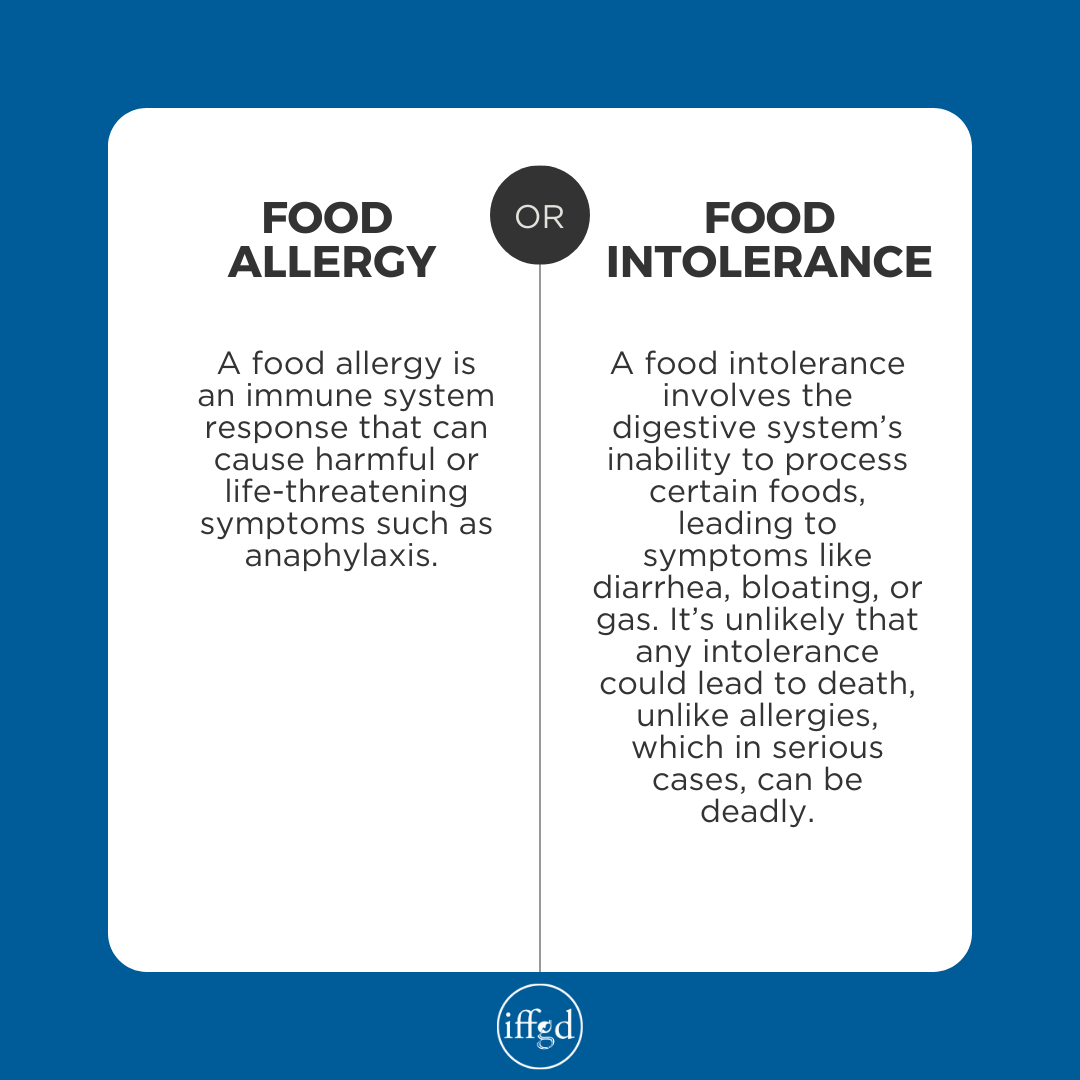
A food allergy is an immune system response that can cause harmful or life-threatening symptoms such as anaphylaxis. A food intolerance involves the digestive system’s inability to process certain foods, leading to symptoms like diarrhea, bloating, or gas. It’s unlikely that any intolerance could lead to death, unlike allergies, which in serious cases, can be deadly.
Distinguishing between the two can be challenging for many, particularly those dealing with gastrointestinal (GI) disorders as both can cause GI discomfort.
To learn more about food allergies, click below.
| | |
We’re working with the American Neurogastroenterology and Motility Society (ANMS) to launch a letter writing campaign to the members of Congress asking them to urge the FDA to find ways to preserve patient access to domperidone.
For many patients with GI disorders like gastroparesis, domperidone makes a huge difference in quality of life. The drug has been banned in the US due to the risk of side effects like cardiac arrhythmias, but for many patients, the benefits outweigh the risks.
Click the button below join the campaign!
| |
Clinical trials and research studies help to improve our understanding of the underlying mechanisms of diseases and advance the development of new and better treatment options. By participating in a study, you can help further the advancement of research and learn more about your condition.
Here are 3 studies currently recruiting participants:
| | VP-VLY-686-2601: A Proof Of Concept, Randomized, Double-Blind, Placebo-Controlled Study To Evaluate The Effects Of Tradipitant On Nausea and Vomiting After GLP-1R Agonist Administration in Healthy Overweight Class I or Class II Obese Volunteers | | NAFLD Clinical Care Pathway (NCCP) | | Multi-Site Detection of Barrett's Esophagus in Patients Without Chronic GERD Symptoms | | Advisory Board Member Peter Whorwell | Professor Peter Whorwell has spent his whole career caring for patients with disorders of gut brain interaction, especially irritable bowel syndrome (IBS), and undertaking research into these conditions. This research has resulted in over 400 original papers, reviews and chapters covering the epidemiology, pathophysiology and clinical manifestations of these disorders as well as various treatment options. Many years ago, he showed that patients with IBS often complain of symptoms such as backache, fatigue, nausea, bladder problems and gynaecological symptoms which can result in them being referred to the wrong clinic where they can be unnecessarily investigated or even receive inappropriate surgery. He also highlighted the problem of trying to distinguish between the symptoms of IBS and endometriosis. | |
| |
Dr. Whorwell was the first to point out, rather controversially, that fibre, fruit and vegetables, which in the past were recommended for IBS, can actually make some patients worse. He pioneered the use of hypnotherapy for IBS which, after many years of scepticism, has now gained general acceptance as one of the more effective treatment options for disorders of gut brain interaction. Lastly, his scoring system for measuring the severity of IBS (the IBS SSS) is now regarded as the gold standard for recording the outcome of treatment in either clinical practice or in treatment trials. He continues to work in the UK, at Manchester University NHS Foundation Trust.
In the early 1990’s Peter met Nancy Norton who was working tirelessly to increase public awareness of these disorders and had no fear in confronting decision makers in Washington, DC. She invited him participate in the various activities of the IFFGD and her conferences in Milwaukee became a ‘must’ for people working in the field of disorders of gut brain interaction. He has since written numerous IFFGD fact sheets and sits on the advisory board.
| |
IFFGD is a nonprofit organization. We rely on donor support to fund research and to provide reliable information and support to those affected by chronic gastrointestinal disorders.
| | | | |