From the North Carolina Synod Council

The North Carolina Synod office is located on the original and ancestral homelands of the Keyauwee people, and we give thanks for their presence here since time immemorial. We also wish to recognize and honor all our indigenous siblings who have called and continue to call this land their home. 


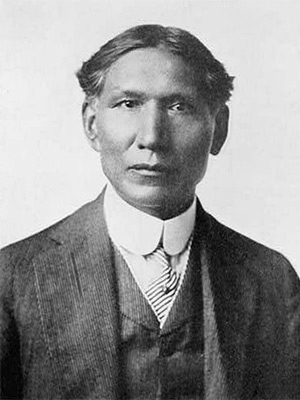
We are following the list of topics suggested by Native leaders in the ELCA to continue our learning together. In September, we are learning about the life of Charles Eastman, a man who developed lives in two worlds, both the Indigenous and colonized worlds, and was an example of the pain of assimilation that many Indigenous people still face today.

September 2022: Life of Charles Eastman

Opening excerpt from Charles Eastman/Ohiyesa: Living in Two Worlds by Julie Arndt:


It was said of Dr. Charles Eastman late in his life that he was “equally at home in a war bonnet as he was in a starched collar.” Dr. Eastman was born into the Santee Sioux nation and would become the first Native American to be certified in western medicine but learned herbal medicine from the maternal grandmother who raised him.


Born in the Dakota Territory in 1858 to a pure Sioux father and a half-Sioux mother, he was raised in the traditional ways. He was on the path to becoming a great warrior, learning from his uncle who was already a great warrior. Then his father, presumed dead after the Dakota War of 1862 and away from his son for ten years, returned to his people...

An Overview of the Life of Charles Eastman by Julie Arndt
Key Resource
 
Invitation to Action

Charles Alexander Eastman ( AKA Ohiye S’a (Always Wins) 


Caught between two worlds…born and raised in the Dakotas with traditional ways of living, this Santee Sioux Native stood on his firm native foundation. Only to be thrust into Americanized Eurocentric Christianity, where that usual bargain of assimilation would most certainly deprive one of who they are in exchange for educational opportunities. Somehow Charles went on to live a full thriving life, becoming the first Indigenous person to be certified and practice Western Medicine. Treating white and Indigenous people was very much a challenge while not living a life as enough of either to always be appreciated or trusted. Still vying to bridge that gap came to a very heralding experience as he found himself the sole doctor treating the casualties of Wounded Knee. It was those sacred scars that inspired him to write, lecture and encourage reform with both his traditional ties and his white modern ties. Seeing the value of his boyhood accounts he was a major proponent in the establishment of 32 YMCA’s and the prompting of the founders of the Boy Scouts of America.  


  • Could you imagine the juxtaposition of his lifetime? Somehow he still chose to set a positive precedent by honoring where he came from, living connected to his traditions, while advancing in the white society and offering the best of both worlds to all. 


  • Do you think the YMCA or Boy Scouts would have some of the same focuses without this man's influences? 

Watch this trailer to see the legacy of Charles Alexander Eastman

as told by Vision Maker Media.

Ohiyesa: The Soul of an Indian Trailer

Would you open your heart to consider the experiences of the true original native Americans? How the very fabric of this country was forcefully unwoven and how these loose ends continue to fray to this day because of the careless inaction and the disregard for Gods creation. The beauty is preserved in this man's writings and teachings. The generations that remain on and enrich these lands are a worthy and entitled people that deserve our acknowledgment and healing. That will not happen if they continue to go through this alone. 


Connect to your own community. Find out whose ancestral lands are you living on at native-land.ca. Discover your Indigenous siblings and neighbors and visit the cultural museums and community events that they may have to offer. Offer to host one in your congregation and community. 

Follow these links and hear testimony of fellow Americans, responding to the present awareness of wrongs done to these rich cultures. 

Follow The Road to Healing Tour with US Secretary of the Interior Deb Haaland (Laguna Pueblo)
Hear real testimonies of those still processing the boarding school assimilation programs
 

Theological Reflections on Charles Eastman

In The Soul of an Indian, Eastman writes:


“The original attitude of the American Indian toward the Eternal, the ‘Great Mystery’ that surrounds and embraces us, was as simple as it was exalted. To him it was the supreme conception, bringing with it the fullest measure of joy and satisfaction possible in this life. 


“The worship of the ‘Great Mystery’ was silent, solitary, free from all self-seeking. It was silent because all speech is of necessity feeble and imperfect… It was solitary, because they believed that He is nearer to us in solitude, and there were no priests authorized to come between a man and his Maker” (I. The Great Mystery). 


What spiritual practices or encounters with God does this quote bring to mind? How does this compare or contrast with how you approach or worship God?  

In The Writings of Ohiyesa - Charles Alexander Eastman, M.D., Santee Sioux, Raymond Wilson writes that the first offering was a “practice [that] required that the Indian child sacrifice the thing most dear to him to the Great Mystery. Such a deed instilled in the child for the rest of his life the quality of sacrificing things to others” (pp. 63-4).


How does this compare or contrast with what you were taught as a child about giving to God and others?


In the same document, Wilson writes, “Eastman declared that the original doctrines of Christianity were professed in theory, but not practiced. He believed that Christianity was too closely linked with white civilization’s emphasis on competition and materialism. In his travels, Eastman was shocked to see the poor living conditions and slums in the white Christian world. He was also dismayed to hear them using God’s name in vain, something Indians would never do… [He said,] ‘I believe that Christianity and modern civilization are opposed and irreconcilable, and that the spirit of Christianity and of our ancient religion is essentially the same’” (pp. 64-5). 


What is your response to this quote? 

Additional Learning Resources

Last year, congregations were invited to participate in honoring Orange Shirt Day on September 30th. All across the NC Synod, congregations lifted up orange fabric, banners, ribbons, and shirts in their worship spaces to honor the indigenous children who never came home from boarding schools. This act honored the grief of indigenous communities in the United States and Canada and became a way that we could begin to learn about the boarding school story. 


As we approach September 30 this year, we are invited to continue this tradition of honoring Orange Shirt Day. Here are some resources that may be of help to worshiping communities as they discern the best way to participate in this remembering.


The basics. Information about the origins of Orange Shirt Day, along with printable logos for newsletters or bulletin inserts, can be found HERE.


The letter. The ELCA American Indian/Alaska Native Association shared a letter regarding this observation in 2021 expressing their desire for us to join together in honoring Orange Shirt Day. This letter, along with a video from Rev. Jack Russell talking about his own boarding school experience and other information, can be found HERE.

Questions?
If you have questions about any of these resources, contact staff liaison for our Learning Team, Pastor Danielle DeNise.
Click here to subscribe to the synod's monthly Indigenous Learning e-News.
 
Click here to review previous editions of the synod's Indigenous Learning e-News.
Indigenous Learning e-News | NC Synod, ELCA | 704-633-4861 | nclutheran.org