|
ARLINGTON HEIGHTS · BARRINGTON · BUFFALO GROVE · ELK GROVE VILLAGE EVANSTON · GLENCOE · GLENVIEW · HOFFMAN ESTATES · INVERNESS KENILWORTH · LINCOLNWOOD · MORTON GROVE · MOUNT PROSPECT · NILES PALATINE · PARK RIDGE · PROSPECT HEIGHTS · ROLLING MEADOWS · SKOKIE SOUTH BARRINGTON · WHEELING · WILMETTE · WINNETKA
| |
On April 22nd, EARTHDAY.ORG launches a commitment for a 60% reduction in the production of all plastics by 2040. | |
|
|
Did You Know?
According to earthday.org....
- More than 500 billion plastic bags—one million bags per minute—were produced worldwide last year.
- The fast fashion industry annually produces over 100 billion garments. Approximately 85% of these garments end up in landfills or incinerators, with only 1% being recycled.
- Last year in the United States, 100 billion plastic beverage containers were sold. That’s more than 300 bottles per person!
- Making a plastic water bottle requires six times as much water as the bottle itself contains.
Plastics waste extends beyond an environmental issue. As plastics break down into microplastics, they release toxic chemicals into our food and water sources and circulate through the air we breathe. Plastic production now has grown to more than 380 million tons per year. More plastic has been produced in the last ten years than in the entire 20th century, and the industry plans to grow explosively for the indefinite future.
EARTHDAY.ORG is working to change human attitudes about and behavior toward plastics and reducing plastic pollution. The End Plastic Pollution campaign helps people understand the impacts of plastic pollution on human and ecosystem health and how everyday actions can lessen the problem. The campaign draws attention to the harmful effects of plastic in our environment and empowers people to make a difference.
To learn more about Planet vs. Plastics and join the movement for a plastic-free future, please visit: Earth Day 2024. To educate yourself on the impacts of plastic on human health, check out the Plastics Health Research Module and EARTHDAY.ORG’s Earth Hub for all fact sheets, toolkits, press releases, and articles.
| |
A Commonly Asked Question - Answered | |
 | |
What Do Those Symbols Mean?
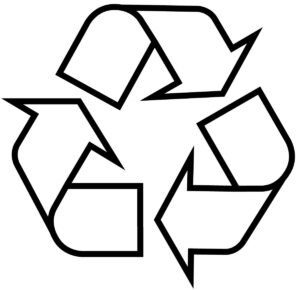
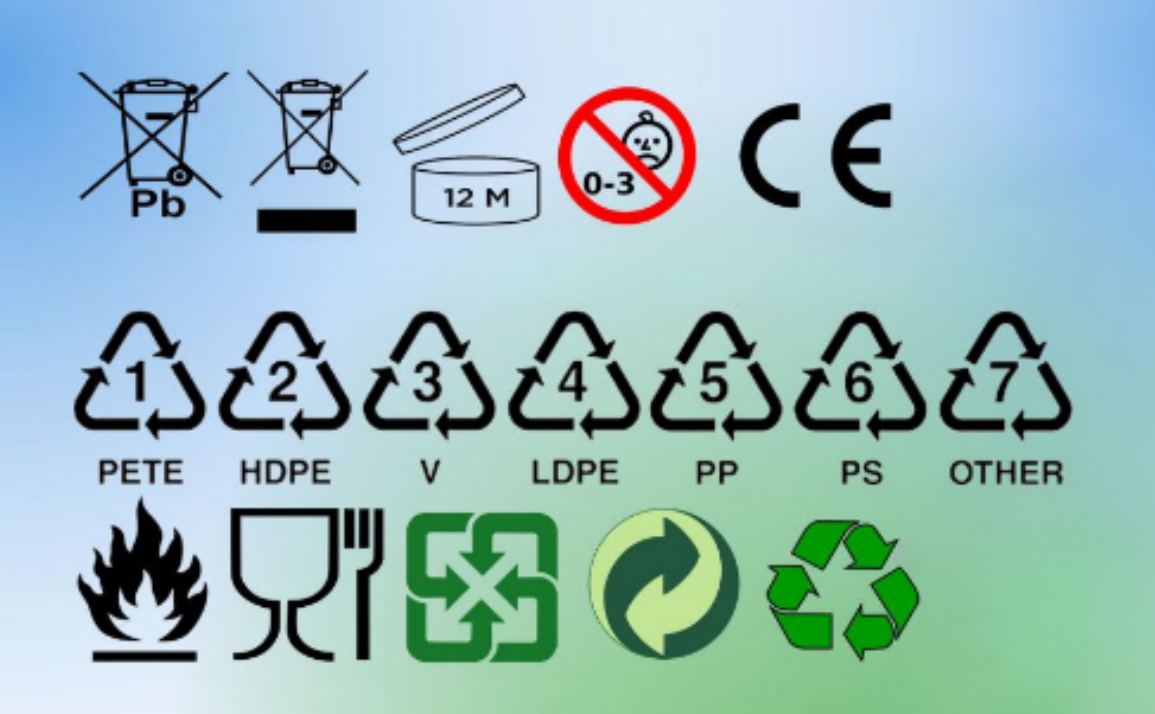
Everyone thinks they recognize the recycle symbol. Typically, it looks like three arrows chasing each other in the shape of a triangle, but what about all the other versions and symbols? Don't they mean recycle too?
In 1970, the original design of the recycle symbol was created by 23-year-old student, Gary Anderson. He was the winner of the Container Corporation of America’s (CCA) inaugural Earth Day competition. Little did anyone realize that it would become such a commonplace icon of the 21st century!
However, the commonplace, unregulated printing of this symbol has become a problem. This is because when people see what they interpret to be a recycling symbol, they automatically think, “I can recycle this!” and toss the item into the recycling bin. The belief that these emblems mean an item is recyclable is a common misconception.
Just because a circular symbol with arrows is printed on an item,
doesn’t mean an item is recyclable in your current system!
It’s mind-blowing and maddening, isn’t it?!
| |
|
Let’s break it down:
The overall looping design represents circularity. This means keeping materials in the loop to reduce waste. The three chasing arrows represent the concepts of reduce, reuse, and recycle. However, these should be viewed as separate entities:
-
Reduce: First, do you recognize the amount of waste you produce? Are you actively taking steps to reduce it?
-
Reuse: Second, are you utilizing the materials you have by reusing them to their maximum potential instead of getting rid of them after one use?
-
Recycle: Then, LASTLY, consider how to manage the waste you have and ask yourself “Is it appropriate material for the recycle bin?” If not, it MUST go to the landfill.
| |
|
|
If you look at the recycle symbol piece by piece, and ask yourself those questions, it makes more sense!
Now, what about those numbers? Aren’t those numbers supposed to tell us if we can put an item into our recycling cart?
The simple answer is NO! Generally, ignore them. There are more than 30 kinds of plastics, with more being developed every day, and our best Material Recovery Facilities (MRFs) can usually identify and recover 5 of them. These numbers are called resin codes. They were designed by manufacturers to identify chemistry classifications of plastics, NOT for residents to determine if the item is eligible for the recycling cart.
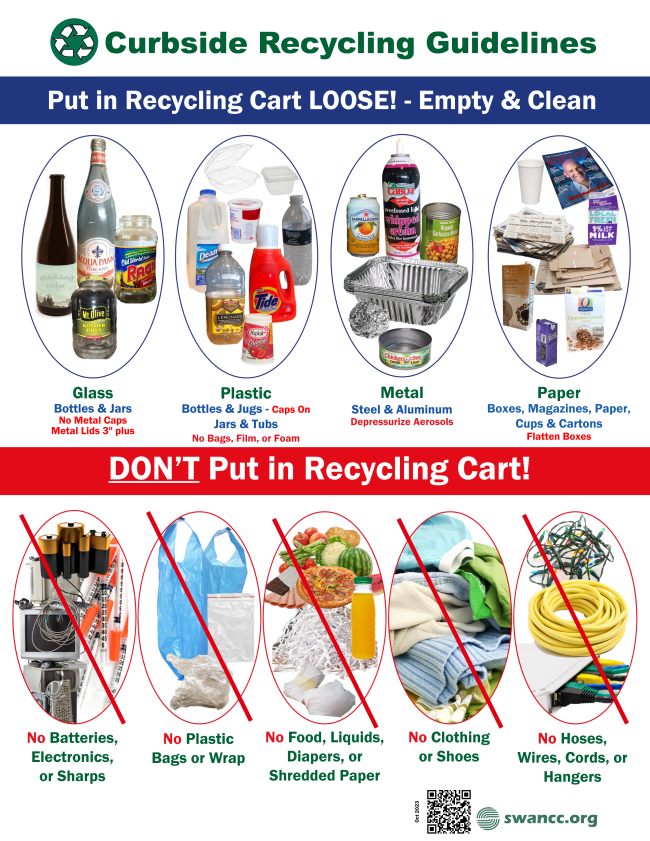
Yes, this can all be frustrating and sometimes even make us want to give up. It’s important to remember that if you feel this way, you are making it too complex and overburdening yourself. Take a step back and remember to keep it simple. Review the curbside guidelines below, ask yourself the questions listed above, and stick to recycling those items only. Don’t get bogged down in the occasional item you have in hand that is not pictured. If you are uncertain if it’s appropriate material for the recycle bin, then don’t risk contamination by wishcycling. Put it in the trash and keep the value of the truly recyclable material high.
As the world comes to terms with the growing amounts of waste generated every day, understanding what can and can’t be recycled is increasingly important. Not only do we need to divert more waste away from landfills, but we also need to keep materials in the loop for as long as possible so that we can reduce our reliance on virgin materials and avoid the environmental impacts associated with extracting them.
Would you like to suggest a question to be answered in the newsletter?
Please email Theresa@swancc.org.
Have you missed a commonly asked question from our previous newsletters? Use the links below to review them.
Batteries
Cardboard Boxes
Electric vs Electronic
Plastic Bags and Flexible Plastic
Scrap Metal
Shredded Paper
Wrapping Paper
| |
International Compost Awareness Week
May 5-11
| | |
|
International Compost Awareness Week (ICAW) is the largest and most comprehensive education initiative of the compost industry. ICAW 2024 is May 5-11 and the theme is Compost...Nature’s Climate Champion! | |
|
The theme was chosen by participating international partners incorporating the collective focus on one of the initiatives of the United Nations Sustainable Development Goals (SDG), which is “Take urgent action to combat climate change and its impacts.”
YOU can compost! What are the benefits of using compost and composting in your yard?
- The use of landfill space and incineration can be reduced by at least one-third when organics are recycled.
- Methane can be significantly reduced through the recycling of organics instead of their being landfilled.
- Soil health and productivity is dependent on organic matter.
-
Compost’s return to the soil serves as a “carbon bank" and offers a significant answer to climate change mitigation.
For more information and resources, please visit:
International Compost Awareness Week (ICAW)
and
The Compost Research and Education Foundation
| |
|
Available 24/7 - SWANCC's Digital
Reuse and Recycling Directory
| |
|
The digital Reuse and Recycling Directory lists reuse opportunities for books, clothing, household items, office equipment, sporting goods, toys, and other materials. This guide also provides information on various aspects of recycling and waste, featuring, appliances, batteries, construction materials, electronics, office equipment, cartridges, metals, motor oil, and many other items.
Type what you are looking for in the bar titled "What are you Recycling?", then click the Search button for results.
| |
|
Electronics Recycling Drop-Off Locations | |
|
Glenview Transfer Station
3 Providence Way
Des Plaines
Saturdays: 9 am to 11:30 am
OPEN Year-round (except Saturdays following a holiday when garbage collection is delayed)
Hoffman Estates Village Hall
1900 Hassell Rd
Mondays: 10:00 am - 12:00 pm
OPEN April 1, 2024 - November 18, 2024
Mount Prospect Public Works
1700 W Central Rd
Wednesdays: 10:00 am - 12:00 pm
OPEN April 10, 2024 - October 30, 2024
Winnetka Public Works
1390 Willow Rd
Thursdays: 1:00 pm - 3:00 pm
OPEN April 4, 2024 - November 21, 2024
OPEN April 6, 2023- November 16, 2023
| |
|
Other Special Materials
SWANCC Member Communities offer programs for various materials that are reusable, recyclable, or need to be disposed of in an environmentally-safe manner.
These include:
- fluorescent bulbs
- mercury containing devices
- sharps
- batteries
Please contact your community to confirm participation before dropping off items.
| |
Where to Take Household Chemicals | |
SWANCC | (847) 724-9205 | info@swancc.org | swancc.org | | | | |