September 17, 2020
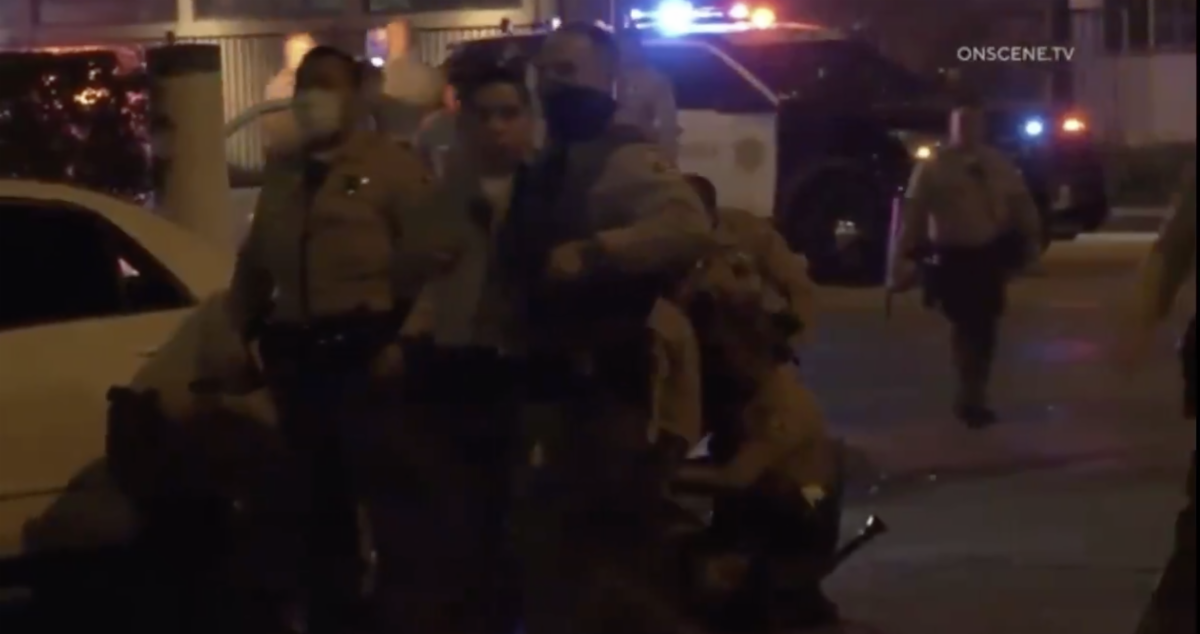
After KPCC journalist Josie Huang was violently arrested Saturday, Sept. 12 while covering a protest, the Reporters Committee for Freedom of the Press and 64 media organizations sent a letter to the Los Angeles County Sheriff’s Department calling for the charges against her to be dropped. L.A. Sheriff Alex Villanueva has responded to that request, saying in part, “I am an advocate of responsible reporting and truly believe in transparency. … Unfortunately, Ms. Huang became part of the problem by inserting herself too close to the situation.” Video of the incident contradicts that assertion. The attack on Huang is the latest in a series of assaults on journalists across the country this year, condemned by the National Press Club and the Journalism Institute. 
Top stories
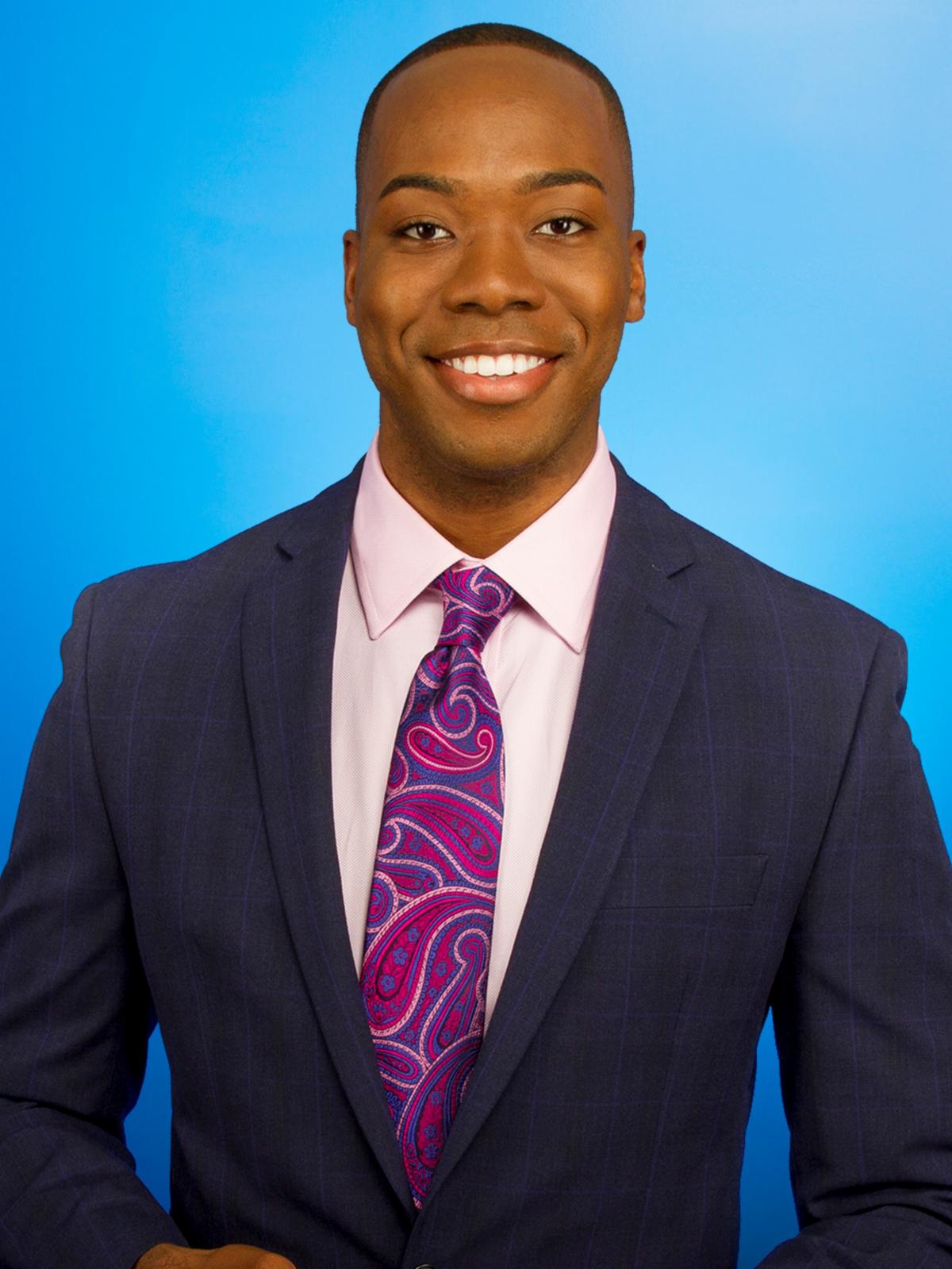
For Emmy award-winning weather reporter Tevin Wooten and his team at The Weather Channel, coverage this year has changed in “every way one could imagine.” 

The pandemic complicated travel plans and resources. And hurricanes and wildfires intensified. 

Sally — the fourth hurricane to make landfall in the U.S. this year — has inundated the Gulf Coast with “4 months of rain in 4 hours,” officials said Thursday morning. With 3 months to go, the 2020 hurricane season has already set several records and forecasters are running out of storm names.

On top of the active tropical systems in the Gulf, record-setting wildfires in the West have destroyed more than 5 million acres of land and caused hazardous air quality in cities across California, Oregon and Washington. 

The Institute emailed Wooten — who has been covering Sally from Navarre, Florida — for advice on how journalists can report on breaking weather stories when it’s not normally their beat.

What are your top three tips for journalists reporting on natural disasters when it’s not normally their beat?

Wooten: Lean on the experts and ask questions. Whether it’s a state climatologist, local broadcast meteorologists or National Weather Service meteorologists…we’ve gone through years of extensive mathematics and science courses. We truly know the ins and outs, and often enjoy breaking down every little bit.

Relate your stories to the impacts, and don’t focus on the jargon. Sometimes, the public will latch on to fancy terms, and the forecast itself or threats are lost in the mix.

Don’t hype or create new terminology for the sake of it. Covering weather and natural disasters is already complex. There’s no need to sensationalize to grab attention.

Can you share some weather resources for journalists to get up to speed quickly?

Wooten:


What are some weather trends for journalists to monitor for future articles?

Wooten: The intersection of climate change and hurricanes seems to have piqued the interest of many Americans. Despite an increasing threat, there is still a growing population along major coastlines without proper infrastructure management.

Socioeconomic status also comes into the fold. Americans are significantly leaning on state and local government, so it’s critical to ensure those below the poverty line are given proper attention just because they don’t have the proper financials to prepare (and respond) for hurricanes.

How has your hurricane coverage changed this year during the pandemic? 

Wooten: In every way one could imagine. Beyond the aggressive use of PPE, we have to be even more self-sufficient going into a city, because we don’t know what resources will be available. Simple tasks such as going to the grocery store for supplies are limited. Some businesses where we’d typically eat haven’t even re-opened from the pandemic.

We’ve also modified how we’re deploying our crews. In many instances there are times where we’d make the longer drive than the shorter flight. We have to be a bit more strategic in socially distancing.

In your opinion, what is missing from the hurricane coverage so far? Who is doing it right?

Wooten: Selfishly, I’d say my colleagues and I at The Weather Channel produce the best world class coverage around the clock. But local broadcasters know their area better than anyone, and I think they deserve credit for keeping up and connecting with their community.

What is your advice for staying safe in the field?

Wooten: Make safety be the top priority and let the storm come to you.
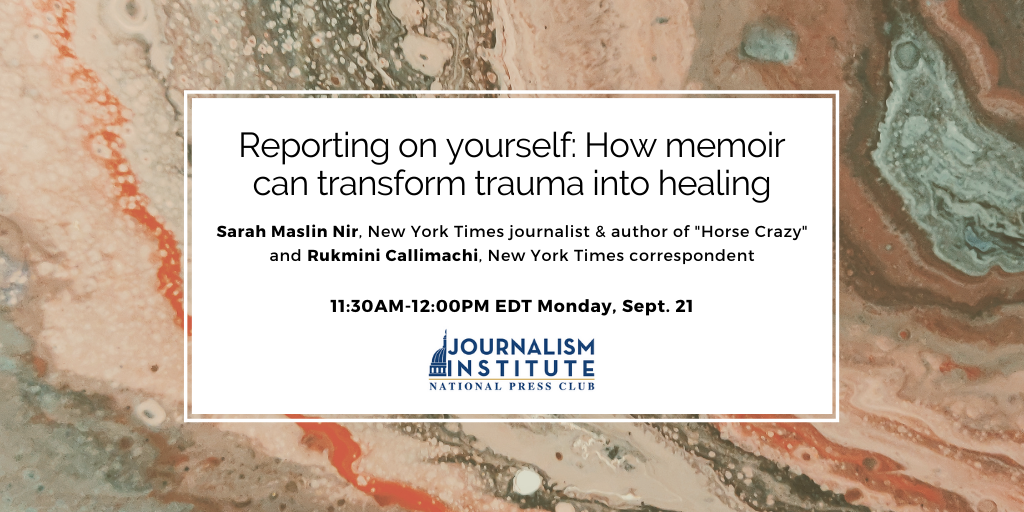
In a departure from her typical beat as a New York Times journalist, Sarah Maslin Nir has turned her reporter’s eye on herself in her new book, “Horse Crazy: The Story of a Woman and a World in Love with an Animal,” which unpacks her and others’ obsession with horses. Nir began riding horses as a 2-year-old but it wasn’t until she started writing a memoir about her passion that she realized the role they played in helping her heal from trauma. 

Registration is open now for this free online program, which will be held on Sept. 21, from 11:30 a.m.-12 p.m. Nir will be in conversation with Rukmini Callimachi, a fellow New York Times journalist, Pulitzer Prize finalist, and horse lover. They will discuss: 

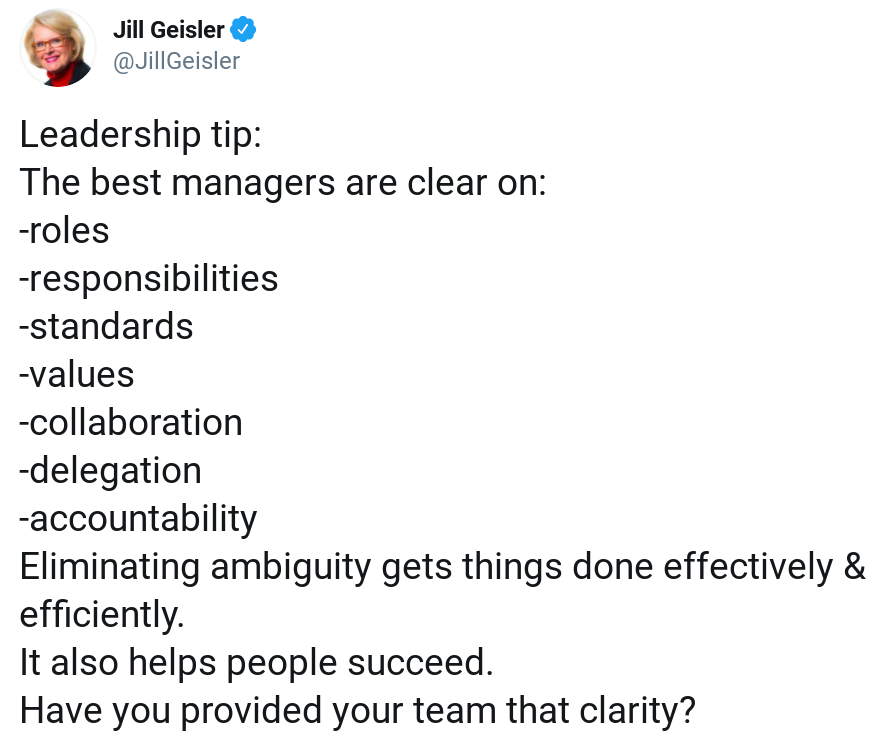
When you create that clarity, everyone knows what is expected of them and feels empowered to make decisions based on shared priorities and principles. That allows each team member to see how they contribute to a mission that’s meaningful, with clear communication at the core.

Advice from Jill Geisler, Bill Plante Chair in Leadership & Media Integrity, Loyola University Chicago, Freedom Forum Fellow in Women’s Leadership

Click here to read Jill’s previous posts.
It might seem counterintuitive to devote your self-care time to others, but helping out can have hefty health benefits. 

Research shows volunteering can lower stress and depression, help people learn to build relationships, and increase your lifespan. Plus, the resulting sense of gratitude for what you have brings a healthy dose of happiness. 

We’ve shared ways to volunteer virtually during the pandemic. Here are some new small but meaningful ways you can help others: 

  • Offer to virtually tutor or visit with a friend’s child.
  • Clean out your closets or cabinets and gift what you don’t need. Try finding a Buy Nothing group on Facebook, or call your local shelters to see what items they’ll accept during the pandemic.
  • Gift your old electronics (iPads, laptops, phones) to school kids who could use them to do coursework at home. Call a local school, or try a national organization.
  • Bake a treat and share it with your neighbors. Or, drop off or send a meal kit to an ill colleague.
  • Write and send notes to local nursing home residents, or ask about being paired with a resident for check-in calls.
  • Virtually assist someone via Be My Eyes, an app that allows for real-time assistance for people living with a vision impairment.
  • Check VolunteerMatch, which currently lists more than 1 million opportunities to serve, or catchafire.org. Both let you browse nonprofits’ needs and match them to your skill set (computer skills or graphic design, for example).

Read on for more self-care tips, or share how you are taking care of yourself right now.
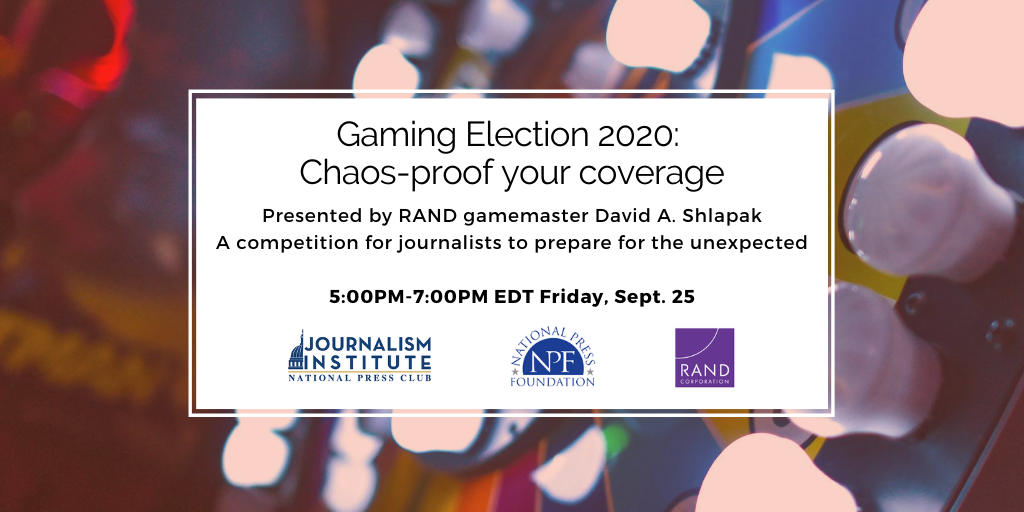
The National Press Club Journalism Institute, the National Press Foundation, and the RAND corporation are offering journalists a new way to prepare for the unexpected in Election 2020 news: Gaming your coverage plan.

Registration is open for this free program, which will be held on Friday, Sept. 25 from 5-7 p.m. ET. 
RAND gamemaster David A. Shlapak will present players with scenarios based on current and likely events, and each team will make coverage decisions, not knowing what the next roll of the dice will bring. 

The game will surface journalists’ assumptions and test decisions as reporters and editors balance competing goals, commit limited resources, and assess tradeoffs. The game’s timeline will begin in September, continue through Election Day, and end on Inauguration Day. 
National Press Club news
This newsletter is written & edited by the National Press Club Journalism Institute staff: Beth Francesco, Holly Butcher Grant, and Julie Moos. Send us your questions and suggestions for topics to cover.

Get this from a friend? Subscribe, and view the archives.