|
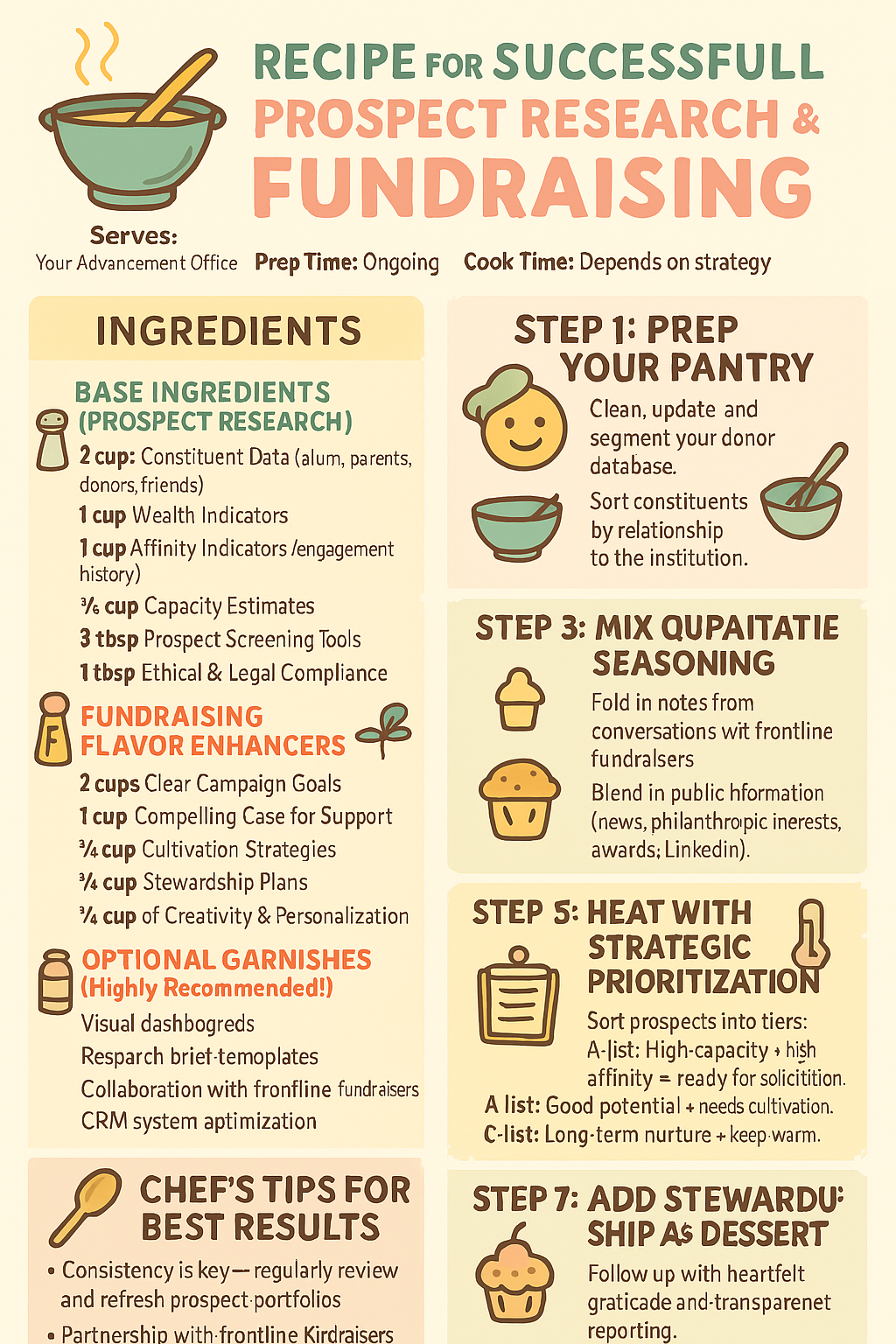
Recipe for Successful Prospect Research & Fundraising
Serves: Your Advancement Office
Prep Time: Ongoing
Cook Time: Depends on strategy
Difficulty: Strategic and Rewarding
🧾 Ingredients
Base Ingredients (Prospect Research)
- 2 cups Constituent Data (alumni, parents, donors, friends)
- 1 cup Wealth Indicators
- 1 cup Affinity Indicators (engagement history)
- ½ cup Capacity Estimates
- 3 tbsp Prospect Screening Tools
- 1 tbsp Ethical & Legal Compliance
- Fundraising Flavor Enhancers
- 2 cups Clear Campaign Goals
- 1 cup Compelling Case for Support
- 1 cup Cultivation Strategies
- ¾ cup Stewardship Plans
- ½ cup Impact Stories
- A dash of Creativity & Personalization
Optional Garnishes (Highly Recommended!)
- Visual dashboards
- Research brief templates
- Collaboration with frontline fundraisers
- CRM system optimization
🧑🍳 Instructions
Step 1: Prep Your Pantry (Data Organization)
Clean, update, and segment your donor database.
Sort constituents by relationship to the institution (alumni, parents, community, corporations).
Make sure you have access to reliable research tools (LexisNexis, iWave, donor surveys, wealth screenings, etc.).
Step 2: Mix Capacity + Affinity
Combine wealth indicators (real estate, business ownership, giving history, stock holdings)
with affinity indicators (event attendance, volunteerism, giving patterns, board connections).
Stir gently until a clear prospect profile begins to form.
Step 3: Add Qualitative Seasoning
Fold in notes from conversations with frontline fundraisers.
Add feedback from program staff or leadership.
Blend in public information (news, philanthropic interests, awards, LinkedIn).
This enhances flavor and ensures each prospect feels personalized—not generic.
Step 4: Heat with Strategic Prioritization
Sort prospects into tiers:
A-list: High capacity + high affinity → ready for solicitation.
B-list: Good potential → needs cultivation.
C-list: Long-term nurture → keep warm.
Let your frontline fundraisers “taste-test” the list and give final approval.
Step 5: Prepare the Fundraising Strategy
For each high-potential prospect, craft a menu of:
Cultivation ideas (meetings, tours, impact updates).
Ask amounts aligned with capacity.
Shared interests aligned with institutional priorities.
Build customized outreach plans — the flavor profile matters!
Step 6: Serve the Ask
Present a clear, compelling case for support.
Plate with precision — timing, relationship, and communication style matter.
Offer a suggested gift amount confidently and respectfully.
Step 7: Add Stewardship as Dessert
Follow up with heartfelt gratitude and transparent reporting.
Show the donor the impact of their gift.
Offer additional opportunities for engagement & continued connection.
This step is essential — it turns one-time donors into lifelong supporters.
🍽️ Chef’s Tips for Best Results
- Consistency is key — regularly review and refresh prospect portfolios.
- Partnership with frontline fundraisers makes the whole recipe stronger.
- Storytelling warms the dish — people give to people, causes, and emotion.
- Ethics > everything — accuracy and privacy matter.
If you have ideas for additional content, please let us know. As we look ahead to 2026, we remain grateful for the opportunity to provide research that serves as the foundation for fundraising, such as supporting donor identification, cultivation and solicitation strategies, and effective stewardship.
While S&P reports lower expectations for U.S. nonprofit higher education in 2026 due to changes in federal policy, enrollment declines, rising operating expenses, and frequent closures and consolidations, we are hopeful that advancement professionals will meet these challenges with resilience and innovative strategies.
Warmest wishes for a wonderful holiday season! As always, please feel free to reach out with questions, comments, or requests for assistance with fundraising research.
Best regards,
Sapna and the USM Advancement Research Team
|