|
Weed Watch!
Colorado Weed Management Association
1st Quarter Newsletter 2026
| | |
The CWMA Marketing & Communications Committee is proud to present our first newsletter of 2026. In this edition we will be covering a variety of interesting topics such as invasive cattail control using biochar, the evolution of Colorado noxious weed enforcement efforts, dormant-season Russian knapweed gall wasp release and how some of Colorado's most ubiquitous plant species are a scourge in New Zealand. As always, you will also find our recurring segment Weeds in the West News along with our Weed of the Month.
Before the hectic season kicks off in earnest, we encourage our readers to consider taking the time to share their stories, accomplishments or items of interest for publication here, along with volunteering as a CWMA committee member. No matter which committee you may choose, you will serve a critical role towards advancing our collective statewide efforts. Your presence and participation brings untold value and is the engine of our organization. If you haven't had a chance yet, we also encourage you to review the stellar work that our team has done revamping our website. There you will find a wealth of information and tools, pleasingly streamlined and ready for use. We are beyond fortunate to have such an exceptional administrative team as we do with The Solution and commend Monica Groh and Juffer Bornales for their tremendous contributions to our organization. See their exceptional work here: https://www.cwma.org/
| | |
Loyola University, Chicago Researchers Study Invasive Cattail Control with Biochar
By: Timothy Prince, City of Longmont/CWMA Marketing & Communications Committee Member
| | |
Difficult and Essential
Due to its advantageous physiological features, Typha (cattail) has been historically difficult to control. Without a consensus on the best method of control, many land managers run out of resources before being able to tackle the prolific wetland species. Researchers at Loyola University, Chicago have recognized this issue and have been researching exciting and economical ways to control Typha since 2016.
Often considered native, most Typha marshes contain both the native Broadleaf cattail, Typha latifolia, as well as the invasive Narrowleaf cattail, Typha angustifolia. These species often hybridize, resulting in the aggressive hybrid: Typha x glauca. Historically, Typha latifolia and Typha angustifolia did not share the same native range. Anthropomorphic activity has actively moved the plants around and consolidated water passages, allowing for hybridization and invasive behavior.
Native Typha are an essential part of many wetland ecosystems across North America. The vigorous and adaptable cattail provides wildlife food and habitat, reduces pollutants, prevents erosion and has a variety of cultural uses. Because of this adaptability, cattails have capitalized on human disturbances to wetlands. In wetlands with high nutrient loading and fluctuating water cycles, cattails tend to take over and reduce diversity, diminishing much of the plant’s productive capacity. Unfortunately, this is the current state of many wetlands in the front range; the difficult nature of controlling cattails along with the precedence of other invasives often has us ignoring the unsightly monocultures.
Team Typha to the Rescue
The researchers from Loyola University, Chicago aka 'Team Typha' have been harvesting cattails in the Shiawassee National Wildlife Refuge with an aquatic harvester and underwater weed whips. While harvesting can be difficult and time intensive, Team Typha is showing that repeated harvesting can significantly reduce Typha dominance. Over a four-year study between 2016-2019, the team created two distinct harvesting approaches to determine the effect of removing all cattail biomass and only removing above water biomass. Both methods showed significant reductions in cattail regrowth relative to the control areas. Removing the underwater litter also led to a greater abundance of amphibian larvae, sunfish and submerged aquatic plants. Leaving the litter allowed for greater fish diversity and invertebrate abundance.
Mass Effect
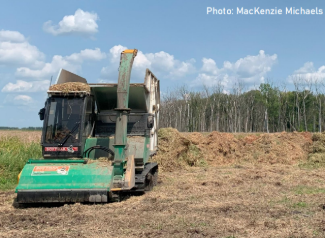
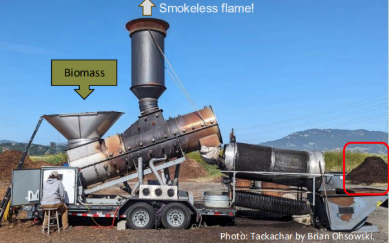
One issue with cattail harvesting is the space taken by the accrued biomass. Although Typha can be useful in absorbing excessive and harmful nutrients from water, these nutrients are re-released into water when the Typha litter is left. Because of this, it becomes necessary to remove the litter from water bodies. Fortunately, "Team Typha" was able to obtain a machine called a “Takachar” which turns the removed cattail biomass into biochar. The first advantage was obvious; the overall biomass was significantly reduced with limited byproducts. The researchers have also investigated using the biochar practically. One idea was to reapply the biochar to the marsh to see if it acted as a control on the cattails. Initial greenhouse studies show biochar applications have reduced Typha biomass while having a neutral impact on native species Juncus nodosus and Schoenoplectus acutus. The applied biochar holds onto nutrients that Typha would typically utilize. Cattails flourish with excessive nutrients, such as nitrogen and phosphorus. Reducing nutrients can potentially limit Typha's ability to outcompete other species and allow for more diversity. Researchers have also used commercially available wood-based biochar to a similar effect. If further trials yield similar results, this could be a unique tool to use in wetland restoration efforts.
For Your Consideration
The study has certainly provided evidence that cattail harvesting can benefit wetlands in Colorado. While it will take time and effort over continuous years, strategically targeting wildlife habitat would reap additional value from the labor. If the biochar from the harvested cattails can be used to further control said cattails, along with the additional uses from biochar, a lot of value could come from a well implemented harvest practice. Everyone keep an eye out for a used “Takachar” on Facebook Marketplace.
Special thanks to Mackenzie Michaels for her contributions and the entirety of "Team Typha" at the University of Loyola, Chicago.
| | |
Dormant Season Russian Knapweed Gall Wasp Release Method Met with Great Success in Huerfano County
By: C. Bryant, Huerfano County Noxious Weed Manager/CWMA Board Member
| |
Early Season Biological Control
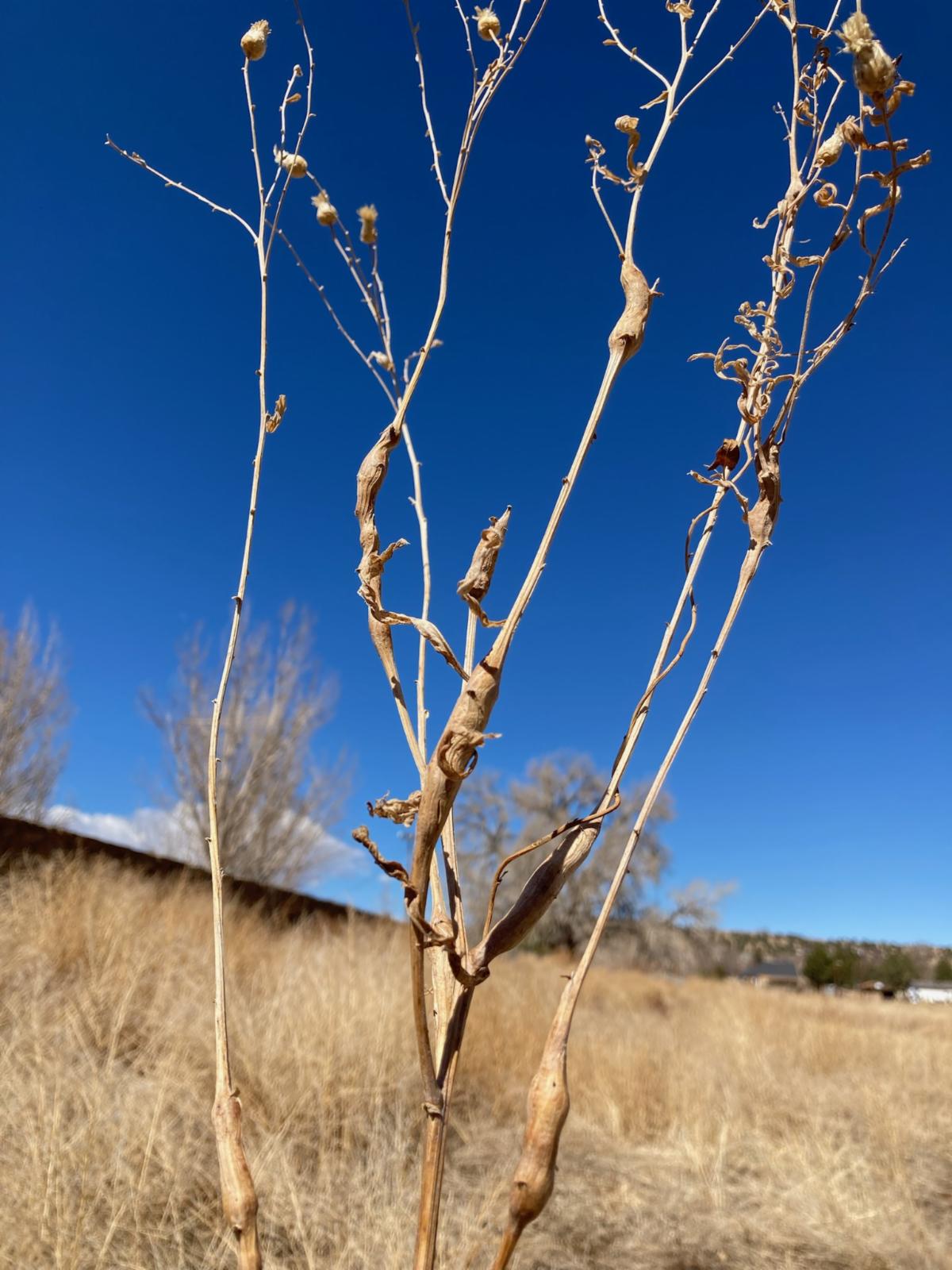
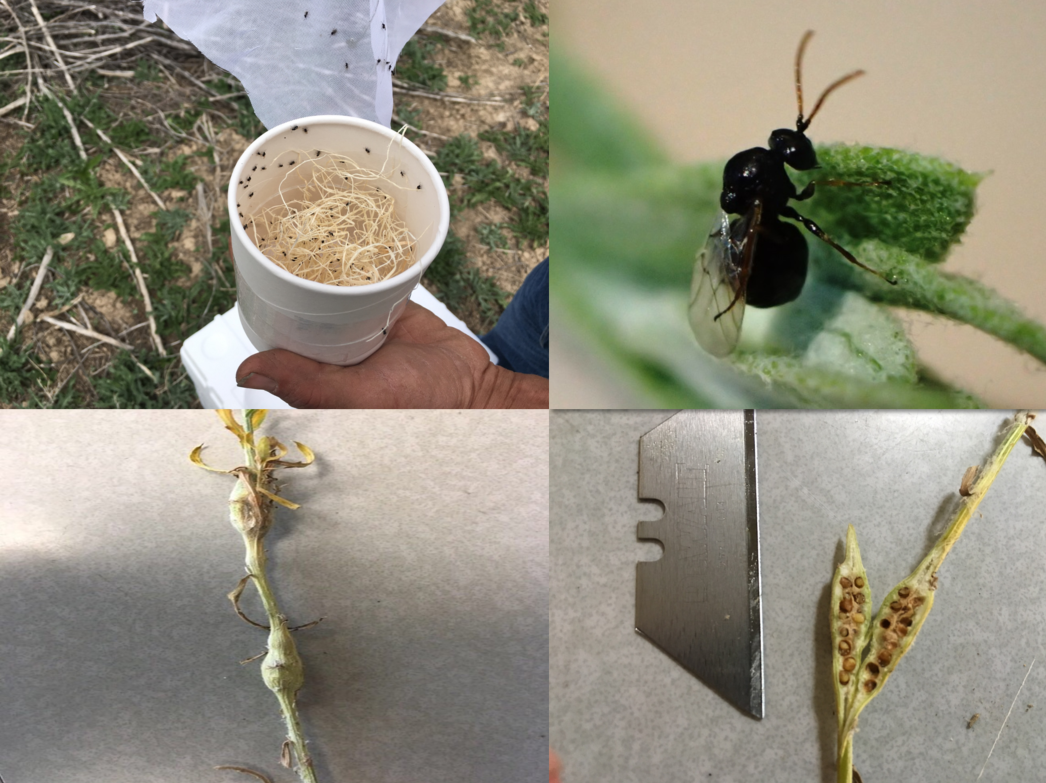
One of the things that I look forward to most with the onset of summer is the monitoring and release of biological controls. Those so graciously provided to us by the Palisade Insectary usually have a fairly tight window for release, highly dependent upon the lifecycle of the beneficial agent being released. One of the first biocontrol opportunities that land managers have each season is the release of Aulacidea acroptilonica, also known as the Russian knapweed stem gall wasp. Normally, the good folks at the Palisade Insectary will begin shipping out adult RK gall wasps around the time Russian knapweed is just gaining its legs in April. These newly emerged tender shoots provide the ideal medium for the RK wasps to deposit their eggs, which in turn form larvae-laden galls that eventually reduce the plant’s seed production and overall vigor. While the release of adult RK gall wasps has resulted in several successfully established populations in Huerfano County, an equally effective release method has been the distribution of galled RK stems during the winter months.
The Simplicity of Collection
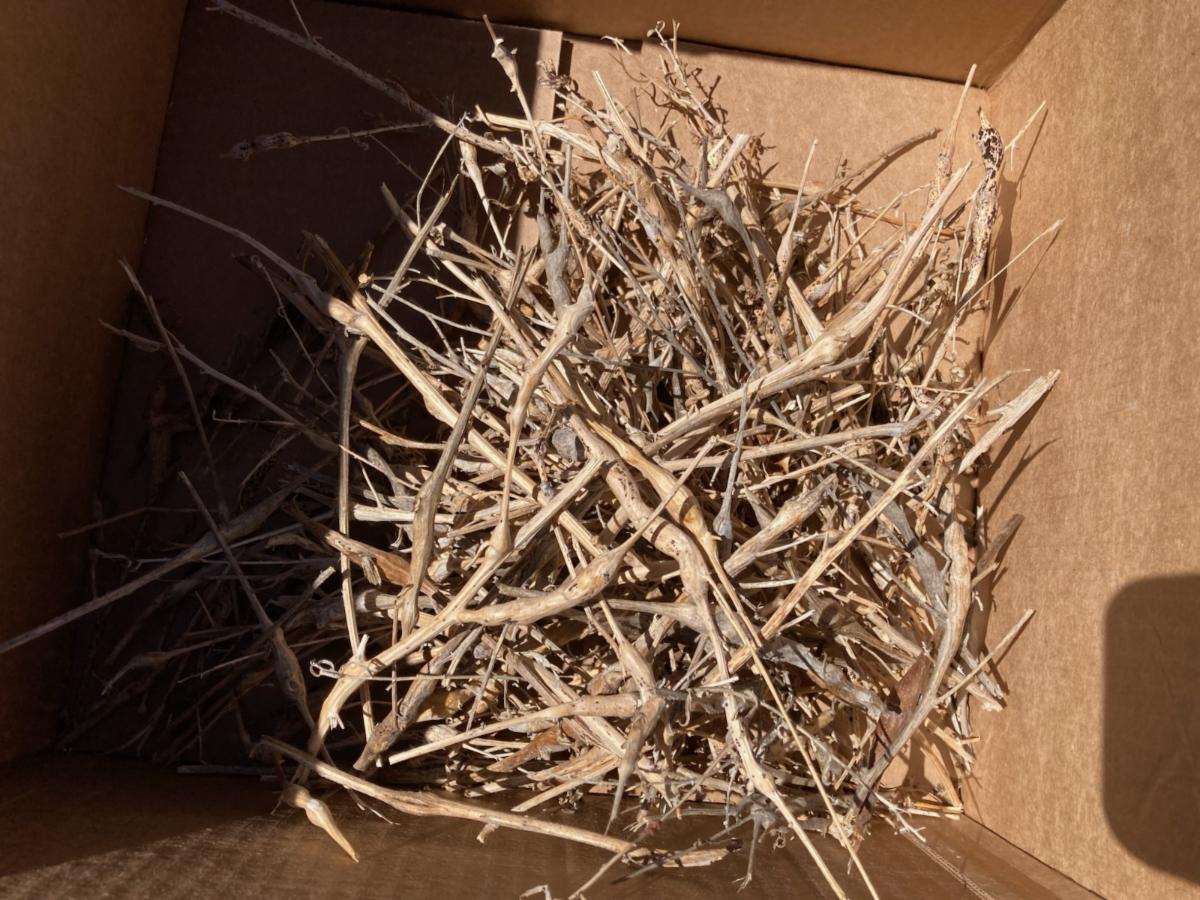
This effort first begins by visiting an RK infested site that has an ample amount of galled plants that have senesced over the winter months. The dry, brittle plants can be broken off by hand or cut with shears, with any seed containing flower heads removed so as to not transport them off-site. The galls upon the stems are readily apparent and range in size from a slight raised surface distortion to bulbous growths nearly as big as a finger. Perhaps being a little overly cautious, I prefer to do this work no later than mid-March and I process the gall-laden stems outdoors in the cold winter air so that I might not inadvertently rouse Aulacidea’s seasonal dormancy by bringing them indoors. Another precaution I take during collection is to avoid stepping on galled stems so they do not become damaged.
Release Site Selection
Upon collecting an ample amount of galled stems, I will transfer them to a release site outside of the climate-controlled vehicle cab, once again trying to avoid breaking their dormancy. I prefer to select a release site that I have either not observed signs of RK gall wasps at, or that do not have a considerable amount of infected plants. I also look for areas that are not frequently grazed or where other site disturbances may occur. A center point for the bulk of the RK infestation is identified and plotted by GPS. From this point galled stems are distributed in a ray pattern. Their spacing depends upon the number of galled stems collected and the size of the RK patch. To mimic their upright nature when they are affixed to a plant, I will place them vertically within the dead mass of the new host plant. Doing so prevents the hastened pace of decomposition that would occur if the stems were placed directly on the moist soil surface. This also prevents future depredations of the galls by other hungry insects or vermin. After performing this relatively simple dormant-season release procedure, all one can do is wait.
Monitoring Tips
The hectic work pace of spring and early summer usually prevents my visiting of the dormant season release sites until late June to early July. Taking care not to step on the RK plants that might have formed galls, I will carefully examine the perimeter plants for the telltale signs of bulbous growth. If inspecting later in the season during or after flowering, another fairly quick way to sort out galled plants is by looking at the size of the pappus. Galled plants will usually form a much smaller flower head that is readily apparent. While this release method has provided a high degree of success and is highly sustainable, it does come with an important caveat relayed to us during the 2025 CWMA Winter Training by CDA Biological Control expert John Kaltenbach; namely the avoidance of spreading parasitoid insects with galls. These various parasitoids target our undeveloped Aulacidea while they are still dormant, with the most likely culprit being parasitic Hymenoptera, just as the gall wasps themselves are. This concern is perhaps more limited when galled stems are distributed within the same general area or environment as opposed to being taken great distances outside of their established range, where local parasitoids are absent.
| Photos (above): Adult gall wasps and galled stems | | Photo (above): Cleaned, galled RK stems ready for release | Photo Credits: C. Bryant | | |
Noxious Weed Enforcement in Colorado: Education through Enforcement
By: Mark Giampietro, Archuleta County Weed & Pest Department\CWMA Marketing & Communications Committee Member
| |
An Ongoing Challenge
One of the biggest challenges we face as weed managers is getting the public to be aware of, and manage, noxious weeds. Despite the implementation of the Colorado Noxious Weed Act (CWNA), localized ordinances across Colorado, and countless educational campaigns state and nationwide, the war against noxious weeds largely wages on in the periphery of public awareness. Only a handful of people that work outside of the green industry, or agriculture, seem to have more than a surface level of understanding of what noxious weeds are and how they affect ecosystems, the economy, and public health.
New Enforcement Tools
Some counties are raising awareness and encouraging action through enforcement. Forced-entry management has been outlined in the CWNA for years, but more recent changes to the legislation have allowed counties the ability to fine property owners for being out of compliance. Forced-entry management, while a valuable tool in certain situations, can lead to tense situations, unfavorable public perception, and demands more resources to follow through with. The fining structure (up to $1000 initially and $100 per day while in violation per the CNWA), certainly grabs people’s attention while also being less demanding of resources for counties who are already strapped for money and time.
In Archuleta County there is a fining structure laid out in the county Noxious Weed Ordinance 2024-002. However, fines aren’t immediately levied against those not in compliance. Initially, educational letters are sent to the landowner detailing which noxious weed species have been identified on their land, along with CSU fact sheets which provide best management practices for each species. Landowners are given 30 days to respond to this letter, or do some form of management, before a Notice of Violation (NOV) is sent. If no response to the NOV or management of their weeds happens within 10 days, fines begin accruing.
In most cases, the educational letter alone opens a dialogue between the county and the landowner and presents an educational opportunity. A site visit is conducted, where the landowner meets with staff from the Archuleta County Weed and Pest Department to inventory noxious weed species and develop an integrated management plan with the owners’ land use goals in mind. Thus, transforming what could be a potentially tense, “us vs them” situation into a collaborative, more personal educational relationship.
The Realities of Enforcement
Of course, the response to enforcement letters isn’t always so optimistic and cooperative. Some people are upset, offended, or outraged by receiving such a letter. This is where educating them about the impact of noxious weeds and using public relation strategies like those outlined by Sabrina Slagowski-Tipton at this past Colorado Weed Management Association’s Winter Training can make a difference. Often, explaining to the landowners that they simply need to obtain an integrated management plan from the county and begin management to avoid fines helps ease their initial reactions.
It is also not realistic to enforce on every property that has noxious weeds. Each governing body must decide which lines to draw in the sand, keeping state mandated management goals and species lists in mind. In Archuleta County, List A species, neighbor complaints, and large-scale infestations are prioritized for enforcement. For smaller counties with staff and budget limitations, following through with enforcement can be tricky. Noxious weed enforcement may not be the top priority for every county legal team. Knowing how much of an enforcement caseload the legal team can handle can help inform how many fines can realistically be followed through with.
For some individuals who, despite all cooperative efforts, still don’t manage their weeds, or even respond to a single letter sent, fines may be in their future. But for many landowners who have been subject to enforcement, prompt action is usually taken and a new understanding of the importance of noxious weed management is gained. A lot of people simply just aren’t aware of the weeds, or they are and just need a gentle nudge in the right direction. We have seen some promising progress in Archuleta County from our enforcement program. More acres are now being effectively managed because of it. While it is a new program in a small county, there is potential for a large impact.
|
| |
Weeds in the West News
*Arizona: Pima County officials are concerned about the prolific spread of globe chamomile (stinknet) following heavy winter rains. Stinknet threatens Saguaro cactus habitats through plant competition and increased fire return intervals.
(Source: https://tucson.com/news/local/environment/article_a8a1b0fe-a70b-4f51-86e7-89e1a14d20fd.html
*California: The Southern California Mountains Foundation is hosting a number of "Saharan Mustard Weed Pull Events" in February and March. This exotic species has greatly hampered desert plant communities in the Mojave/Cochella Valley.
(Source: https://www.facebook.com/photo.php?fbid=1310341411127241&id=100064541840314&set=a.356881223139936)
*Colorado: A Gazette article covered a presentation on 2025 findings for Colorado Springs parks/open spaces, noting increased noxious weed growth (e.g., Canada thistle, yellow toadflax, mullein). Focused spraying occurred in areas like Red Rock Canyon and Fishers Canyon; heavy early spring rains aided native plant recovery but boosted invasives.
(Source: https://gazette.com/2026/02/19/lower-bird-count-growing-noxious-weeds-new-species-reported-in-colorado-springs-open-spaces)
*Idaho: Counties issued 2026 "Notice to Control Noxious Weeds" under Idaho law (e.g., Gem County), requiring landowners to manage listed species. Priorities include terrestrial weeds like common mullein, Scotch thistle, and others, plus prevention of aquatics like flowering rush (isolated in some areas but high-risk).
(Source:https://webgen1files.revize.com/gemcountyid/Noxious_Weed/2026 Notice to Control Noxious Weeds.pdf )
*Montana: Montana State University Extension's Invasive Plants program released a January post promoting the GROW (Getting Rid of Weeds) resource hub for integrated weed management (IWM), including cover crops, farmer forums, ID factsheets, videos, and case studies. It addressed questions on biomass, establishment, and integration to combat invasives..
(Source: https://www.montana.edu/extension/invasiveplants/extension/monthly-weed-posts/2026-January-GROW.html)
*Nebraska: LB 807 (introduced in the 109th Legislature, Second Session) proposed transferring administration of the Noxious Weed Control Act from the NDA to a new Department of Water, Energy, and Environment (DWEE). Committee statements and floor discussions during the January 27th hearing debated the change, but amendments retained it under NDA. This reflected ongoing policy discussions on invasive species coordination, including riparian vegetation management.
(Source: https://nebraskalegislature.gov/FloorDocs/109/PDF/CS/LB807.pdf)
*Nevada: NDA published an updated Early Detection and Rapid Response (EDRR) species distribution document for 2026, tracking priority invasive/noxious weeds across the state for proactive monitoring and eradication. This supports coordinated efforts to prevent establishment of new invaders in Nevada's diverse ecosystems (deserts, Great Basin rangelands, riparian zones).
(Source:https://agri.nv.gov/uploadedFiles/agrinvgov/Content/Plant/Noxious_Weeds/Documents/EDRR)
*New Mexico: Taos Soil and Water Conservation District efforts removed thousands of Russian olives from pastures/riparian areas in Ranchos de Taos, addressing water use and habitat impacts. Broader calls from Middle Rio Grande Conservancy District (MRGCD) pushed for multi-million-dollar funding to clear saltcedar and Russian olive from the bosque (Rio Grande corridor), citing extreme water depletion and unfair burdens on irrigators/farmers. (Source: https://www.krqe.com/news/new-mexico/water-managers-push-for-funding-to-remove-invasive-plants-from-the-bosque)
*Oregon: Overshadowing Colorado State's paltry 2026 funding amounts for noxious plant species control, the Oregon State Weed Board allocated $3.5 million for the biennial 2026/2027 funding cycle.
(Source: https://www.oregon.gov/oda/weeds/pages/grant-program.aspx)
*Washington: The Washington State Noxious Weed List has been updated to include: waterhemp, delta arrowhead (Class A), black locust, Norway maple and English holly (C List) . (Source: https://www.nwcb.wa.gov/whats-new)
*Wyoming: Wyoming's aggressive cheatgrass control campaign is facing strong headwinds as legislators consider drastic funding cuts. Over $13 million has been spent so far treating post-wildfire areas. (Source: https://www.wyomingpublicmedia.org/natural-resources-energy/2026-01-16/funding-for-weeds-mitigation-projects-hangs-in-limbo )
| | |
CWMA Online Training and Education for CE Credits: Easy to Use at Home or Work!
Need credits? CWMA has you covered year round with online education approved by the Colorado Department of Agriculture! Attend a live webinar or take an on-demand course that offer CEC’s, under $40 for CWMA members!
These courses give you on-demand access to credible, curated and convenient online training activities. We currently have two options: one for those seeking CE credits and one for people who are not.
| |
Industrial and Right of Way (109)
🔗 Register Now:
Click here for the CE credit version
Click here for the non-credit version
| | |
Rangeland and Pest Control (107)
🔗 Register Now:
Click here for the CE credit version
Click here for the non-credit version
| | |
Ag Weed Control (103)
🔗 Register Now:
Click here for the CE credit version
Click here for the non-credit version
| | |
Kochia (Bassia scoparia)
By: Mark Giampietro, Archuleta County Weed & Pest Department\CWMA Marketing & Communications Committee Member
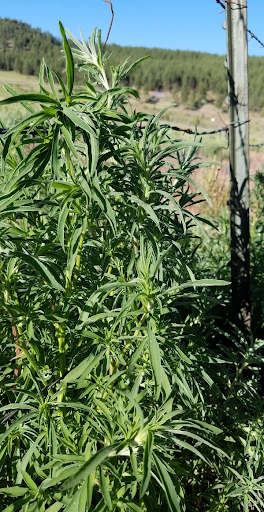
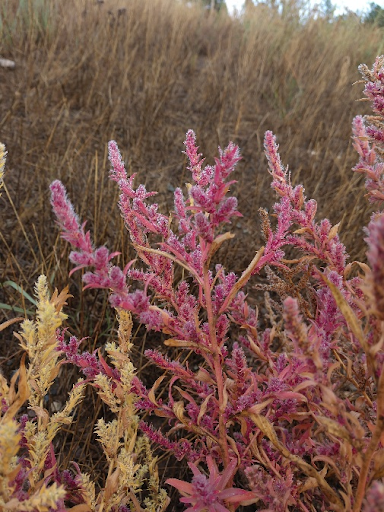
Kochia is an annual shrub-like weed originally from Eurasia. It was introduced to North America during colonial times for livestock forage and ornamental plantings. It is also known as Mexican Fireweed or Burning Bush, due to the red color it turns during autumn. While it is not listed as a noxious weed in Colorado, Kochia is a very aggressive plant that readily invades pastures, rangeland, agricultural crop sites, roadsides, and other disturbed areas. It tends to be one of the first plants that show up in disturbed areas, or areas with poor soil quality due to its ability to tolerate dry, unfavorable, saline soil conditions that many desirable plants cannot. Kochia can germinate as early as March in favorable conditions, allowing it an early season competitive advantage. Kochia is a prolific seed producer, with seed estimates ranging from 15,000-30,000 seeds per plant. Its main method of seed dispersal is tumbling after senescence.
Kochia has become infamous for its herbicide resistance, making it difficult to control. It is resistant to multiple groups of herbicides (group 2, group 4, group 6, and group 9). Its herbicide resistance is theorized to be due to its quick generational succession, genetic variability, ability to cross pollinate, and its tolerance to unfavorable environmental conditions. For weed managers, this means herbicide control is limited, and the timing of application is crucial, as the scant effective herbicides for Kochia tend to lose their efficacy as the plants mature. An integrated approach is often the best method to manage Kochia. Well timed herbicide applications combined with tillage or mowing before viable seeds have formed, and planting competitive species such as native grasses, or barley in agricultural settings, can be more effective than relying on herbicides alone to control Kochia.
Photo Credits: Ethan Proud, Archuleta County
| |
Colorado's "Wilding Conifers" Take Over New Zealand Habitats
By: C. Bryant, Huerfano County Noxious Weed Manager/CWMA Board Member
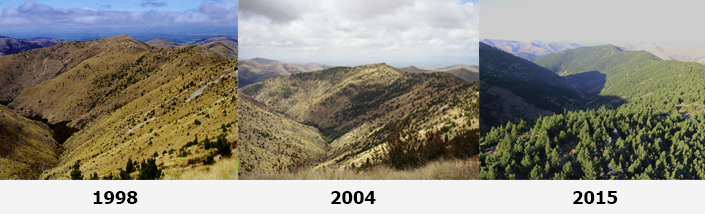
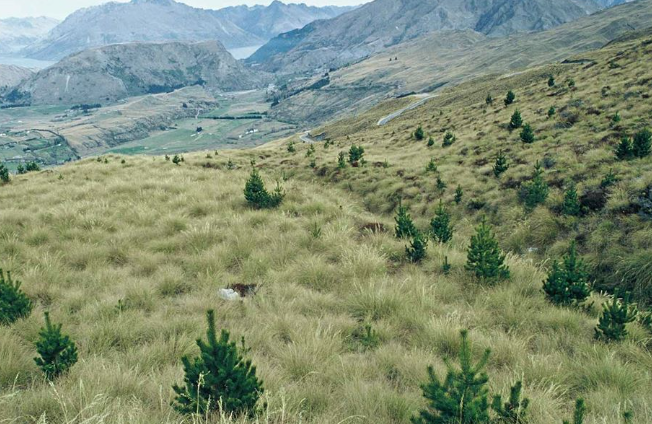
| | Photos (above): Pine Invasion of New Zealand mountainsides, (below) Early invasion of NZ grasslands | | |
Our Natives Acting Like Invasives
A common theme of our Native Plant Stories over the last year has been our exploration of the invasive potential for our beloved native species when they are found outside of their natural range. The very woody species that we so often protect through prudent treatment option selection here in Colorado are actually a scourge elsewhere, causing many of the same deleterious effects that we often associate with species like Russian olive or tamarisk. In this edition, we will be exploring some of our keystone coniferous species that are considered “unwanted organisms” within New Zealand’s Biosecurity Act of 1993, particularly Ponderosa pine, Douglas fir and lodgepole pine.
The "Wilding Pine" Invasion
These species have posed dire enough ecological threats that a national initiative in New Zealand called the “National Wilding Conifer Control Programme” was created to address the problems associated with these hallmark Colorado natives.
While these species are beyond common throughout Colorado, they take on the most exotic form when found in New Zealand as the country has no native species in the Pinus genus. These three species greatly contribute to the 1.8 million hectares (4,447,896 acres) of “wilding infested” lands indentified in New Zealand. Being originally introduced for ornamental use, timber production, shelterbelts and to help mitigate soil erosion, populations have expanded drastically since their arrival in New Zealand starting in the 19th century.
Substantial resources have been dedicated towards curbing these exotic threats, to the tune of $15-25 million dollars annually in recent years. This is all for good reason; the New Zealand government’s range expansion modeling indicates a spread rate of 5% per year. Further projections estimate that within 20 years nearly 20-25% of the entire country could be invaded by these wilding conifers if drastic mitigation campaigns are not put in place.[i] The time lapse photo series above demonstrates the rapid range expansion observes within just 17 years within New Zealand’s mountain ranges.
When we look at the multitude of problems presented by these species, there is a near overlay between them and the woody invasives that we are well accustomed to. Much like tamarisk or Russian olive, infested sites create reduced biodiversity, encroach upon agricultural lands, possess excessive evapotranspiration rates, cause manipulation of soil chemistry, serve as a host for pests\diseases and limit the use of recreational areas.
Combating Wilding Pines
When we assess the IVM options utilized to control these species, we find many of the same tools and methods utilized for our invasive woody species such as hand pulling, mechanical control using masticators and chemical controls. Triclopyr seems to be one of the more common herbicides recommended for control, though a number of technical bulletins relate a rather intimidating tank mix called “TDPA” which consists of Triclopyr, dicamba, picloram and aminopyralid. Curiously missing from the IVM toolbox for coniferous species management in New Zealand is biological controls. Given the widespread destruction wrought by the mountain pine beetle Dendroctonus ponderosae in Colorado, one would think it would provide a readymade, pine-devastating solution. However, with New Zealand being an archipelago with no land borders and a unique evolutionary history, non-native biological controls are approached with high caution. While Pinus species are not native to New Zealand, the off-target damage towards introduced economically valuable timber\pulp producing species like Radiata pine is heavily considered, effectively ruling out mountain pine beetles and other common North American pine pests for use in their biological control programs.
For the 2026 field season, the National Wilding Conifer Control Programme will be advocating for enhanced funding up to $30 million\year and continue prioritizing treatments among the most high-risk landscapes, focusing on the elimination of seed sources (mature trees before cones develop) along with the early detection and rapid treatment of satellite populations. Initial treatments are often performed by governmental units, with “Good Neighbour” agreements then drafted with private landowners to ensure successfully controlled areas are up kept. Noting a “high reinvasion potential”, site upkeep is indeed a daunting task given the fact that over 2.12 million acres have been treated since 2016.
Small Country, Big Response
In conclusion, the effort and concern towards controlling these “wilding conifers” by the New Zealand government is admirable, especially when compared to our efforts stateside concerning our noxious species. New Zealand, having a land area nearly identical to Colorado (while having less than half of the GDP of Colorado)[ii] annually spends more towards the control of only one small segment of invasive woody species than the State of Colorado has for all invasive plant species in the last decade.[iii] What lessons might Colorado draw from New Zealand’s focused, national-scale response?
[i] https://www.doc.govt.nz/nature/pests-and-threats/weeds/common-weeds/wilding-conifers
[ii] https://www.imf.org/external/datamapper/NGDPDPC@WEO/NZL, https://www.bea.gov/news/2026/gross-domestic-product-state-and-personal-income-state-3rd-quarter-2025
[iii] https://www.mpi.govt.nz/biosecurity/exotic-pests-and-diseases-in-new-zealand/long-term-biosecurity-management-programmes/wilding-conifers, https://ag.colorado.gov/conservation/noxious-weeds/grants
Photo: Autumntime swarm of boxeleder beetles
| | |
The 15th Edition of the Noxious Weeds of Colorado Booklet is available for purchase.
Discover comprehensive updates to noxious weed profiles with detailed identification guides — all crafted for enthusiasts, professionals, and nature lovers. Don’t miss your chance to get your hands on this essential resource.
Please provide a USPS-compatible address, as all products will be shipped via USPS.
| | |
2026 CWMA Virtual Spring Training - Register Today!
Earn ALL your core credits for your CO applicators license in ONE day.
The following credits are CDA approved with workshop #26151:
- LR Laws and Regs (2 credits)
- PF Pesticides and Their Families
- EP Environmental Protection
- UP Use of Pesticides
- AS Applicator Safety
- PS Public Safety
| | |
Why Be A Member?
Simply put, we help you and your employer IDENTIFY and MANAGE invasive species and CONNECT you to the right resources and support. Membership gives you special access to:
- A network of peers for support, advice and solutions
- Science based research and training
- CE courses and events to help you maintain your license
- A library of curated resources
- Opportunities to advance your career and develop leadership skills
- Member discounts for events, webinars, and publications
- And more!
What else? CWMA fights for the industry by ensuring that rules and regulations at the state level help and not hurt your ability to perform your job. We increase environmental awareness among decision-makers and the broader public.
| | |
Sustaining Partners
Not a sustaining partner but want to be? Join here.
|
| |
How can CWMA work for you?
Do you want to make a difference with CWMA? Would you like to influence the direction that CWMA is leading? Join a committee by reaching out to the chairs and co-chairs.
Want to join a committee but don't know where to start? Contact us for more info!
| | |
Are You a Writer or Have a Story to Tell?
If you have a success story or event you'd love to share...we want to help!
Colorado Weed Management Association is always looking for new content, exciting stories in integrated management, and alerts on new weed species!
Send in an article, write up, or pictures and we can share them in our quarterly newsletter.
Email submissions to Communications Committee at info@cwma.org.
Please limit pieces to 500 words. All submissions are subject to review.
Newsletter contributors have to be CWMA members.
|
| | | |