August 7, 2026

Dear Community:


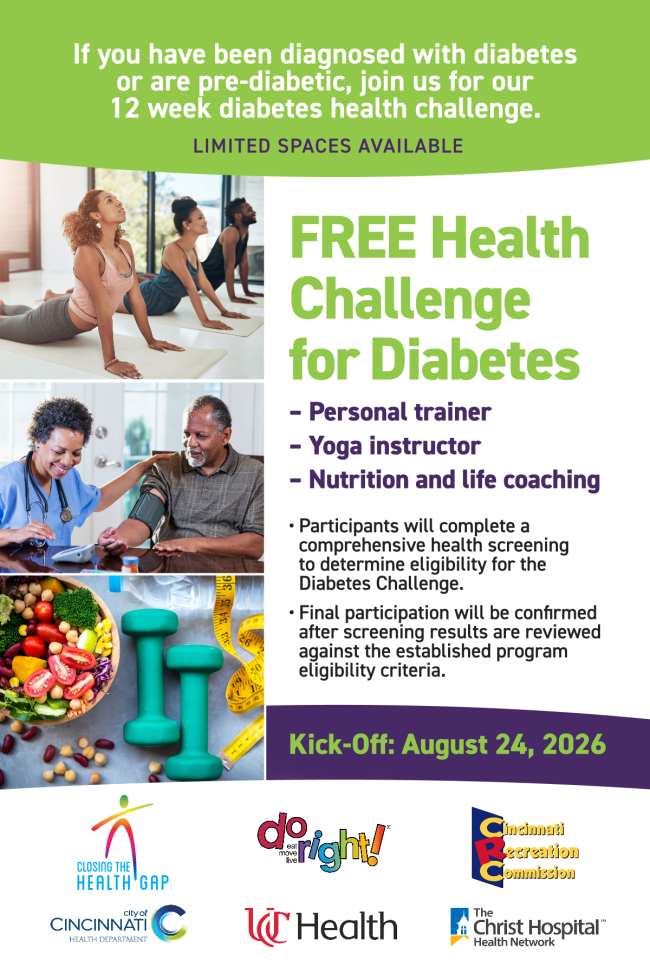
To kick-off the Weekly Update, please note an important scheduling update: Our free, 12-week Diabetes Health Challenge has been pushed back and will now officially begin on August 24. If you are pre-diabetic or living with diabetes, there is still time to sign up for this incredible program. Please see the flyer below for details and registration links.


Tomorrow on Saturday, August 8, from 1:00 to 3:00 p.m., I urge you to join us at the Holloman Center for Social Justice for a critical voting call-to-action event. We are supporting the League of Women Voters, the Urban League, and the Cincinnati NAACP to help our neighbors register to vote. Our collective voice is our power, so please help get the word out.


Finally, it is with a heavy heart that we acknowledge the passing of our beloved Board Chair, Dianne Ebbs. A tribute to her extraordinary life and legacy of service is included below. We will honor her by continuing the fight for equity, because as always, We Must Save Us. Blessings to all of you for a safe and healthy week ahead.


Renee Mahaffey Harris

President & CEO

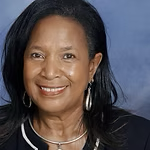
In Memorium: Dianne Ebbs (1946-2026)


It is with profound sadness and a heavy heart that I share the news of the passing of our beloved Board Chair, colleague, and dear friend, Dianne Ebbs.


I had the distinct privilege of knowing Dianne and her husband, Peter, for more than 30 years. To know Dianne was to know a woman whose very essence was defined by an unshakeable commitment to justice, equity, and uplifting those pushed to the margins. She was a visionary leader, an inspiring educator, and a civic powerhouse who never wavered from doing what was right and just.


Dianne once described her personal mission as one of empowerment and a steadfast commitment to being a voice for the voiceless. She lived that mission every single day. She guided her life by the words of Dr. Martin Luther King Jr.: "When your character is built on spiritual and moral foundation, your contagious way of life will influence millions." Dianne’s way of life was indeed contagious. Her integrity, deep spiritual devotion, and moral character propelled her to the forefront of countless community service efforts, not just here at the Center for Closing the Health Gap, but across Cincinnati.


Over her 40 years in this city, she served as a retired Principal and Superintendent, and lent her brilliance to organizations including HER Cincinnati, the Advisory Board for Cincinnati Scholar House, and as the Executive Director of Summer Camp Reading. Her leadership within the Episcopal Church demonstrated her deep faith in action.


At the Health Gap, we will forever be indebted to her steady hand, her bold vision, and her compassionate heart. She drove our mission forward because she believed deeply in bettering everyone and empowering every person to improve their quality of life. We have lost a titan of our community, but her legacy of service, her fight for social justice, and her contagious spirit will continue to influence and inspire us all. We will honor her memory by continuing the work she loved so dearly.


Rest in power and peace, my friend.


Renee Mahaffey Harris

President & CEO, Center for Closing the Health Gap

HHS Announces HRSA Health Centers Deliver Record-Breaking Care to More Than 32.7 Million Patients

The U.S. Department of Health and Human Services (HHS) marked National Health Center Week by announcing that Health Resources and Services Administration (HRSA)-funded health centers served more than 32.7 million patients in 2025 — an increase of more than 350,000 patients from 2024 and the highest number of patients served in the Health Center Program’s 61-year history.


HRSA-funded health centers provide comprehensive primary care at more than 16,000 service sites nationwide, serving 1 in 8 children, 1 in 5 rural residents, and 1 in 15 adults age 65 and older.

Preeclampsia rates in minority communities shed light on the social roots of maternal health disparities

Elevated stress, exposure to environmental toxins, COVID-19 infection during pregnancy and extreme heat are among the factors that have the potential to unleash a chain of physiological responses that can lead to preeclampsia.


While an estimated 4.4% of pregnancies result in preeclampsia globally, the rates are typically higher in low- and middle-income countries compared to wealthier nations. Sub-Saharan Africa has the highest regional prevalence rate, at 13%. In the U.S., the preeclampsia rate rose from 4.5% in 2008 to 8% in 2021, during the height of the COVID-19 pandemic. But racial and ethnic minorities in the U.S. experience higher prevalence rates.

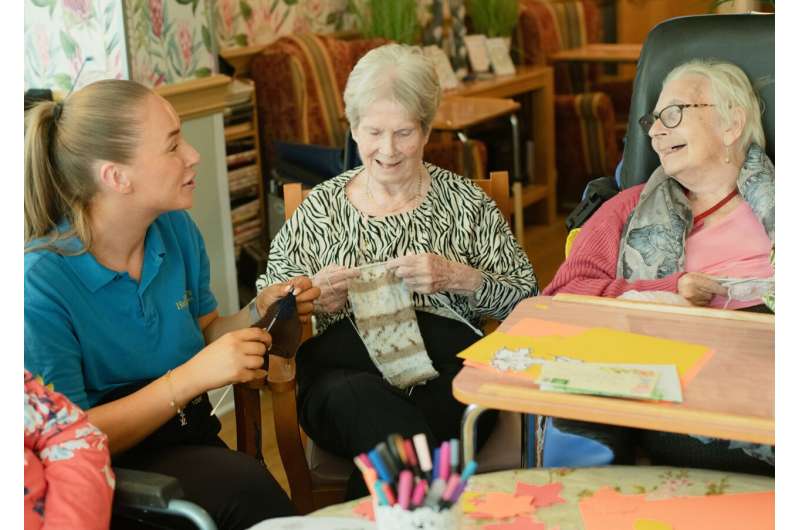
In memory care deserts, senior centers can help close the gap in brain‑related health care

The U.S. Census Bureau estimates that the American population age 65 and older will increase by 17 million from 2026 to 2050. The aging population has already led to an unprecedented rise in the prevalence of Alzheimer's disease and related dementias. More than 7 million Americans currently live with dementia. Research shows that by 2060, this number could increase to over 13 million.


Early detection of cognitive issues can mean more years with a relatively high quality of life. But for the roughly 20% of Americans who live in rural areas, access to cognitive care does not come easily. Rural communities face geographic isolation, financial strain and a lack of specialized providers.

The Trust Gap in Digital Health and AI Starts With Design — Here’s How to Close It

According to Accenture, patients are twice as likely to leave a provider over a poor experience at the front desk or with online services than over substandard medical care. At the same time, trust in digital health products remains fragile: 66% of patients have little confidence that their health system will use AI responsibly, and 58% doubt it will protect them from harm.


The gap between what technology can do and how much patients trust it won’t close on its own. I’ll break down which design decisions build that trust — and which ones quietly destroy it.

NIH Director Bhattacharya kills more health disparities grants

More evidence is emerging that the U.S. National Institutes of Health (NIH) has launched a new wave of grant terminations. The first signs came last week, when Science learned that an ongoing research grant for a structural racism study by an Emory University team had been killed. NIH sources sharing information on background indicated it was the first of more planned terminations. Now, NIH Director Jay Bhattacharya is ending two more grants, both for health disparities research at the University of Pittsburgh.


A 4 August letter sent by Bhattacharya to Pitt’s research office informing it that a grant to social epidemiologist Tamara Dubowitz “will be terminated in full” confirms that more cancellations are coming. The letter explains that Bhattacharya’s priorities include focusing on “measurable health outcomes” and “solution-oriented approaches” in health disparities research. It adds, “As a result, NIH is adjusting its extramural research portfolio, which includes terminating grant awards, to prioritize agency resources towards the above-mentioned priorities.”


“I am livid,” Dubowitz says. Her 5-year, NIH-funded study exploring health and socioeconomic factors contributing to cognitive aging and Alzheimer’s in African Americans living in poor neighborhoods in Pittsburgh is nearing completion, and her team has already spent $7 million of the $9.6 million grant.

Racial and Ethnic Disparities in the Diagnostic Performance of AI Systems for Medical Imaging in the United States

AI-assisted diagnostic systems are increasingly being integrated into radiology and medical imaging practice in the United States. Concerns have emerged regarding differences in diagnostic performance across racial and ethnic populations, particularly among historically underserved groups. This study aimed to systematically review evidence on racial and ethnic disparities in the diagnostic performance of AI systems used in radiology and medical imaging in the United States. A systematic search of major databases identified 27 eligible studies published between 2015 and 2026.


The included studies primarily consisted of retrospective observational and validation studies evaluating AI systems in chest radiography, breast ultrasound, and ophthalmologic imaging, as well as selected non-imaging predictive models. Several studies reported reduced diagnostic performance, lower sensitivity, higher rates of underdiagnosis, or subgroup disparities among racial and ethnic minority populations, particularly Black and Hispanic patients. Some studies also demonstrated that fairness-aware model development and subgroup validation may improve equity in AI performance. The findings were synthesized narratively and support the need for diverse training datasets, transparent demographic reporting, standardized fairness evaluations, and prospective multicenter validation before the widespread clinical implementation of AI systems in radiology and medical imaging.

More Articles of Interest


Temporal Trends and Demographic and Geographic Disparities in Stroke Mortality Among US Adults Aged 25-64 Years (1999-2020)

Cureus, August 4, 2026 


Opportunities for Pediatricians to Address Racism and Bias to Reduce Racial Disparities in Breastfeeding and the Use of Human Milk

National Library of Medicine, August 3, 2026

FOLLOW US
Facebook      LinkedIn      Instagram