Connecting

Aug. 29, 2025


Click here for the sound of the Teletype

Top AP News

Top AP Photos

AP Merchandise

AP Emergency Relief Fund

Connecting Archive

AP Newsletters

AP Donations

AP News Tips

Colleagues,


Good Friday morning on this Aug. 29, 2025,


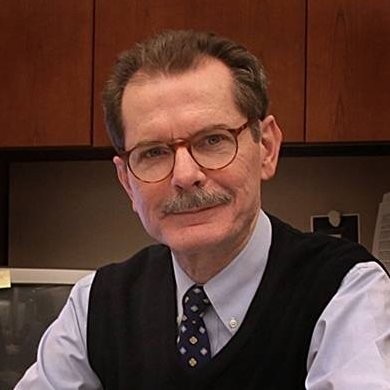
We bring you the sad news of the death of our colleague Paul Colford, an AP vice president who served as the company’s chief media spokesman for 10 years before retiring in 2017.


Colford died Tuesday after heart complications impacted by his 15-year battle with Parkinson’s disease. He was 71.


“He was a great newsman and an inspiration,” said former AP President and CEO Tom Curley.


Colford was succeeded by Lauren Easton, vice president, AP Corporate Communications.


“Paul was my first real mentor," she said. "He taught me so much, from how to distill the complex into something simplistic to how best to put out fires and protect the AP. Anyone who knew Paul knew what a kind, smart and special person he was.


“Paul often would tell me about how he collected newspapers from wherever he traveled so he could see what made headlines around the world. So, for many years, when I would travel, I would be sure to pick up a paper and send it to Paul. That is a tradition I will surely miss.”


If you have a favorite memory of working with Paul, please send it along.


Today marks the 20th anniversary of that fateful day when Hurricane Katrina struck the U.S. Gulf Coast in southeast Louisiana, breaching levees and spurring floods that devastated New Orleans. Katrina caused nearly 1,400 deaths and an estimated $200 billion in damage.


Some of your Connecting colleagues share their memories in today's issue.


80th ANNIVERSARY OF END OF WWII: Next Tuesday marks the 80th anniversary of the end of World War II. The deadliest war in history ended on Sept. 2, 1945, when Japan formally signed the Instrument of Surrender aboard the battleship USS Missouri in Tokyo Bay. Connecting welcomes your stories relating to the war – through firsthand experience, family experiences or other ties. Please share over the weekend.


Here’s to a great Labor Day weekend – be safe, stay healthy, live each day to your fullest.


Paul


Paul D Colford

Sep 24, 1953 - Aug 26, 2025

Paul Colford, 71, a longtime newspaperman, died Tuesday, August 26th, 2025, after heart complications impacted by his fifteen-year battle with Parkinson’s disease. Mr. Colford, a life-long New Jerseyan, was born in Jersey City, NJ, lived in Roselle Park, Belmar, and Trenton. A graduate of St. Peter’s University in Jersey City, Mr. Colford studied abroad in Siena and Turin, Italy. He was a published author of two books and was in the process of writing his third, about a folk hero from his hometown in Jersey City. His career spanned over 30 years as a reporter and featured columnist at The Courier News, New York Newsday, and The New York Daily News. He retired as Vice President of Media Relations for The Associated Press in 2016. His freelance articles appeared in publications including The New York Times and The Los Angeles Times.


Paul’s curiosity, intelligence and warmth endeared him to many. He fostered decades-long friendships from all eras and aspects of his life. Paul will be remembered as someone who possessed the rare ability to connect and commiserate with a stranger as naturally as he could with his own friends and family. He knew that everyone had a story to tell.


He was predeceased by his parents Joseph and Catherine, and his first wife, Jane. He is survived by his current wife, Anne LaBate of Trenton, NJ; his daughter, Catherine Colford (Hunter Gardner) of Brooklyn, NY; his son, Liam Colford (Allissa) and his granddaughter, Jane, of Philadelphia, PA; and his siblings, Mary Palecek (Stephen) of Mount Laurel, NJ; Joseph Colford (Jeanne) of Middletown, NJ; Francis Colford (Denise) of Long Branch, NJ; Chris Colford (Irene) of Greenwich, CT; Peter Colford (Jeanne Pare) of Mendham, NJ; Loretta Reilly (Matthew) of Mount Laurel, NJ; and Brian Colford (Margaret) of Pearl River, NY.


The family wishes to express their sincere gratitude to Dr. Jill Farmer for her exceptional care and kindness. The family thanks the caring staff of Capital Health Regional Hospital in Trenton and caregivers Layfornia and Rosie.


Visitation will be held on Tuesday, September 2nd 2025 at 10:00 AM at Saint Rose Roman Catholic Church in Belmar, with a Funeral Mass immediately following at 10:30 AM. Interment to follow at Saint Gertrude Cemetery, Colonia, NJ.


In lieu of flowers, friends are asked to consider a donation in Mr. Colford’s memory to the Committee to Protect Journalists (cpj.org) or the Parkinson’s Foundation (Parkinson.org).


Arrangements are under the auspices of the Chiacchio Southview Funeral Home, Trenton, NJ.


Click here for a link to his obituary. Shared by Rick Pienciak.


Katrina - a 20 year look back

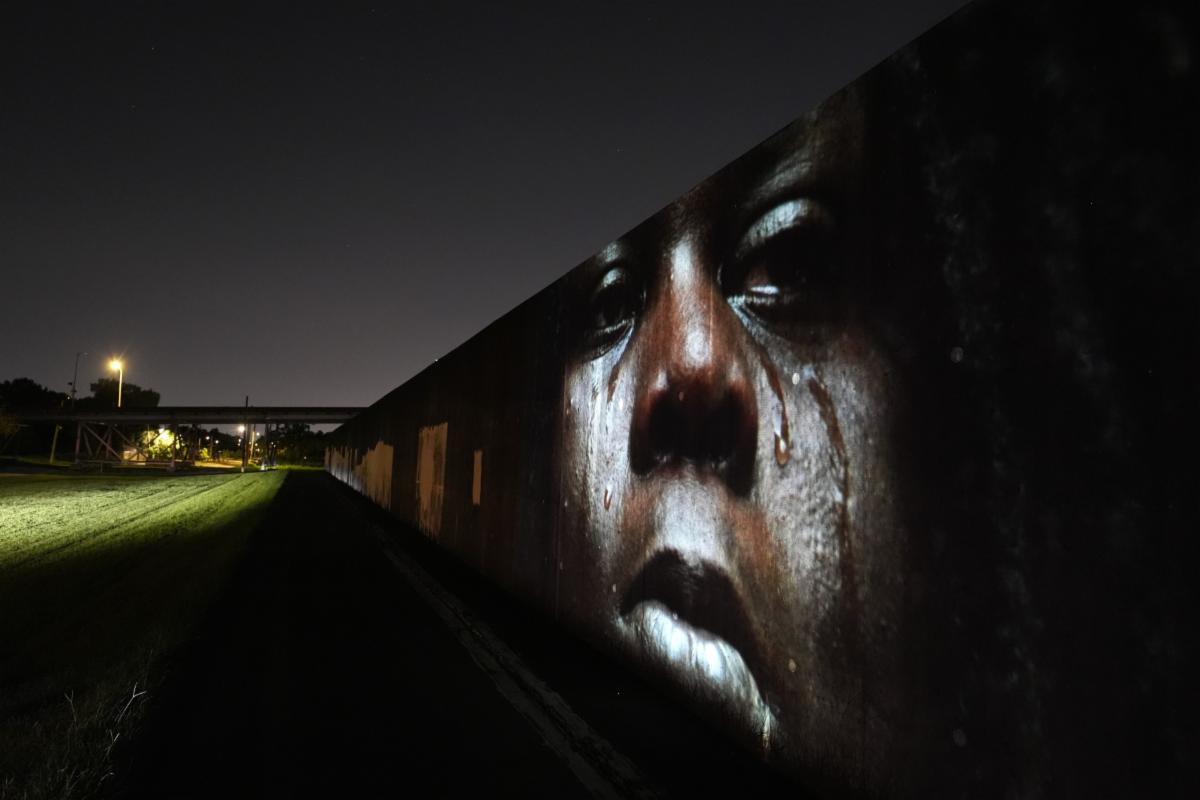
This photo of Leonard Thomas, 23, crying in the aftermath of Hurricane Katrina in New Orleans, taken by AP photographer Rick Bowmer, is projected Wednesday, Aug. 13, 2025, onto the flood wall in the Lower Ninth Ward, which was breached, flooding major parts of the city. (AP Photo/Gerald Herbert)


Jim Gerberich - This is an amazing body of work by AP photographer Gerald Herbert who is based in New Orleans. He called it a "highly experimental package." Undoubtedly the experiment was a success.


Click here to view: PHOTO ESSAY: 20 years after Hurricane Katrina, these then-and-now photos show the power of place


In his words:


I put a lot of hours, both dusk and dawn, to put together this highly experimental package. Lots of moving parts: archive searches, projector, ladders, power sources, mosquitoes, sweating profusely in the hot, humid New Orleans nights, the drive times, sleuthing locations, etc., including the last night: driving to Pass Christian and Biloxi with my brother John to visit and photograph our Uncle Mike’s grave, who we lost in Katrina. With great thanks to AP Feature Photo Editor David Goldman, who helped conceive this project, guided me through it, challenged me to reach higher, and worked with me on the final edit. Also a special thanks to John Sanchez and Lila Sanchez, and Doug Parker, who assisted me invaluably on some of these shoots. And with the GREATEST respect to the AP photographers who were so amazing in their coverage of Hurricane Katrina.


Probing old scars again in New Orleans


Kevin Mcgill - We are probing old scars again in New Orleans, testing the sensitivity of deep, lingering bruises. That’s how people often mark historic and tragic milestones in time. So, that’s what we’re doing on the 20th anniversary of Hurricane Katrina.


I don’t want to do it. I was recently invited to leave my retirement chair to join some fellow Associated Press veterans for a panel discussion on what it was like to cover the storm’s devastation while living it out 20 years ago. I accepted. But other than that, I’ve avoided giving Katrina much thought. I’ve not watched the documentaries, not read most of the retrospectives. I like that, at some point between Aug. 29, 2015, and today, I stopped marking events in my life as having happened Before Katrina and After Katrina.


Now, as Aug. 29, 2025, approaches, I don’t want the second decade’s passing to hurt like the first. But maybe it should.


Ten years ago, it all seemed like yesterday, even though a decade had passed. The memories had a much longer than expected shelf life — the seemingly ceaseless flood, a growing death toll, bodies going unburied, desperate people begging for food, medicine and a way out of town. I felt powerless to help and overwhelmed by the immensity and the number of the stories unfolding around me. Even when I was on dry land I felt like I was wading through hip-deep mud, like I was in one of those dreams where you want to run but your feet won’t move. The city had slowly struggled to its feet but the 10th anniversary brought the pain back hard.


Still, as strong as the pain was, so was the hunger for tradition — the city’s shared heritages, intermingling cultures, participatory parades, emblematic music, communal feasts. The city had been knocked down and forever changed. But the hunger had survived the storm and it still raged 10 years later. Feeding it helped us know we were still alive — perhaps with a new appreciation for what we lost and almost lost.


For me, a bar where a juke box played old James Booker records had become a sacred place. The opening strains of “The Treme Song” or the soaring trumpet solo kicking off the Mardi Gras anthem “Second Line” could move me to tears. All kinds of little musical or visual cues could choke me up with a kind of ragged relief and jagged joy, something akin to what a parent must feel when a child has been rescued from the brink of death.


Now, the pain can still flare — it has at times this week. But it has mostly, blessedly, faded. What worries me is that I, freshly retired at age 68, sometimes find that my old fervor is fading as well. The old, soul-stirring hunger for tradition can be subsumed by mere nostalgia if I let it.


Ten years ago, I was still breathing the same air as Fats Domino, Dr. John, Ellis Marsalis, Allen Toussaint.


Ten years ago, I could call Dooky Chase’s restaurant and get an interview with Leah Chase, who provided civil rights leaders with fine food and a meeting place during the segregation era. Hell, I could eat food prepared by Leah Chase.


They are gone now. My New Orleans and I both survived Katrina, but that didn’t mean we didn’t sustain damage, nor did it mean we would never grow old. Or change, for better and for worse.


New Orleans’ population is smaller and whiter post-Katrina. Affordable housing for the working class and the poor remains in short supply. Crime remains a recurring problem and government services are wanting at multiple levels. Ten dangerous people escaped the notorious New Orleans jail a few months ago. One remains at large. The sheriff who runs that jail will likely be replaced in the next election but whether there will be meaningful change is questionable. This is all bad.


But there remain things to be happy about. The first thing that comes to mind: a larger-than-life statue of Robert E. Lee, erected during the Jim Crow era and towering over St. Charles Avenue like a giant middle finger, is gone now. Good riddance.


The musical heritage is hanging on. Branford Marsalis is back in town at his late father’s namesake cultural center. And the Jazz and Heritage Festival remains a signature international event.


Also good: Saturday night, my wife and I strolled two blocks from my house to join with neighbors to watch the annual Krewe of Oak Mid-Summer Mardi Gras parade. It’s a loosely organized procession of people with varying degrees of musical and dancing talent and varying amounts of clothing. And there’s always a topical theme. If you’ve been reading carefully, you can probably guess what this year’s was. Yep, this year there were a lot of orange jump suits, horizontal stripes, pretend police and musical interludes from the self-styled Orleans Parish Prison Escapees Brass Band.


I needed that. My sometimes flailing fervor for tradition was thus fed.


Oh, and I have a granddaughter now — born almost 18 months ago to the older of my two Wicked Stepdaughters. She will be dancing to James Booker in no time. And I’m living for the day when I can explain to her why I smile every time I pass a certain empty pedestal on St. Charles Avenue, why New Orleanians often eat red beans and rice on Mondays and why, sometimes, I still choke up when I hear the opening strains of “Second Line.”


My 20-year-old scoop resonates on the anniversary of a fatefully flawed presidential briefing


Ron Fournier - Six months after Hurricane Katrina ravaged New Orleans, killing 1,392 people and exposing government incompetence at local, state, and federal levels, a source slipped me confidential video footage of a pre-storm briefing for President George W. Bush. I filed this story:


WASHINGTON (AP) -- In dramatic and sometimes agonizing terms, federal disaster officials warned President Bush and his homeland security chief before Hurricane Katrina struck that the storm could breach levees, put lives at risk in New Orleans' Superdome and overwhelm rescuers, according to confidential video footage.


Bush didn't ask a single question during the final briefing before Katrina struck on Aug. 29, but he assured soon-to-be-battered state officials: "We are fully prepared."


The footage -- along with seven days of transcripts of briefings obtained by The Associated Press -- show in excruciating detail that while federal officials anticipated the tragedy that unfolded in New Orleans and elsewhere along the Gulf Coast, they were fatally slow to realize they had not mustered enough resources to deal with the unprecedented disaster.


Linked by secure video, Bush expressed a confidence on Aug. 28 that starkly contrasted with the dire warnings his disaster chief and numerous federal, state and local officials provided during the four days before the storm.


A top hurricane expert voiced "grave concerns" about the levees and then-Federal Emergency Management Agency chief Michael Brown told the president and Homeland Security Secretary Michael Chertoff that he feared there weren't enough disaster teams to help evacuees at the Superdome.


"I'm concerned about ... their ability to respond to a catastrophe within a catastrophe," Brown told his bosses the afternoon before Katrina made landfall.


That’s Michael Brown, as in "Brownie, you're doing a heck of a job" — Bush’s infamous high-five to a FEMA director who shouldered most of the blame in the immediate aftermath of the storm. We learned through this leak that while Brown may have been overmatched for his job, he at least knew enough to raise a flag.


It was the president, not Brown, who declared, “We’re fully prepared” when they clearly were not.


I return to this story today — the 20th anniversary of that missed-opportunity presidential briefing — because in the years since:


climate change has made American communities dramatically more susceptible to killer storms;


political and philosophical polarization has made government more incompetent, with voters losing faith in government operations;


President Donald Trump is reversing post-Katrina reforms at FEMA.


Let’s take that list one item at a time.


Read more here.


AP reporters reflect on Hurricane Katrina, 20 years later

By HAYA PANJWANI


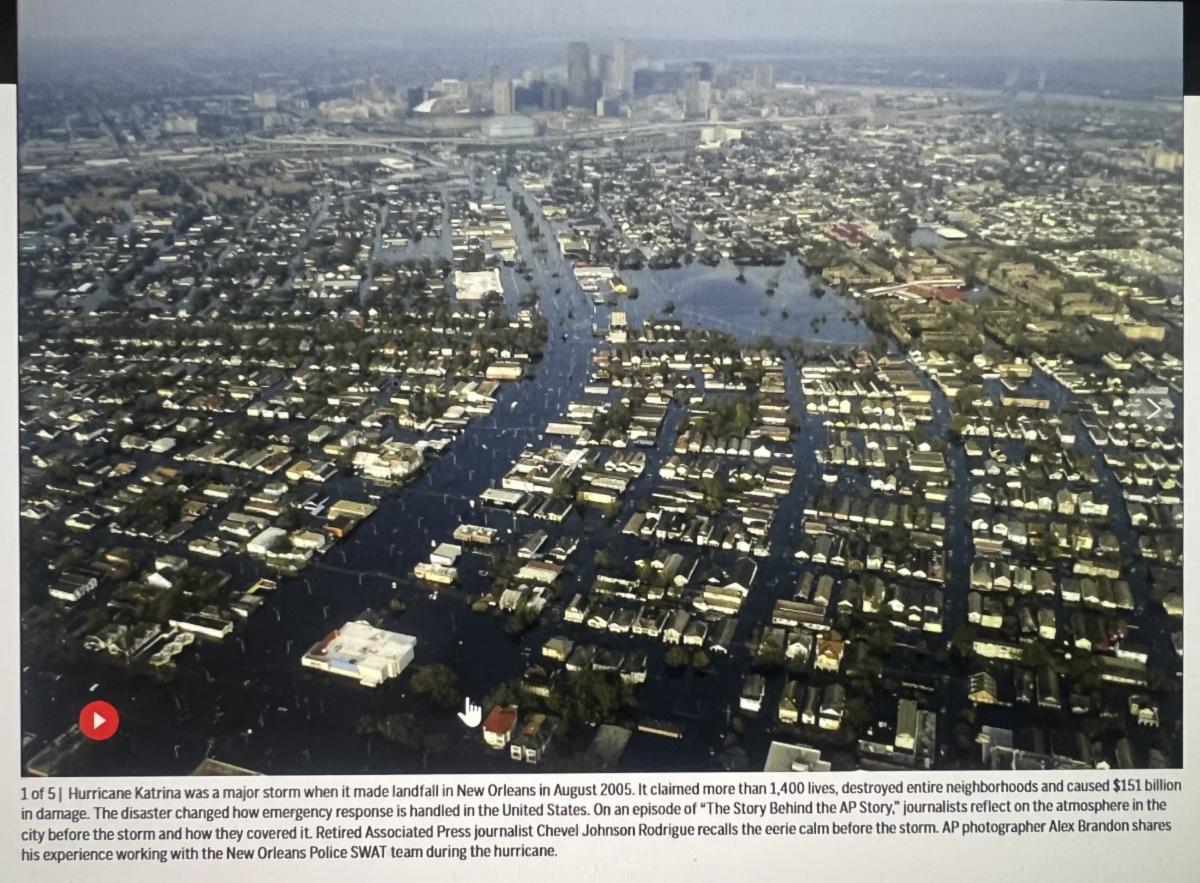
WASHINGTON (AP) — Hurricane Katrina claimed hundreds of lives, destroyed homes and changed how emergency response is dealt with forever.


In this episode of “The Story Behind the AP Story,” retired Associated Press journalist Chevel Johnson Rodrigue recalls the eerie calm before the storm and AP photographer Alex Brandon shares his experience working with the New Orleans Police SWAT team during the hurricane.


AP AUDIO: AP reporters reflect on Hurricane Katrina, 20 years later

On this episode of The Story Behind the AP Story, journalists reflect on the atmosphere in the city before the storm and how they covered it.


Alex Brandon, AP photographer: New Orleans, the city, Louisiana, the state, and I believe the United States, the whole United States -- what happened to that city during Katrina will forever change, I hope, the response of the federal and state governments to something of this magnitude.


Haya Panjwani, host: Hurricane Katrina was a major natural disaster that made its landfall near New Orleans in August 2005 as a Category 3 storm. It claimed more than 1,400 lives, destroyed entire neighborhoods and changed emergency response in the United States forever. I’m Haya Panjwani. On this episode of “The Story Behind the AP Story,” we go back 20 years to Hurricane Katrina. We’ll hear about the atmosphere in the city leading up to the storm, how current and former AP journalists covered it and how the disaster affected them personally.


Chevel Johnson Rodrigue, retired AP journalist: My name is Chevel Johnson Rodrigue. I am a retired AP journalist. I’ve lived in New Orleans my whole life. My parents were in the military, so we moved around a lot when I was younger, but their home base was always New Orleans.


Read more here.


ABC’s Robin Roberts retraces her post-Hurricane Katrina journey back to hometown

DAVID BAUDER

AP Media Writer


Revisiting the time she broke down on “Good Morning America” while covering Hurricane Katrina’s destruction of her hometown Pass Christian, Mississippi, Robin Roberts said she feared losing her job.


Only three months after she was named a host of the ABC News show with industry vets Charles Gibson and Diane Sawyer, Roberts had played it straight on the Gulf Coast. That’s what reporters do: they keep a lid on emotions to get the work done. Then Gibson asked, during a live shot, if Roberts had determined that her mother and other family members were safe.


So much for professional reserve.


“It’s one thing if you shed a tear, but I was boo-hooing,” Roberts said. “I was delighted that in the end people were touched by that in a way that I wasn’t expecting, that it was authenticity. That was proof that they just want you to be real in the moment.”


That clip of a much younger Roberts — still a “Good Morning America” host — is replayed on her ABC News special looking back at Katrina after 20 years. It airs Friday at 8 p.m. Eastern and is streamed on Disney+ and Hulu starting the next day.


Roberts, 64, has been back in the region more times than she can count since then, both to report and visit family. Her mother, Lucimarian, died in 2012 at age 88. Her sister Sally-Ann, a longtime news anchor in New Orleans, has retired.


“I still can’t believe it’s been 20 years,” she said. “Two decades. Going through the old footage was a little PTSD. You kind of blocked some of that out.”


In the special, Roberts retraces the ride she took from New Orleans to Pass Christian 20 years ago. There are fewer “staircases to nowhere” along the way, evidence of destroyed homes, each time she’s back. But remnants from Katrina are still there.


Read more here.


AP Photo of National Guard patrolling DC is going mega viral

Armed National Guard soldiers from West Virginia patrol the Mall near the Labor Department in Washington, where a poster of President Donald Trump is displayed, Tuesday, Aug. 26, 2025. (AP Photo/J. Scott Applewhite)


Michael Rubin - Online posts accompanied by comments that a giant banner of a glaring leader hanging on a government building (Labor Department) with armed military guarding the streets would be normal in some place like North Korea.


Where is the AP Stylebook when you need one?


Adolphe Bernotas - Israel says the deadly attack on journalists was a "mishap." Apparently the PR department doesn't read the AP Stylebook, which says:


"mishap A minor misfortune. People are not killed in mishaps."

Connecting wishes Happy Birthday

Barry Bedlan


Jeff Rowe


On Saturday to…


Kristi Chew


John Dowling


Dana Fields


On Sunday to…


Steve Helber


Ken Kusmer


Ellen Nimmons


John O'Connor


Nancy Shulins


Jeff Ulbrich

Stories of interest


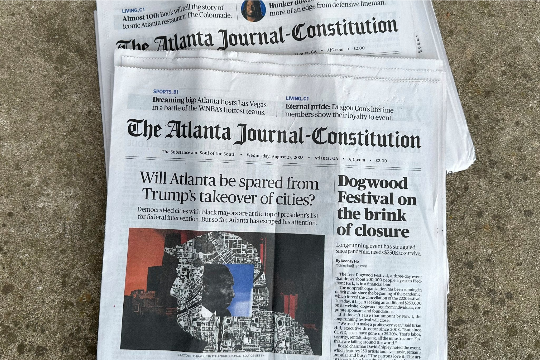
Atlanta Journal-Constitution to stop printing as it transitions to all-digital news (AP)

Printed copies of The Atlanta Journal-Constitution from Wednesday. (AP Photo/Jeff Amy)


By JEFF AMY


ATLANTA (AP) — The Atlanta Journal-Constitution will stop providing a print edition at year’s end and go completely digital, a dramatic change for a storied newspaper founded shortly after the Civil War.


The decision will make Atlanta the largest U.S. metro area without a printed daily newspaper, although some smaller metro Atlanta newspapers continue printing.


Publisher Andrew Morse said in his Thursday announcement that the news organization will aim to expand its audience as it continues to report the news using online, audio and video products.


“The fact is, many more people engage with our digital platforms and products today than with our print edition, and that shift is only accelerating,” Morse wrote in a letter to subscribers posted on the Journal-Constitution’s website. The AJC has about 115,000 total subscribers, of whom 75,000 are online only; Morse has set a goal of gaining 500,000 online subscribers.


The newspaper is privately owned by descendants of the Cox family. Former Ohio Gov. James Cox bought The Atlanta Journal in 1939 and The Atlanta Constitution in 1950. The Atlanta Constitution was founded in 1868, only a few years after the Civil War left Atlanta in ruins. It became the platform of famous editors including New South booster Henry Grady and anti-segregationist Ralph McGill.


Read more here.

Click here for AJC story. Shared by Ed Williams, Myron Belkind.


-0-


Can a print journalist become a TV reporter? Some face significant challenges. Others find success. (Poynter)


By: Amaris Castillo


Three years ago, The E.W. Scripps Company, one of the largest broadcast news organizations in the United States, prepared to launch an ambitious initiative. The Scripps Journalism Journey Initiative, a multiyear program with Google, was designed to transition experienced print journalists into broadcast news careers, at a time when local newspapers were closing and newsrooms were shrinking.


Here’s how it would work: Selected journalists would be hired into full-time roles in Scripps’ local and national newsrooms. They’d receive extensive support: training, mentoring, job shadowing, hands-on work and individual coaching. The program promised to offer these journalists a chance to embrace new challenges and reignite the passion that first drew them to journalism.


“They’ve already got the journalism part down, but they have to have the platform delivery down,” Scripps president and CEO Adam Symson told Poynter at the time. “And so putting in place the infrastructure to be able to recruit, train and retain mid-career journalists and launch them into careers in Scripps newsrooms is the opportunity.”


For all its promise, the transition hasn’t been simple. Participants have had to master new skills, learn new jargon and adjust to entirely different workflows. For a good portion of program members, it’s been a steep but rewarding learning curve. For others, it’s been overwhelming, even disillusioning.


“It can certainly be a challenging (transition) overall, and an exciting one,” said Jodie Heisner, news director of WEWS-TV in Cleveland, Ohio, who has welcomed a JJI participant. “I think it really depends on the person that is entering into the challenge, where they are in their career, what they’re looking for, how open they are to change.”


Since the program launched, Scripps has welcomed two groups of journalists. Over several months, Poynter spoke with several participants about their experiences.


Read more here.


-0-


Journalists killed in Gaza surpass 210; RSF and Avaaz call for a global newsroom mobilization on Sept. 1 (Editor and Publisher)


Press Release | Reporters Without Borders and Avaaz


More than 150 media outlets from over 50 countries will participate in a world-first, global media mobilization on Monday, Sept. 1, coordinated by Reporters Without Borders (RSF) and Avaaz, the global civic movement. The action comes in response to the unprecedented killing of over 210 journalists in Gaza and Israel’s ongoing refusal to allow independent international press access to the territory — a situation that is without precedent in modern warfare.


The Sept. 1 mobilization will unite newspapers, broadcasters and online platforms in a coordinated call to end the killing of journalists, open Gaza to the press and protect Palestinian reporters working under fire.


This urgent action follows the latest deadly strike on Aug. 25, when the Israeli army bombed the al-Nasser medical complex in central Gaza — a well-known hub for reporters — killing five journalists and staff from local and international outlets including Reuters and The Associated Press. Just two weeks earlier, on Aug. 10-11, an airstrike killed six journalists, among them Anas al-Sharif, correspondent for Al Jazeera.


Read more here. Shared by Len Iwanski.


-0-


The White House Is Its Own Media Outlet (Columbia Journalism Review)


By Dhrumil Mehta and C.J. Robinson


A few days ago, we searched for the latest news from Washington, DC, on behalf of visitors who had traveled to the US from abroad. They were considering canceling their trip to the nation’s capital after hearing about President Trump’s deployment of the National Guard. So we asked Google whether DC was safe. To our surprise, the first article that appeared in the “news” tab was not from a news source—it was from the US Department of Defense.


The article, titled “Guard Assisting Law Enforcement in Making DC Safe,” does not take the form of a press release or an official announcement. Instead, it is written in the style of a news piece. It says that the president has “declared a crime emergency” in DC and “vowed to make streets there safe again.” It depicts a photo of a civilian family smiling at National Guardsmen, and quotes an Air Force staff sergeant saying “we’re just here to help.” The article did not mention that, according to the statistics, crime in the city has fallen over the past two years.


The Trump administration is adept at capturing and holding public attention. Since January, it has filmed Teslas on the White House lawn, posted ASMR-style videos on Instagram, and used AI to make cartoon images of deportations. Publishing propaganda content that looks like news is just another of its tactics to reach audiences directly—and it seems to be working. Our analysis of a Google News dataset posted on Kaggle found a jump in the frequency of articles from the whitehouse.gov domain after President Trump’s second inauguration, and readers have noticed.


Read more here. Shared by Len Iwanski, Richard Chady.


The Final Word

Shared by Len Iwanski, Adolphe Bernotas

Today in History - Aug. 29, 2025

By The Associated Press

Today is Friday, Aug. 29, the 241st day of 2025. There are 124 days left in the year.


Today in history:


On Aug. 29, 2005, Hurricane Katrina struck the U.S. Gulf Coast in southeast Louisiana, breaching levees and spurring floods that devastated New Orleans. Katrina caused nearly 1,400 deaths and an estimated $200 billion in damage.


Also on this date:


In 1814, during the War of 1812, Alexandria, Virginia, formally surrendered to British military forces, which occupied the city until September 3.


In 1825, the Treaty of Rio de Janeiro was signed by Portugal and Brazil, officially ending the Brazilian War of Independence.


In 1862, the Bureau of Engraving and Printing began operations at the United States Treasury.


In 1944, 15,000 American troops of the 28th Infantry Division marched down the Champs-Élysées in Paris as the French capital continued to celebrate its liberation from the Nazis.


In 1958, the U.S. Air Force Academy opened in Colorado Springs, Colorado.


In 1966, the Beatles concluded their fourth American tour with their last public concert, held at Candlestick Park in San Francisco.


In 2004, marathoner Vanderlei de Lima was attacked by a spectator during the running of the Olympic marathon in Athens; de Lima, who was leading the race at the time, eventually finished third and received the Pierre de Coubertin medal for sportsmanship in addition to his bronze medal.


In 2008, Republican presidential nominee John McCain picked Sarah Palin, a maverick conservative who had been governor of Alaska for less than two years, to be his running mate.


In 2013, in a sweeping new policy statement, the Justice Department said it would not stand in the way of states that wanted to legalize, tax and regulate marijuana as long as there were effective controls to keep marijuana away from children, the black market and federal property.


In 2021, Hurricane Ida blasted ashore in Louisiana as one of the most powerful storms ever to hit the U.S., knocking out power to all of New Orleans, blowing roofs off buildings and briefly reversing the flow of the Mississippi River.


Today’s Birthdays: Actor Elliott Gould is 87. Former U.S. Treasury Secretary Robert Rubin is 87. Olympic gold medal sprinter Wyomia Tyus is 80. Olympic gold medal long jumper Bob Beamon is 79. Animal behaviorist and autism educator Temple Grandin is 78. Dancer-choreographer Mark Morris is 69. Actor Rebecca De Mornay is 66. Supreme Court Justice Neil Gorsuch is 58. Singer Me’Shell NdegeOcello (n-DAY’-gay-OH’-chehl-oh) is 57. Actor Carla Gugino is 54. Actor-singer Lea Michele is 39. MLB pitcher Noah Syndergaard (SIHN’-dur-gahrd) is 33.

AP classes, by the year...


(EDITOR'S NOTE: This is a listing of Connecting colleagues who have shared the year and the bureau where they started with the AP. If you would like to share your own information, I will include it in later postings. Current AP staffers are also welcome to share their information. We include deceased staffers when their information is shared; their names are italicized.)


1951 - Norm Abelson (Boston)


1953 – Charles Monzella (Huntington, WVa)


1955 – Henry Bradsher (Atlanta), Paul Harrington (Boston), Joe McGowan (Cheyenne)


1957 - Louis Uchitelle (Philadelphia)


1958 – Roy Bolch (Kansas City), Robert Dubill (Buffalo)


1959 – Charlie Bruce (Montgomery)


1960 – Claude Erbsen (New York), Bill Lenz (Detroit), Carl Leubsdorf (New Orleans), Harry Moskos (Albuquerque)


1961 – Peter Arnett (Jakarta, Indonesia), Strat Douthat (Charleston. WVa), Warren Lerude (San Diego), Ed Staats (Austin)


1962 – Paul Albright (Cheyenne), Malcolm Barr Sr. (Honolulu), Myron Belkind (New York), Dave Mazzarella (Newark), Peggy Simpson (Dallas), Kelly Smith Tunney (Miami)


1963 – Hal Bock (New York), Jeff Williams (Portland OR)


1964 – Rachel Ambrose (Indianapolis), Larry Hamlin (Oklahoma City), John Lengel (Los Angeles), Ron Mulnix (Denver), Lyle Price (San Francisco), Lew Simons (New York), Arlene Sposato (New York), Karol Stonger (Indianapolis), Hilmi Toros (New York)


1965 – Niles Andersen (Omaha), Bob Dobkin (Pittsburgh), Harry Dunphy (Denver), John Gibbons (New York), Bob Greene (Kansas City), Jim Luther (Nashville), Larry Margasak (Harrisburg), Rich Oppel (Tallahassee), Jim Rubin (Trenton). Lynn Sherr (New York), Mark Thayer (San Francisco)


1966 – Shirley Christian (Kansas City), Mike Doan (Portland, OR), Edie Lederer (New York), Nancy Shipley (Nashville), Mike Short (Los Angeles), Marty Thompson (Seattle), Nick Ut (Saigon), Kent Zimmerman (Chicago)


1967 – Dan Berger (Los Angeles), Adolphe Bernotas (Concord), Lou Boccardi (New York), Linda Deutsch (Los Angeles), Don Harrison (Los Angeles), Frank Hawkins (New York), Doug Kienitz (Cheyenne), David Liu (New York), Bruce Lowitt (Los Angeles), Chuck McFadden (Los Angeles), Martha Malan (Minneapolis), Bill Morrissey (Buffalo), Larry Paladino (Detroit), Michael Putzel (Raleigh), Bruce Richardson (Chicago), Richard Shafer (Baltimore), Victor Simpson (Newark), Michael Sniffen (Newark), Kernan Turner (Portland, Ore)


1968 – Lee Balgemann (Chicago), John Eagan (San Francisco), Earleen Fisher (Indianapolis), Joe Galu (Albany/Troy), Peter Gehrig (Frankfurt), Charles Hanley (Albany), Jerry Harkavy (Portland, Maine), Herb Hemming (New York), Brian King (Albany), Samuel Koo (New York), Karren Mills (Minneapolis), Michael Rubin (Los Angeles), Rick Spratling (Salt Lake City), Barry Sweet (Seattle)


1969 - Ann Blackman (New York), Ford Burkhart (Philadelphia), Harry Cabluck (Pittsburgh), Dick Carelli (Charleston, WVa), Dennis Coston (Richmond), Ron Frehm (New York), Mary V. Gordon (Newark), Daniel Q. Haney (Portland, Maine), Mike Harris (Chicago), Brad Martin (Kansas City), David Minthorn (Frankfurt), Cynthia Rawitch (Los Angeles), Bob Reid (Charlotte), Mike Reilly (New York), Doug Tucker (Tulsa), Bill Wertz (Minneapolis), Jim Willse (New York), Bill Winter (Helena)


1970 – Richard Boudreaux (New York), David Briscoe (Manila), Sibby Christensen (New York), Richard Drew (San Francisco), Bob Egelko (Los Angeles), James Gerstenzang (San Francisco), Steve (Indy) Herman (Indianapolis), Tim Litsch (New York), Lee Margulies (Los Angeles), Arthur Max (Tel Aviv), Chris Pederson (Salt Lake City), Brendan Riley (San Francisco), Chuck Robinson (Indianapolis), Larry Thorson (Philadelphia)


1971 – Harry Atkins (Detroit), Jim Bagby (Kansas City), Larry Blasko (Chicago), Jim Carlson (Milwaukee), Jim Carrier (New Haven), Chris Connell (Newark), Bill Gillen (New York), Bill Hendrick (Birmingham), John Lumpkin (Dallas), Kendal Weaver (Montgomery)


1972 – Hank Ackerman (New York), Rod Davis (Dallas), Bob Fick (St. Louis), Joe Frazier (Portland, Ore.), Terry Ganey (St. Louis), Mike Graczyk (Detroit), Denis Gray (Albany), Lindel Hutson (Little Rock), Linda Kramer Jenning (San Francisco), Brent Kallestad (Sioux Falls), Tom Kent (Hartford), Nolan Kienitz (Dallas), Kent Kilpatrick (Detroit), Andy Lippman (Phoenix), Mike Millican (Hartford), Bruce Nathan (New York), Ginny Pitt Sherlock (Boston), Lew Wheaton (Richmond)


1973 - Jerry Cipriano (New York), Susan Clark (New York), Norm Clarke (Cincinnati), Marty Crutsinger (Miami), Steve Fox (Los Angeles), Joe Galianese (East Brunswick), Merrill Hartson (Richmond), Mike Hendricks (Albany), Tom Journey (Tucson), Steve Loeper (Los Angeles), Jesus Medina (New York), Ellen Miller (Helena), Tom Slaughter (Sioux Falls), Jim Spehar (Denver), Paul Stevens (Albany), Jeffrey Ulbrich (Cheyenne), Owen Ullmann (Detroit), Suzanne Vlamis (New York), John Willis (Omaha), Evans Witt (San Francisco)


1974 – Norman Black (Baltimore), Julie Dunlap (Philadelphia), David Espo (Cheyenne), Dan George (Topeka), Robert Glass (Philadelphia), Steve Graham (Helena), Tim Harper (Milwaukee), Elaine Hooker (Hartford), Sue Price Johnson (Charlotte), Fong Lien (Los Angeles), Dave Lubeski (Washington), Janet McConnaughey (Washington), Lee Mitgang (New York), Barry Shlachter (Tokyo), Bud Weydert (Toledo), Marc Wilson (Little Rock) 


1975 – Peter Eisner (Columbus), Charles Hill (Charlotte), Jim Limbach (Washington), Bill McCloskey (Washington), David Powell (New York), Eileen Alt Powell (Milwaukee)


1976 – Brad Cain (Chicago), Judith Capar (Philadelphia), Dick Chady (Albany), David Crary (Jackson), Steve Crowley (Washington), Diane Duston (Columbus), David Egner (Oklahoma City), Carole Feldman (Newark), Ed Golden (New York), Steve Hindy (Newark), Marc Humbert (Albany), Steven Hurst (Columbus), Richard Lowe (Nashville), Mike Mcphee (Boston), John Nolan (Nashville), Guy Palmiotto (New York), Charlotte Porter (Minneapolis), Chuck Wolfe (Charlotte)


1977 – Bryan Brumley (Washington), Robert Burns (Jefferson City), Charles Campbell (Nashville), Carolyn Carlson (Atlanta), Dave Carpenter (Philadelphia), Solange De Santis (New York), Jim Drinkard (Jefferson City), Ken Herman (Dallas), Mike Holmes (Des Moines), Doug Jeffries (New York), Brad Kalbfeld (New York), Larry Kilman (Atlanta), Scott Kraft (Jefferson City), John Kreiser (New York), Peter Leabo (Dallas), Kevin LeBoeuf (Los Angeles), Ellen Nimmons (Minneapolis), Joyce Rosenberg (New York), Dan Sewell (Buffalo), Estes Thompson (Richmond), David Tirrell-Wysocki (Concord)


1978 – Jane Anderson (Providence), Vinnie D'Alessandro (Hartford), Tom Eblen (Louisville), Ruth Gersh (Richmond), Monte Hayes (Caracas), Matt Mygatt (New Orleans), Doug Pizac (Los Angeles), Charles Richards (Dallas), Reed Saxon (Los Angeles), Steve Wilson (Boston)


1979 – Jim Abrams (Tokyo), Peter Banda (Albuquerque), Brian Bland (Los Angeles), Scotty Comegys (Chicago), John Daniszewski (Philadelphia), Frances D’Emilio (San Francisco), Pat Fergus (Albany), Ken Fields (St. Louis), Brian Friedman (Des Moines), Sally Hale (Dallas), Susana Hayward (New York), Jill Lawrence (Harrisburg), Thomas Leone (Harrisburg), Warren Levinson (New York), Joe Madison (New York), Barry Massey (Kansas City), Phillip Rawls (Nashville), John Redman (London), John Rice (Carson City), Kurt Rossi (New York), Linda Sargent (Little Rock), Joel Stashenko (Albany), Rebecca Trounson (Denver), Robert Wielaard (Brussels)


1980 – Alan Adler (Cleveland), Christopher Bacey (New York), Diane M. Balk (Indianapolis), Jeff Barnard (Providence), Nancy Benac (New York), Mark Duncan (Cleveland), Bill Kaczor (Tallahassee), Mitchell Landsberg (Reno), Mike Mazzo (East Brunswick), Kevin Noblet (New Orleans), Lee Perryman (Tampa), Jim Rowley (Baltimore), David Speer (Jackson), Hal Spencer (Providence), Jo Steck (Los Angeles), Carol J. Williams (Seattle)


1981 – Paul Davenport (Phoenix), Dan Day (Milwaukee), John Flesher (Raleigh), Ray Formanek Jr. (St. Louis), Alan Fram (Newark), Debra Hale-Shelton (Little Rock), Len Iwanski (Bismarck), Ed McCullough (Albany), Drusilla Menaker (Philadelphia), Kim Mills (New York), Mark Mittelstadt (Des Moines), Susan Okula (Hartford), Roland Rochet (New York), Larry Ryckman (Carson City NV), Lee Siegel (Seattle), Marty Steinberg (Baltimore), Bill Vogrin (Kansas City)


1982 – Dorothy Abernathy (Little Rock), Al Behrman (Cincinnati), Tom Cohen (Jefferson City), John Epperson (Chicago), Ric Feld (Atlanta), Kiki Lascaris Georgio (New York), Nick Geranios (Helena), Mike Gracia (Washington), Howard Gros (New Orleans), Mark Humphrey (Nashville), Dan Juric (East Brunswick), Robert Kimball (New York), Rob Kozloff (Detroit), Bill Menezes (Kansas City), David Ochs (New York), Eric Risberg (San Francisco), Cecilia White (Los Angeles)


1983 – Elise Amendola (Boston), Edward L. Birk (Boston), Donna Cassata (Albany), Scott Charton (Little Rock), Sue Cross (Columbus), Mark Elias (Chicago), Mary Esch (Albany), Doug Fisher (Columbus), Alan Fram (Newark), David Ginsburg (Washington), Lisa Hamm-Greenawalt, Diana Heidgerd (Miami), Kevin McGill (New Orleans), Sheila Norman-Culp (New York), Carol Esler Ochs (New York), Jim Reindl (Detroit), Amy Sancetta (Philadelphia), Angie Lamoli Silvestry (New Orleans), Rande Simpson (New York), Dave Skidmore (Milwaukee), Barbara Worth (New York)


1984 – Laurie Asseo (Phoenix), David Beard (Chicago), Owen Canfield (Oklahoma City), Raf Casert (Brussels), Wayne Chin (Washington), Jack Elliott (Oklahoma City), Jim Heintz (Columbus), Candice Hughes (Dallas), Danny Johnston (Little Rock), Kelly P. Kissel (New Orleans), Hank Kurz (New York), Joe Macenka (Richmond), Paul Newberry (Atlanta), Eva Parziale (San Francisco), Walt Rastetter (New York), Malcolm Ritter (New York), Keith Robinson (Columbus), Cliff Schiappa (Kansas City), David Sedeño (Dallas), Andrew Selsky (Cheyenne), Pedro Sotomayor (Los Angeles), Lindsey Tanner (Chicago), Patty Woodrow (Washington)


1985 – Dennis Anderson (Los Angeles), Dennis Conrad (Cleveland), George Garties (Los Angeles), Beth Grace (Columbus), Bob McHugh (Newark), Betty Kumpf Pizac (Los Angeles)


1986 – Joni Baluh Beall (Richmond), David Beard (Jackson), Tom Coyne (Columbia, SC), Dave DeGrace (Milwaukee), Alan Flippen (Louisville), Paul Geitner (Montgomery), Jim Gerberich (San Francisco), Howard Goldberg (New York), Mark Hamrick (Dallas), Sandy Kozel (Washington), Arlene Levinson (Boston), Robert Meyers (London), David Morris (Harrisburg), Susan Ragan (New York), Lori Dodge Rose (Jefferson City), Bob Seavey (Lima), Barbara Woike (New York)


1987 – Donna Abu-Nasr (Beirut), Jim Anderson (Mexico City), Dave Bauder (Albany), Bob Bellafiore (Albany), Chuck Burton (Charlotte), Ted Duncombe (Philadelphia), Beth Harris (Indianapolis), Lynne Harris (New York), Steven L. Herman (Charleston, WVa), Elaine Kurtenbach (Tokyo), Rosemarie Mileto (New York), John Rogers (Los Angeles), Julia Rubin (Denver)


1988 – Chris Carola (Albany), Peg Coughlin (Pierre), Frank Eltman (New York), Kathy Gannon (Islamabad), Steve Hart (Washington), Melissa Jordan (Sioux Falls), Mark Lennihan (New York), Margaret Lillard (Nashville), Bill Pilc (New York), Philip Rosenbaum (New York), Kelley Shannon (Dallas), Darlene Superville (Newark)


1989 – Charlie Arbogast (Trenton), Susan Boyle (New York), John Braunreiter (Milwaukee), Ted Bridis (Oklahoma City), Paul Randall Dickerson (Nashville), Katie Fairbank (Indianapolis), Ron Fournier (Little Rock), Ann Gibson (Richmond), Josh Lemieux (Kansas City), Teresa Walker (Nashville), Michelle Williams (Nashville)


1990 – David Boe (Chicago), Gary Fine (Washington), Frank Fisher (Jackson), Ken Giglio (Washington), Dick Lipsey (Kansas City), Kathryn Loomans (Washington), Dan Perry (Bucharest), Steve Sakson (Baltimore), Sean Thompson (New York)


1991 – Amanda Kell (Richmond), Suzanne Mast Lee (Washingon), Santiago Lyon (Cairo), Lisa Pane (Hartford), Wayne Partlow (Washington), Ricardo Reif (Caracas), Bill Sikes (Buffalo)


1992 – Emery P. Dalesio (Trenton), Jennifer Garske (Washington), Kerry Huggard (New York), Wilfredo Lee (Washington)


1993 – Connie Farrow (St. Louis), Shawn Pogatchnik (London), Jim Salter (St. Louis), Tim Sullivan (New York), Adam Yeomans (Tallahassee)


1994 - Bill Gorman (Washington), Glen Johnson (Boston), Ralph Siegel (Trenton), Margie Szaroleta (Washington)


1995 – Kathy Barks Hoffman (Lansing), Elaine Thompson (Houston), Donna Tommelleo (Hartford)


1996 – Patricia N. Casillo (New York), Burt Herman (Sacramento), John Khin (New York)


1997 – J. David Ake (Chicago), Peter Banda (Albuquerque), Martha Bellisle (Carson City), Kia Breaux (Kansas City), Chuck Burton (Charlotte), Pamela Collins (Dallas), Aaron Jackson (New York), Rachel La Corte (Miami), Madhu Krishnappa Maron (New York), Jim Suhr (Detroit), Jennifer Yates (Baltimore)


1998 – Alan Clendenning (New Orleans), Guthrie Collin (Albany), David Koenig (Dallas), Mitch Stacy (London), Richard Turkheimer (New Orleans)


1999 – Melinda Deslatte (Raleigh), Stacey Plaisance (New Orleans), Laura Rauch (Las Vegas), Terry Spencer (Miami)


2000 – Carrie Antlfinger (Milwaukee), Betsy Blaney (Dallas), Gary Gentile (Los Angeles), Ken Miller (Oklahoma City), Kevin O'Sullivan (New York), Rhonda Shafner (New York), Tom Tait (Las Vegas), Juliet Williams (Milwaukee)


2001 - Mike Weissenstein (New York)


2002 - Michael Casey (Jakarta)


2003 - Lolita Baldor (Washington), Valerie Komor (New York)


2004 - Jim Baltzelle (Dallas)


2005 – Ric Brack (Chicago), Richard Jacobsen (Mexico City), Frank Jordans (London), Angie Yack (Washington)


2006 – Jon Gambrell (Little Rock)


2008 - Steve Braun (Washington)


2011 - Joseph B. Frederick (New York)


2013 - Alex Sanz (Atlanta)


2014 - Peter Costanzo (New York)


2024 - Gabriela Aoun (San Diego)


Got a photo or story to share?

Connecting is a daily newsletter published Monday through Friday that reaches 2,000 retired and former Associated Press employees, present-day employees, and news industry and journalism school colleagues. It began in 2013. Past issues can be found by clicking Connecting Archive in the masthead. Its author, Paul Stevens, retired from the AP in 2009 after a 36-year career as a newsman in Albany and St. Louis, correspondent in Wichita, chief of bureau in Albuquerque, Indianapolis and Kansas City, and Central Region vice president based in Kansas City.


Got a story to share? A favorite memory of your AP days? Don't keep them to yourself. Share with your colleagues by sending to Ye Olde Connecting Editor. And don't forget to include photos!


Here are some suggestions:


- Connecting "selfies" - a word and photo self-profile of you and your career, and what you are doing today. Both for new members and those who have been with us a while.


- Second chapters - You finished a great career. Now tell us about your second (and third and fourth?) chapters of life.


- Spousal support - How your spouse helped in supporting your work during your AP career. 


- My most unusual story - tell us about an unusual, off the wall story that you covered.


- "A silly mistake that you make"- a chance to 'fess up with a memorable mistake in your journalistic career.


- Multigenerational AP families - profiles of families whose service spanned two or more generations.


- Volunteering - benefit your colleagues by sharing volunteer stories - with ideas on such work they can do themselves.


- First job - How did you get your first job in journalism?


- Most unusual place a story assignment took you.


Paul Stevens

Editor, Connecting newsletter

paulstevens46@gmail.com