|
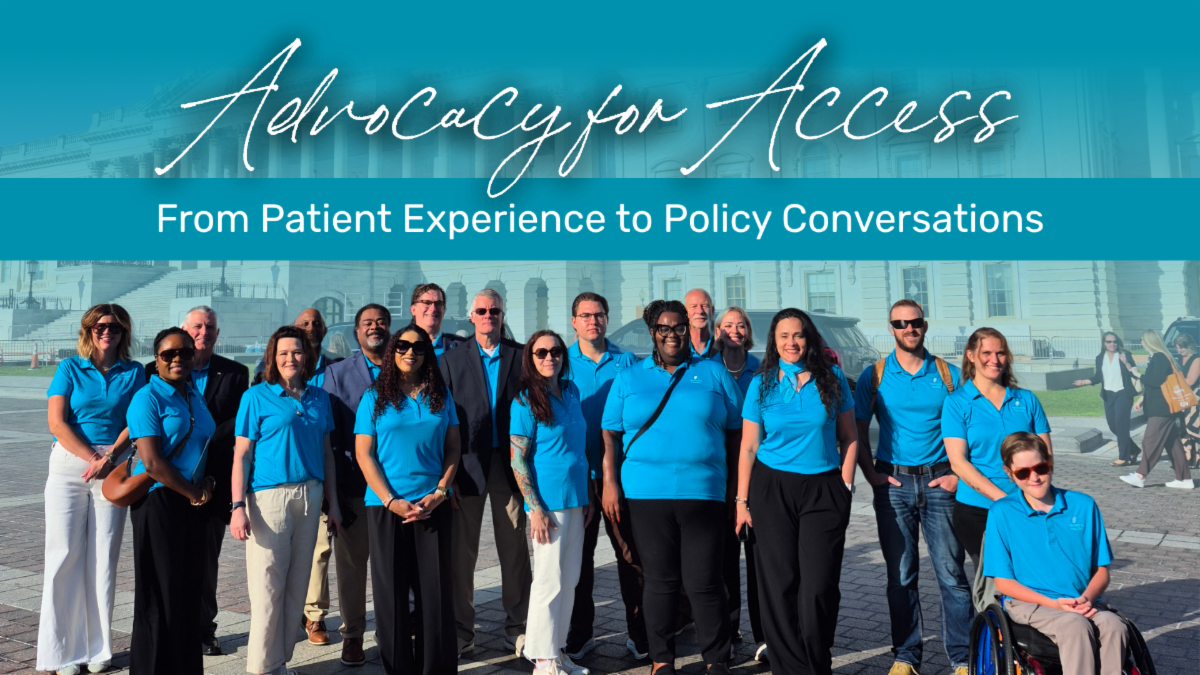
This quarter has reinforced just how important it is for patient experiences to remain part of the conversations shaping healthcare policy. In September, Accessia Health returned to Capitol Hill for our latest Advocacy for Access day, where patient advocates and staff met directly with congressional offices to discuss issues affecting access, affordability, and care for people living with rare and chronic conditions. Their firsthand perspectives brought a human voice to these policy discussions and demonstrated why continued patient engagement matters.
As Congress looks toward the end of the year, several important issues remain in focus. Lawmakers have extended current federal funding through December while work continues on Fiscal Year 2027 appropriations, and discussions surrounding medical research and public health funding continue to evolve. Congress is also considering patient care legislation related to prior authorization, step therapy, copayment assistance, medically tailored meals, and other policies that could affect how individuals access and afford care.
The November elections will bring another period of change to Washington, with the potential to influence year-end legislative priorities and the direction of the next Congress. As new members prepare to take office, there will be continued opportunities to educate policymakers about the lived experiences of people with rare and chronic conditions and the importance of protecting access to coverage, treatment, and patient support programs.
Policy may be shaped in Washington, but its impact is felt in the everyday lives of patients and families across the country. We will continue working to bring those experiences into the conversation, share timely information with our community, and create opportunities for patient voices to be heard when it matters most.
| | |
Every patient deserves timely, affordable access to the care they need. On September 16, Accessia Health returned to Capitol Hill for our latest Advocacy for Access day, meeting with Senators, Representatives, and their staff to discuss healthcare policies that can affect access, affordability, and the patient experience.
Throughout the day, Accessia Health staff and patient advocates brought firsthand experiences into conversations surrounding several legislative priorities. By sharing how delays in care, insurance requirements, treatment costs, and other challenges affect people living with rare and chronic conditions, our advocates helped connect policy discussions to the individuals and families they directly impact.
Our work on Capitol Hill may take place in meeting rooms, but it begins with the voices of the patients and communities we serve. Those experiences help policymakers better understand where challenges exist and why continued conversations about improving access to care matter.
Check out our Advocacy for Access blog to learn more about the legislation we’re championing and why sharing patient voices remains an important part of our advocacy work.
Want to see more from our time on Capitol Hill? Visit our Advocacy & Policy page to explore additional photos from Advocacy for Access and learn more about our ongoing advocacy efforts.
| | The Latest from Capitol Hill | | Key Developments & What's Ahead | | |
Since the end of July, Congress has been mostly away from Capitol Hill with members of the House and Senate focused on campaigning locally ahead of the November elections. Congress is scheduled to be out for the month of October as well, so lawmakers briefly returned to DC in September and easily passed a Continuing Appropriations Resolution (CR) to keep the government open and operating at current funding levels from October 1st to December 11th. The move buys Congress time to work on the annual spending bills post-election and ensures that there is no threat of a government shutdown at the start of the new federal fiscal year.
The White House released a proposed rule to take over all federal grant funding (Congress has exclusive constitutional authority to spend tax dollars), which was met with wide-spread condemnation including from academic health centers and patient advocates. In a stern rebuke, Congress ultimately used the CR to block the proposal from ever moving forward. The White House responded by indicating it was preparing an Executive Order to take over and direct medical research funding at the National Institutes Health, and the Senate responded indicating it would fiercely oppose such efforts, leading the administration to back off the proposals.
The November 3rd elections will have sweeping implications for legislative work this year and moving into the next Congress. Whomever “wins” is likely to put their own stamp on the FY 2027 spending bills and any healthcare legislation that is added to bipartisan spending packages. Moreover, the departing members list is already extensive before the first vote is even cast, meaning that when the new Congress convenes in January, there will be dozens of new members to educate on rare and chronic disease lived-experience issues and the importance of coverage, access, and safety net programs.
| | |
FY 2027 House Appropriations Bills
Congress is not expected to finalize the FY 2027 appropriations bills until well after the November elections and the forthcoming Senate bills should call for increases to medical research, public health, and patient care programs. Meanwhile, the White House’s feud with Congress over control of federal spending continues to simmer. Recently, the administration sent a notice to Congress that it was “rescinding” roughly $800 million in appropriated federal funding for various HHS programs and continued to “impound” funding for the Agency for Healthcare Research and Quality. Bipartisan members of Congress referred to the maneuver as “illegal” but a legislative response is unclear.
| | Patient Care Issues: What To Know | | | | -
Congress continued marking up legislation to make sure several patient care bills were ready for consideration at the end of the year. Most recently, the House Ways and Means Committee held a markup and unanimously reported out the Medically Tailored Home-Delivered Meals Program Pilot Act (H.R. 5439). This legislation seeks to allow patients to receive medical meals for diet and metabolic-meditated diseases at home using their Medicare Part A benefits.
| | |
- The Senate Health, Education, Labor, and Pensions (HELP) Committee held a series of hearings with various nominees to lead at the Department of Health and Human Services (HHS). The recent hearings included Dr. Hiedi Overton to be the next Commissioner of the Food and Drug Administration. Recently, the Senate confirmed a new Director of the Centers for Disease Control and Prevention, Dr. Erica Schwartz, who is now working to restaff and refocus the public health agency.
-
Numerous legislative proposals have emerged to reform the 340B Drug Discount Program. The American Hospital Association has prepared a helpful resource to compare the various bills (though unlikely something will pass this year).
| | | - The Administration announced they were cancelling marketplace exchange health plans for 760,000 enrollees. The type of alleged fraud is unclear from any current information and the move comes as the Administration is implementing deep cuts to Medicaid benefits and new standards for medical frailty and work requirements. Patients and doctor groups continue to push back on proposed standards for individuals to prove their diagnosis renders them incapable of work citing long-standing medical privacy standards.
| | | | - Patient care legislation on prior authorization reform, addressing step therapy, and protecting copayment assistance continue to gain support in Congress as a result of patient outreach and education. Advocates remain hopeful that commonsense patient care legislation will be included in any comprehensive end-of-the-year spending package.
| | | WATCH: Health Policy & Patient Assistance | | |
In case you missed it, last week's Health Policy & The Impact on Patient Assistance webinar is now available to watch on our YouTube and website!
Hear from Accessia Health President Tiara Green and Corey Ford, Principal at Nuvera Consulting, as they discuss the changing health policy landscape, what it could mean for patient assistance, and what patients and advocates should know as they prepare for 2027 coverage.
| | Visit our website to watch our other webinars on advocacy, insurance, health education, and more. | | Accessia Health, a national charitable patient assistance organization, is dedicated to eliminating healthcare barriers for people with rare or chronic health conditions. Comprehensive services include personalized case management, financial assistance, education, and legal aid support. Our flexible funding model goes beyond copays, allowing individuals to pay for other essential medical expenses including insurance premiums, screening and diagnostics, therapy services, travel costs and more. Accessia Health works to ensure that every individual has access to the care they need to lead a healthier life. | | |
Accessia Health exists through generous donations like yours.
Please consider making a gift to provide health and hope to patients nationwide.
| | | | |