Rail & Labor News from RWU
| |
Weekly Digest Number 26 - June 25th, 2024 | |
Welcome to the RWU Rail & Labor News! This news bulletin is produced and emailed out each Tuesday morning. We hope you find each week's news and information useful. If so, please share with co-workers, friends, and colleagues. If you like, you can sign them up to get all the news from RWU HERE. Or forward them the link. Got a hot tip? Please forward the article and a link to raillabornews@gmail.com. Note: If you read over this news bulletin each week, you will be sure to never miss the important news of what is going on in the railroad world from a worker's perspective! | |
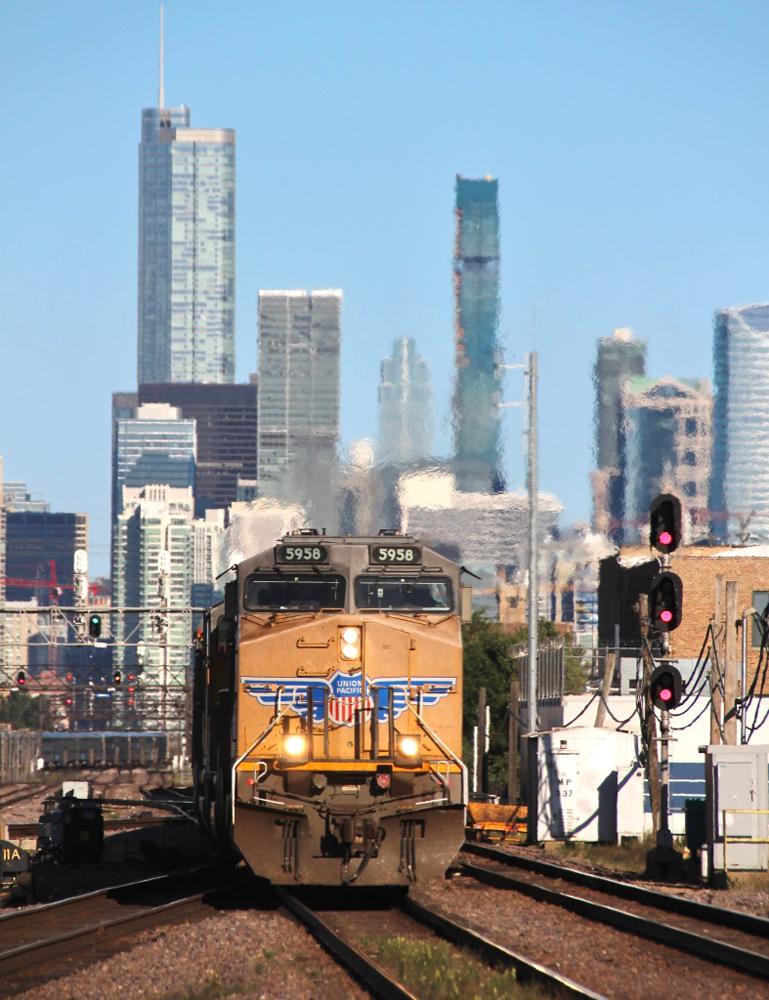
Editor's Note: Once again, this study is making the rounds. We would add that not only is the chance of derailment greater, but the outcome of such a derailment is likely to be more severe. While the rail industry may dispute these findings, it has no figures of its own to contrast with them. | |
|
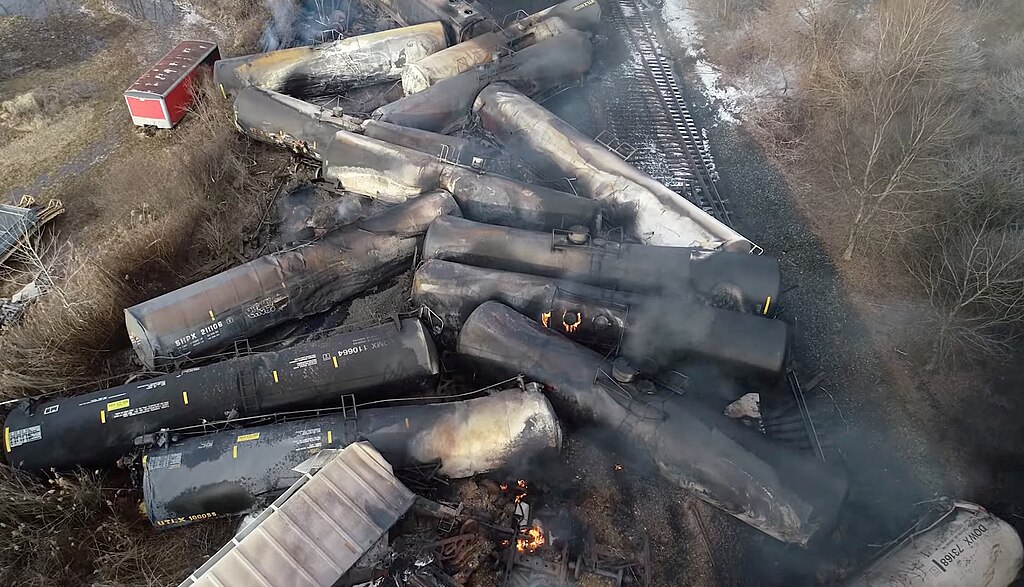
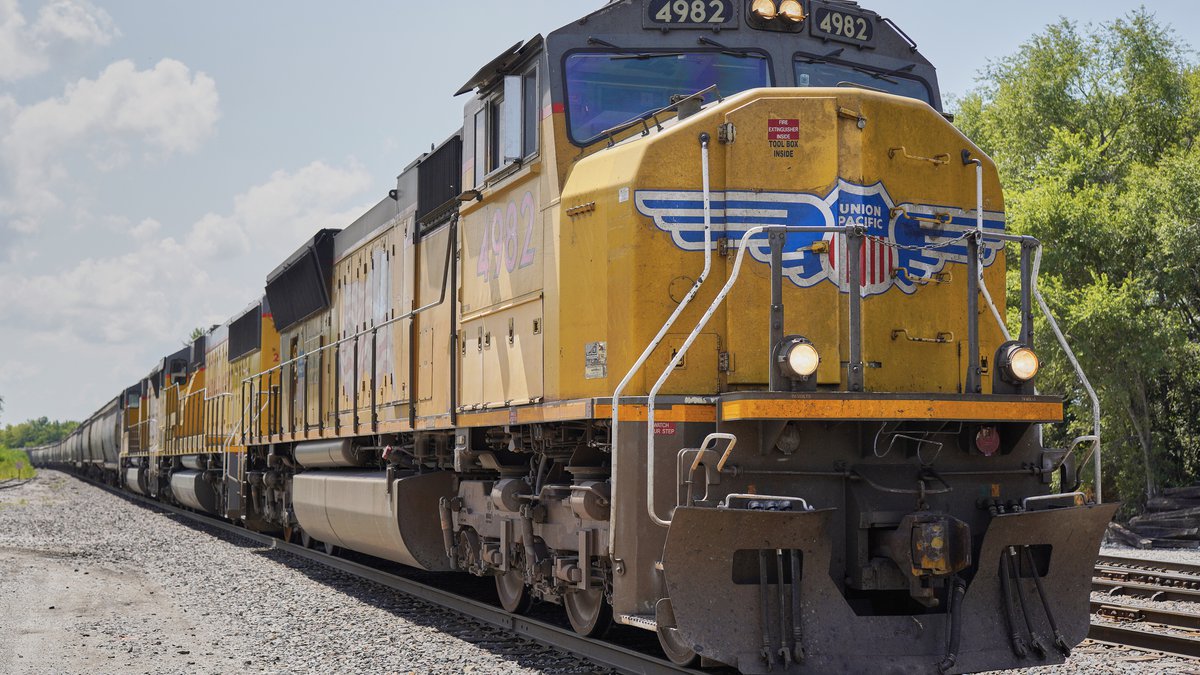
The U.S. has no federal limit on freight train length, leaving the cost-conscious rail industry free to experiment with giants like the 3.5-mile, nine-locomotive behemoth that chugged from Texas to California in a 2010 test run. But the question of capping length snapped sharply into focus last year with the fiery crash of a 150-car, 1.75-mile train carrying chemical cargo through East Palestine, Ohio. Can a train be too long? There are almost no data on any possible dangers posed by multiple-mile freight trains. Now, however, a new study published in Risk Analysis shows that the odds of a train jumping the tracks increases as the vehicle gets longer ... A 200-car train would have a 24 percent increase compared with four 50-car trains, according to the study team’s calculations.
| |
Editor's Note: Like their counterparts in the U.S., Canadian rail workers are hamstrung by a myriad of legal obstacles standing in their way when they wish to strike. But whereas the U/S government blocked the first potential national rail strike in 30 years in the Fall of 2022, Canadian rails have been able to strike a number of times in the last decade. U.S. railroaders have a great opportunity to assist their Canadian brothers and sisters if this round comes to a strike in the coming weeks. | |
|
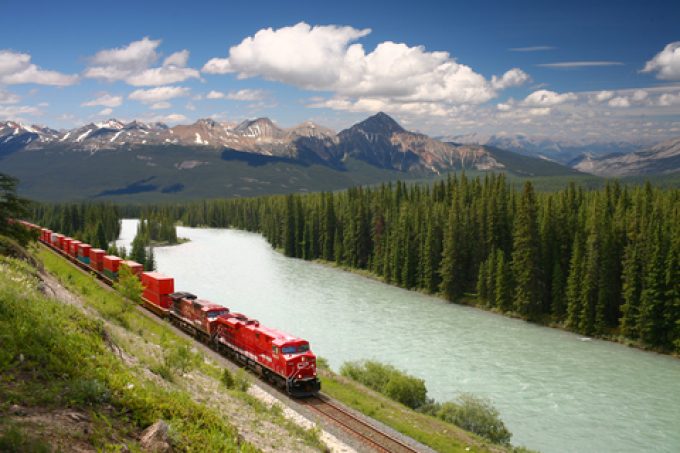
Final submissions to the Canada Industrial Relations Board (CIRB) reveal neither rail companies nor union believe “essential services” will be disrupted by a strike, which could pave the way for action.
On 14 June, the CIRB took final submissions from Canadian National (CN), Canadian Pacific Kansas City (CPKC), the Teamsters Canada Rail Conference (TCRC) and other affected organisations, to make a final decision on whether a strike should be allowed to go ahead.
| |
Editor's Note: This verdict is significant. After a century and a half of braking treaties, agreements, contracts and promises with native Americans, a Class One railroad gets its wings clipped. Hopefully this verdict will inspire others - both native and non-native communities - to fight back against these Robber Barons. | |
|
SEATTLE (AP) — BNSF Railway must pay nearly $400 million to a Native American tribe in Washington state, a federal judge ordered Monday after finding that the company intentionally trespassed when it repeatedly ran 100-car trains carrying crude oil across the tribe's reservation. U.S. District Judge Robert Lasnik initially ruled last year that the railway deliberately violated the terms of a 1991 easement with the Swinomish Tribe north of Seattle that allows trains to carry no more than 25 cars per day. The judge held a trial earlier this month to determine how much in profits BNSF made through trespassing from 2012 to 2021 and how much it should be required to disgorge.
|
|
Editor's Note: As reported in last week's Issue #25 of The Rail & Labor News, Baltimore residents are on the move, fighting back against years of neighborhood degradation by rail giant CSX. | |
|
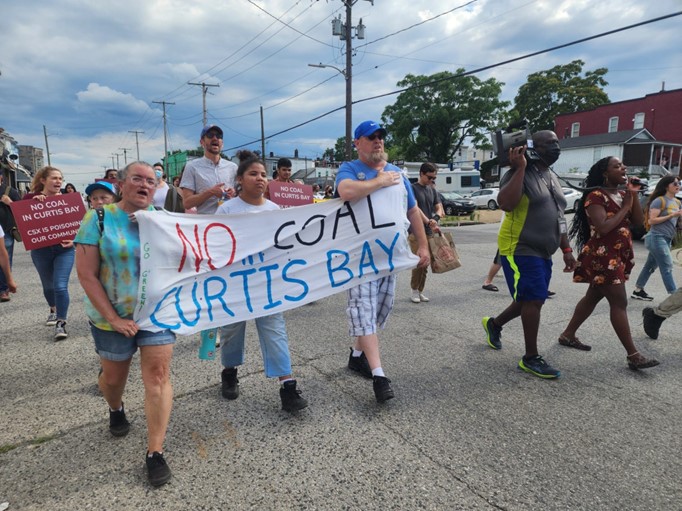
On June 10, in the working-class community of Curtis Bay in South Baltimore, over 50 residents, activists, and supporters from around the city marched through the streets of Curtis Bay to hold CSX Transportation accountable for polluting their community, homes, and bodies with toxic coal dust. Even after an expansive scientific study co-sponsored by the Community of Curtis Bay Association, the South Baltimore Community Land Trust, Johns Hopkins University, the University of Maryland, and the Maryland Department of Environment confirmed the presence of coal dust in the air of the South Baltimore community of Curtis Bay, CSX has denied culpability and called the study “materially flawed.”
| |
Editor's Note: Our apologies for the late notice. For those interested, click on the link to view the session live on Tuesday, June 25th, the date this news summary is published. | |
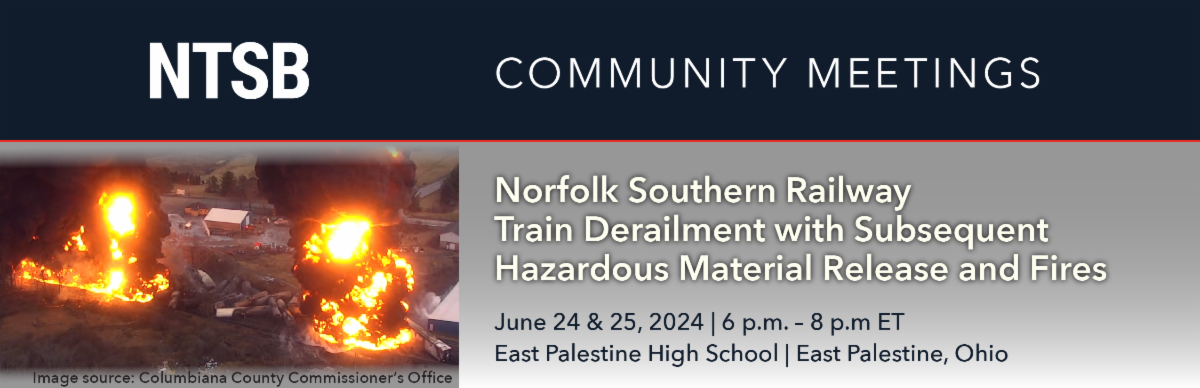
The board will hold community meetings June 24 and June 25 at East Palestine High School, with each beginning at 6 p.m. Both of those meetings will be in-person events only, with no online streaming planned. In between, on June 25 beginning at 9:30 a.m., the board will hold its meeting on the East Palestine investigation report. That meeting will be live streamed on the NTSB’s YouTube channel. During that meeting, the board will vote on the final findings, probable cause, and recommendations resulting from its investigation, and on any changes to the draft version of the final report. | |
Editor's Note: It is hard to believe that prior to this rule, first responders did not have proper access to such essential information. Hopefully now when such wrecks occur, first responders are better equipped to deal with the aftermath with the sound information necessary at their disposal. | |
|
WASHINGTON — The federal government has issued its final rule requiring railroads to provide real-time electronic information on hazardous material to first responders in the event of a derailment or other incident. The rule from the Department of Transportation’s Pipeline and Hazardous Materials Safety Administration is one of many regulatory actions spurred by last year’s derailment and hazardous chemical release in East Palestine, Ohio. It requires such information as the quantity of the material; its position on the train; and a designed emergency contact for the railroad to be provided through a 911 call center or an emergency responder app such as the AskRail Mobile App as soon as the railroad becomes aware of an incident. Crews must also carry a hard copy of the information.
| |
Editor's Note: The fallout from this disaster keeps coming. To think we allow for-profit corporations controlled by irresponsible hedge funds to move the nation's freight. This disaster was the result of PSR, which is the result of Wall Street control of a vital industry. Perhaps it is time for public ownership! See the website HERE. | |
|
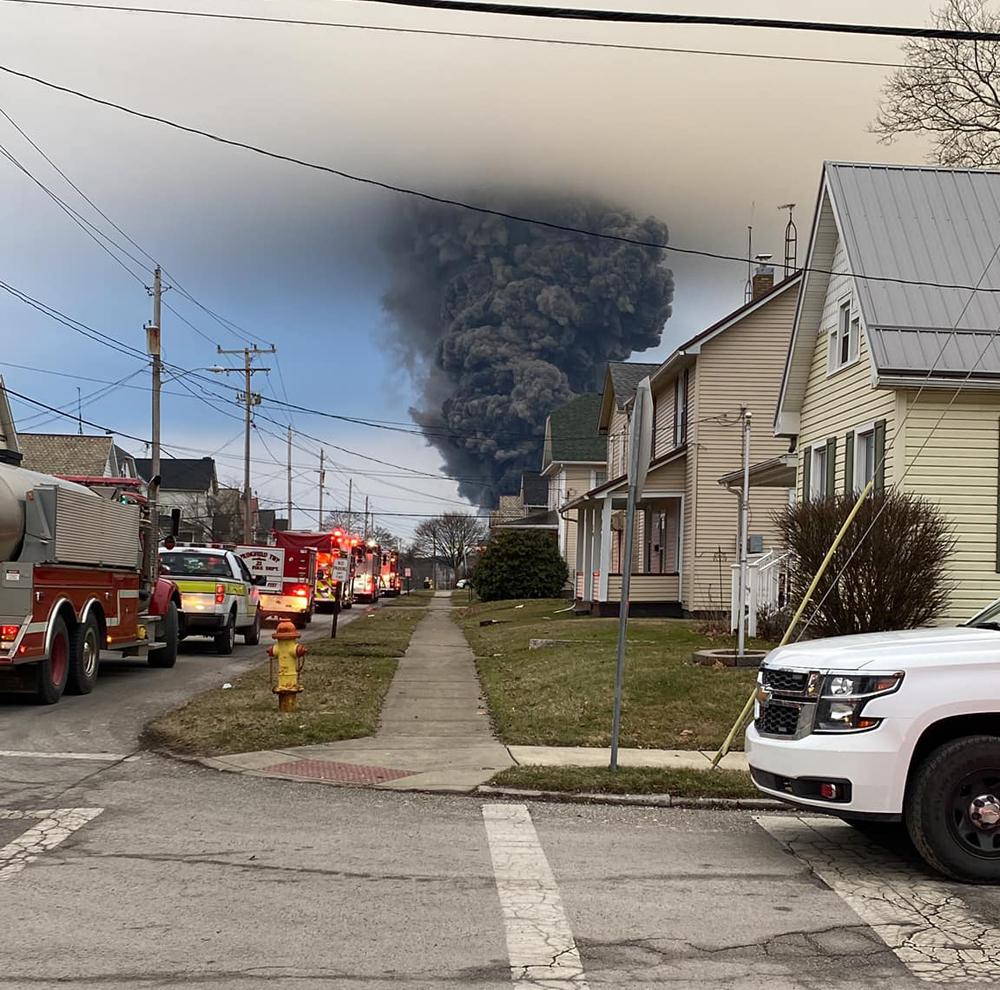
Toxic chemicals released during fires following the Norfolk Southern train derailment in Ohio last year spread to 16 states and likely Canada, according to a study released Wednesday.
The pollution, some of which came from the burning of vinyl chloride, a carcinogen, spread over 540,000 square miles, showing clearly that "the impacts of the fire were larger in scale and scope than the initial predictions," the authors of the study, published in Environmental Research Letters, found.
Lead author David Gay, coordinator of the National Atmospheric Deposition Program, said that he was very surprised by the way the chemicals had spread. "I didn't expect to see an impact this far out," he told The Washington Post.
| |
Editor's Note: Just the latest example of how climate change is affecting the rail infrastructure. However, even without climate change, in the coming years, tens of billions in infrastructure investment is going to be needed to replace thousands of rail bridges like this one in daily mainline service, many of them well over 100 years old and in need of repair or replacement. | |
|
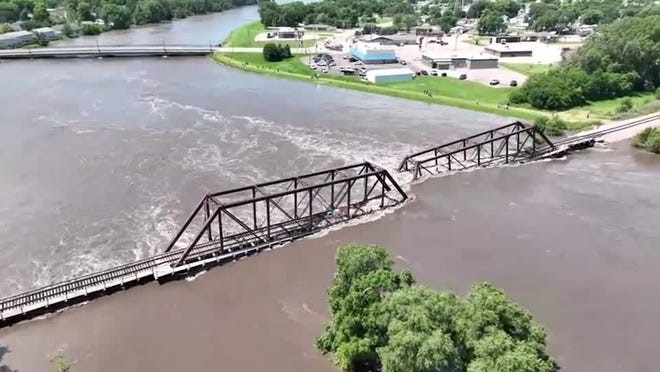
NORTH SIOUX CITY, S.D. — A railroad bridge collapsed during flooding in the Midwestern U.S. that has led to water rescues, evacuations and at least one death and has brought additional misery during a vast and stubborn heat wave. The bridge connecting North Sioux City, South Dakota, with Sioux City, Iowa, collapsed into the Big Sioux River late Sunday, an emergency manager said. Images from local media showed a large span of the steel bridge partially underwater as floodwaters rushed over it.
| |
Editor's Note: The history of railroad police officers is complex. In recent years - as part of cost saving measures due to PSR - many railroads, especially Union Pacific, have shed themselves of much of their police force, often then expecting the state and local police to protect their property. Here is one recent development. | |
|
The rail provision allows railroads to employ police officers who are licensed by the Minnesota Peace Officer Standards and Training (POST) Board to help supplement local law enforcement agencies’ efforts to protect railroad property, employees and passengers. Any railroad that intends to employ peace officers must first appoint a chief law enforcement officer, who must also be a peace officer licensed by the POST Board.
| |
Editor's Note: Ironically, while Class One carriers shutter intermodal facilities in locations around the country, they open new ones elsewhere. While every rail worker should applaud and support the expansion of rail traffic - freight and passenger - trackside communities and their health and vitality must be considered and respected. | |
|
For the past year, the village of Minooka has pressed Canadian National Railway for one big change to the 900-acre intermodal and warehouse complex it’s planning on the edge of town. Instead of sending 900,000 diesel trucks a year north through Minooka’s main commercial district to access Interstate 80, the village wants the railroad to send them to a freeway entrance 5½ miles to the southwest. The state of Illinois built an I-80 entrance ramp there in 2012 in part to keep heavy trucks away from Minooka’s commercial and residential areas.
| |
Editor's Note: Make no mistake, NS is playing "nice guy" now after running roughshod over workers, communities, passengers and shippers for years. The pressure that has been applied - and the negative publicity generated - by the citizens of East Palestine, the rail unions, and groups like RWU has forced NS to take a more humane stand. A shame it took such a calamity - one that in the words of the NTSB Chair was preventable and never should have happened - for the railroad to move in a safer direction. | |
|
ATLANTA — With the National Transportation Safety Board’s final report on the East Palestine, Ohio, hazardous materials wreck due out next week, Norfolk Southern is touting the safety improvements it has made so far this year.
The railroad released a midyear safety report on Monday, which outlines strides the railroad has made this year as well as since the disastrous Feb. 3, 2023, wreck near the Ohio-Pennsylvania border.
CEO Alan Shaw has pledged to make NS the “gold standard” in safety. “We have maintained our positive safety momentum into 2024 with year-to-date improvement across all of our core safety metrics compared to 2023 full-year performance,” Shaw wrote in the midyear report.
| |
Editor's Note: The leader of the largest rail union in the UK inspires and invigorates not just British railway workers, but the working class in the UK as a whole. Meanwhile on this side of the Atlantic, rail union leaders are unknowns at best, and at worst, fight with one another over crumbs, in a demoralizing display of fratricidal nonsense that supposedly passes for trade unionism. | |
|
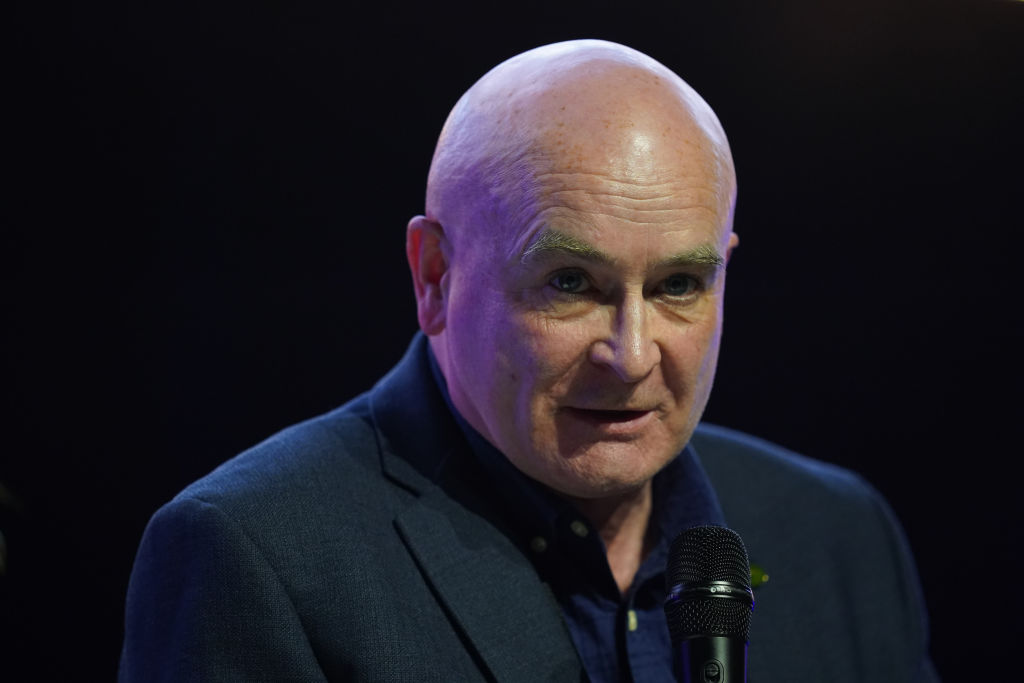
British rail workers’ leader Mick Lynch came to prominence as part of the 2022 strike wave. Lynch’s popularity shows the appetite for unapologetic class politics, although trade unions still face major obstacles to converting that mood into power. "I'm a working-class bloke leading a trade union dispute about jobs, pay and conditions of service.” These were the words that Mick Lynch, the general secretary of the National Union of Rail, Maritime and Transport Workers (RMT), used to rebuke Good Morning Britain television show presenter Richard Madeley in June 2022.
| |
NEWS FROM AROUND THE LABOR MOVEMENT | |
Editor's Note: Some of the biggest union successes in recent years have comes in so-called "right-to-work" states. We can do it! | |
Virginia is seeing a significant and remarkable expansion of its small but wily labor movement. In a labor movement urgently in need of new union organizing experimentation it would certainly be of value to consider the situation in Virginia.
| |
|
Nobody would pick the U.S. state of Virginia to be a trade union organizing hotspot. But that’s what increasingly is happening, despite the fact that many of the unions and certainly the national AFL-CIO are oblivious to it. Richmond the state capital was once the capital of the Confederacy, and Virginia is in many ways the ideological and historical home of U.S. segregationist and anti-union bigotry.
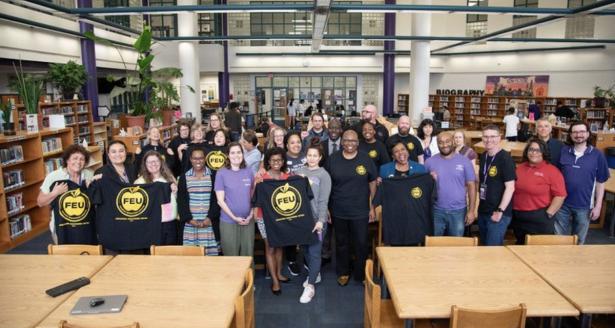
Virginia is seeing a significant and remarkable expansion of its small but wily labor movement. In a labor movement urgently in need of new union organizing experimentation it would certainly be of value to consider the situation in Virginia as one guide to expanded organizing work across the South. “Organize the South!” proponents would do well to take detailed notice of developments in Virginia.
| |
Editor's Note: Our friends at Truckers Movement for Justice (TMJ) is working with a group of like-minded Mexican truckers to win better conditions for truck drivers on both sides of the border. | |
|
(Permian Basin, Texas Region) Truck Drivers in the Permian Basin have been organizing with Truckers Movement for Justice/Tamexun, a grass roots populist labor organization, for a little more than a year to fight back against working conditions, which include black-list and wide spread wage theft, as well as abuse of immigrant drivers, that remind us of sharecropping of olden days. Truckers have had enough!!!
| |
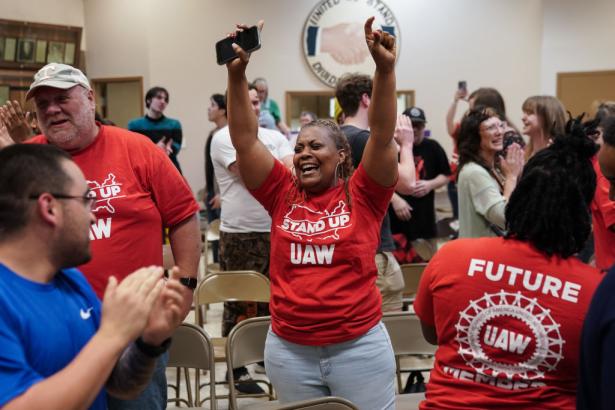
After a victory in Tennessee and a loss in Alabama, the UAW is pressing onward in its fight to organize the notoriously anti-union South. The fate of Southern workers — and all workers — depends on the movement’s willingness to think big.
| |
|
In late April, Volkswagen workers in Chattanooga, Tennessee, delivered a staggering defeat to their employer. At the same time, they struck a blow to the racist political establishment that has long sought, with much success, to make the US South an impenetrable fortress girded by anti-labor laws. The third vote in ten years at the facility was won in a landslide, with 73 percent of the workers voting to join the United Auto Workers (UAW) with 84 percent turnout.
| |
WEEKLY DERAILMENT DEPARTMENT | | | | |