Fundraising Talks
News and updates from the USM Office of
Advancement Research

Upcoming Events 


Turning Wealth Data into a Future-Focused Fundraising Strategy

When: May 20, 2026


Advancement Services in a New Regulatory Era: Public Law 119-21, Corporate Transparency Act & Other Recent Developments

When: May 20, 2026


 The Great Wealth Transfer: How to Build a Multi-Generational Donor Base That Lasts

When: May 13, 2026


Making it in Higher Ed: A Real Talk Career Conversation

When: May 26, 2026

Tell Me More...

Looking for funding opportunities? We've identified a few funds that might be useful to you. Visit the links below to learn more about the requirements and deadlines for these opportunities. 


W. K. Kellogg Foundation Deadline: rolling


NSF Grant: TechAccess: AI-Ready America 
Deadline
: LOI – June 16, 2026, Full Proposal: July 16, 2026

Grant guidelines


Sloan Foundation 

Exemplary Pathways to STEM Graduate Education 
Deadline:
June 1, 2026


Abell Foundation 

Deadline: July 15, 2026

Contact Us


Sapna Varghese

Director of Advancement Research

301.445.2709


Lois Baker

Prospect Researcher


Bethany Jones

Office Clerk

301.445.1950

Letter from the Director

Welcome to the May 2026 edition of Fundraising Talks.

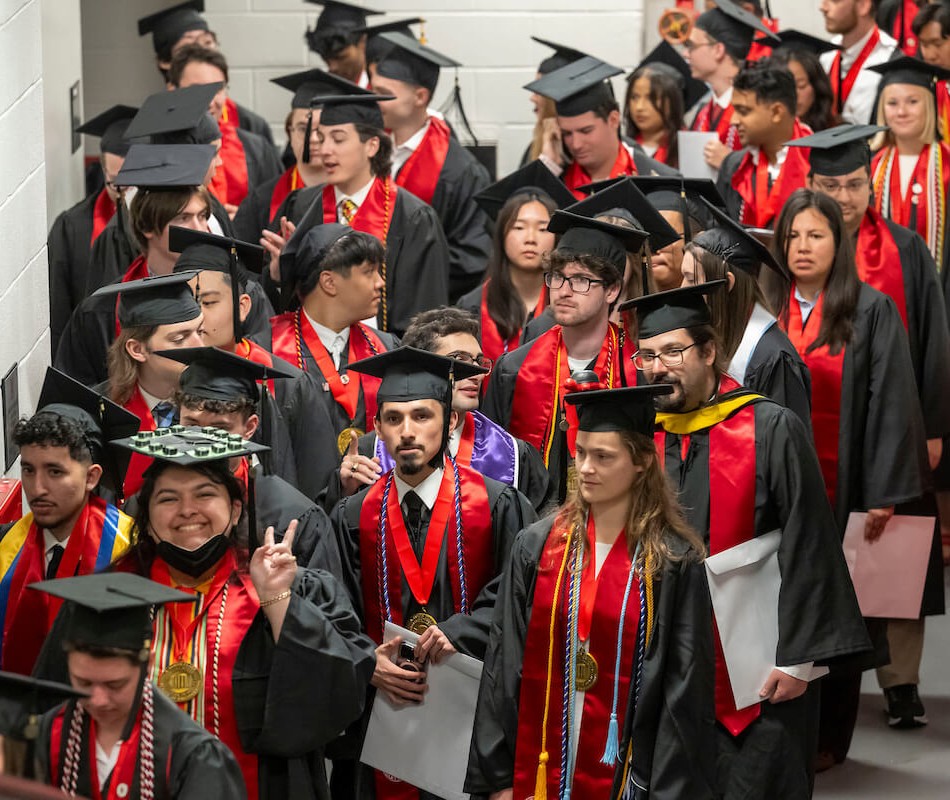
During May, many of our colleges and universities celebrate new graduates through their spring commencement ceremonies. Commencement marks an important milestone for graduates as they reflect on the successful completion of their education and begin a new chapter filled with opportunities and challenges. It is also a pivotal moment for institutions to build lasting relationships with new alumni and their families. Engaging graduates and parents in meaningful ways at this stage helps establish strong connections that can support enduring partnerships—partnerships that play a vital role in shaping the future of higher education.


Latest data from the Council for Advancement and Support of Education’s (CASE) Voluntary Support of Education (VSE) survey shows that philanthropic gifts to U.S. colleges and universities increased 4 percent over the prior year. The survey, conducted with 670 U.S. higher education institutions, analyzed charitable gifts and grants from private sources for FY 2025. In FY 2025, higher education institutions received an estimated total of $78.8 billion in private support. This growth highlights the continued willingness of donors to invest in education and make a meaningful impact.


Key findings from the VSE survey include:


  • Funds received and commitments increased, signaling continued donor confidence. Monetary gifts received by institutions rose by approximately 3.9 percent, while newly committed funds increased by 6.6 percent, reflecting steady donor engagement.
  • Short-term strength with longer-term questions. Increases in new funds committed were reported by 53.1 percent of private institutions and 57.6 percent of public institutions.
  • Individual giving to operating funds increased in FY 2025, while giving to endowment and to property, buildings, and equipment declined.
  • Giving by both alumni and non-alumni individuals increased, while foundation giving declined.
  • Volunteer and board member contributions may be underrepresented, as reflected in CASE’s collection of soft-credit data tied to giving from other sources.
  • “Donors down, dollars up” remained the trend in FY 2025, with institutions receiving larger gifts from fewer donors.
  • Contribution sources varied by gift size. Foundations were the primary source of gifts of $250,000 and above; alumni were key contributors for gifts ranging from $500 to $249,999; and non-alumni individuals predominately contributed gifts between $1 and $499.
  • Securities donations continued to grow, reflecting the impact of strong stock market performance.
  • Bequest intentions increased, and institutions saw growth in realized bequests.


The VSE survey findings affirm that donors continue to value and support higher education, even amid economic uncertainty. At the same time, the data reveals opportunities for continued growth. With new tax laws taking effect in 2026, institutions may be able to further encourage smaller individual donors—particularly non-itemizers—to give. Updated charitable deduction limits of $1,000 for individuals and $2,000 for those married and filing jointly may provide additional incentives to increase participation among these donors. Data-driven fundraising will remain essential, and institutions should continue to improve the quality and use of available data. Doing so strengthens advancement teams’ ability to leverage AI and predictive modeling for more effective donor prospecting. Better use of data is key to identifying and cultivating donors whose interests align with institutional priorities.


As always, please feel free to reach out with questions, comments, or requests for assistance with fundraising research.


Best regards,


Sapna and the USM Advancement Research Team


The Latest in Naming Rights

Naming opportunities continue to be a critical component of fundraising in higher education, but the landscape has grown more complex as donor expectations evolve and campaign goals increase. In this article from CASE, Terry Burton, president of Dig In Research and an expert on naming rights, says that institutions are seeing higher asking prices, more limited‑term namings, and that there is increased donor interest in endowments rather than brick‑and‑mortar projects. Donors today are savvier, often seeking multiple or layered naming recognitions and placing greater value on strong stewardship and community impact. Burton emphasizes the importance of institutions developing clear naming policies, gathering external market data, and taking time to align opportunities with both institutional priorities and donor interests. He advises advancement teams to slow down negotiations, avoid rushed decisions, and maintain clear governance processes, as naming gifts carry long‑term reputational implications. Overall, thoughtful planning, transparency, and authentic relationships are key to successful and sustainable naming partnerships.

Data Hygiene: How to Give your Nonprofit’s CRM a Clean Bill of Health

Strong fundraising depends on strong data, yet many organizations are held back by donor records that are outdated, incomplete, or inconsistent. Rather than attempting an overwhelming database overhaul all at once, institutions can make meaningful progress by starting with targeted audits that identify missing contact details, demographic gaps, and relationship information. Addressing deeper issues such as duplicate records, inconsistent titles, unlinked family or corporate connections, and unclear communication preferences can further strengthen the foundation for donor engagement. Establishing and consistently applying clear data entry standards is essential to keeping records accurate over time. Tools like data appends can help fill in missing information and flag deceased or unreachable constituents, though human review is necessary. With cleaner data in place, advancement teams are better equipped to design targeted outreach, which leads to improved stewardship, and more effective fundraising strategies.

How do Fundraisers See Major Donors Evolving?

Major donors are becoming more strategic, hands‑on, and outcomes‑focused, according to Giving USA’s Impact Giving Insights, which surveyed fundraisers on shifts in the major donor landscape. Fundraisers report that many donors now want to take initiative in their giving, seeking direct involvement and tangible results rather than just making unrestricted contributions. This desire for active engagement often shows up through restricted gifts tied to specific outcomes, along with expectations for frequent, data‑driven reporting. Increasingly, major donors are loyal to the causes they care about (rather than individual organizations) and are willing to support nonprofits they believe are producing measurable impact. To adapt, institutions are emphasizing deeper in‑person relationship building, as well as clearer and more concise impact communications. Additionally, institutions are staying open to donor ideas while staying aligned with institutional mission and values.

Why Authentic Connection Is the Key to Acquiring the Right Donors

Nonprofits are facing declines in donor participation, with recent data showing that the donor base fell 3.6 percent in 2025 and that most first‑time donors never give a second time. Because retaining donors is far more cost‑effective than acquiring new ones, fundraisers are focused on identifying and cultivating donors who have strong long‑term potential. Fundraising experts emphasize that mission alignment and donor affinity are critical to attracting high‑quality supporters, particularly for major gifts. According to NonProfitPRO, intentional communication, meaningful experiences, and clear demonstrations of impact help deepen donor relationships and increase lifetime value.Technology and data analytics play an important role in prospecting and efficiency, but as we know, human connection remains essential to successful donor engagement. Click here to read more about how nonprofits should balance broad donor acquisition with thoughtful cultivation of aligned supporters to build a sustainable and resilient donor base for the future.

Data Shows Gen Z Is In The Beginning Stages Of Philanthropy

Recent research from GoFundMe and GivingTuesday shows that Gen Z adults are participating in philanthropy at higher rates than older generations. Gen Z's engagement is driven primarily by personal relationships and social connections, with giving often taking visible, digital forms such as sharing campaigns, peer‑to‑peer fundraising, and advocacy. For Gen Z, generosity frequently starts with participation rather than financial capacity, making community fundraising an entry point into broader charitable involvement. The data also reveals that this generation gives in more ways and more frequently, despite lower average incomes. Nonprofits should rethink digital platforms as spaces for active engagement and not just transaction processing. Click here to learn more about meeting Gen Z where they already engage.