The Muslim Brotherhood Still Isn’t a Terrorist Organization
Naming it one will only bolster repression in the Middle East and the United States.
By Marc Lynch,
Professor of political science and international affairs at George Washington University and director of the Project on Middle East Political Science.
December 10, 2025
On Nov. 24, the Trump administration issued an executive order beginning the process of designating certain branches of the Muslim Brotherhood as foreign terrorist organizations. The executive order offered scant evidence or rationale for the designation. Taken together, the basis amounted to some incendiary rhetoric by Jordanian and Egyptian Brotherhood leaders after the Oct. 7, 2023, attacks and the minor role allegedly played by Lebanon’s Brotherhood branch in missile attacks at the same time. As the administration’s paltry presentation suggests, there simply isn’t any good, new evidence that the Muslim Brotherhood is a terrorist organization.
The push to get the United States to designate the Muslim Brotherhood as a terrorist organization is a bad idea with a long history dating back to at least 9/11. It has been repeatedly pushed by right-wing groups in the United States and by anti-brotherhood allies in the Middle East, including the United Arab Emirates (UAE), Egypt, and Israel. And it has been repeatedly rejected. As former President George W. Bush among others understood, this designation would not only be inaccurate, it would undermine human rights and democracy across the Middle East.
The Trump administration, however, doesn’t care about either truth or democracy and has purged many of the professionals in the civil service who might offer informed analysis. As a result, it is now preparing to take this step at a time when it will be both ever more irrelevant in the region and ever more damaging at home.
In the Middle East, America’s allies have spent more than a decade unleashing the full fury of unrestrained security apparatuses on the Brotherhood (and all other civil society or oppositional forces). As a result, the Muslim Brotherhood has been largely decimated as a popular force, and key regional backers such as Qatar and Turkey no longer care as much to defend it. In America, however, there is every reason to fear that the Trump administration will use the Muslim Brotherhood’s terrorist designation as a tool to target its own political enemies. The result will be to intensify an already dangerous crackdown on migrants, left-leaning civil society, and domestic political opposition.
The Muslim Brotherhood has been the object of intense conspiracy theories since 9/11, particularly among the far-right constituencies that dominate the current Trump administration. As a result, it’s important to separate out the myths from the reality.
There is no singular Global Muslim Brotherhood—something that even U.S. President Donald Trump’s executive order acknowledges by specifying individual branches of the Brotherhood rather than a more global universal designation. The Muslim Brotherhood was founded in Egypt in 1928 and spread quickly across the region and globally. Each national branch shared overarching organizational and ideological commitments, but each evolved primarily in response to local conditions, and none took its orders from a central office in Cairo, Europe, or anywhere else. They had family resemblances rather than a central command and control. Key Islamist organizations such as Tunisia’s Ennahda denied that they were part of the Muslim Brotherhood even as they pursued similar organizational and ideological strategies.
Branches of the Brotherhood in different countries shared ideological references such as Hassan al-Banna and Sayyid Qutb and followed a common set of contemporary religious authorities such as Yusuf al-Qaradawi. But each country’s branch evolved its own political leaders and religious guides. Across the region, Brotherhood branches almost always pushed for more religious societies and conservative social policies. However, they generally didn’t wear their theology especially heavily. In contrast with the intensive Quranic commentary favored by Salafi movements or Islamic State circles, Brotherhood figures tended to keep their theology simple and focus on the practicalities of political power and social organization.
As a result, during the decades prior to 2011, the Brotherhood resembled the evangelical American Christian right more than it did al Qaeda. It was a vast, sprawling movement oriented toward building a more religious society through proselytizing, providing social services, and engaging in bare-knuckled political competition. Most Brotherhood organizations maintained a network of social services and charities and operated openly even in countries where they were technically illegal. The Brotherhood’s cadres tended to be middle-class urban professionals, not the disenfranchised and impoverished youth who gravitated toward more violent jihadist or more doctrinaire Salafi organizations. Brotherhood organizations consistently participated in elections when given the chance—and consistently won.
When this happened, the Brotherhood faced accusations that its commitment to democracy was purely instrumental: “one man, one vote, one time.” Whether fair or not, the group was never given a chance to refute this accusation. In Egypt, the Muslim Brotherhood won the post-2011 elections only to be overthrown by Gen. Abdel Fattah al-Sisi’s 2013 military coup. In Tunisia, Ennahda won post-2011 elections only to be criminalized a decade later by the populist secular President Kais Saied.
This is not to say that the Muslim Brotherhood has never been implicated in violence. While official Brotherhood rhetoric rejects the use of violence and has vocally opposed violent jihadist rivals like al Qaeda, its organizations have indeed engaged in violence, particularly in the face of violent state repression. Egypt’s Muslim Brotherhood split in the 1960s in part over the question of violence and only reemerged on the scene in the 1970s after renouncing its extremist wing. The Syrian Muslim Brotherhood, for its part, adopted far more extreme rhetoric and violent practices in the 1970s in the face of the Assad regime’s repression. Later Syrian Muslim brothers, mostly in exile, played a key role facilitating external intervention into the post-2011 civil war. Hamas emerged out of a Muslim Brotherhood-style organization in Gaza in the context of the 1987 Palestinian Intifada, and pioneered suicide bombings against Israelis during the Oslo years. And Iraqi Muslim Brotherhood organizations played a key role in the Iraqi Sunni insurgency against American occupation after 2003.
The Muslim Brotherhood’s complex nature has been reflected in the evolving U.S. political debate. In the 1990s and 2000s, critics focused on the violence of Hamas and the Iraqi insurgency, as well as the Muslim Brotherhood origins of key al Qaeda figures such as Abdullah Azzam and Ayman al-Zawahiri. But others saw the Brotherhood more as a firewall against radicalization, using its tenacious and robust organization and ideological indoctrination to recruit and retain potential radicals.
The Bush administration’s approach to the Brotherhood exemplifies these contradictions. Many hawkish ideologues at the time advocated for targeting the Brotherhood, claiming it was moderate-looking but a dangerous stepping stone on the path to radicalization. Others, including key neoconservatives, preferred including the Brotherhood within democratic openings in hopes of moderating the organization and entrenching democratic practices across Arab societies. That’s why key administration members supported the Muslim Brotherhood’s participation in the 2005 Egyptian elections and Hamas’s inclusion in the 2006 Palestinian elections. In Iraq, the counterinsurgency brain trust around Gen. David Petraeus came to recognize the value of fine-grained distinctions among different types of Islamists. This led to the 2006-08 “Sunni Awakening” that allied the United States with nationalist Islamist insurgents often rooted in the Brotherhood against al Qaeda and the emergent Islamic State.
After 2011, both the debate and the realities changed rapidly. The Brotherhood emerged as a powerful force during the Arab uprisings that swept the region in 2011 and toppled multiple regimes. Deeply frightened regimes across the region singled out the Brotherhood as the greatest threat to their survival—not because they were terrorists, but because they were a popular and effective social movement. They fumed at the Obama administration’s willingness to give the Brotherhood a chance, especially in Egypt, and at the support Qatar and Turkey offered the group.
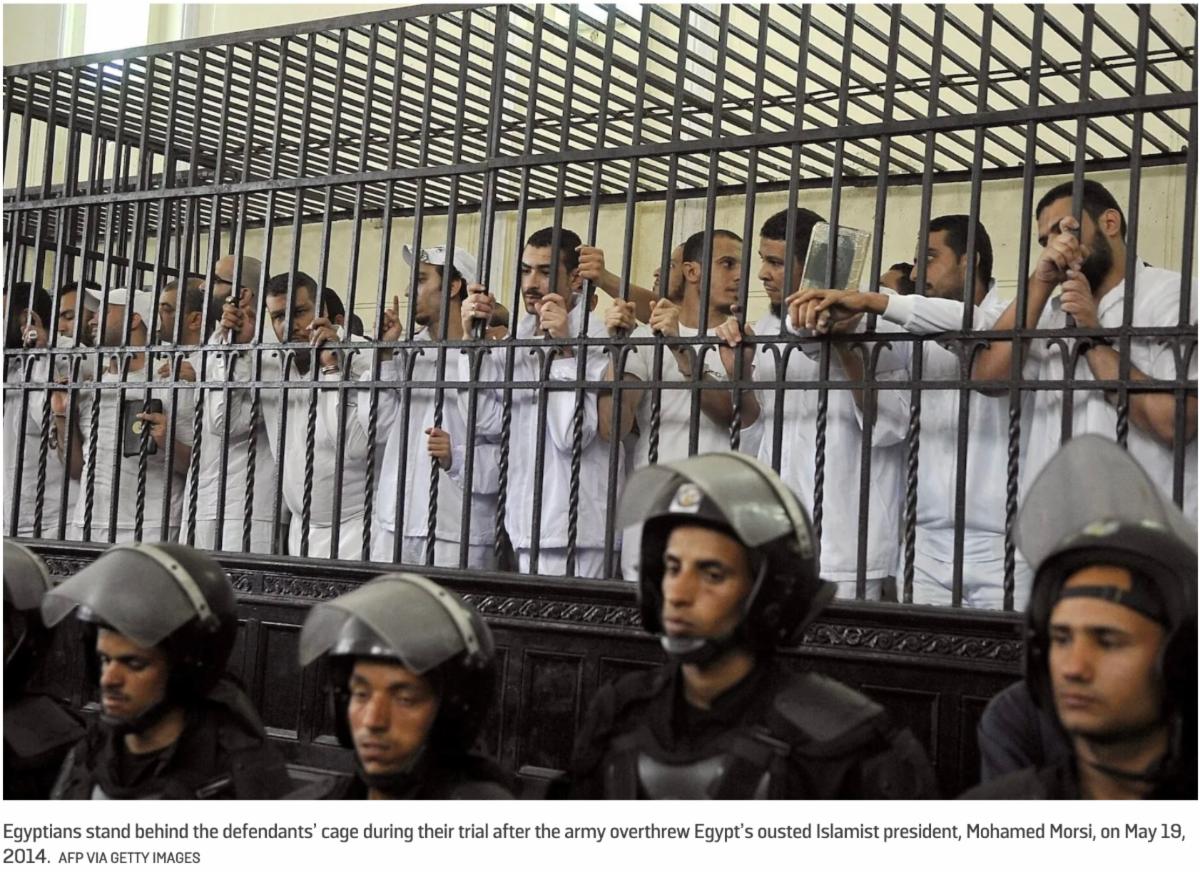
The backlash came quickly, as two years of Brotherhood political advances led to intense repression by authoritarian regimes across the Middle East. The UAE took the lead, supporting Egypt’s July 2013 military coup and defending the massacre of Islamist protests at Rabaa a month later. The brutal repression that followed included the arrest of an estimated 60,000 political prisoners and the confiscation of virtually all identifiable Brotherhood financial and physical assets. It also saw the launch of an international propaganda campaign intended to cast the Brotherhood as the equivalent of al Qaeda and the Islamic State.
Specific concerns drove each regional country’s embrace of this campaign. The Saudi crackdown on the Muslim Brotherhood came as part of Saudi Crown Prince Mohammed bin Salman’s blitzkrieg assault on the power of the kingdom’s Islamic religious establishment. A fusion between Salafi theology and Brotherhood politics had been the key driver of the Saudi Sahwa (Awakening). This was a popular movement sympathetic to the Brotherhood featuring popular social media figures such as Salman al-Awda who used their religious platform to criticize Saudi policies at home and abroad. Most of its key figures are now in jail or the graveyard, despite having no connection to terrorism.
Jordan similarly moved against the Brotherhood, which had evolved from a key pillar of support for the monarchy into its primary organized political opposition. Facing an escalating domestic political crisis and increasing pressure from its financial backers in the Gulf, Jordan took unprecedented steps to break the Brotherhood —sponsoring an alternative leadership, stripping its financial assets, and ultimately criminalizing it.
The regional campaign against the Brotherhood came to a head in 2017 when the UAE and Saudi Arabia blockaded Qatar and demanded Doha end its regional support for the group. The pressure extended to Washington, where an assortment of think tanks and public relations firms lobbied the first Trump administration to declare the Brotherhood a terrorist organization. While the MAGA base thrilled to anti-Muslim conspiracy theories, the so-called adults in the room at the time pushed back.
When former President Joe Biden took office in 2021, the UAE and Saudi Arabia quietly ended the boycott of Qatar, mended fences with Turkey, and scaled back the regional anti-Brotherhood campaign. But the damage had been done. Today’s Muslim Brotherhood is a shell of its former self. Across most of the region it has been forcibly stripped of the social services and public presence that underpinned its political power. Its reputation has been badly damaged by the relentless propaganda campaigns. As a result, it no longer represents a significant political force—even though regimes anxious about another round of protests still fear its resurgence.
The Hamas attacks on Israel on Oct. 7, 2023, turbocharged scrutiny of the Muslim Brotherhood’s historic connections with and support for Hamas. That’s the direct trigger for the renewed push to finally get Washington on board with the terrorist designation. Israel views this as part of its full-spectrum war on Hamas and what it sees as the group’s global support base. Egypt, the UAE, and Saudi Arabia are hoping to secure this concession in return for lending their support to Trump’s Gaza plan. And Qatar and Turkey, the Muslim Brotherhood’s traditional protectors, are now less interested today in sacrificing on its behalf after years of growing frustration with Hamas.
If the designation goes through, it will intensify existing trends toward repression in the region while pushing what remains of the Brotherhood further to the shadows.
But the real driver and primary impact of Trump’s executive order may lie in American politics. Designating the Brotherhood as a terrorist organization could put official muscle behind the Trump administration’s efforts to demonize, pressure, and criminalize its opponents. For far-right conspiracy theorists, the Brotherhood offers an amorphous, loosely defined target that includes American Muslim organizations such as the Council on American-Islamic Relations, higher education and Middle East studies centers, nongovernmental organizations, and even Jewish student protesters against genocide.
Trump’s designation of the Brotherhood could establish a legal basis for scrutinizing these organizations’ funding, licensing, and membership. It could also become the basis for even more aggressive State Department screening of visa applicants as well as Immigration and Customs Enforcement harassment and deportations.
Designating the Brotherhood is not about addressing a security threat—it’s another escalation toward authoritarianism in the Middle East and the United States alike.
Read the full Article
|