|
Monthly Newsletter
July 2025
| | National Alliance to End Homelessness
2025 Conference Takeaways | | |
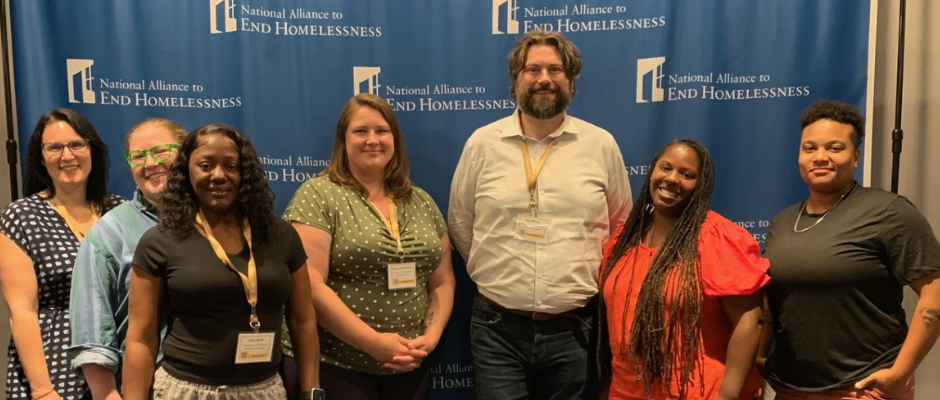
We are so pleased to share our reflections on the National Alliance to End Homelessness (NAEH) 2025 Conference. Our lessons learned ranged from tactics for effective advocacy, compassionate case management, partnerships between healthcare and our sector, using data to tell compelling stories, and so, so, much more!
One idea that seemed to resonate across the entire conference was that of "glimmers". Amidst challenging times, it is vital to find moments and signs of hope. These glimmers are the victories that uplift us and keep us moving.
We hope to incorporate these lessons in the coming year and beyond as we face uncertainty, but also certainly opportunity.
| | |
Samm Williams
Emergency Shelter Support Manager
| | |
What I Attended:
I attended workshops focused on strengthening housing and shelter systems through relationship-centered and evidence-based practices including: Welcome People In, Bring People Home, emphasizing low-barrier shelter models, Bridging the Gap: A Human Approach to Aftercare, highlighting the need for long-term support post-housing, and Facilitating Medicaid Payment for Housing Services.
Lessons Learned for CT:
-
Aftercare Is Essential: (1) Aftercare should be embedded, not optional—ensuring participants feel supported after being housed. (2) Hiring dedicated Aftercare Specialists fosters continuity, care, and connection.
-
Case Management Is Relationship-Based: (1) Staff authenticity and deep client trust are foundational to effective support. (2) Emotional connection drives housing outcomes more than policy alone.
-
Link Healthcare & Housing More Seamlessly: (1) Avoid retraumatizing clients through repetitive intake by facilitating bi-directional data sharing. (2) Explore digital identity tools (e.g., mobile IDs, ID.gov) that allow clients to securely share health/housing data with consent.
Personal Reflection:
This conference was a powerful reminder that ending homelessness starts and ends with people. The recurring theme across every session was connection—between clients and staff, agencies and landlords, healthcare and housing systems. What stood out most was the emphasis on authenticity, empathy, and action. We must stop relying solely on systems and instead build community-based, trust-centered, housing-first solutions. I’m leaving with a renewed sense of purpose—and clarity that in Connecticut, we need to double down on relationships, reduce barriers, and keep the focus squarely on housing as the goal.
| | |
Amber Freeman
Director of Training, Technical Assistance and Community Impact
| | |
What I Attended:
- At this year’s National Alliance to End Homelessness conference, I participated in workshops addressing urgent housing challenges, systemic inequities, and cross-sector collaboration. Sessions included: Navigating Challenging Housing Markets, Reclaiming Equity in a Time of Pushback, Building Cross-Sector Healthcare and Mental Health Partnerships and Housing-Focused Case Management.
Lessons Learned for CT:
-
Landlord Engagement is Key: CCEH should expand its role in engaging landlords—through networking, statewide tenant certification, and training.
-
DEIBA Is Everyone’s Responsibility: Equity is about shared gain, not loss. We must embed restorative justice into our culture, not just our policies.
-
Demographic Shifts Require System Shifts: (1) Address distrust in public systems. (2) Better serve Latin populations by improving language access and relational support. (3) Move from compliance-driven models to relational infrastructures.
Personal Reflection:
The conference was both inspiring and sobering. I felt energized by the passion of others working toward the same mission but also overwhelmed by the scope of the work ahead. What stood out most was the central role of relationships and community in ending homelessness. It’s not just about systems and policy—it’s about how we show up for each other with empathy, humility, and trust. Real change will come when we center people, build strong connections, and lead with compassion. We already have the resilience—we just need to move forward together.
| | |
Ryan Beach
Director of Fundraising and Development
| | |
What I Attended:
- I chose sessions focused on creating narratives, exploring how to authentically engage PWLE, and effective storytelling through concise data and community voices. Some of the sessions included: The Art of the Two-Pager, How a Workforce With Lived Experience Drives Change, and How To Talk So They'll Listen: Messaging Across Mindsets, Incomes, and Ideologies.
Lessons Learned for CT:
-
There are two distinct ways to influence people through your messaging: altruistic and self-benefit. Essentially you should appeal to people's inherent want to help each other or enforce the idea they are protecting a community they helped build and inhabit, and you may need to shift to one or the other to adapt to the audience.
-
Authentic engagement requires regular, organic, genuine interaction. You can't interview your way to true perspective that doesn't do harm.
-
Building a model for the cost to solve homelessness is still possible, but may look drastically different given current potential cuts.
Personal Reflection:
-
This was my first NAEH Conference, and hopefully not my last. It was so refreshing in this climate to come together with so many passionate and like minded thinkers. One might expect people to be downtrodden or resigned, but I felt the overall energy was one of resilience and perseverance and where the focus was on solutions.
| | |
Haley Gross de Jimenez
Director of Finance and Operations
| | |
What I Attended:
I participated in sessions focused on leadership, data-driven strategies, federal funding, and innovative staffing. Key presentations included "Lessons in Leadership," "Bridging the Divide," "Using Data," and discussions on CoC and ESG consolidation. These sessions brought together leaders nationwide to share successes, struggles, and strategies for tackling homelessness.
Lessons Learned for CT:
-
Funding Preparedness: In the face of CoC-to-ESG consolidation CT must: (1) Prioritize services using a triage model. (2) Overlay service maps with federal funding streams. (3) Coordinate with state and local partners on potential block grant impacts.
-
Staffing Innovation: Inspired by LASHA, CT could create a flexible pool of trained “on-call” support staff to fill urgent provider gaps—building resilience and peer support statewide.
-
Hope as a Tool: “Glimmers”—small signs of progress—should be celebrated and shared to sustain morale and momentum in our system.
Personal Reflection:
The strongest message I took from the conference is this: No one has all the answers, but we will find them together. In a time of uncertainty, the spirit of collaboration and openness felt at NAEH was powerful. By sharing what works—and what doesn’t—we light the way forward. It reminded me that even amidst deep challenges, hope and unity are our most vital tools.
| | |
Tahria Bruff
Finance and Operations Coordinator
| | |
What I Attended:
This was my first year attending the conference themed “Unity in Action: Building Sustainable Solutions Together.” It brought together a diverse range of voices—from national experts to grassroots organizers and individuals with lived experience.
Lessons Learned for CT:
-
Federal Preparedness: Understand the shifting federal landscape and work with municipalities to anticipate and fill gaps left by potential HUD cuts.
-
Empathetic Leadership: Lead without judgment, recognizing the dignity of each individual. Acknowledge the stress our field is under and make space to process and respond constructively.
-
Visibility & Engagement: As emphasized by Jimmy Jones of Valley Community Action—“Build the table bigger”—bring more people into the conversation and make homelessness impossible to ignore.
Personal Reflection:
This conference was both inspiring and grounding. Hearing directly from people with lived experience reaffirmed the need to center policy around those most affected. I left feeling more connected to a national movement of changemakers and reminded of the power in collective advocacy. Beyond learning, this space offered healing and solidarity—fueling my commitment to apply these lessons in the months ahead.
| | |
Katherine Whitney
Community Impact Program Manager
| | |
What I Attended:
A highlight was our meeting with staff from Connecticut’s federal delegation, where we discussed the serious risks federal spending cuts pose to our homelessness response system. The conference also featured impactful sessions like “Authentic Inclusion and Partnership with People with Lived Expertise in Advocacy Efforts,” which focused on transforming how we engage people with lived experience.
Lessons Learned for CT:
-
Center Lived Expertise: Inclusion means more than an invitation—it requires real decision-making power. Tokenism must be replaced with shared leadership.
-
Structural Supports for Access: (1) Compensate participants for their time and expertise. (2) Address logistical barriers (transportation, childcare, meals, tech access). (3) Clarify time commitments and provide support like definitions, guides, and practice opportunities.
-
Co-Creation Over Consultation: Go beyond feedback—build messaging and strategy together. Honor emotional labor and the diversity of experiences.
-
Build Pathways, Not Just Participation: Embed professional development and leadership tracks within advocacy and organizational work to create lasting system change and build trust.
Personal Reflection:
While the political backdrop of federal cuts was sobering, I came away encouraged by the strong support from Connecticut’s congressional delegation. I feel hopeful about continuing that partnership in the challenging months ahead. Most of all, the conference deepened my commitment to ensuring authentic inclusion—where people with lived experience help lead, not just participate. If we’re serious about ending homelessness, we need every voice, every skillset, and every ounce of energy at the table—fully empowered and supported.
| | |
Are you a mission driven training specialist with exceptional project management, facilitation and technical skills?
If yes, we encourage you to apply for the Training & Technical Assistance Manager role at Connecticut Coalition to End Homelessness (CCEH) and help us build capacity and meet the needs of system service providers and key partners. This work involves developing and delivering training, providing technical assistance and leveraging technology to create a repository for on-demand training and “just in time” resources to support Connecticut’s Homeless Response System.
CLICK HERE to Apply Today!
| | Update from NAEH - Summer Advocacy | | |
The House and Senate will be in recess, and this is the perfect time to meet with them when they are back at home. The National Alliance to End Homelessness has put together a brief Summer Advocacy Checklist to make your voice heard as the administration makes crucial decisions around the future of the Continuums of Care and Housing and Homelessness Service funding.
CLICK HERE to Learn More and Take Action!
| |
Connecticut Coalition to End Homelessness
| | | | |