May 10, 2022
Spring Issue #11
Weekly activities and lessons to keep your child thinking and progressing throughout the school year.
“Every child is an artist; the problem is staying an artist when you grow up”
Hello and Happy Tuesday!

If you are looking for more fun and educational learning, this week's flyer has some excellent activities. The Math Problem of the Week is a hands on favorite of mine. Give it a try before beginning family movie night :-) If you need a good new read, or something to inspire a reluctant reader this weeks title is a very fun and fast read that I know all students will enjoy. There also is an important and easy science experiment that will change the way children look at leaves and plants. Have a great week and keep on thinking, writing, creating, and learning.

Please share this flyer with your friends and encourage them to join our mailing list by following the links on this page.

Mr. McManus :-)
Great Read of the Week
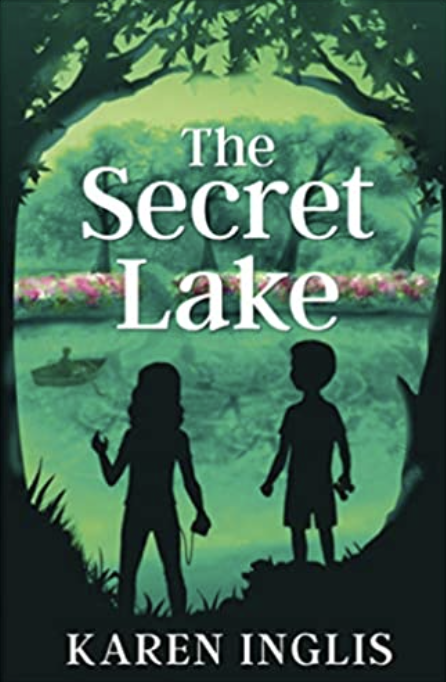
The Secret Lake
by Karen Inglis
When Stella and her younger brother, Tom, move to their new London home, they become mystified by the disappearances of Harry, their elderly neighbor’s small dog. Where does he go? And why does he keep reappearing wet-through? This thoughtful mystery, adventure, and time-travel adventure will captivate the most reluctant reader. This is an excellent read with a strong mix of characters, and short, gripping chapters that lead you swiftly through an absorbing tale of mystery and suspense. In their adventure, Stella and Tom travel back in time 100 years where they make both friends and enemies with, and uncover startling connections between the past and present. You will have to pull it out of your child's hands. Enjoy!
Inquiry Quest
Do Leaves Breath?
Step 1: Fill a large bowl with lukewarm water.
You can use a glass or plastic bowl (personally, I like glass bowls better as you'll be able to see the experiment from all angles however you will probably have the bowl outside so you may want to use plastic).
You can extend the experiment by measuring the amount of water you use to cover the leaf to see if that has any impact on the results!

Step 2: Head outside and find a large leaf.
You'll want to remove a leaf from a tree or plant and not just pick one up off the ground as we want an 'active' leaf for the project.
If you'd like to, have some fun with art & science by making a leaf rubbing before you go to the next step!

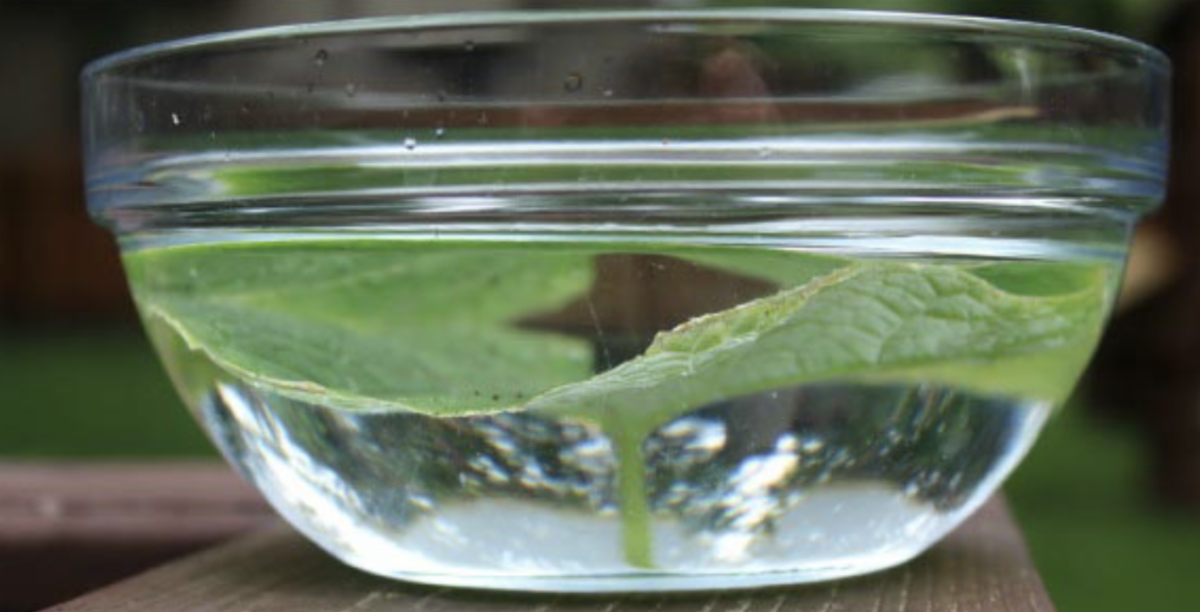
Step 3: Place the leaf in the bowl of water and put a small rock on top of it so it is FULLY submerged under the water.

Then, put the bowl in a sunny spot.
As you can see, this is really the benefit of using a glass bowl, so you can be sure your entire leaf is underwater.

If you have a place inside that's super sunny, you can also try keeping the bowl there.

Step 4: WAIT!
Oh yea, did I mention that now we need to wait a few hours ;-)
I know -- one of the hardest things for kids. So go on with your day - maybe set the experiment up before lunch or quiet time. Or, you can get it ready before heading off to school or the park and it will be waiting when you come back.

Step 5: Take a peek a few hours later

What you should be seeing is small bubbles that form around the leaf and the edges of the bowl. These are easy to see with the naked eye but having a large magnifying glass on hand always makes an experiment feel more scienc-y ;-)

Explaining Photosynthesis & Respiration in Plants and Trees
Ask yourself what would happen if you held their breath, went underwater in the pool and then let their breath out? You would see bubbles coming up in the water.
That's what you are seeing here - the leaf is still using the sunlight as part of the photosynthesis process (where leaves convert sunlight to energy). 

As a leaf creates that energy, it needs to get rid of the items it no longer needs so it will expel both the extra oxygen during photosysthesis along with water (the release of water from a plant is called transpiration). 

The process of photosynthesis is what allows us to see the bubbles - as the leaf releases its' extra oxygen while submerged, the oxygen can be seen as bubbles in the water. And, since oxygen is lighter than water, the bubbles will eventually rise to the surface.

Now does a tree or plant breathe the same as we (humans) do?

Nope!

A plant, tree or leaf doesn't have any lungs or respiratory system. 
But it is a living organism just like we are! It takes in air through their stomata.
A human takes in air with oxygen and as they exhale, they release carbon dioxide.
Plants take in carbon dioxide from the air and then release oxygen as photosynthesis and respiration occur.

So there you have it - you are 'seeing the invisible' because when leaves are on the tree, you aren't able to really see the process of photosynthesis in the works ;-)

If you feel your child might benefit from a group or individual tutoring program to prepare them for the next phase of their education, please contact McManus Tutoring.

Programs are structured so that students learn independence, accountability, and self-possession. They will develop a repeatable structure that can be used to build success in the future.
Three Writing Prompts and a Riddle

These prompts and questions will help jump-start your daily writing. Just as it's important to read for at least 30 minutes each day, you should also write for 30 minutes a day. Don't worry about your organization or spelling, just write!


"The sounds of the forest reminded me of..."


"Greg watched so much television that..."


"The rules of Bowling for Flamingos were simple..."

Thinking Puzzle
A high school has a strange principal. On the first day, he has his students perform an odd opening day ceremony:

There are one thousand lockers and one thousand students in the school. The principal asks the first student to go to every locker and open it. Then he has the second student go to every second locker and close it. The third goes to every third locker and, if it is closed, he opens it, and if it is open, he closes it. The fourth student does this to every fourth locker, and so on. After the process is completed with the thousandth student, how many lockers are open?
Last week's answer... 10 is the score for the first roll. 15 is the score for the second roll. 9 is the score for the third roll. 20 is the score for the fourth roll. 12 is the score for the fifth roll.
Problem of the Week
The Great Popcorn Challenge
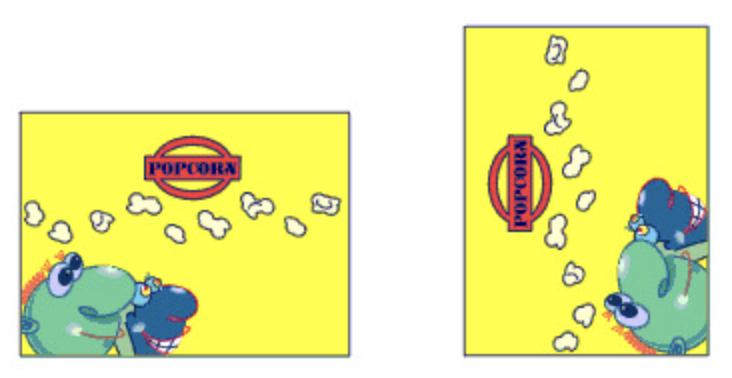
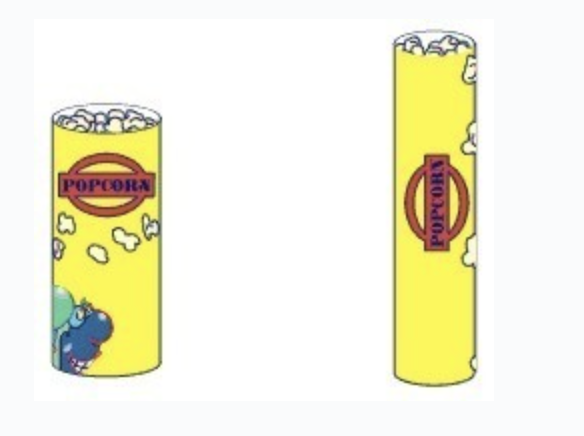
Which shape holds more popcorn?
Take two sheets of 8 1/2 by 11 inch paper. Roll one into a short cylinder and the other into a tall cylinder. Does on hold more than the other?
For what size paper would the two cylinders hold the same amount?
To receive your own copy of The McManus Files, join our mailing list
mcmanustutoring.com has all previous issues of The McManus Files posted in its library.
Visit the site by clicking mcmanustutoring.com