Chesapeake Times

Technical Review, Issue 18

July 2024

Letter from the General Manager – Harold Orlinsky

Imagine driving down an unknown road and coming to a fork - do we go left or right?

(And there is no going straight). This a choice we need to make, which then defines

where we go next. Although we always have the option to turn back, we press on,

seeing where the new road leads us. On the road we travel, we meet new people, visit

businesses and learn from others. Did we make the right choice? Should we have

taken the other road?


It’s an analogy I use often here at Chesapeake. With each new release of SonarWiz,

we are adding dozens of updates and changes. Are we adding the right ones? Why

did we choose to add that one? For each release, the team goes through our list of

feature requests and areas of development and changes to be added. Next month, with

SonarWiz 8.1 to be released, we have over 50 changes and updates.


This version will have some of the Automatic Target Recognition functionality, faster drawing for sidescan tiles, updates to bathymetry and sub bottom, and more. Fifty of them! Did we address all the feature requests - specifically, yours? If we missed it this time, let me know. The road we take has lots of forks and we’re always picking a new direction to go. The road

we’re on doesn’t have any stop signs, as we are always on the move.


Survey season is in full swing, and we’re seeing clients working on new projects. With

the latest innovations in sonar technology, the data is getting better all the time. We’ll

do our part to support the operations, and if you find any issues let us know. I also

want to take this opportunity to introduce two new members of our support team – Alex

and Brian. You’ll see emails from them and meet them at a conference or training later

this year.


I must admit that I started to listen to Country Music. It was a genre I never listened to

in the past, and I used to skip over those radio stations, but times have changed. I am

following the traditions in my new home and trying to fit in here in Nashville. At the Annual

Winter Training to be held here in December, I’ll probably even be wearing boots. As the

saying goes, "when in Rome do as the Romans do."


Happy Surveying!

Download SonarWiz

New Features and Technical Notes


Sub-bottom Displayed Range Upgrade ..................... Christopher Favreau, CTO

Towfish Navigation in SonarWiz ................................ David Finlayson, Chief Scientist

Faster Tiling Output ................................................... Jonathan Fleetwood, Engineer

A New Speed Limit .................................................... Harold Orlinsky, General Manager

Charting New Waters ................................................ Alex Nowak, Support Specialist

Sub-bottom Displayed Range Upgrade

Sometimes an improvement in SonarWiz takes a few releases to be fully realized. One such instance is the upgrade to the displayed range for SBP (sub-bottom) data. One of the areas of SonarWiz where we like to make improvements is the ability to import the data as is.  Next step is to allow the user to modify the data in post processing while preserving the original data. Then allow adjustments to be performed multiple times, so the user can get it just right without having to import the data multiple times. 


We have been replacing the processing of the data on import with post processing equivalents over the years. The transition from SonarWiz 5 to SonarWiz 6 marked a major transition. SonarWiz started storing floating point samples, which allowed the user to make extensive color mapping adjustments in post processing. This article will focus on the upgrade of import-based range truncation for the SBP data to the post processing displayed range adjustment that the Side Scan Sonar data has enjoyed for many years.


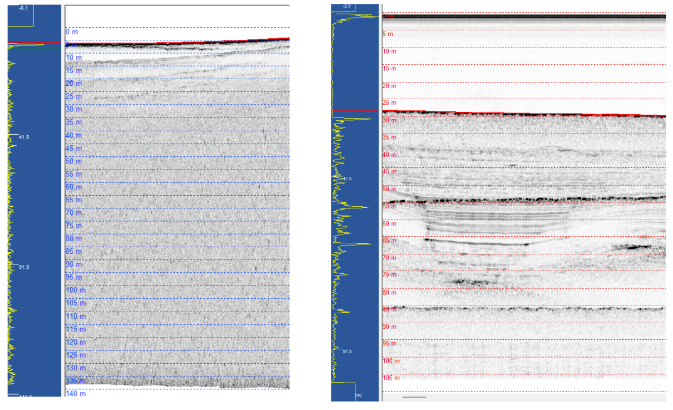
Let’s start with the question: why do users need to adjust the range of the SBP data? Most of the time SBP data is collected at a close to optimal range for processing and review. This data does not benefit much from being able to adjust the range. The data that benefits the most is SBP data that was collected using an optimistic range which fell short of expectations. This data typically has a lot of blank or noisy data after the visible sediment. In order to allow the user to focus solely on the good data, they remove the data that does not contain any useful information. Sometimes this region is small, and sometimes it is really huge compared with the actual sediment data. The images below are a good example of this:

Read full article

Towfish Navigation in SonarWiz

With the summer field season in full swing, our support team has seen an uptick in questions

about how towfish navigation works in SonarWiz. That is, given the position and orientation of the towing platform, how exactly does SonarWiz compute the position and orientation of the towfish? The answer, not surprisingly, depends on a number of conditions and assumptions. Some of these have never been detailed in the user guide. This article will cover the most common situations.

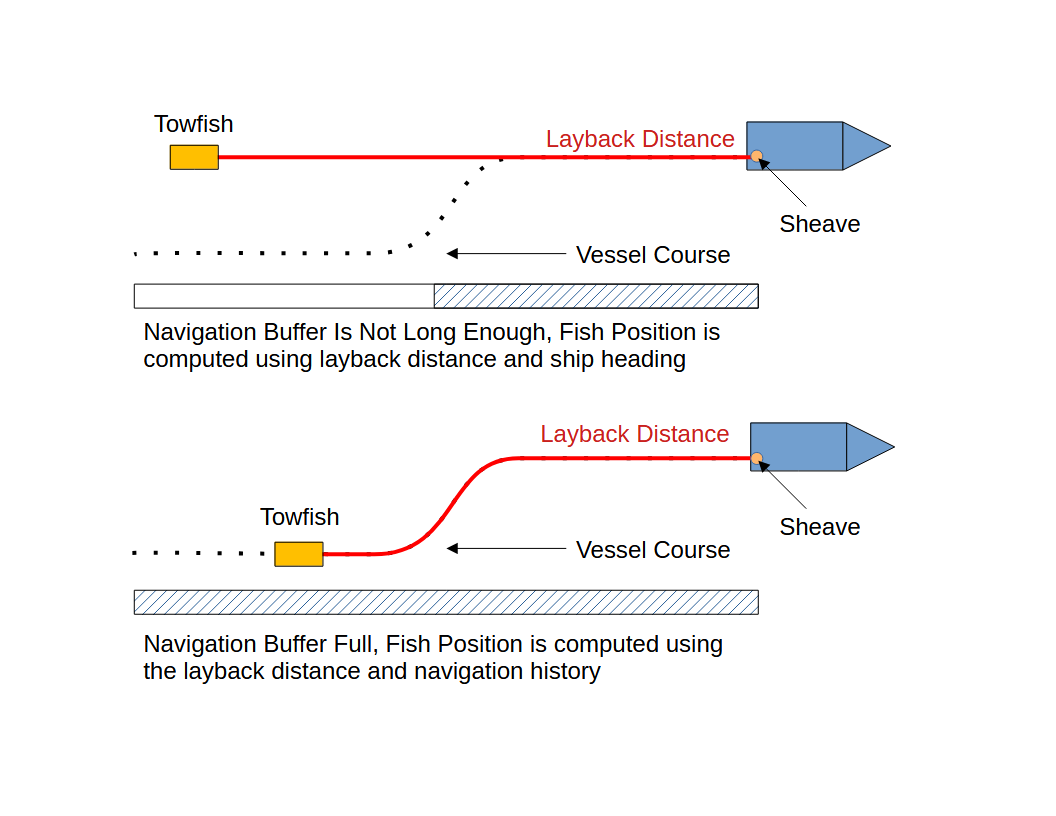
Our towfish algorithm assumes that the towfish exactly follows the course of the ship (technically, the course of the sheave). Just like a caboose follows the engine of a train along the tracks. If the ship performs a maneuver, the towfish will perform the same maneuver in time. The way this is done is that SonarWiz creates a history of the current and previous ship positions and headings.

Read full article

Faster Tiling Output

Geoimage exports are a standard deliverable for many surveys. One or a set of georeferenced images with varying annotation of the full survey area can provide an easy-to-understand overview of the survey findings in geographic context. The GeoTIFF format – a TIFF image with some embedded metadata to specify its location within some coordinate reference system – is a good fit for these needs.


Large survey areas and/or high-resolution output needs provide some challenges, however. Support for file sizes greater than 4GiB (or 2GiB in some cases) might not be available in downstream (from image creation) tooling, and working with such large images tends to be sluggish.

Read full article

A New Speed Limit

A new filter has been added to the bathymetry processing, to both the Navigation and Attitude editor and into the Merge option. It allows you to remove spikes in the data caused by erroneous GPS values, based upon the instantaneous speed computed between two fixes. It is called a speed filter. Although we expect a lot from our positioning system, we do see the occasional hiccups along the way. And viewing the sounding data in the sweep editor, you wouldn’t see these jumps


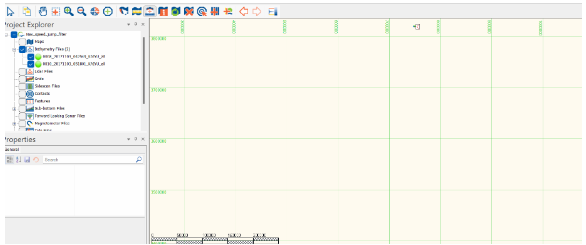
In the main map, if we don’t easily see the trackline with the data files imported properly, it’s probably because the drawing engine wants to grab the entire data set. (note the data is in the upper center of the image):

Read full article

Charting New Waters: My First Dive into SonarWiz and Ocean Mapping

Despite covering more than 70% of the Earth’s surface, over 80% of our oceans remain unexplored and unmapped. This vast, uncharted territory presents both challenges and opportunities for marine research and exploration. To bridge this gap, advanced technologies are essential, and one such tool is SonarWiz by Chesapeake Technology.


SonarWiz is a software platform designed to facilitate the collection, processing, and analysis of sonar data using its intuitive interface and powerful features. It simplifies the complex task of mapping underwater environments, making it easier to uncover and understand the hidden features of our oceans. Whether you’re mapping the ocean floor or investigating underwater structures, SonarWiz provides the tools needed to turn raw data into clear, actionable insights.

Read full article

Privacy Notice: Your email address (and other personal information, if applicable) is being used to fulfill your request to receive newsletters from CTI. Use is subject to CTI’s Website Privacy Policy. CTI complies with the EU's GDPR laws. Continued reading of the newsletter is implicit acceptance of our Policy, and you may unsubscribe at any time using the link below.
WWW.CHESAPEAKETECH.COM
Facebook  Linkedin  Youtube  Instagram