|
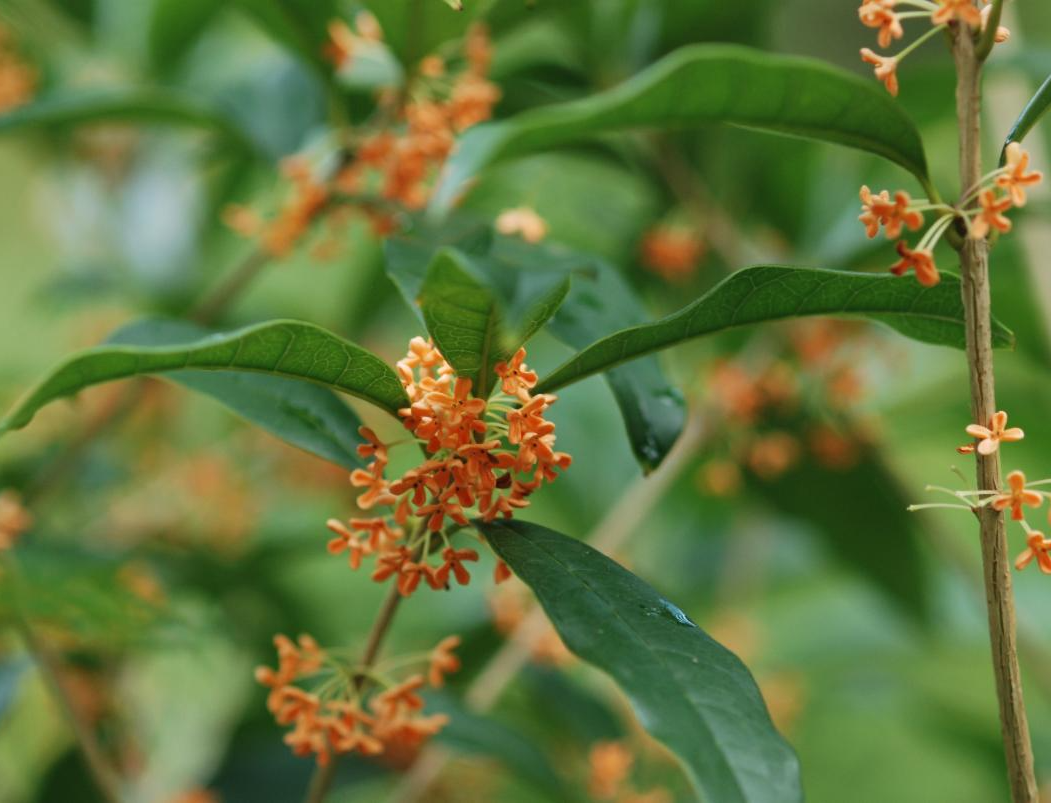
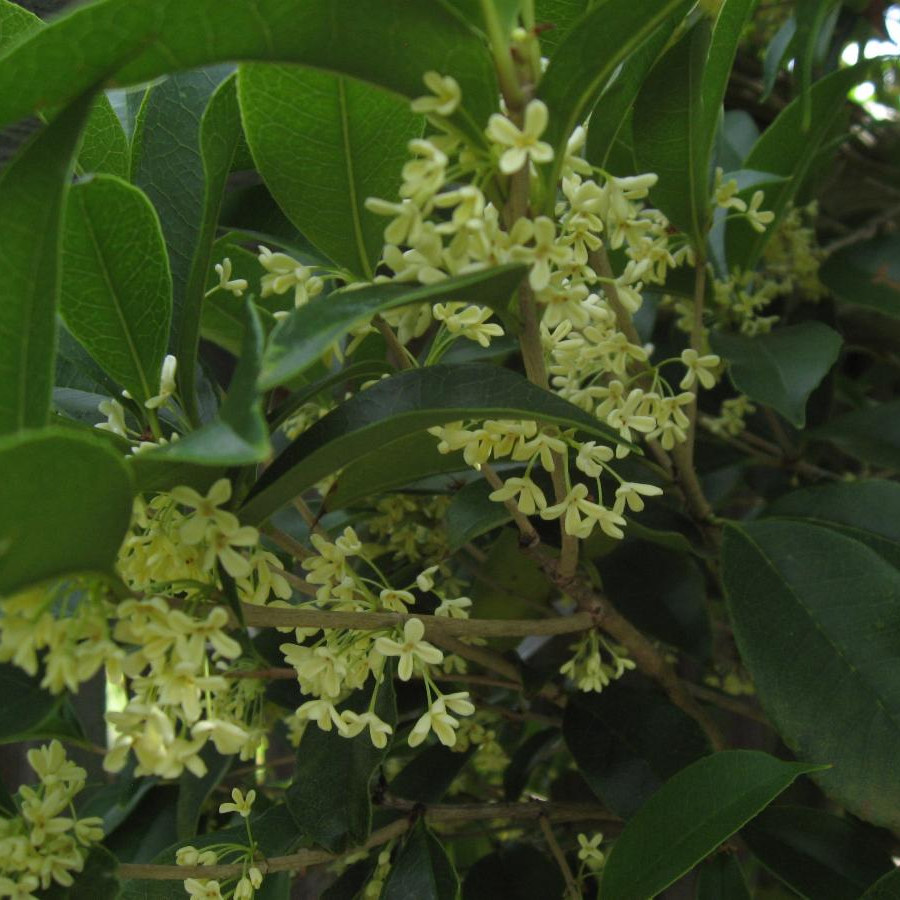
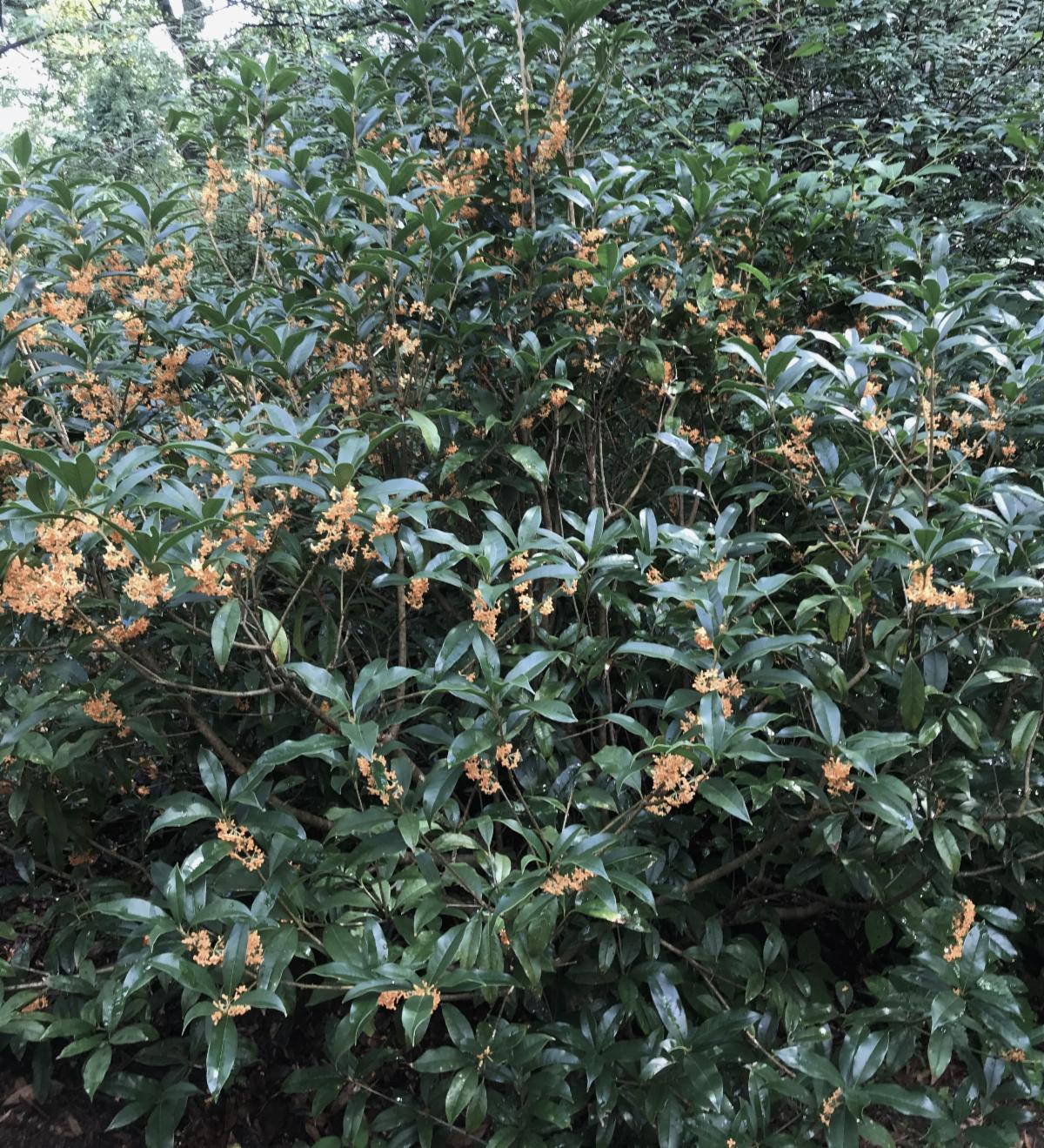
While many flowers bloom into the fall, most only please the eyes. Tea olives, however, release an enchanting apricot scent into the air. The white, yellow, or orange flowers are used to add a strong, fruity fragrance to beverages or perfumes. In eastern Asia, where Osmanthus fragrans is native, the flowers are also used in jams, cakes, soups, and herbal tea. The tea olive tolerates the clay soils and dry spells common to this area, but it is only hardy to zone 8. It needs the protection of a wall or courtyard to survive extended cold periods. It can be pruned into an evergreen hedge or kept small, but be aware that it blooms on old growth. The orange-flowered form, Osmanthus fragrans Aurantiacus Group, is a bit hardier, but doesn’t flower as abundantly. Yellow- and apricot-flowered cultivars exist, as well as reblooming cultivars. Osmanthus heterophyllus is much hardier, but has been found in the woods near where it grows at the Arboretum, so there may be a risk of it escaping gardens. Seek out the fragrance of tea olives at the U.S. National Arboretum’s National Herb Garden or China Valley in the Asian Collections this fall.
Kamala Codrington-White, an Agricultural Science Research Technician at the National Arboretum, shares plants of note at the Arboretum in this recurring segment. Find these plants on your next trip to the Arboretum. Photos by the National Arboretum.
|