|
The Challenge of Crossing Nevada
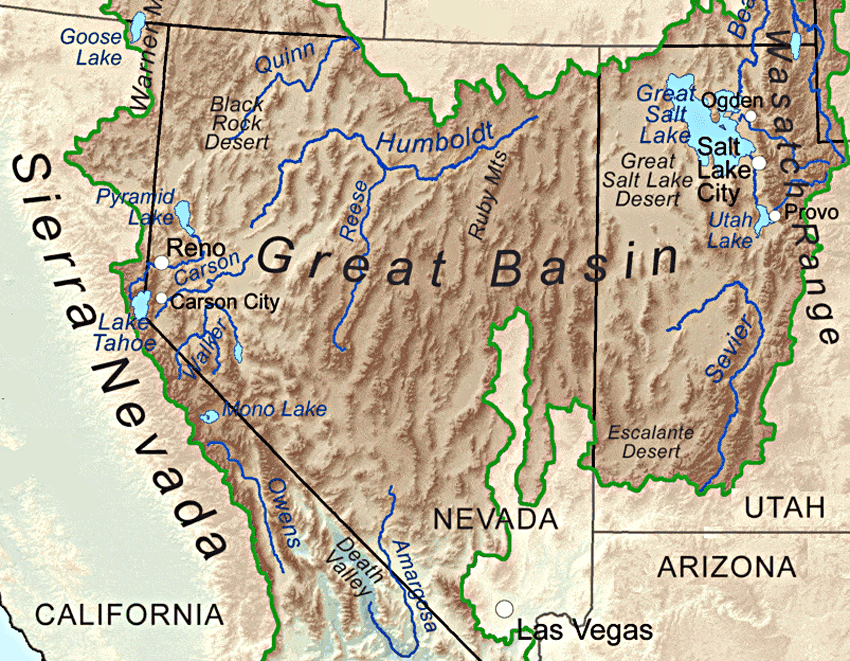
From the 1820s until the completion of the nation’s first transcontinental railroad in the late 1860s, the only feasible way to reach California from the Missouri River frontier was by navigating a series of river systems west of the Rocky Mountains and across the vast Great Basin.
Other than the formidable Sierra Nevada, traversing present-day Nevada posed the most significant challenge on the California Trail. This region is the driest in the United States, offering little potable water for travelers and their livestock. Its rugged terrain consists of more than 150 named mountain ranges, with over 30 peaks exceeding 11,000 feet in elevation. With few rivers, the land is plagued by undrinkable alkaline water, extreme temperature fluctuations, and barren salt flats. Despite these harsh conditions, small groups of Native Americans managed to survive there for thousands of years, adapting to the unforgiving landscape.
One of the most crucial elements of the Nevada section of the emigrant trail was the Humboldt River. Many pioneers derided it as a “poor excuse for a river,” yet without it, there would have been no viable route for the California Trail.
| |
Joe Walker’s Discovery of the Humboldt Route
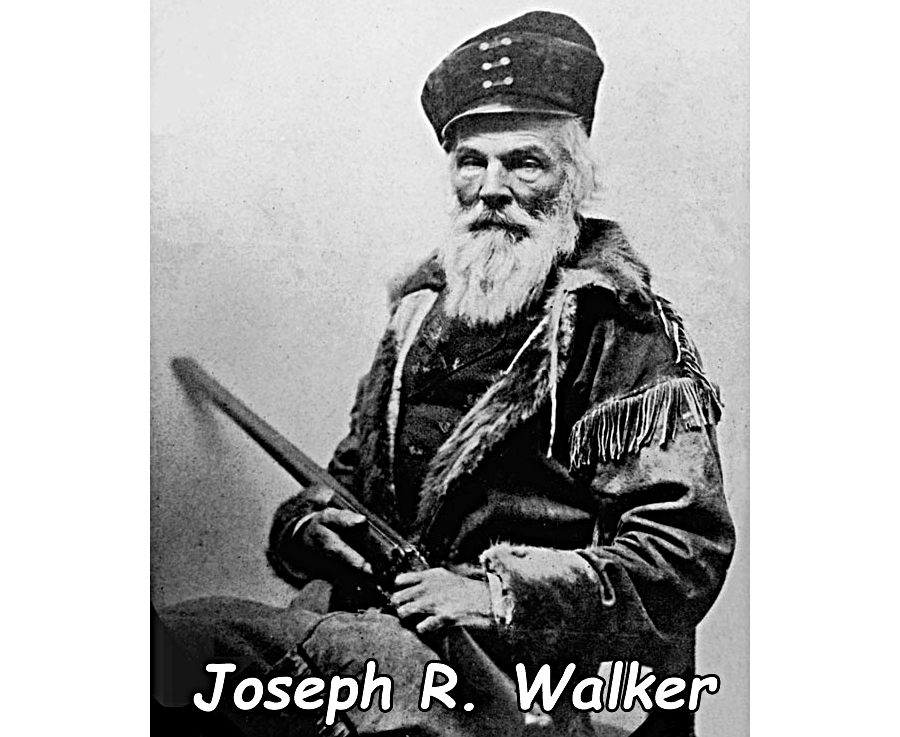
Fur trapper Joseph R. Walker was the first American to recognize the Humboldt River’s potential as a gateway to the Pacific. In 1833, while returning from an exploratory mission to California, Walker and his men traveled east through a pass at the base of the Southern Sierra, which would later be called Walker Pass. They then moved north along the Eastern Sierra Front and followed the Humboldt River Valley eastward to a rendezvous point in the Rockies.
Born in 1798 in Tennessee’s backwoods wilderness, Walker received little formal education but became well-versed in farming, hunting, and trapping. As a teenager, he participated in several conflicts with Native American tribes, and by the time he was 21, his family had relocated to the Missouri-Kansas frontier. Towering at six feet four inches, Walker was a physically imposing figure, powerfully built and highly skilled in frontier survival.
Zenas Leonard, one of the men in Walker’s party, chronicled their journey in a memoir published in 1837. He described Walker as a man perfectly suited for leading expeditions. According to Leonard, Walker was accustomed to the hardships of the wilderness, well-versed in Native American culture, and capable of commanding his men without inciting resentment. Exploring uncharted territory was his passion.
| |
A Harrowing Journey to the Pacific
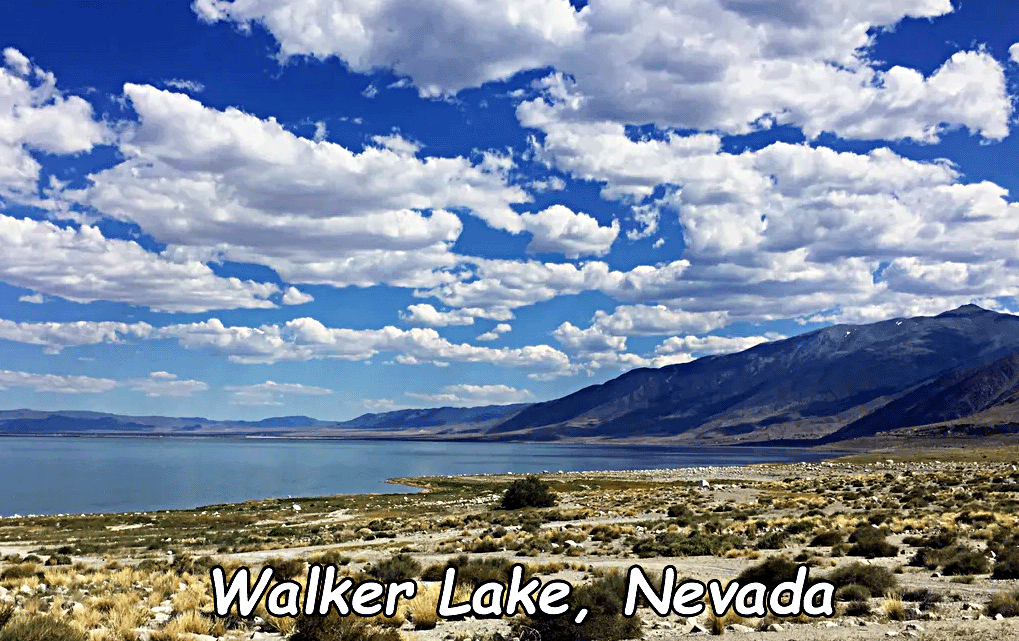
In late July 1833, Walker and his 60-man party left their annual beaver trappers’ rendezvous in the Rocky Mountains. Traveling on horseback with pack mules, they avoided bringing wagons. The group followed the Bear River southward to its terminus at the Great Salt Lake, then ventured west into the desolate Utah Desert. Eventually, they reached the Humboldt River and traced its course to its sink. Along the way, Walker passed two lakes in what is now western Nevada. These bodies of water would later be named Carson Lake and Walker Lake, in honor of Christopher “Kit” Carson and Joseph Walker.
Crossing the Sierra Nevada required immense effort, testing even the strongest members of the group. The terrain became so steep that their terrified horses and mules had to be lowered down cliffs using ropes tied to trees and rocks. Supplies dwindled, forcing the men to survive on horse and mule meat. Despite these hardships, the expedition successfully reached San Jose and continued over the Coastal Range, where they laid eyes on the Pacific Ocean for the first time.
| |
Advising on the California Trail
Walker’s adventures did not end there. In 1845, he became a guide for John Frémont’s expedition, during which Frémont named Walker Lake and the Walker River after the seasoned mountain man who had explored them more than a decade earlier.
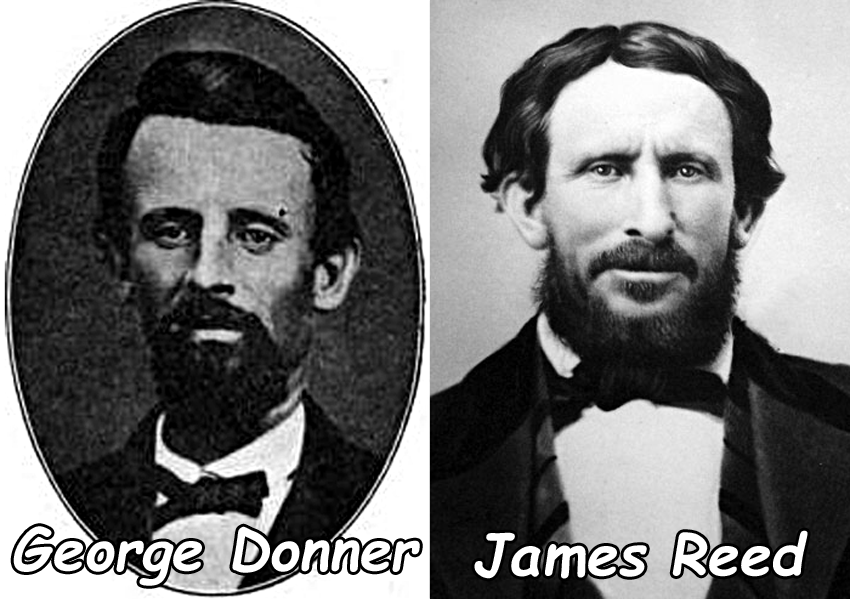
Walker was known for giving sound advice to those embarking on the California Trail. Most emigrants heeded his warnings, but some, like the ill-fated Donner Party, ignored his counsel to disastrous effect. Walker explicitly advised George Donner and his co-captain James Reed against taking the Hastings Cutoff, an unproven shortcut through the Sierra Nevada.
However, Donner and Reed chose to disregard his warnings, believing it would save them time. Several women in their party, including George Donner’s wife, Tamzene, opposed the decision but ultimately deferred to their husbands.
This choice would lead to one of the most infamous tragedies in pioneer history, as nearly half of the Donner Party perished in the harsh winter conditions.
| |
A Mountain Man's Legacy
Life as a mountain man in the 19th century was perilous and often short. One fur-trading company employed approximately 180 men over six years, of whom 94 were killed by Native American attacks. That figure does not account for those who perished from bear attacks, blizzards, hypothermia, or drowning.
Yet, against the odds, Joseph Walker survived into old age, a testament to his exceptional survival skills. He lived to nearly 78, an impressive feat for someone who spent his life in the wilderness.
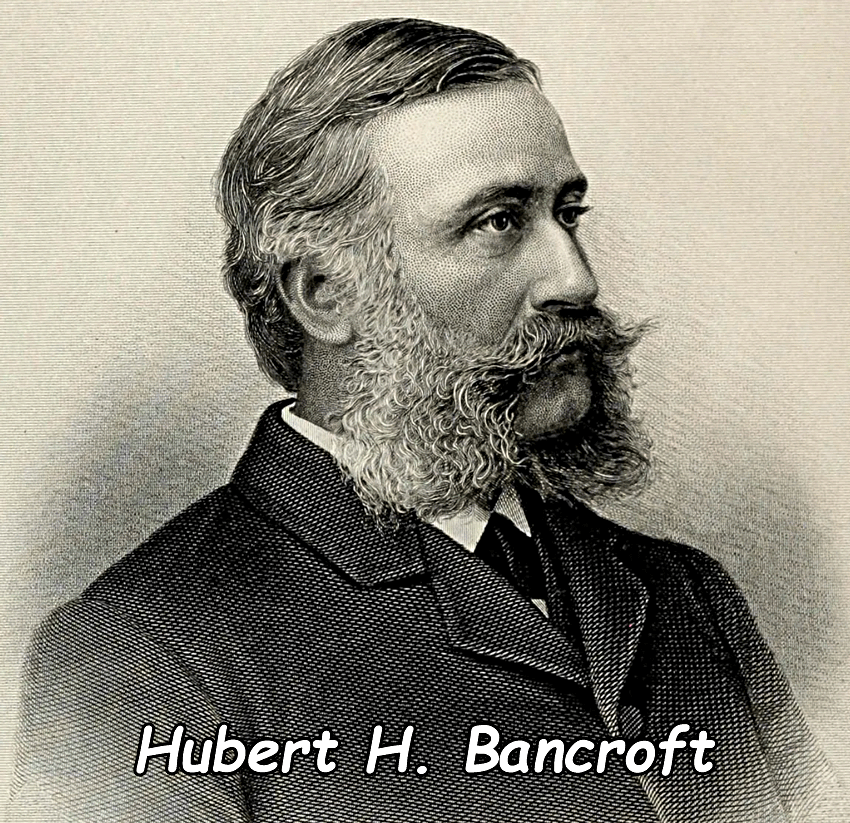
After his death near Mount Diablo in October 1876, historian Hubert H. Bancroft honored him, writing that Walker was among the bravest and most skilled of the mountain men. Few knew the geography or native tribes of the Great Basin better than he did.
Unlike many of his contemporaries, Walker was not boastful or pretentious, instead letting his remarkable achievements speak for themselves.
His contributions to westward expansion, especially his discovery of the Humboldt River route, cemented his place in history. Thanks to Walker’s explorations, thousands of pioneers found a path to California, forever shaping the nation’s destiny.
| |
If you know anyone who you think might be interested in my emails - Please forward to them this link.
http://www.renokelly.com/blog.html
They can click on a subject that interests them on this webpage. I will not contact your friend unless they contact me. Of course, nobody is ever given access to my email list.
Thank you very much - Kelly
| |