|
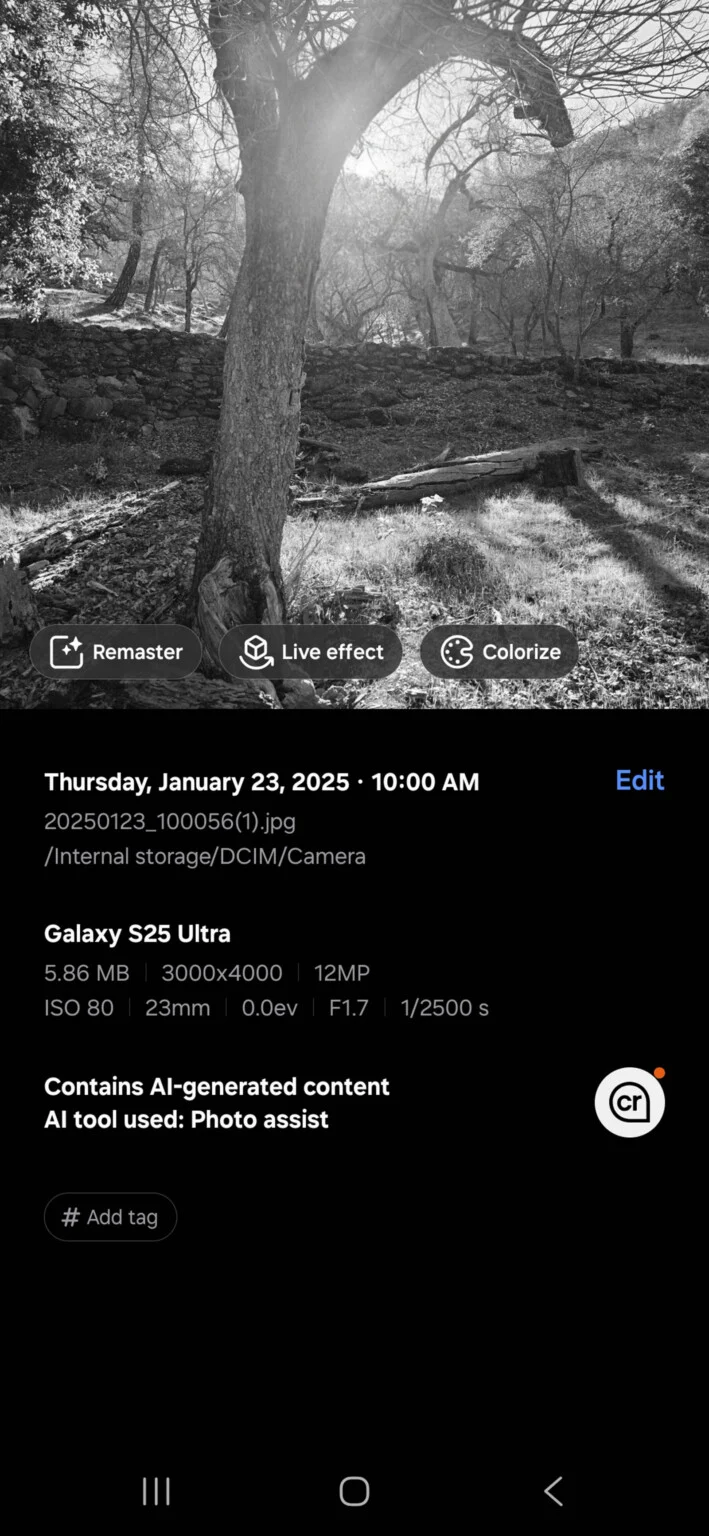
And guess what? “It is remarkably difficult to prove a photo is fake or was edited in some way, but it’s very easy to prove a photo is real and unchanged.”
So the approach that makes most sense is to not stray away from C2PA’s roots: promote the use of image metadata to prove that a photo is real and unedited – any other images should then be viewed with a healthy dose of suspicion.
Needed to (re-)trust photos: a multi-layered infrastructure. But there’s more to adhering to an industry tech standard like C2PA to let us trust real photos or to adding invisible watermarks that identify GenAI images. Industry friend Paul Melcher champions establishing a multi-layered infrastructure aimed at the survival of light-based photography—and its value as a truthful record of the world around us.
He advocates intertwining tech initiatives (tamper-evident metadata, cryptographic seals, AI forensics), in addition to behavioral standards (ISO-style ethics, trust-level systems, peer oversight), and legislative frameworks (legal mandates, licensing, global agreements) to establish an ecosystem where:
- Authentic photographs are immediately verifiable,
- Ethical accountability is enforced, not just encouraged, and
- Clear legal consequences exist for those who exploit fabricated imagery to deceive.
Read his whole analysis on Kaptur.
Google. Whisk’s motto: Prompt less, Play more. Whisk, Google’s GenAI image remixing tool is now available outside the US – in more than 100 countries that is. By now we all know that creating images the way you want them solely from text prompts is pretty darn hard. Google Whisk tries to make things easier by letting you provide separate (text or image) prompts for subject, scene, and style. Whisk then uses Google’s Imagen 3 tech to remix all these inputs into a single image. Not quite what you wanted? Type something like “change pants to pink-striped pajamas” and Whisk takes it from there.
Adobe. GenAI video: Sora, here we come. Get your wallet out. A few months after OpenAI launched Sora, its text-to-video generator, Adobe’s Generate Video is now in public beta, allowing anyone to generate five-second video clips at 1080p. Based on either text or image prompts, Generate Video also includes various options to refine or guide the results, such as simulating styles, camera angles, motion, and shooting distances.
Did I say “anyone”? I meant: anyone who’s willing to fork over between $10-$30 per month for this beta – “introductory” prices that will change to unspecified new prices on March 15. Alas, it's a beta of a quality that is so bad Adobe shouldn’t be charging money according to Fstoppers. Ouch.
ByteDance. Pushing the GenAI video quality. GenAI video not quite ready for prime time? While that might be the case for Adobe, how about for TikTok owner ByteDance? Researchers from this company have demoed a new AI system, OmniHuman-1, which can generate perhaps the most realistic deepfake videos to date, according to this TechCrunch report.
Descript. From text-based video editing to video generation. Past Visual 1st presenter Descript, best known for its text-based video editing features (it transforms audio and video into editable text, allowing you to edit your media as easily as editing a document) launches AI Video Maker, aimed at turning initial ideas into a fully drafted video by means of Chat GPT. How does it work? It all starts with a chat in which you tell the AI of what you’re thinking of. It then will generate a script and set the video generation in motion.
Synthesia. Selfie Avatars with "real" backgrounds. You’ve probably seen the GenAI apps that let you create selfie avatars, some even with movement and audio. Past Visual 1st presenter Synthesia goes one step further with its new Selfie Avatars tool. Upload 5-10 selfies, enter a text prompt that describes the setting (say, “Skydiving wearing sunglasses”, record a voice over, and Synthesia generates your avatar, letting your animated self speak in your own voice, and situate you in the setting of your choice that you’d described in your text prompt. Put your synthetic self in a super market, a coffee shop, in the jungle, or piloting a plane - you get the idea.
PiktID. Next generation of GenAI face editing. Former Visual 1st presenter PiktId announces Erase ID 3.0, the most advanced version of its AI tech for creating synthetic identities at scale by replacing faces in original photos with GenAI-created versions. The beauty of it: take one photo and make many variations featuring different "people". Or alter their facial expressions, ethnicity, age or hair styles.
|