Fifteen home-based child care providers in Akron, Ohio, received mini-grants from the city to fund leadership and business development, advocacy training, and coaching for quality improvements.


QUOTABLE & NOTABLE

“For decades, employer-provided child care was viewed largely as a C-suite perk — more comparable to fertility treatment than health insurance. This perception existed partly because federal tax incentives for child care benefits were so inadequate that only the largest, wealthiest companies could offer them.


“But this ‘nice to have’ mindset fundamentally shifted in the pandemic, when school closures forced frontline workers into impossible choices between their jobs and their kids. It’s now the health care and hospitality industries, retail and manufacturing sectors, public safety agencies and airports like Pittsburgh International that are forging the way on employer child care. ...   


“In this era of Republican-controlled government, employer-led solutions appear more viable than the costly universal public program Democrats failed to pass during the pandemic. States are increasingly supporting employer solutions as well, with at least 17 now offering tax credits to companies that operate or contract child care for their employees.”

Who:

Rachel Cohen

Where:

“This workplace benefit is helping parents — and boosting businesses. Could it backfire?” published in Vox


FACT OF THE WEEK

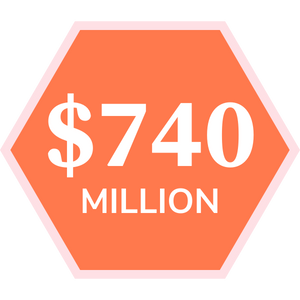
A new analysis estimates that Gov. Mike DeWine’s proposed child tax credit could produce $740 million in economic benefits each year for Ohio. This figure includes direct benefits for eligible families who would receive up to $1,000 per child each year, as well as other societal benefits that include avoiding the costs of crime and drawing in new revenue from future income.


EVENTS & HAPPENINGS

The Ohio Department of Children and Youth is hosting an online meeting to review eligibility and access to programs covered by the Ohio Department of Health’s Bureau of Maternal, Child, and Family Health programs on Monday, March 10, at 10 a.m. ET.

ZERO-TO-THREE is hosting an online session titled “Special Briefing: What Federal Actions and Proposed Budget Cuts Mean for Babies and Families” on Tuesday, March 11, at 4 p.m. ET.


BEYOND THE BUCKEYE STATE

Idaho is making headlines for a stunningly drastic proposal to eliminate required adult-child ratios in early care and education settings. EdSurge discusses what’s at stake for child safety if the policy change goes through. ZERO-TO-THREE has a write-up on why child care ratios and group size are essential for child health and well-being.

In November 2024, Travis County, Texas, became the first county in the Lone Star State to pass a voter-approved children’s fund. The ballot measure increased property taxes to fund access to affordable and high-quality child care, as well as after-school and summer programs for children in families with low incomes.


WHAT WE'RE READING

The Ohio Department of Children and Youth has just published a scorecard tracking data on infant mortality. It includes data on infant and maternal health outcomes that may correlate to mortality (e.g., low birthweight, maternal prenatal care, maternal smoking). The data can be sorted by region, county, Medicaid use, and more.

The Hechinger Report details the struggles parents may face when trying to obtain early intervention services for children born prematurely, including poor communication about qualifying for services, and delays in obtaining services. There are also struggles experienced by the health agencies providing those services — like heavy caseloads and mediocre technology to track referrals. Advocates in the state of Illinois are hoping to pilot a program that helps families enroll in services before an infant is discharged from the NICU.

The Hechinger Report also looks at districts that are making their school buildings better for preschoolers. Tailoring these spaces comes at a time when enrollment in state-funded preschool is at a record high. Curating spaces that are welcoming, play-oriented, and the right size for young children are proving to help child behavior and increase teacher job satisfaction.


RESEARCH ROUNDUP

A new study published by researchers at The Ohio State University’s College of Education and Human Ecology and the University of Minnesota shows that longer paternity leave can positively impact co-parenting between moms and dads. Researchers analyzed data from the New Parents Project featuring 182 couples who answered a series of questions in the third trimester and again when their baby was 3, 6, and 9 months old. When their babies were 9 months old, parents were asked about both maternal “gatekeeping” — how much a mother welcomes or discourages care from dad. (Researchers called the former “gate-opening” and the latter “gate-closing.”) The study found that the longer paternity leave taken by the father, the less likely a mother was to display gate-closing behaviors. One of the study authors, Dr. Sarah Schoppe-Sullivan, told Ohio State News, “A lot of research on the transition to parenthood suggests that nearly all couples fall into this trap of having unequal roles — even highly educated, two-earner couples like those in our study. This study suggests that a longer paternity leave may be a way out of the trap, that it may lead to a situation where fathers do have more of an equal role in parenting.”


This edition was written by Jamie O’Leary and Janelle Williamson.

If you like this newsletter, forward to a friend! Subscribe here.


crane.osu.edu

X  LinkedIn