|
Ampersand Insights, November 2026
Our latest company news, investment updates, leadership perspectives and industry insights.1
(View Newsletter as Web Page)
| |
From Diagnosis to Dose: Partnering with Families Who Can't Afford to Wait
For families facing ultra-rare genetic diseases, traditional drug development models often offer few viable pathways forward. More and more, parents are taking it on themselves: they start foundations, fund the research and push their loved ones’ therapies toward the clinic. Ampersand portfolio company Genezen, a viral vector CDMO located in Fishers, Indiana, and Lexington, Massachusetts, has become a key manufacturing partner for these patient-led programs. In recent months, Genezen has announced partnerships with:
-
The Charlotte & Gwenyth Gray Foundation to Cure Batten Disease, for CLN6 Batten disease, an inherited, fatal brain disease in children that gradually takes away sight, movement, speech and thinking, and causes seizures
-
The Raiden Science Foundation, for UBA5 disorder, an ultra-rare genetic condition that causes severe seizures starting in infancy, major developmental delays and movement problems
-
Nevena Lešević, who is advancing an N-of-1 AAV9 (adeno-associated virus serotype 9) gene therapy for her son Kosta’s ultra-rare ARCA2 (autosomal recessive cerebellar ataxia type 2), a progressive genetic disorder that damages the part of the brain controlling balance and coordination
-
Elly’s Team, for NEDAMSS, a rare genetic disorder in which children who have been developing normally begin to lose skills, including speech and movement, and develop seizures
-
Galibra Neuroscience, for SSADH deficiency, a rare inherited metabolic disorder where the body can’t properly break down GABA, a brain chemical, leading to developmental delays, low muscle tone, seizures and speech difficulties
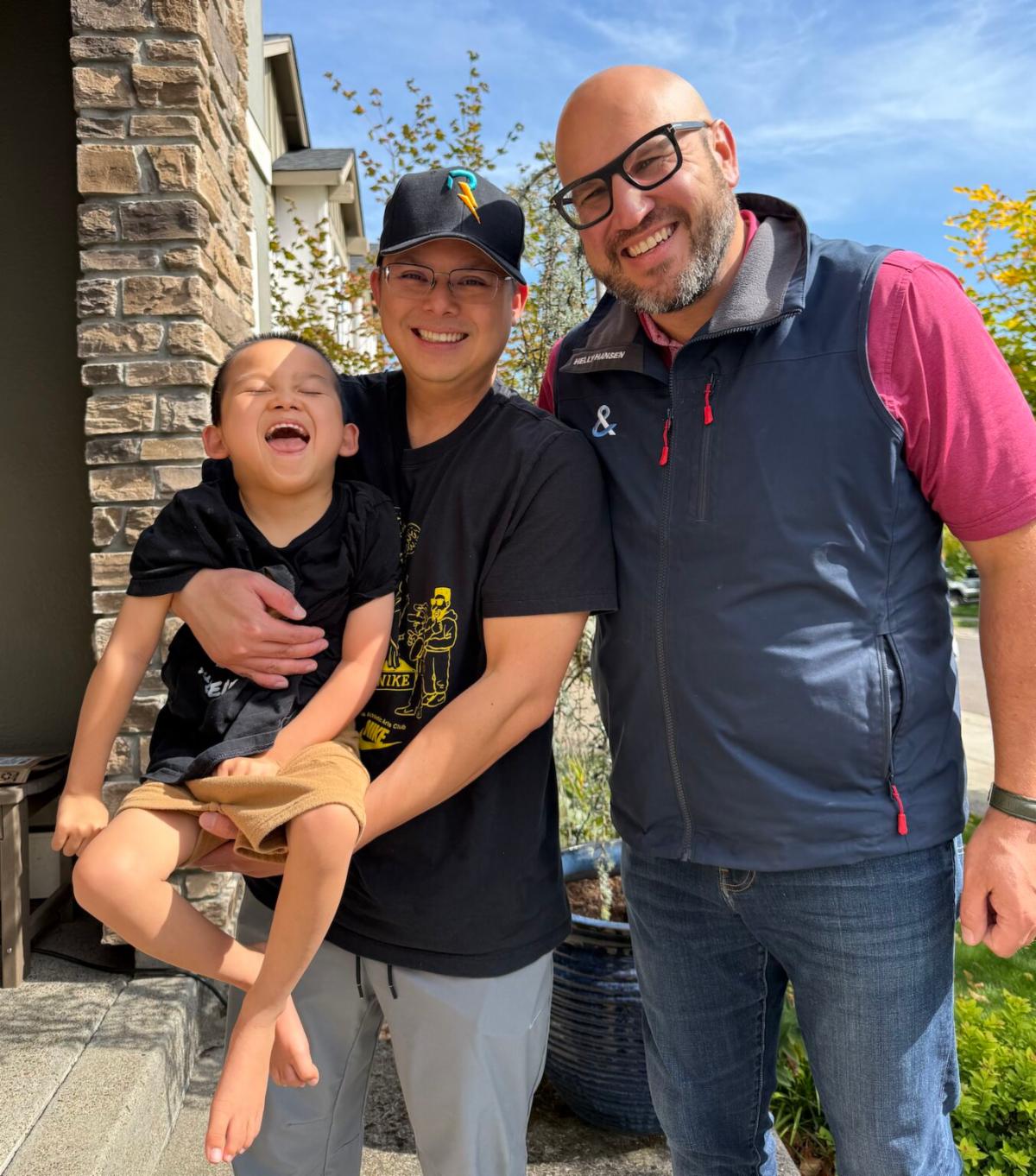
Chairman & CEO Steve Favaloro (pictured below visiting a patient) and Dr. Susan D’Costa, Chief Technical and Commercial Officer, talk about what these partnerships require, the science behind them and how they fit into the company’s growth.
| | |
For readers less familiar with the field, what role does a viral vector CDMO play in getting a gene therapy from the lab to a patient?
Susan: Chemistry, Manufacturing and Controls (CMC) is a critical component of gene therapy development, and for viral vectors, the process is intrinsically linked to the product itself. For ultra-rare and individualized therapies, where resources and timelines are often especially constrained, the right CDMO partner is even more critical. An experienced CDMO must be able to take a nimble, risk-based approach to development, balancing speed, cost and technical complexity without compromising patient safety or product quality.
Genezen has built a growing portfolio of partnerships with parent-led foundations. How did this become a focus for the company, and why does it matter to you?
Steve: At Genezen, our mission has always been rooted in the belief that every patient deserves a chance at a better future, regardless of how rare their disease may be. As we've grown our capabilities and experience in viral vector development and manufacturing, we've seen an increasing number of parent-led foundations stepping forward to advance therapies where traditional drug development models have not provided a viable path. For me, these partnerships represent the very best of what our industry can accomplish when scientific innovation meets a shared sense of purpose. They're a powerful reminder of why we do what we do, and I'm incredibly proud that Genezen can play a meaningful role in helping these families move promising therapies forward.
Your work with Nevena Lešević supports an N-of-1 trial for her son Kosta. What does it take, scientifically and from a regulatory standpoint, to manufacture a therapy for a population of one?
Susan: Developing a gene therapy for a single patient presents a unique set of challenges, but the fundamental requirements for safety, quality and regulatory compliance remain just as critical as they would for a larger clinical program. Our strategy is to leverage Genezen's extensive AAV9 experience and established manufacturing platform to produce a single batch of material at scale, with a portion allocated to the necessary nonclinical studies and the remainder intended for clinical use, subject to appropriate testing and regulatory authorization. For an N-of-1 program, every decision carries significant weight. Our job is to navigate the technical and regulatory complexities while keeping the ultimate goal in focus: giving Kosta the opportunity to receive a potentially life-changing therapy.
Cost is often the biggest barrier for these families. How has Genezen built a more streamlined model, including the expanded SGS testing collaboration, to make clinical-grade manufacturing more accessible?
Steve: Cost is one of the most significant barriers facing parent-led foundations, and we recognize that every dollar invested in development needs to move these programs closer to the clinic. By leveraging our established platforms, we avoid unnecessary development work, and we're building strategic relationships with industry partners, including our expanded collaboration with SGS, to help streamline critical testing activities and create a more coordinated, cost-conscious development pathway. The Charlotte & Gwenyth Gray Foundation to Cure Batten Disease was one of our first family-led foundation partners to benefit from this collaboration.
How do these programs fit alongside Genezen's broader commercial business, and what do they mean for the company's long-term growth?
Steve: We see these partnerships as a natural extension of our broader business strategy and our commitment to advancing transformative therapies for patients. From a long-term perspective, we believe there's an opportunity to build a more scalable and sustainable model for supporting ultra-rare and individualized therapies alongside our traditional commercial programs. It's an approach that aligns our growth with our mission, allowing us to continue investing in our capabilities while helping expand access to promising therapies for underserved patient populations.
Looking ahead, how do you see the outlook for ultra-rare and individualized gene therapies evolving, including on the regulatory front, and what role do you want Genezen to play?
Steve: I believe we're entering a new era for ultra-rare and individualized gene therapies, where advances in science, manufacturing and regulatory approaches have the potential to make treatments accessible to patients who historically have had very few options. But realizing that potential will require a different model of collaboration across the industry.
Susan: I believe we're at an important inflection point for ultra-rare and individualized gene therapies, with an opportunity to rethink how we approach development for these small patient populations. One of my priorities is working collaboratively with regulatory agencies and other stakeholders to establish more streamlined, fit-for-purpose pathways that recognize the unique challenges of these programs.
Read the full conversation with Steve and Susan, including how Genezen is moving the Raiden Science Foundation’s UBA5 program into clinical manufacturing, how learnings carry from one AAV9 program to the next and why Susan joined the board of Elly’s Team.
| | |
Sustainability by Design: How Gannet BioChem Is Building a Greener CDMO
| |
|
Since its carve-out from Nektar Therapeutics in December 2024, Gannet BioChem has established itself as a leader in activated polymers and PEG reagents, operating from its 124,000 sq. ft. FDA-inspected facility in Huntsville, Alabama. Alongside that growth, the company has placed greater strategic focus on sustainability, aligning its operations with Science Based Targets initiative (SBTi) objectives, and the early results are already measurable. Dr. Tony Sander, Chief Operating Officer at Gannet BioChem, explains what's driving the industry's focus on sustainability, where Gannet started and how the team is balancing environmental goals alongside rapid growth.
What's driving pharma's push toward sustainability?
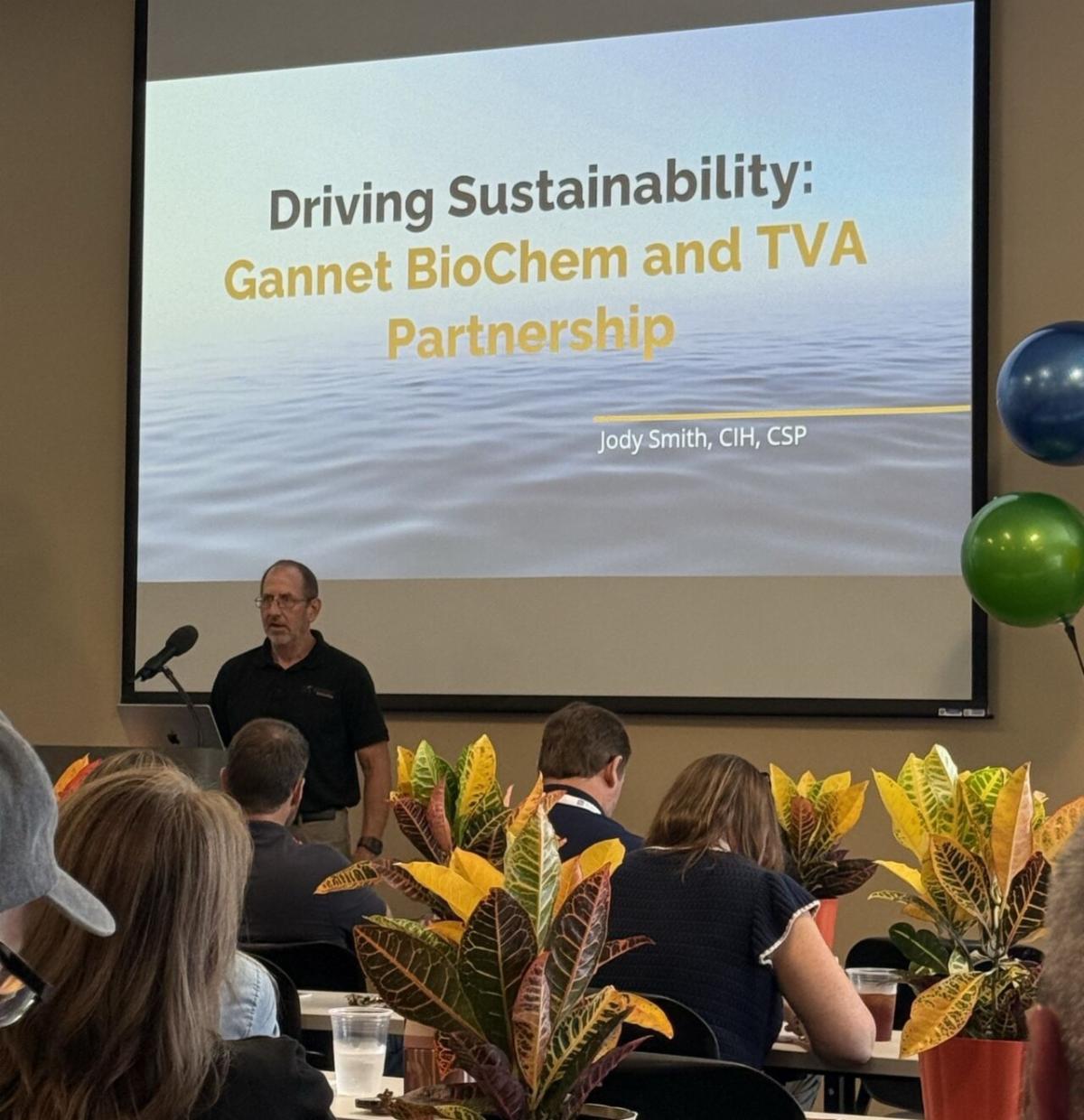
Tony: In pharmaceutical manufacturing, sustainability is rapidly becoming a business norm. As a standalone CDMO, we're an integral part of our customers' supply chains, so our operations contribute to their Scope 3 emissions and to each drug product's overall carbon footprint. Environmental stewardship is therefore increasingly important to securing and maintaining strong customer partnerships. We're addressing that proactively by aligning our operations with SBTi objectives and working to reduce hazardous waste generation. We're also collaborating closely with our utility provider, TVA (Tennessee Valley Authority), through its EnergyRight Strategic Energy Management program on energy management, performance tracking and incentive programs, which support measurable, data-driven improvements in energy efficiency and environmental performance.
Where does Gannet stand today?
Tony: Our approach to sustainability has evolved significantly in recent years. Previously, we were part of a larger publicly traded biotech, where sustainability was one of several business priorities competing for resources. Becoming a standalone CDMO within Ampersand's life sciences portfolio changed that. We've been able to place greater strategic focus on sustainability and dedicate more resources to reducing the environmental impact of our operations.
Where did you begin?
Tony: With the low-hanging fruit. We performed an energy scan and energy mapping, then built an opportunity register targeting our biggest sources of energy consumption. From there, we've focused on optimizing operating conditions, eliminating unnecessary redundancy and identifying equipment that could be replaced with more efficient alternatives. Even these seemingly straightforward improvements take time and ongoing commitment, along with internal resources, close vendor collaboration and capital investment.
Where are the biggest opportunities for a manufacturer like Gannet?
Tony: One of the biggest opportunities lies in recovering and reusing materials that would otherwise become waste. As a chemical manufacturer, solvents have historically been our largest hazardous waste stream. We've developed closed-loop recovery and reuse programs for isopropyl alcohol (IPA) and dichloromethane (DCM), and we continue to pursue additional recycling opportunities. One of our most impactful initiatives has been our participation in chemical reuse programs, which has significantly reduced Scope 3 emissions across our value chain. The results speak for themselves: a 40% reduction in chlorinated solvent waste and an 82% reduction in non-chlorinated solvent waste.
What are the main challenges?
Tony: Most manufacturing facilities weren't originally designed with sustainability in mind. Our core expertise has always been in chemical manufacturing, and our biggest challenge is that we're working to reduce our greenhouse gas emissions while rapidly growing the business. Growth naturally means more energy, more raw materials and more manufacturing activity. Incentive programs offered by our utility provider also tend to run on much longer timelines than a fast-growing business would prefer. Our experience has shown us how important it is to consider sustainability from the outset of any capital investment or expansion decision. By building environmental considerations into how we improve our processes and grow our operations, we can work toward reducing our environmental impact while continuing to meet our customers' needs.
What comes next?
Tony: For now, we're focused on what's within our direct control: optimizing operations and investing in more efficient systems, equipment and processes that improve yield and throughput while minimizing waste. Over time, operational improvements alone may not be enough to reach our goals, and carbon offsets could become an important part of our approach. Looking further out, the industry will keep moving closer to truly sustainable manufacturing, particularly as new facilities are built. When sustainability is written into user requirements, engineering design and equipment and process selection from day one, rather than retrofitted later, operations can be optimized for both environmental performance and long-term efficiency.
| | | | |
Portfolio Companies Launch New Brands
Two Ampersand portfolio companies recently introduced new brands after combining complementary businesses. In both cases, the new name tells the story of what the combined company stands for.
| | |
NanoImaging Services and Proteos have united as TrueCourse Biosciences, an integrated contract research organization based entirely in the US. AI is speeding up drug discovery, but experimental validation still decides which candidates move forward. The TrueCourse name reflects that moment. The company helps pharmaceutical and biotech teams see how their targets and drug candidates actually behave, so they can set the right course for their programs with confidence. TrueCourse combines NanoImaging Services’ leadership in cryo-EM with Proteos’ expertise in protein production. It also offers binding assays, X-ray crystallography and nanoparticle characterization at sites in San Diego, CA; Woburn, MA; and Kalamazoo, MI.
“By expanding our capabilities and connecting them more closely, we can help researchers cut through complexity, reduce uncertainty and identify the clearest path forward for their programs,” said Dr. Lindsey Gottler, CEO of TrueCourse Biosciences.
| |  | |
P95 Julius Clinical has launched as AKEURA, a global specialist CRO with expertise in both clinical trials and real-world evidence (RWE). The name draws on the company’s Dutch roots. It was inspired by “A keur,” the Dutch mark of A-grade quality, and by the experienced specialists who bring that standard to every study. The new brand completes the integration of P95 and Julius Clinical after their 2025 merger. It arrives as regulators rely more on real-world data, so clinical and RWE expertise need to work together from the start of a program. AKEURA is headquartered in Zeist, the Netherlands, and has more than 500 researchers, clinicians and scientists. It has supported more than 1,000 studies in over 75 countries.
“Every study comes down to thousands of decisions, and getting them right means arming the people making them with the information and technology they need,” said Bassem Saleh, CEO of AKEURA. “Today, that belief has a name: AKEURA.”
| | | |
Ampersand Recognized by GrowthCap and Inc.
Ampersand has recently received two industry recognitions. The firm was named to GrowthCap’s Top Private Equity Firms of 20262 list for the third consecutive year. Inc. also named Ampersand a 2026 Founder-Friendly Investor3 for the fifth consecutive year.
GrowthCap based its assessment on two decades of industry observation, direct conversations with investors and CEOs, reviews of firm activity and feedback from portfolio company leaders and industry peers. The evaluation covered January 1, 2025 through June 30, 2026.
Inc.’s Founder-Friendly Investors list names private equity firms, venture capital firms and lenders that founders see as strong partners in building their companies. To build the list, Inc. surveyed entrepreneurs who have sold to private equity and venture capital firms or worked with lenders, and it reviewed how their companies performed during those partnerships. Ampersand is one of 294 firms on this year’s list.
Both recognitions come shortly after Ampersand closed its latest fund, Ampersand 2026 Limited Partnership (AMP-26). The fund was oversubscribed and closed at its $1.5 billion hard cap. Ampersand is grateful for these recognitions of its long history of partnering with healthcare and life sciences companies.
| | | |
[1] This newsletter is provided by Ampersand Capital Partners (“Ampersand”) for informational purposes only and does not constitute investment advice or an offer to sell, or a solicitation of an offer to buy, any interest in any fund or other investment vehicle managed or advised by Ampersand. Any such offer will be made only to qualified investors by means of confidential offering documents. The portfolio companies discussed herein were selected for illustrative purposes, do not represent all investments made by Ampersand, and it should not be assumed that any investment in these companies was or will be profitable. Past performance is not indicative of future results. Views expressed by portfolio company executives are their own and do not necessarily reflect the views of Ampersand. Certain information herein has been provided by portfolio companies or third parties and has not been independently verified by Ampersand. This newsletter contains forward-looking statements that are subject to risks and uncertainties, and actual results may differ materially. Information is current as of November 2026, and Ampersand undertakes no obligation to update it.
[2] This award was provided by GrowthCap on August 27, 2026, and based on the time period of January 1, 2025 to June 30, 2026. Ampersand submitted a nomination to be considered for the GrowthCap Top Private Equity Firms 2026 list and, once selected by GrowthCap as an honoree, Ampersand paid a publishing and copyright fee to GrowthCap to promote this award. The data provided in this award publication is for informational purposes only and should not be construed as investment advice, endorsement or recommendation. GrowthCap believes the information in this publication to be accurate but does not verify its accuracy independently and does not warrant or guarantee that it is accurate or complete. GrowthCap has no obligation to provide any updates or changes to the information. No investment decisions should be made using this information.
[3] The 2026 Founder-Friendly Investors list was announced by Inc. on October 27, 2026, and the award is based upon information from the calendar year 2025. Ampersand paid Inc. a nonrefundable application fee to participate in Inc.’s 2026 Founder-Friendly Investors list, which all applicants were required to pay. Ampersand also paid application fees in connection with its prior Founder-Friendly Investor recognitions. Ampersand applied for consideration, provided founder references and examples of founder-led investments and value creation as part of its submission. Inc. compiled its list by directly surveying founders who have sold to private equity and venture capital firms and worked with lenders, and then examined data on portfolio company growth during those partnerships. This award is not to be construed as indicative of future performance.
| | | | |