|
No doubt most everybody has heard that there is a global shortage of semiconductor chips that has affected automotive production and dealer inventories. Just recently there has been some good reporting on these issues which has made sense of these supply chain challenges. Understanding the situation allows us to manage our own vehicles better.
Some background...
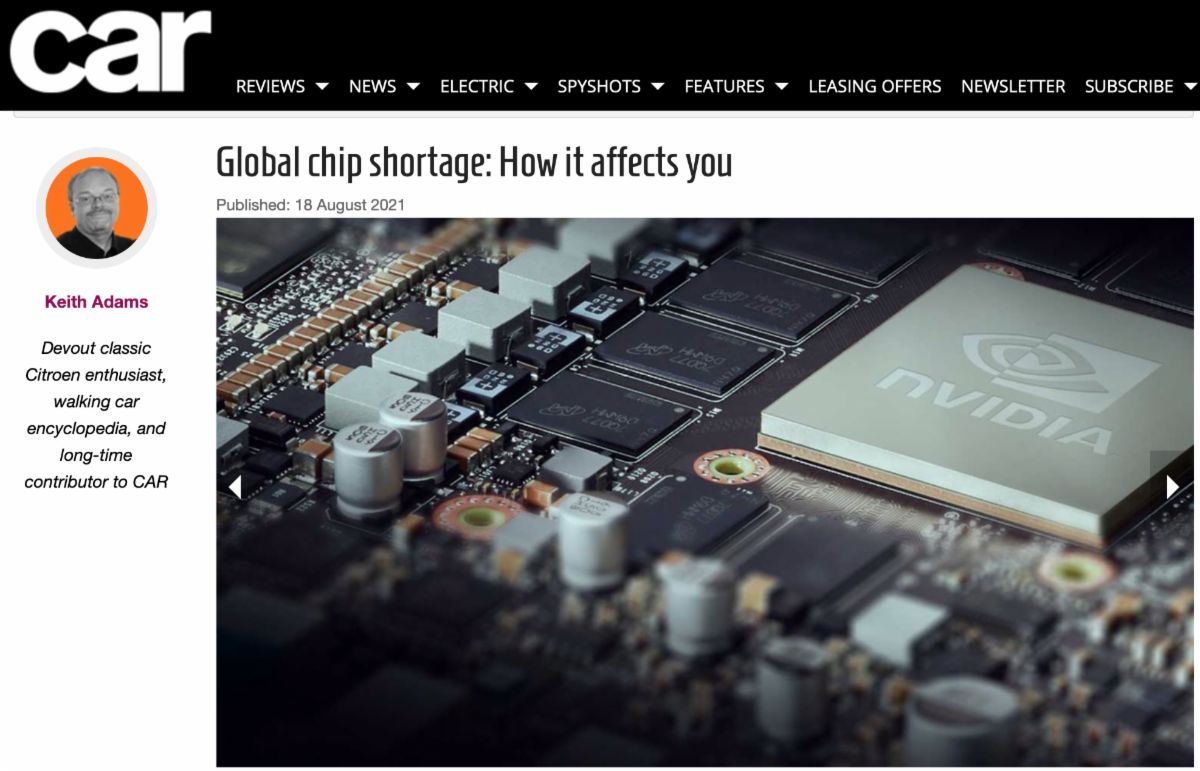
Semiconductor chips are in just about everything from toasters to the Mars Rover. There are thousands of them in each car that govern the powertrain, and provide the logic behind all the safety, comfort and convenience options. The automotive industry accounts for about 3% of global chip production. 75% of all the chip production, and 100% of the most sophisticated versions, are made in Asia - mostly Taiwan.
Factories producing chips cost in the tens of billions of dollars, and there are only a few companies with the scale and expertise necessary to manufacture them. Not even Intel can make the most sophisticated chips that are found in our iPhones and other high-end consumer electronics. This is a strategic resource as important as oil, located in a politically sensitive area of the world. It wouldn't take much for it to blow up with huge global economic and security repercussions.
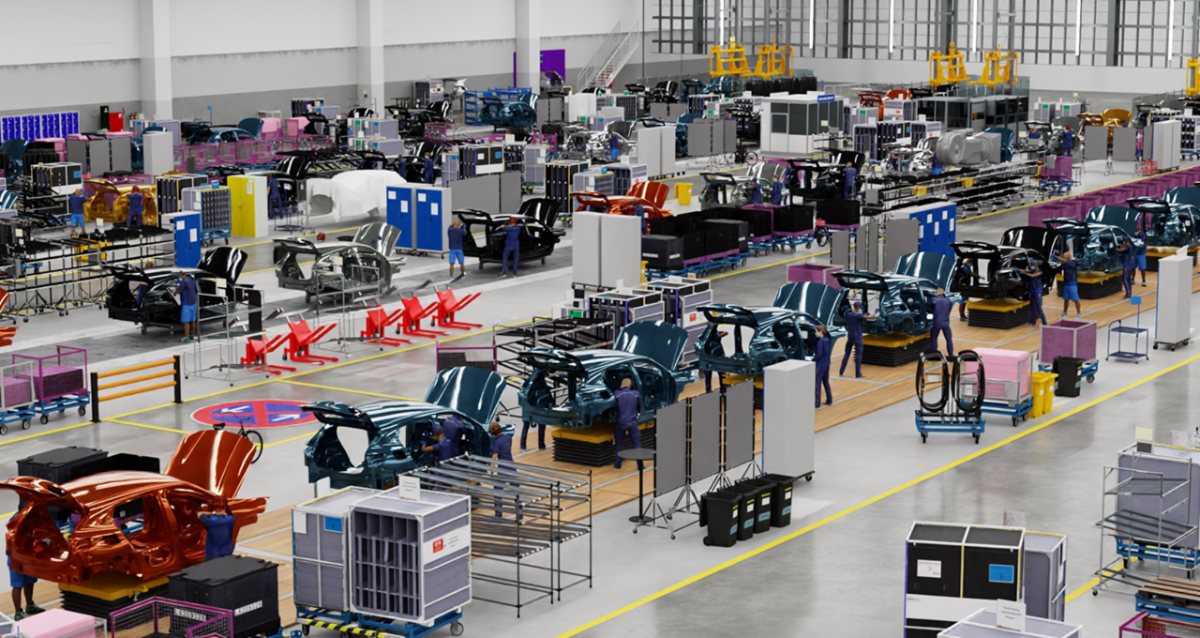
When COVID started in early 2020, automobile manufacturers stopped production either because COVID appeared on the factory floor, or they were worried about excess supply. Modern production methods are 'just in time, just in place', meaning the suppliers make daily deliveries to the factories to a pre-determined place on the assembly line. The factories have no inventory to speak of. Even if they wanted to keep accepting component deliveries, most factories have no place to put the parts except on cars moving down the assembly line. Orders were cancelled for chips and everything else, and this rippled throughout the global supply chain.
Meanwhile, the demand for home office and video equipment increased dramatically with the shift to video conferencing and working from home. Also, demand for all manner of home entertainment items from smart TVs to gaming consoles exploded. The chip capacity used by automotive manufacturers was taken up (and then some) by other electronic devices.
Then there was a fire at the Renesas Electronics factory near Tokyo, which is one of the largest semiconductor factories for the automotive industry. Severe weather affected the ports in Texas and Taiwan which didn't help.
When it looked like there was some light at the end of the COVID tunnel, many people were sitting on accumulated savings from staying at home and not spending anything. Demand started to increase for cars and manufacturers started production back up. Except now there were no chips available, and there were other issues jump-starting the global supply network. In many instances vehicles were assembled, but towed off the line into a storage compound, waiting for the chips to be installed.
Dealer inventories were sold down to unprecedented levels. Ads started to appear on commercial radio from car dealers trying to entice people to sell their cars. Volume dealers were actually suggesting that customers factory order vehicles as they didn't have anything on the lot. Manufacturer and dealer incentives shrivelled, and used car values went up. It's easy to find a parking spot now!
Instead of year-over-year growth that most manufacturers were accustomed to, most had significant decreases. All will be re-evaluating supply chain vulnerabilities, and you can expect automobile manufacturers getting in the chip business through acquisitions and partnerships.
The vehicles affected are different between manufacturers and production facilities, so dealers may have some models in stock but not others. While some vehicles are back in production, they may not be available with the full complement of options. Most estimates suggest that the supply chain will be back to normal at the end of 2021, but there could still be residual affects into 2022.
What does this mean for you?
Well, it is a good time to sell your car, that's for sure.
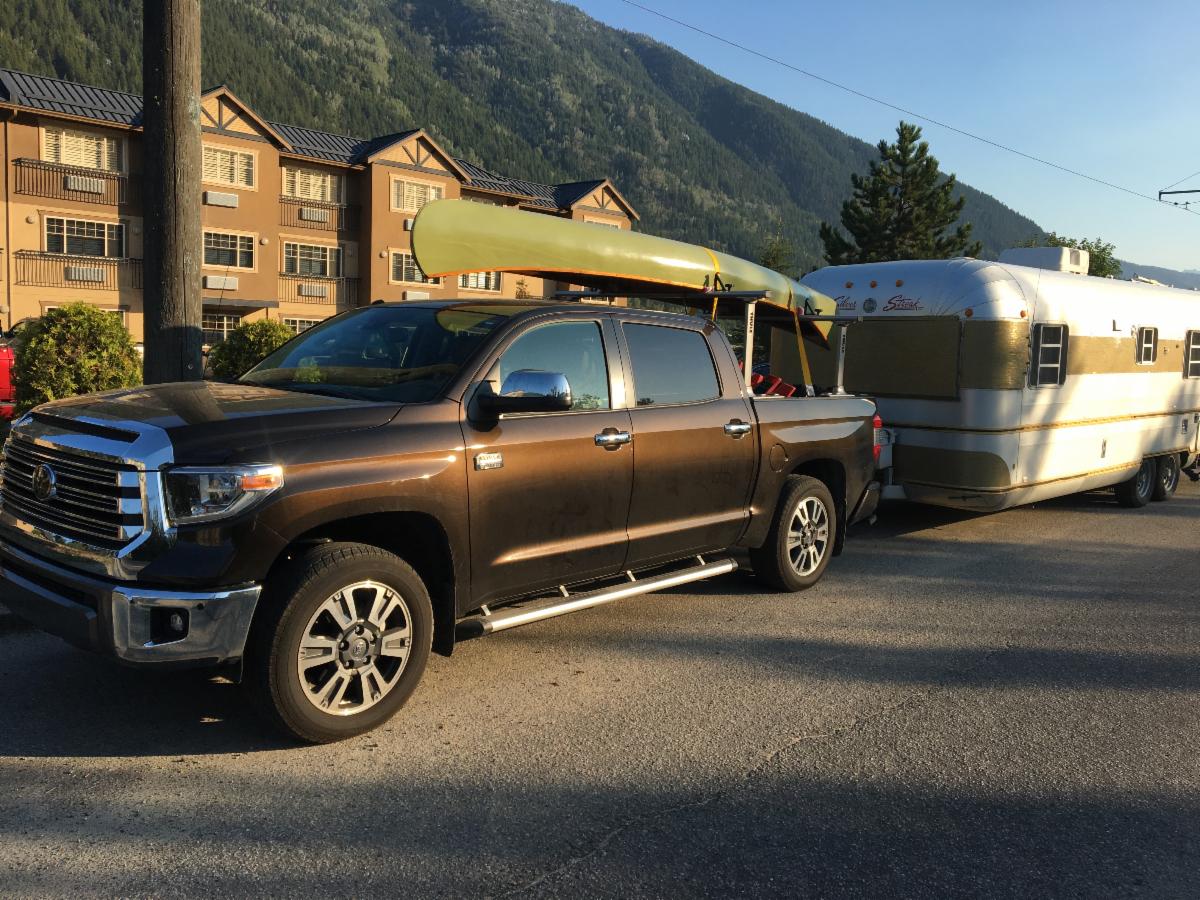
Here is an example: I sold my Toyota Tundra yesterday. I bought it new in 2019. The dealer was underwhelming, but the sales guy had eight kids (!), and I thought I might as well give him the business.
The Tundra wasn't a particularly competitive product as it basically hadn't been changed since 2007. Newer trucks from the 'Big 3' had many more bells and whistles, as well as more economical turbocharged engines. I valued space, reliability and resale which are hard to beat with a Tundra. I got the top-of-the line '1794' edition which gives you a badge on the front fenders, fake wood and nice seat covers. It was $68,000 with some accessories, and they took $4,000 off. I financed $64,000 at half a percentage point of interest, which was a subvented rate worth another $4,000 over the term of the loan.
I sold it for $56,000 after 26 months and 36,000km - 87.5% of its purchase price. The Toyota dealer offered $52k, a Honda dealer offered $54k, and about 15 brokers made offers on it - all within a 24 hour time span. It went to a guy who was shipping trucks to the US. After the lien was paid off, I got a cheque for $16,000 which was my equity.
This was no creampuff either - it had its share of misfortune. Vandalism, hail, Land Rover fenders which flew out of it at 130km/hr, scratches on every panel from the kid's bikes, a dent in the door from my wife helping me back up the trailer - it almost needed a restoration! I was going to fix it up, but the guy wanted it right away, and I took $1,000 off of the agreed price because of the paint work needed.
I placed an order for a 2022 Tundra which gets a long-awaited re-design, and will come early next year in time for camping season. I feel pretty good about that purchase. I mean, I'm used to telling people that they have that much negative equity after selling a two year old vehicle...
In fact, in 20 years of selling cars, excepting modern classics like the Porsche GT2/3/RS/911R, I don't recall used car values as high for any car as they are now. And those specialty cars that didn't depreciate (or went up in value) were never driven. Certainly they were never used for hauling car parts and camping trips.
Because new car prices are more-or-less fixed by MSRP, my advice is to take advantage of the market and sell whatever you have now. You can always order a car, and in a few months things will get back to normal. Whatever you do, don't get caught up in the situation and buy something you don't want, or pay too much for it. The semiconductor chip problem will sort itself out, and it will be once again hard to find a parking spot at a car dealer.
Of course, I can help with any automotive transaction, just reply to this email.
|