|
Week 1 of the 2026 Session
On Tuesday, January 13th the legislature officially gaveled in to begin the 60-day regular session. The countdown clock reads 56 days until Sine Die begins with bills moving and evolving every day—stay on top of county priorities with this weekly legislative bulletin, and with our comprehensive Bill Tracker.
| |
Join us for the 2026 Legislative Day in Leon County! January 21st – Register Today!
| |
Each year during the height of legislative session, FAC hosts our Legislative Day in Leon County. Commissioners and staff are encouraged to come to Tallahassee
to assist in the lobbying efforts to protect home rule and prevent unfunded mandates. January 21st will be here soon, so book your hotel room and legislator appointments today!
| |
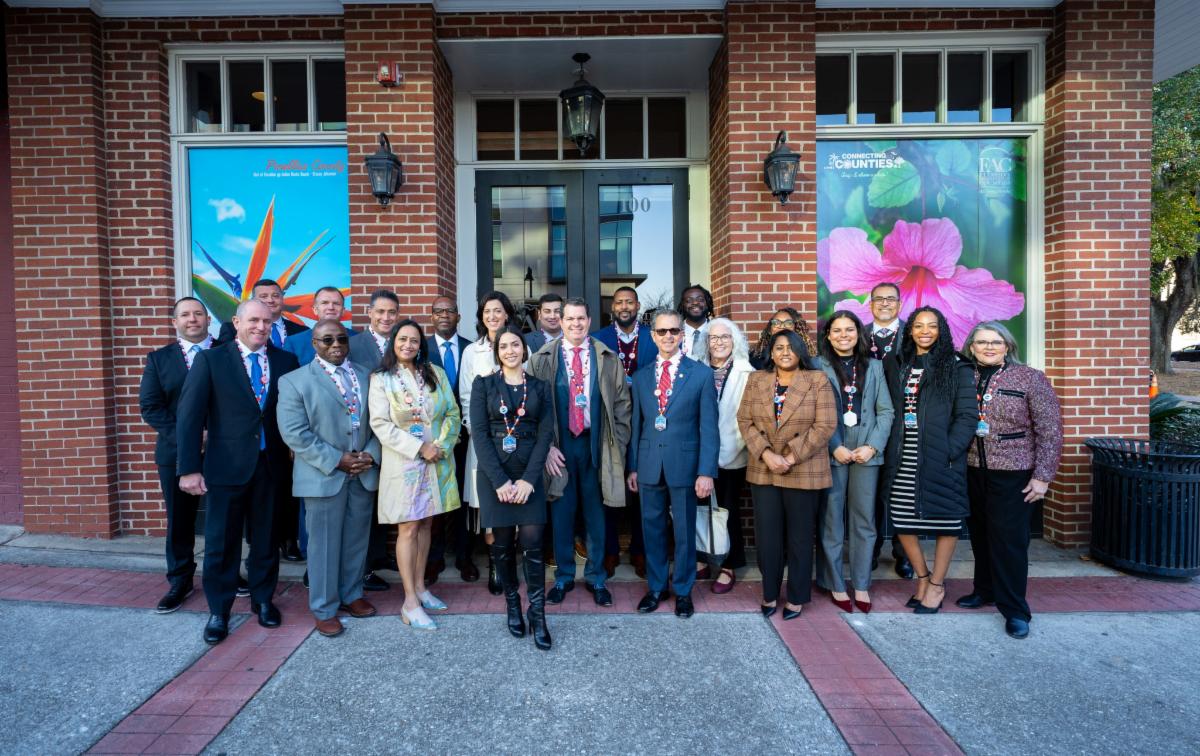
Palm Beach Comes to Town for their 2026 County Days
| | Palm Beach County kicked off session by hosting their County Days in Tallahassee. Commissioners and staff mobilized to the Capitol to speak with delegation members and other legislators regarding the county’s priorities this session. | | Governor and Presiding Officers Outline Session Priorities | | Governor DeSantis, Senate President Albritton, and House Speaker Perez opened Florida’s 2026 Legislative Session by outlining agendas centered on economic relief, accountability, and investment. DeSantis prioritized advancing his $117 billion budget with tax relief and state investments, and supporting redistricting and other key policies. The Governor did not provide additional details for a property tax relief proposal. Albritton focused on a “Rural Renaissance” to strengthen healthcare, education, transportation, and economic development in rural Florida while maintaining fiscal discipline. Perez emphasized addressing affordability, insurance, taxes, prescription drug costs, and infrastructure. All three leaders stressed collaboration to tackle Florida’s economic and fiscal challenges. |
Homestead Elimination “Phase Out” Clears House Committee
| | |
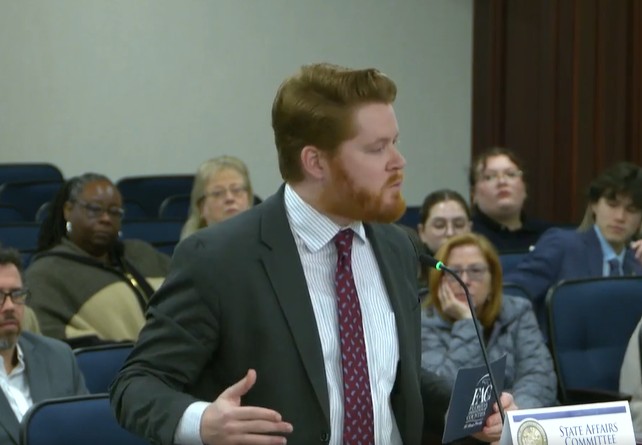
On Thursday, 1/15, the House State Affairs Committee passed HB 203 Phased Out Elimination of Non-School Property Tax for Homesteads favorably by Representative Miller. This bill proposes a constitutional amendment to significantly expand the homestead exemption from all ad valorem taxes other than school district levies. Beginning January 1, 2027, the exemption would increase by $100,000 annually for ten years and, by January 1, 2037, would fully exempt homestead property from county and municipal ad valorem taxation (excluding school taxes).
If approved by voters, the measure would remove over 40% of all homestead property taxes in 40 counties with many counties experiencing full homestead elimination by year four. The proposal represents a tax shift from homestead property owners to businesses and renters while not contemplating implementation or replacement of local revenues to provide core essential services.
To watch the committee hearing, click here.
| |
Sovereign Immunity Passes House
| | |
On Thursday, 1/15, HB 145 Suits Against the Government by Representative McFarland passed favorably. This bill substantially revises Florida’s waiver of sovereign immunity, significantly increasing tort liability exposure for counties and other local governments. Beginning October 1, 2026, the cap for claims accruing between 2026 and 2031 increases to $500,000 per person and $1 million per incident, rising further after 2031. Counties may settle claims above statutory caps without legislative approval, regardless of insurance limits, and insurers may not condition payment on a claims bill. The bill also lengthens notice and statute of limitations periods, expanding litigation risk. These changes may increase insurance costs, self-insurance reserves, and budgetary pressure on county governments.
To watch the committee hearing, click here.
The Senate companion, SB 1366 by Senator Brodeur has not been heard yet this session.
| | Senate Moves Blue Ribbon Development in First Committee | | |
On Tuesday, 1/13, the Senate Community Affairs Committee passed CS/S48 Blue Ribbon Projects favorably by Senator McClain. This bill requires administrative approval of 10,000+ acre “blue-ribbon” projects for properties that are owned by the same person or entities. The bill requires 60% of the land to be set aside for reserve areas while allowing the other 40% of the land for development.
- The automatic approval under this bill strips Floridians and their local officials of any meaningful voice by mandating an automatic approval process that overrides comprehensive plans, eliminates public hearings, and shifts land-use authority from elected officials to large landowners.
- Without any enforcement mechanisms for the bills’ requirements, communities cannot ensure compliance or protect long-term planning goals.
-
Florida law already allows large-scale planning through existing sector plans under s. 163.3245 F.S., for properties with 5,000 acres.
- This bill creates an unnecessary new framework that adds confusion and inconsistency to the state’s growth-management system.
During committee, an amendment was adopted to tighten the language regarding the reserve areas of the bill. FAC opposed this bill in committee, as it would impose broad preemption on our home rule authority and current growth management frameworks.
To watch the committee hearing, click here.
The House companion, HB 299 by Representative Melo, is waiting to be heard in its second committee stop, the House Commerce Committee.
| |
FAC Supports 180 Glitch Fix Through First Committee Stop
| | |
On Tuesday, 1/13, the Senate Community Affairs Committee passed SB 840 Land Use Regulations for Local Governments unanimously by Senator DiCeglie.
The bill amends certain provisions in CS/CS/SB 180 (2025) relating to restrictions on local
government power to regulate land use following hurricanes. The bill reduces the number of “impacted local governments” under s. 252.422(1), F.S., by redefining the term to include only counties located entirely or partially within 50 miles, instead of 100 miles, of the track of a hurricane listed in a federal major disaster declaration, and the municipalities located within those counties. The bill revises s. 252.422(2), F.S., to allow impacted local governments, within 1 year after a hurricane makes landfall, to propose or adopt moratoriums, amendments to comprehensive plans or land use regulations, or procedures concerning review, approval, or issuance of a site plan, development permit, or development order.
However, under the bill, impacted local governments may not:
- Enforce a moratorium that prevents or delays the repair or reconstruction of an existing improvement damaged by a hurricane. An exception is allowed for enforcement of a moratorium addressing stormwater or flood water management, potable water supply, or necessary repairs to or replacement of sanitary sewer systems.
- Require the repair or reconstruction of an existing improvement damaged by a hurricane to comply with a comprehensive plan or land development regulation amendment that becomes effective after a hurricane makes landfall.
- Enforce a change to a procedure concerning review, approval, or issuance of a site plan, development permit, or development order, which increases the timeframe for final action and which is effective after a hurricane makes landfall.
The bill clarifies that these restrictions only apply to property damaged so severely that the
repairs or reconstruction require a permit. Local governments may require property owners to show documentation related to the damage caused by the hurricane. If a property was not damaged enough to require a permit for repair or reconstruction, comprehensive plan or land development regulation amendments and moratoriums will apply.
However, the bill continues to permit impacted local governments to enforce if the associated application is initiated by a private party other than the impacted local government and the property that is the subject of the application is owned by the initiating private party. Impacted local governments may also enforce if, as clarified by the bill:
- The proposed comprehensive plan amendments and land development regulations are approved by the state land planning agency for an area of critical state concern designated pursuant to chapter 380, F.S.
- The adoption of the comprehensive plan amendment or land development regulation amendment is required to comply with state or federal law.
- The adoption of the comprehensive plan amendment or land development regulation implements a floodplain management standard consistent with 44 C.F.R. part 60, relating to the National Flood Insurance Program.
The bill deletes the provision in s. 252.422, F.S., allowing any person to file suit for declaratory and injunctive relief to enforce the section. It also deletes an Office of Program Policy Analysis and Government Accountability study requirement.
The bill clarifies that s. 252.422, F.S., does not restrict local government adoption or
enforcement of changes to the Florida Building Code or local technical amendments there to. CS/CS/SB 180 similarly restricted the regulatory powers of local governments listed within the federal disaster declaration for Hurricane Debby, Hurricane Helene, and Hurricane Milton. These restrictions, as revised by SB 840, expire on June 30, 2026. Without SB 840, the restrictions on local governments within the disaster declarations for Hurricane Debby, Hurricane Helene, and Hurricane Milton will not expire until June 30, 2028.
To watch the committee hearing, click here.
The House companion, HB 1465 by Representative Andrade has not been heard yet this session.
| |
Rural Renaissance 2.0 Passes Senate
| | |
On Wednesday, 1/14, the Senate passed SB 250 Rural Communities on the floor unanimously by Senator Simon. SB 250 is a wide-ranging rural policy and economic development bill that makes substantial structural changes to how the state supports rural counties, rural infrastructure, and rural public services.
The bill establishes the Office of Rural Prosperity within the Department of Commerce to coordinate rural initiatives statewide. The Office will administer grants, provide technical assistance to local governments, stand up seven regional liaison centers, and maintain a statewide resource directory to help rural communities access state and federal programs.
Another important provision of the bill is the revision of the fiscally constrained county threshold. SB 250 increases from $5 million to $10 million the amount a county may raise from one mill of ad valorem tax before phasing out of designated fiscally constrained status. Raising the mill threshold will allow additional counties to qualify for enhanced distributions under s. 218.67, F.S., and will help stabilize funding for counties with limited revenue-raising capacity.
The bill also creates two major new statewide rural grant programs. The Renaissance Grants Program, which provides block grants for counties experiencing long-term population decline. These funds may be used to promote growth, stabilize community services, support workforce initiatives, and implement local revitalization strategies tailored to each county’s needs. The other program is the Public Infrastructure Smart Technology Grant Program, which supports the deployment of digital, automated, and data-driven technologies to improve the operation, efficiency, and resiliency of public infrastructure systems in rural areas, including transportation, utilities, and emergency response networks.
SB 250 also makes significant transportation investments by directing new allocations and enhanced priority funding for rural roads and bridges. This includes updates to the Florida Arterial Road Modernization Program, increased support for the Small County Road Assistance Program, and targeted funding for rural freight, agricultural corridors, and safety improvements.
The bill adjusts multiple state revenue-sharing programs, including the half-cent sales tax, documentary stamp distributions, and communications services tax allocations. Collectively, these changes steer additional recurring funding toward rural infrastructure, transportation systems, and general county revenue support.
SB 250 expands the Florida Small Business Development Center Network’s role in rural areas by increasing funding for consulting, outreach, and technical assistance to small businesses in rural and economically distressed communities. It also authorizes matching-fund waivers or reductions for rural local governments seeking state or federal grants, reducing financial barriers to capital projects and economic initiatives.
Several major rural health provisions are included. The bill creates new grants to expand primary and preventive care access, increases capital support for rural hospitals, and develops programs to strengthen emergency medical response, obstetrics, specialty care, and care coordination in rural communities.
Finally, SB 250 expands support for rural school districts, including adjustments to local housing funds, the creation of educator recruitment and retention incentives, and enhanced resources for regional consortia serving rural districts.
The bill takes effect July 1, 2026.
The House companion, HB 723 by Representative Abbott, has not been heard this session
To watch the floor session, click here.
|
Compatibility Preemption Passes Through Second Senate Stop
| | |
On Monday, 1/12, the Senate Judiciary Committee unanimously passed CS/SB 208, Land Use and Development Regulations, by Senator McClain. Originally, the bill revised laws on compatibility, infill residential development, building design regulations, and development fees. During the committee stop, an amendment was adopted that revised the bill, addressing only compatibility and development orders. The bill requires local governments to use objective compatibility factors and design standards for residential development, and limits denials based on compatibility to cases where officials specifically identify the issues and explain in writing why proposed mitigation won’t work, vague “neighborhood character” claims aren’t enough. The bill exempts certain areas/projects such as different land use categories, PUDs/master-planned communities, and older historic districts and doesn’t override existing plan/regulation consistency requirements.
The bill also requires the amount of any application fee associated with a development permit or development order to reasonably relate to the direct and reasonable indirect costs associated with the review, processing, and final disposition of the application, and to be published on the local government’s fee schedule. The fee may not be based on a
percentage of construction costs, site costs, or project valuation.
The House companion, HB 399 by Representative Borrero, has not been heard this session.
To watch the committee hearing, click here.
|
Land and Water Management Bill Advances with Broad State Preemption
| |
On Tuesday, 1/13, the House Natural Resources and Disasters subcommittee passed HB 479 Land and Water Management favorably by Representative Maggard. HB 479 prohibits counties and municipalities from adopting or enforcing any law, ordinance, regulation, rule, or policy that prohibits “adjacent upland activities” located outside a wetland buffer of at least 15 feet and an average of 25 feet. While framed as a wetland buffer limitation, the bill’s language extends beyond buffer size and instead broadly restricts local regulation of upland activities.
The bill does not define “adjacent” or “upland activities,” creating uncertainty regarding what local land-use, stormwater, and development regulations may be preempted. As drafted, the provision could be interpreted as establishing a safe harbor for all upland activity beyond the buffer, regardless of site conditions or environmental impacts.
Counties are concerned this broad preemption may limit their ability to review construction and stormwater plans and meet state and federal water quality and flood protection requirements. Wetlands play a critical role in flood attenuation and nutrient filtration, and restricting local regulatory tools may increase long-term costs and reduce flexibility.
To watch the committee hearing, click here.
The Senate companion, SB 718 by Senator McClain has not been heard yet this session.
|
FAC Supports Pre-Litigation Shade Meeting Legislation
| | |
On Wednesday, 1/14, the House Civil Justice and Claims Subcommittee HB 655 Public Meetings/Attorney Meetings to Discuss Private Property Rights Claims unanimously by Representative Duggan. This bill expands county authority to hold closed attorney-client sessions by expressly allowing private meetings during the 90-day notice period for Bert Harris Act property rights claims, in addition to pending litigation. This change helps counties protect legal strategy and settlement discussions during sensitive pre-litigation stages without public disclosure. FAC supported the proposal as part of the Legislative Action Plan.
The bill preserves Sunshine Law safeguards, requiring public notice, open meeting commencement and conclusion, and full recording and transcription by a certified court reporter. Transcripts become public upon claim or litigation resolution or expiration of limitations. Counties may incur modest administrative and transcription costs, but requirements largely mirror existing attorney-client session procedures.
To watch the committee hearing, click here.
The Senate companion, SB 332 by Senator Bradley has not been heard yet this session.
|
Land Conservation Bills Heard by Both Chambers
| |
On Tuesday, 1/13, the House Natural Resources and Disasters Subcommittee passed HB 441 Conservation Lands unanimously by Representative Kendall. HB 441 revises procedures governing the sale and exchange of conservation lands owned by the state and water management districts. The bill requires the Division of State Lands and water management districts to publish specified information on their websites at least 30 days before meetings to review proposed sales or exchanges of conservation lands.
For proposed sales, the bill requires publication of parcel information and a statement explaining why the land is no longer needed for conservation purposes. For land exchanges, the bill requires appraisal of certain parcels and advance publication of information identifying the parcels involved, conservation easements to be retained, and the conservation benefit of the exchange.
The Senate companion, SB 546 by Senator Mayfied passed its first committee unanimously and is waiting to be heard in its second stop.
To watch the committee hearing, click here.
| |
FAC Supports Code Inspector Body Camera Authorization
| | |
On Tuesday, 1/13, the Senate Community Affairs Committee passed SB 504 Code Inspector Body Cameras and SB 506 Public Records/Body Camera Recordings by a Code Inspector unanimously by Senator Burgess. Together, SB 504 and SB 506 create a statutory framework for the use of body cameras by local government code inspectors. SB 504 authorizes, but does not require, counties and other local governments to allow code inspectors to wear body cameras and mandates that any entity doing so adopt detailed policies on use, training, storage, retention, and periodic compliance review. It also clarifies that Florida’s wiretapping laws do not apply to code inspector body camera recordings.
SB 506 addresses public records implications of those recordings by creating a new exemption for body camera footage recorded by code inspectors in private residences, health care or social service facilities, or other places where a reasonable expectation of privacy exists. Counties must retain recordings for at least 90 days and manage disclosure requests under new, detailed statutory standards, including mandatory disclosures to recorded individuals and court-ordered access. The exemption applies retroactively and sunsets in 2031 unless reenacted.
The House companion to SB 504/SB 506, HB 509/HB 511 by Representative Partington passed its first committee on Wednesday.
FAC supported the bills in committee. To watch the committee hearing, click here.
|
Commercial Construction Projects Passes Both Chambers
| | |
On Tuesday, 1/13, the Senate Community Affairs Committee passed SB 526 Commercial Construction Projects unanimously by Senator Grall. On Wednesday, 1/14, the House companion, HB 405 by Representative Griffitts Jr., also unanimously passed its second committee and is awaiting a hearing in the third.
The bill revises Florida law governing public procurement to void and render unenforceable any provision in a public construction contract which purports to waive, release or extinguish the rights of a contractor to recover costs, damages, or equitable adjustments, or obtain a time extension, for delays in performance of the contract when the delays are caused by the awarding body or its agents, employees or persons working on its behalf. These provisions apply to all public construction contracts entered into on or after July 1, 2026.
However, the bill specifically does not void a provision that requires notice of a delay by the party claiming the delay; provisions for liquidated damages for a delay caused by the contractor or its subcontractors, agents or employees; or provisions related to arbitration or other procedures designed to settle contract disputes.
The bill also updates the Florida Building Codes Act by directing the Florida Building Commission, working with DBPR, to create a uniform commercial building permit application to be used statewide without modification, and to make it available online and to local enforcement agencies by July 1, 2027. In addition, the Commission must develop standardized supplemental trade forms (e.g., electrical, HVAC, plumbing, water/sewer) that locals may require depending on project scope, but these forms cannot lengthen review/permit timelines; agencies must also allow relevant reviews to happen simultaneously and may request extra documents only as needed for code/zoning compliance without changing the uniform application. The bill defines “commercial construction project” and requires local enforcement agencies to reduce permit fees when private providers do plan review or inspections by at least 50% and at least 75% if both services are provided by a private provider—while barring fee collection if the reduction is not provided.
To watch the committee hearing, click here.
|
Beach Management Bill Passes first Committee
| | |
On Tuesday, 1/13, the Senate Environment and Natural Resources Committee passed SB 636 Beach Management unanimously by Senator Leek. This bill revises state beach management policies by expanding eligibility for designation of “critically eroded” beaches, a prerequisite for state cost-sharing of nourishment and restoration projects. Counties that preserve local funding and meet easement and geological criteria may be automatically designated, increasing access to state funding of up to 75 percent of project costs.
To watch the committee hearing, click here.
The House companion, HB 1297 by Representative Greco has not been heard yet this session.
|
Statewide ADU Mandate Passes Second Committee Stop
| |
On Wednesday, 1/14, the Senate Appropriations Committee on Transportation, Tourism, and Economic Development passed SB 48 Housing unanimously by Senator Gaetz. This bill authorizes, but does not require, a landlord to accept a “reusable tenant screening report” when determining whether to lease a residential property to a prospective tenant. A prospective tenant requests and pays for the report, which is uploaded to a website that is then shared with a landlord. The bill also requires counties and municipalities to adopt an ordinance by December 1, 2026, to allow ADUs in any area zoned for single-family residential use. Such ordinance applies prospectively to ADUs permitted or constructed after adoption of the ordinance. Local governments may regulate the construction, permitting, and use of ADUs, except that local governments may not:
- Prohibit the owner of an ADU from offering the ADU for rent, except for terms of less than 1 month, notwithstanding s. 509.032(7)(b).
- Require an ADU owner to reside in the primary dwelling unit.
- Increase parking requirements on any parcel that can accommodate an additional motor vehicle on a driveway without impeding access to the primary dwelling unit.
- Require replacement parking if a garage, carport, or covered parking structure is converted to create an accessory dwelling unit.
The bill reaffirms current law by stating that the owner of a property with an ADU may not be denied a homestead exemption for those portions of property on which the owner maintains a permanent residence solely on the basis of the property containing an ADU. However, if the ADU is rented to another person, the ADU must be assessed separately from the homestead property and taxed according to its use. The bill directs the Office of Program Policy Analysis and Government Accountability (OPPAGA) to evaluate the efficacy of using mezzanine finance, or second-position short-term debt, to stimulate the construction of owner-occupied affordable housing.
To watch the committee hearing, click here.
The House companion, HB 313 by Representative Nix R. passed its first committee and is waiting to be heard by the second.
| |
DBPR Deregulation Bill Passes Through Second Committee Stop
| | |
On Wednesday, 1/14, the House State Administration Budget Subcommittee passed HB 607 Industries and Professional Activities favorably by Representative Yarkosky. This bill makes technical and substantive updates to multiple professional licensing programs affecting county building and permitting operations, including building code administrators, inspectors, engineers, and contractors. The bill revises certification by endorsement standards for building code officials, clarifies disciplinary authority, and confirms that counties remain the employer and legal defender of enforcement officials acting within their official duties. The bill also clarifies when professional engineers may perform building code inspection services for counties without separate certification. While it does not broadly preempt local authority, it may affect county staffing, hiring, risk management, and legal defense costs.
To watch the committee hearing, click here.
|
Public Safety Presumption Proposal Clears First Committee
| | |
On Tuesday, 1/13, the Senate Community Affairs Committee passed SB 330 Disability Provisions for Firefighters and Law Enforcement and Correctional Officers
unanimously by Senator Bradley. This bill expands statutory presumptions for firefighters and law enforcement, correctional, and correctional probation officers related to heart disease, hypertension, and tuberculosis. From a county perspective, the bill broadens eligibility for line-of-duty presumptions by allowing officers to rely on physical examinations from prior employing agencies if a county did not require a new exam. The bill also imposes a five-year record-retention requirement for physical exam records, with failure resulting in a presumption favoring the employee. Counties may face increased workers’ compensation exposure and added administrative and compliance burdens.
To watch the committee hearing, click here.
| | | | |