|
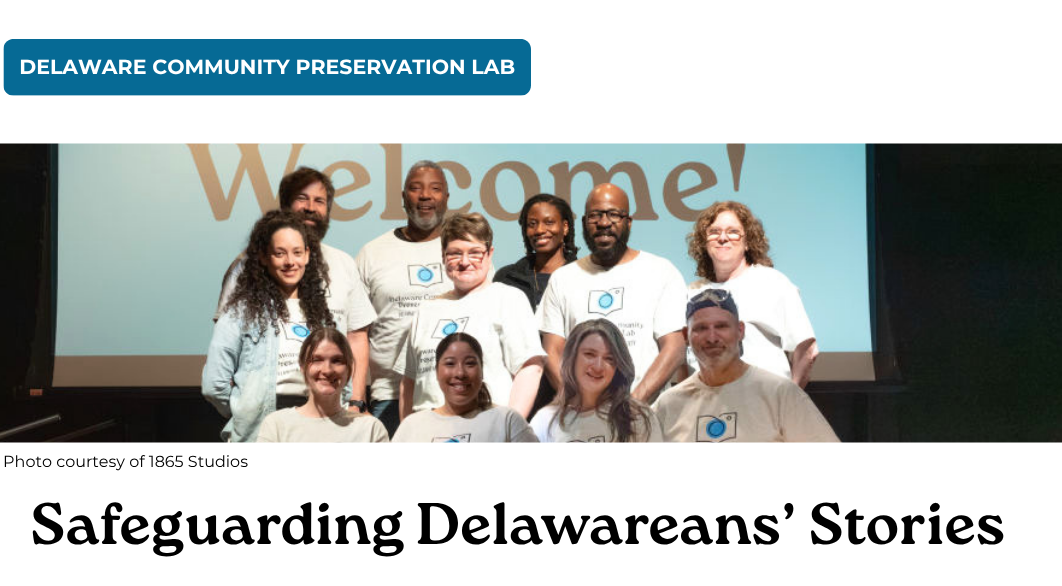
The Delaware Community Preservation Lab (DCPL) celebrates what makes Delaware unique: its people, their stories, and the items they hold dear.
Whether etched in stone, written in smudged ink, pasted into a scrapbook, or uploaded to the cloud, our individual and collective stories prevail because previous generations carefully saved and passed them down.
While traditional archives often focus on famous figures or official records, meaningful history is being created every day in our own communities. The DCPL is an interactive program that brings preservation tools and knowledge into communities across the state.
“Most of us have cleared out the basements or attics of our loved ones, churches, and community organizations. Inevitably, we find things that tell a story and should be preserved. The trouble is that most of us don’t know where to begin,” said DHS Chief Curator Leigh Rifenburg.
| | |
Each three-hour event features interactive stations, where attendees can consult with preservation specialists to learn tips for organizing and safely storing items; receive assistance digitizing flat objects such as photos, letters, and other papers; and discover how to record and preserve photographs and video about objects or stories.
All participants will leave with archival-quality preservation materials and a USB drive loaded with their digitized files and an easy-to-follow preservation guide.
“By demystifying the process of digital preservation and making it accessible for everyone, we can save more of Delaware’s history than ever,” Rifenburg said.
The DCPL kicked off at Route 9 Library in April. Future stops include the Cheswold Volunteer Fire Company on August 8 and a Sussex County location in the fall.
| | |
As we approach a momentous occasion in our national history, the Delaware Historical Society is taking a closer look at local and community history.
Our Uncover the Past: Transcribing Delaware History series at Route 9 Library engages members of our community to help transcribe items from our collections, including records and documents from African School Society, Abolition Society of Delaware & Garrett Scrapbook, and Women’s Indian Association of Wilmington.
“This is a way to get the community involved in preserving the records in our care while increasing access to handwritten documents," said Hannah Grantham, Director of the Mitchell Center for African American Heritage at DHS.
| | |
With the help of our community transcribers, we can provide more digital resources to share with individuals who can’t physically visit the Research Library & Archives to view the originals or who may not be skilled at deciphering historic cursive handwriting styles.
“Everyone who participates in these events is a critical component of making this work happen and helping to share collections that haven’t been accessible but tell strong stories about Black history in Delaware,” Grantham said.
The first transcribathon, in February, sold out, and our enthusiastic participants wanted even more documents! The May 16 transcribathon is full, but there are two additional opportunities to participate in August and October.
| | |
Make the Delaware Historical Society part of your celebration of the 250th anniversary of the Declaration of Independence!
Raise a glass to the Revolution – and some of the libations the Founding Fathers were fond of – with a tasting of Revolutionary Spirits on June 26. Or raise your voice with some of the era's popular music during From the Vault: Revolutionary Singalong on June 23.
If you can't join us in person, sign on for a Zoom presentation about Delaware's independence from Pennsylvania or the history of our state's Founding Fathers, presented in partnership with Delaware Public Archives.
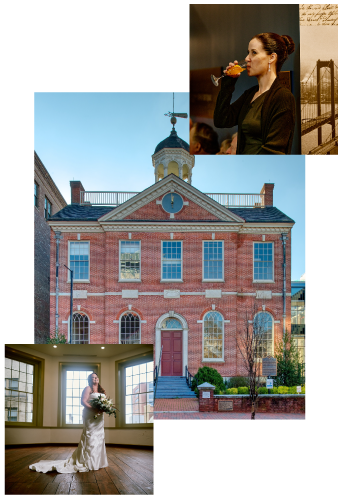
And on July 3, we hope you'll join us for a reading of the Declaration of Independence on the steps of historic Old Town Hall, followed by an afternoon of family-friendly activities exploring the Declaration and the fight for independence.
For the full list and all the details of our upcoming events, visit our calendar.
| |
| |
Members are our partners in the mission to preserve and promote Delaware’s unique history to educate, inspire, and empower people and communities. We can’t do what we do without members like you!
Why join?
- Unlimited free admission to the Delaware History Museum, Mitchell Center for African American Heritage, and Read House & Gardens
-
Special member pricing for select events, like Revolutionary Spirits on June 26
-
Making History magazine and the Delaware History Journal.
Join today to receive the Spring/Summer magazine!
| | | | |
|
March 20, 2026
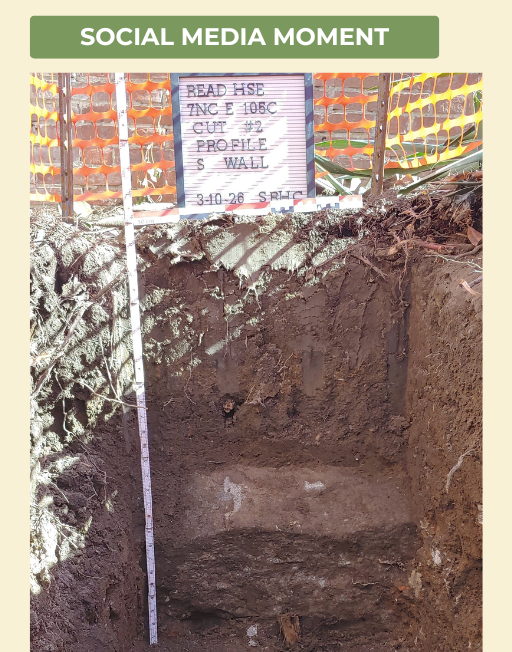
During construction work at the Read House & Gardens, the excavation revealed a section of the front foundation wall of the George Read I house, which had been destroyed in the Great Fire of 1824. When Eastern Horticultural Services dug trenches for new water and drain lines, they discovered that the front wall of the house was very close to the Strand. The layers of the soil show a clear break where the wall likely stood in the present-day parterre garden.
Follow us on Facebook and Instagram!
| | |
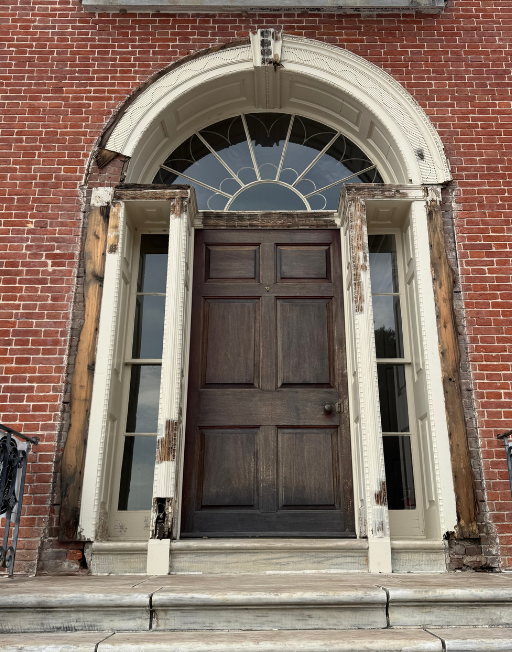
The Read House front door is an iconic feature of the front of the house, capturing the attention of passersby for generations.
Unfortunately, age and improper care had taken a toll on the historic woodwork. Modern latex paint and previous repairs using epoxy and imitation wood fillers trapped moisture in the wood of the door surround, causing it to splinter and rot.
With the help of the building restoration specialists Brouns & Galloway, the architrave on the front of the house is being lovingly preserved.
"The historic materials and the linseed oil products they're using are really sustainable materials that will prevent future damage," said Read House Director Dr. Laura Earls.
The modern, plastic-based pain was stripped using LME lasers, a gentler method that preserves the texture because it doesn't require scraping.
| |
|
Rotted pieces were removed, and the architrave was transported to North Carolina for Dutchman repairs using oakum and linseed oil putty. After the architrave is reinstalled, it will be painted using natural materials that match the existing colors.
| | |
When people talk about “digging deeper into the past,” they don't usually mean actually digging, but in our Restore & Remember programs, it can mean sifting through stacks of documents or even literally putting a shovel into the ground.
Restore and Remember: Historic R&R engages community members to volunteer at important historic sites within Delaware’s Black community while discussing and learning the history of each place and the people who used it.
The program takes people out of a traditional museum or archives setting, putting them to work helping organize and clean up different spaces. Along the way, participants gain a richer understanding of the site's history and importance.
"These programs are so fun! You get to talk to people at these sites and learn things you can't learn from a textbook, and we can put history into practice at sites that are important to people across Delaware," said Hannah Grantham, Director of the Mitchell Center for African American Heritage.
A pilot program doing some light landscaping and yardwork at Mt. Salem Church in New Castle last spring showed the need for this initiative, which the team took to historic African American Zoar UM Church in Odessa for a clean-up day last fall.
| | |
This spring, we visited The Monday Club in New Castle on April 11, and we have a second date scheduled to help catalogue photos from their records on May 30.
REGISTER FOR MAY 30
"The Monday Club archive is really rich. It tells the story of an impressive but undersung organization that has had far-reaching impacts on public and philanthropic life. They've given so much to Delaware and the community, and these events help community members give back and will hopefully lead to more scholarly endeavors to uncover Monday Club history," Grantham said.
In June, the program will travel to Jason Beach in Sussex County, a formerly segregated beach area of Trap Pond State Park. In partnership with Delaware State Parks, the June 19 event is an opportunity for people who regularly visited this beach to bring their mementos and family history items to be evaluated and preserved.
"This is an exciting collaborative endeavor and an opportunity for us to engage with new people and support them in documenting their history and understanding their own stories," Grantham said.
REGISTER FOR JUNE 19
| | |
From weddings and cocktail receptions in historic Old Town Hall, to outdoor events in Willingtown Square or the Read House & Gardens, to corporate meetings and luncheons in our spacious Copeland Room, DHS looks forward to hosting you!
Contact Rental & Events Coordinator Carol Washington for rates and availability. Members get a 15% discount!
| | | |
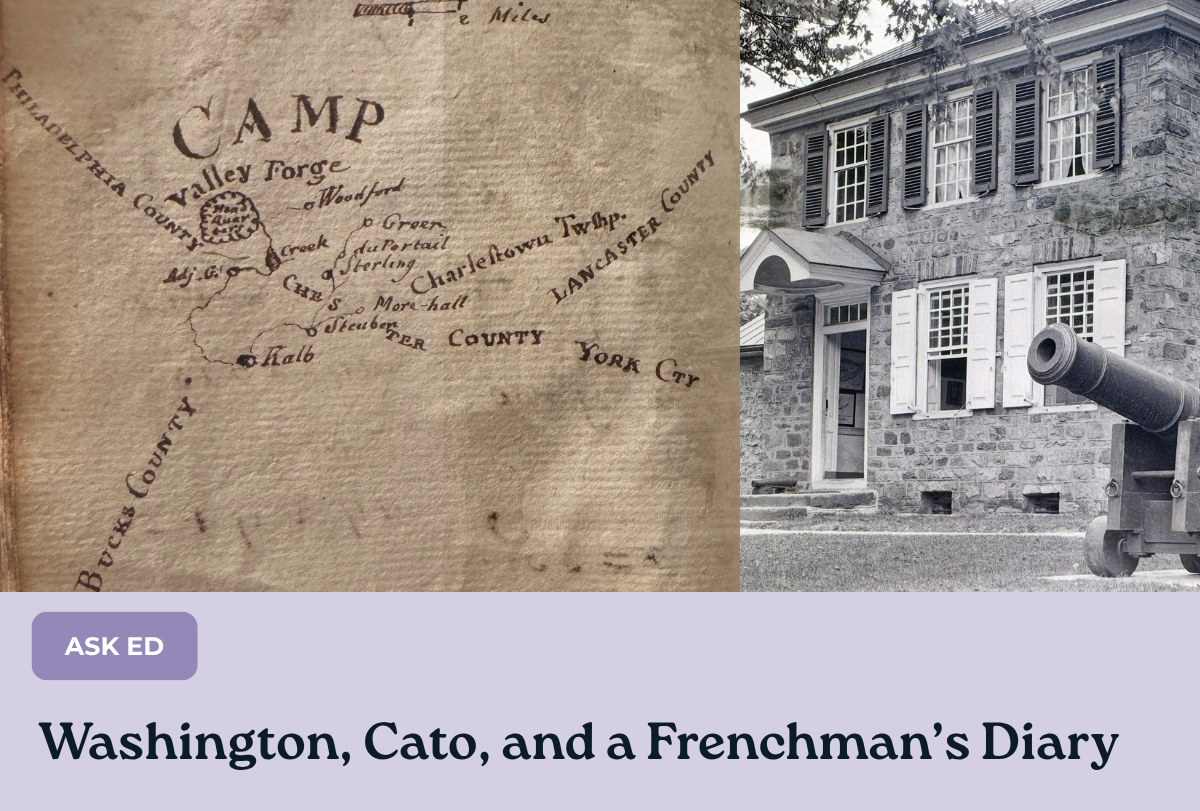
One of the most interesting and valuable manuscripts at the DHS in connection to the Revolutionary War is the handwritten diary of French linguist Pierre Du Ponceau (1760-1844).
DuPonceau had a front row seat to the Continental Army’s struggle in Valley Forge during the brutal winter of 1777 and 1778. While in camp, he dined many times with George Washington, General de Kalb, General Von Stueben, General Nathanael Greene, Lord Stirling (Major General William Alexander) and others. He also penned a small map of the American encampment at Valley Forge, presented here as a visual.
The diary is entirely in French but there’s a typed English translation, for those who might be interested in reading it. Access to the diary has been requested several times over the years, most recently by a historian in Scotland.
Within a few months of DuPonceau's diary entries, Washington and his officers staged a theatrical play in a converted bakery in camp (in direct violation of the Continental Congress prohibition on live theater a few years earlier, incidentally). Washington's play was based on a 1712 work by Englishman Joseph Addison entitled Cato, A Tragedy.
| | |
Morale was low. The winter had been harsh. Washington was looking for a way to motivate his officers and grab hold of some fortitude himself.
The Founding Fathers were well schooled as youngsters in the classics and in lessons of world history. A tale about a last stand to tyranny was perfectly appropriate, (if ironic given that particular true story ended in defeat.)
The book Rome's Last Citizen, The Life and Legacy of Cato, Mortal Enemy of Caesar by Rob Goodman & Jimmy Soni, reminds us how precarious the American Cause was following the Battle of the Brandywine in 1777 and how many of the same political dynamics at work in ancient Rome are present today.
Marcus Porcius Cato the Younger foresaw and opposed the rise of Julius Caesar. The tragedy of Cato’s end on the island of Utica as Caesar's army approached steeled Washington and his officers for the war ahead.
Cato was George Washington. King George was Julius Caesar. The American Cato, as Washington became known, triumphed.
Happy 250th, Cato.
| | | |
|
Ed Richi is the Curator of Printed Materials at DHS.
Visit our website to learn more about our Research Library & Archives and available research services or to book an appointment.
| | |
As we go about our day to day lives, we don’t always think of the people throughout history who visited the same places and walked the same streets.
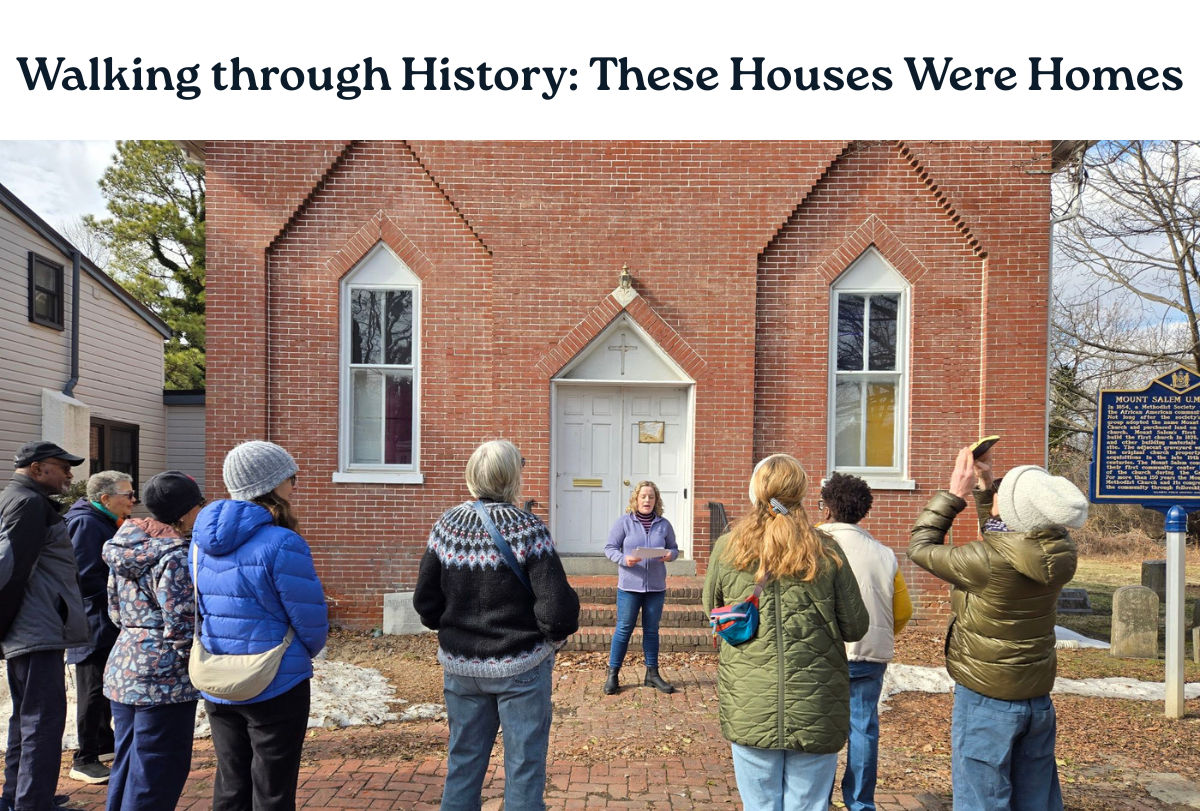
Our These Houses Were Homes walking tours allow guests to immerse themselves in history as they visit sites that were integral to the African American community in Historic New Castle and learn the stories of the families who lived and worked there.
These Houses Were Homes: 5 Generations of Black Community in Old New Castle debuted in 2024 led by Dr. Melissa Benbow-Flowers, who created the tour for a 2023 internship project at the Read House based on her research on the African American population in New Castle from 1800-1940.
For 2026, the tour was revamped to include expanded research, new tour stops, and an accompanying map.
Hosted each Saturday in February by Mitchell Center and Read House staff as part of of our Black History Month celebrations, the tours will return as a regular offering this summer and fall, running once a month from July to November.
| | |
This year’s tours focus on one hundred years of Black family life, culture, and history, from 1776 – 1876. Situating the tour during that time frame ties it to this year’s ongoing conversations about the 250th anniversary of both the United States and Delaware.
“Old New Castle is very important to both the colonial story and the early republic, but often, different levels of society get overlooked. The first hundred years of this country were really exciting but also tumultuous, and we had a great opportunity to explore more nuance and detail of what it meant to live in a community like this from 1776-1876,” said Hannah Grantham, Director of the Mitchell Center for African American Heritage.
Read House Director Dr. Laura Earls noted that the walking tours always draw a crowd, and offering additional dates this year will allow more Delawareans to engage with this history.
“It’s always exciting to see interest in the tours from so many different people, and part of our intention is to make sure this material is broadly accessible to tell a full story of New Castle history,” Earls said.
| | |
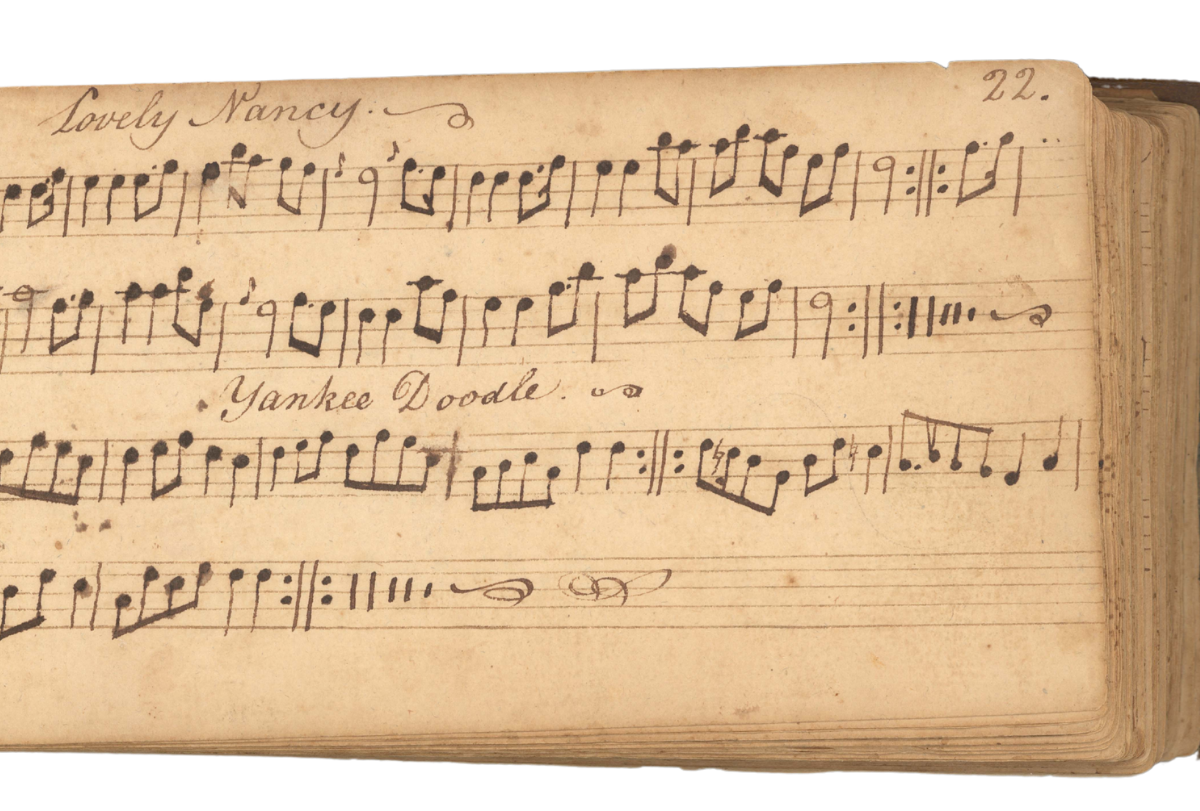
18th CENTURY SONGBOOK
Get into the Revolutionary spirit with lively songs during From the Vault: Revolutionary Singalong on June 23.
Learn more about this excerpt from an 18th century songbook from our archives – singing and dancing optional!
| | | | | Your support helps us to preserve and present priceless collections and to keep telling all the ever-expanding stories of Delaware’s past and present in new ways. | | | | |