Fallout: A Magical Moment at St. Marks
By Ben Rangel
Photos by Nelson Ball
It was surely one of the windiest days of the year, but I didn’t think I had ever seen anyone fly a toy kite at St. Marks before. As my truck raced down Lighthouse Road, I watched as the kite rose slowly in place and then floated back down, hovering just beyond the lighthouse itself. How could something in motion seem to be so still?
I’ll admit it: I was speeding in the Wildlife Refuge. But when two of your best naturalist friends tell you to get down to the coast “right now!”, it’s hard not to put the pedal to the metal. It had been a dreary day, the early hours dominated by the passing of Tropical Storm Nestor. As a sun-addicted Tallahassean, having to spend the morning moping indoors had put me in a mood. I was just about down for a nap when the texts started coming: there was a fallout happening... get down to the coast.
St. Marks Wildlife Refuge is well known for its annual Monarch butterfly migration. A festival is held each fall at the Refuge’s iconic lighthouse as thousands of Monarchs pass through on their 2,000-mile migration from North America to Central Mexico. The delicate beasts take a moment from their arduous trip to feed on the saltbush and goldenrod that bloom throughout the Refuge. It is definitely a sight to see a bush so covered in Monarchs that it appears to droop over; but every birder in North Florida knows that another wonderful event is happening in the Refuge around the same time: the fall migration of trans-Gulf migrants and the arrival of wintering species. The autumn season allows many visitors to the Refuge to tick off boxes on their “life” list, while revisiting old favorites.
However, this day wasn’t special because of seasonal migrations. Nestor had brought to the Refuge a spectacular phenomenon: a fallout. This rare event occurs when migratory birds become trapped by a severe weather pattern. In this case, the tropical storm had prevented the birds from achieving their accustomed flight plan. Trapped by the storm, the hapless birds were exhausted by the time they reached land. We call this a “fallout” because the tired birds appear to fall out of the sky. As the storm fizzled out after hitting the coast, St. Marks was the perfect place for the birds to stop off for the same reasons the monarchs land there: rest and food.
Closer to the lighthouse, I realized there was something off about the toy kite I was seeing. It wasn’t a kite at all, but a rather large bird. “A Magnificent Frigate bird,” my friend said, as I exited my truck. “It’s here because of the fallout.” We spent the next few moments watching in silence as the giant bird floated just offshore, level with the lighthouse cupola. There was a reason I had thought it was a toy kite: not once did I see it flap its wings. Magnificent Frigate birds can spend days in flight, sometimes going nearly 140 miles before landing. Struck by its eerie silhouette, it was not hard to see how the bird’s name had earned such a powerful adjective.
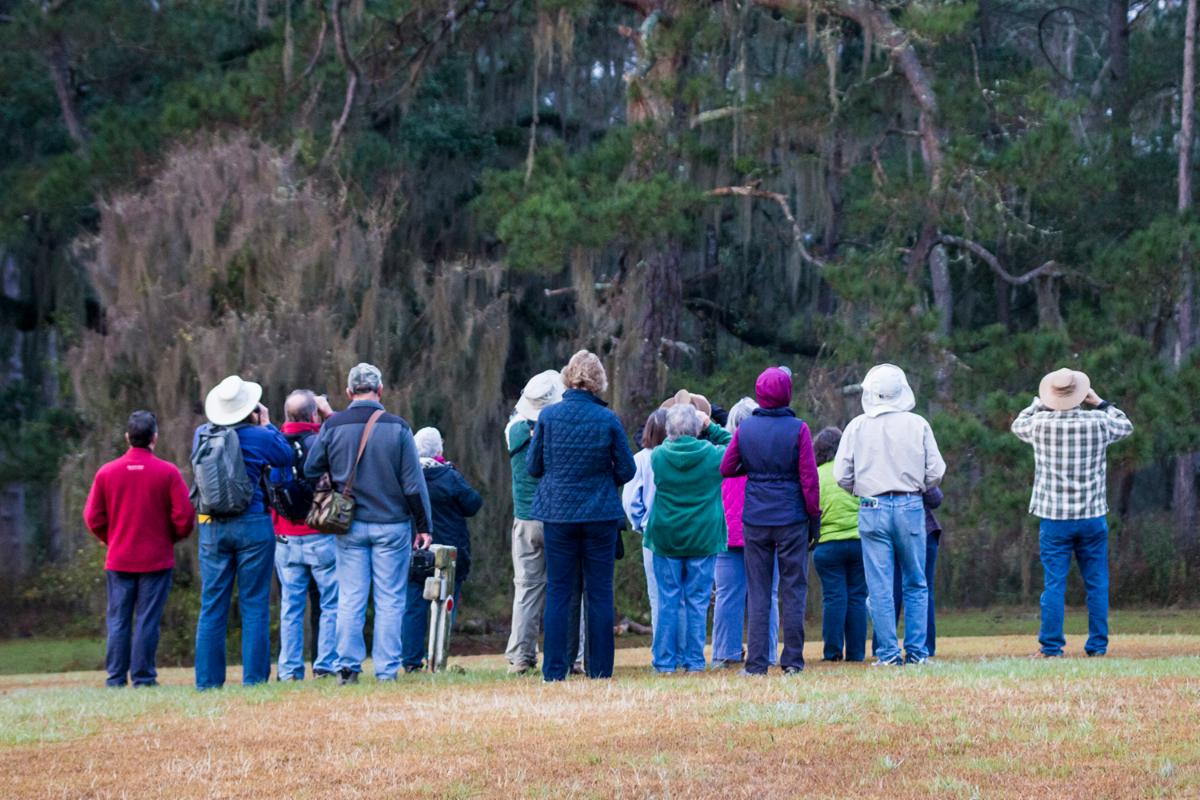
We couldn’t spend much longer looking at the frigate bird. A series of chirps had caught our attention, and we made our way along the walking path that looped the pool in front of the lighthouse. In this pool we could see all sorts of shorebirds: Lesser Yellowlegs stepped delicately beside Willets, and Black Skimmers coasted in the path of Forster’s and Royal Terns.
The real show was not out on the water, but along the path in the wax myrtles and cedar trees. Dozens of Rose-breasted Grosbeaks hid among branches, and flashes of tropical red betrayed the location of Summer Tanagers. And better yet: so many species of warbler, exhausted beyond care, and too busy eating flying insects and berries to mind that we had come so close. Each time a warbler tried to take flight, the strong winds pushed it back until it gave up, and went back to eating.
Aside from seeing bird species uncommon in your area, this is what makes a fallout so magnificent, the ability to get close to those birds that normally flit away the second your binoculars lift to your eyes. As someone new to the sport of birding, this moment was a revelation for me. I could feel my identification skills building as my friends exclaimed over each new species and pointed out the differences between the males and females. In all, our group saw 11 species of warbler during the fallout: Black-and-white, Black-throated Green, Pine, Bay-breasted, Palm, Magnolia, Tennessee, Hooded, Black-throated Blue, Northern Parula and American Redstart.
A fallout doesn’t last long. It’s one of those magical moments in nature where time can melt away, and then it’s over. As we reached the end of the cedar trail, a huge flock of Rose-breasted Grosbeaks took off from the shore. The day was ending and so was the magic, but I know exactly where I’m headed the next time a tropical storm hits the coast.